
Pharma Chief Urges Transparency in Virus Vaccine Rollout

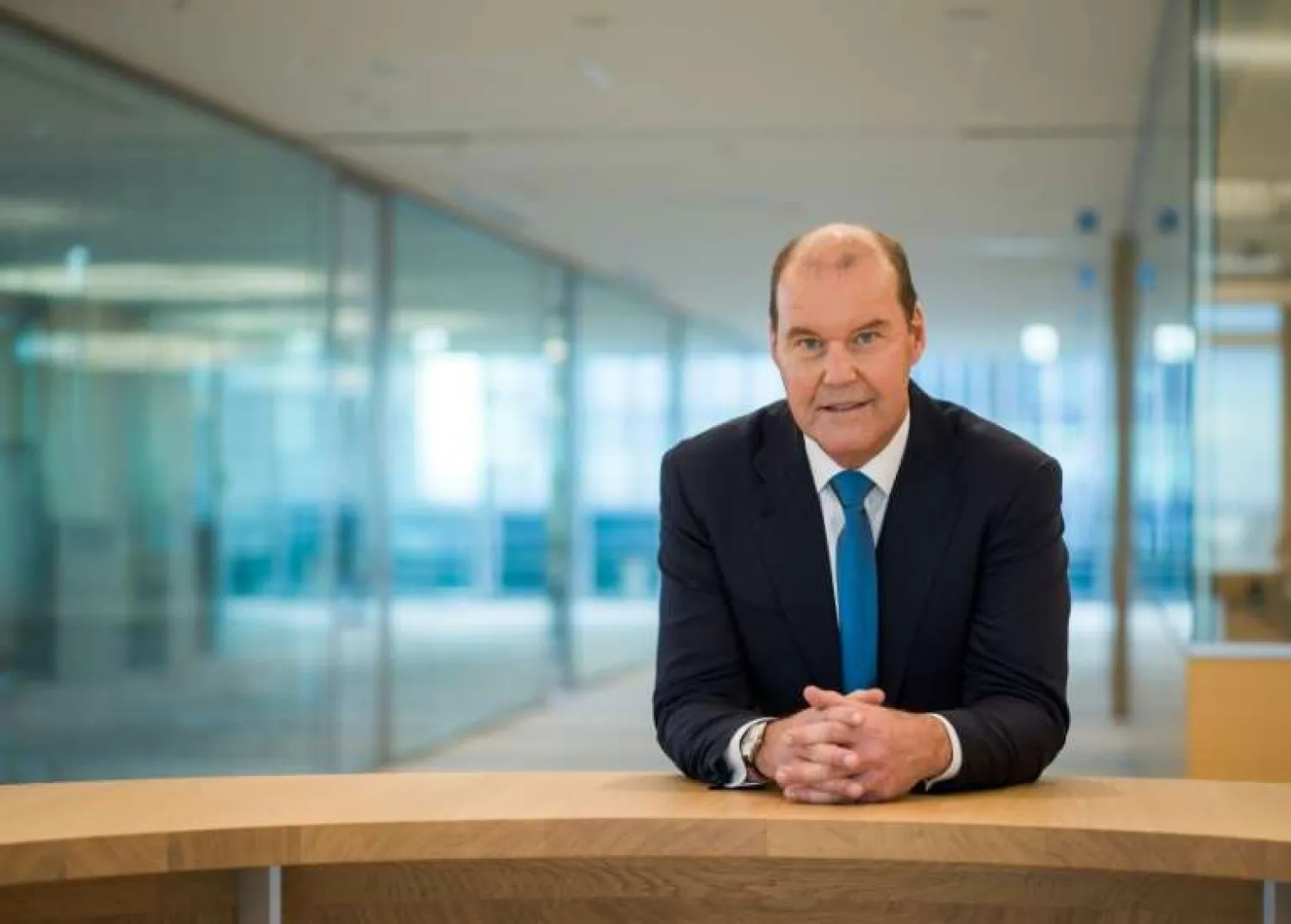
Weber says the pandemic has reminded the public of the crucial role played by the pharmaceutical sector | AFP
TT

Pharma Chief Urges Transparency in Virus Vaccine Rollout

Weber says the pandemic has reminded the public of the crucial role played by the pharmaceutical sector | AFP

Pharmaceutical firms must be "very transparent" about the risks and benefits of vaccines in efforts to end the coronavirus pandemic, the head of Asia's largest drugmaker has told AFP.

Takeda, one of the world's biggest pharmaceutical companies, is not developing its own vaccine but has contracts with several firms to distribute their jabs in Japan and is also testing a virus treatment.

"We have to manage the situation well, be very transparent and extremely educative in the way we introduce products," chief executive Christophe Weber told AFP in an interview.

"Medicines or vaccines are never perfect... there are always some side effects," said Weber, who joined Takeda in 2014 and took the top job a year later after nearly two decades at Britain's GlaxoSmithKline.

But he is optimistic the industry can explain the risks and benefits properly.

The Frenchman even sees a chance that the inoculation could help push back the growing tide of uncertainty and outright opposition to vaccination worldwide.

"It will be interesting to see. Vaccine hesitancy is strong, especially in some countries, but many vaccines are protecting against diseases that people never see," he said.

"Here it's different, everybody is seeing the impact of the coronavirus... so it could actually re-demonstrate the value of vaccines."

Takeda inked a deal with the Japanese government and US firm Moderna Therapeutics in October to import and distribute 50 million doses of its vaccine in Japan from the first part of 2021.

The US Food and Drug Administration on Friday granted emergency authorization for the Moderna jab -- the same permission already granted to the Pfizer/BioNTech version.

Takeda has also signed a deal with US biotech firm Novavax to produce and deliver its vaccine in Japan, if ongoing clinical trials prove successful.

But the firm -- which became one of the world's largest pharma companies after its 2019 purchase of Ireland's Shire -- has decided not to develop its own coronavirus jab.

"When we assessed the situation and the technology that we have in-house, we felt we did not have the best technology to develop a vaccine," Weber said.

- Covid-19 treatment -

Japan's pharmaceutical sector has moved comparatively slowly in the race to end the pandemic, and while companies including AnGes, Shionogi, and Daiichi Sankyo are now developing vaccines, they are not expected to be available before 2022 at the earliest.

The country has however secured doses from players abroad, including Pfizer and AstraZeneca.

"There is no leading vaccine player in Japan," said Weber, adding that Takeda hopes to develop in that direction, including with plans for a dengue vaccine.

He believes Japan's biotech sector is less developed than that in the US because the country lacks the "vibrant spin-off mechanism" to help scientific research groups grow into successful start-ups.

"In Japan, scientific research and academia is strong, but there is much less in the way of spin-offs and venture capital," he said.

"We need to make more efforts to generate this ecosystem in Japan," he added, pointing to an open innovation research facility Takeda founded in 2018 that houses 70 companies, including young biotech firms.

And while it has shied away from coronavirus vaccines, Takeda has been working on a plasma therapy to treat the new respiratory disease in collaboration with an international alliance of drug manufacturers.

Called CoVIg-19, the treatment uses concentrated and purified antibodies taken from patients who have battled the coronavirus.

Weber expects clinical trial results for the treatment to be published early next year and says a timeframe for it to hit the market "will all depend on the data".

He's not concerned that the arrival of multiple vaccines renders the treatment irrelevant, warning "we shouldn't drop the ball and assume vaccines will solve everything".

"The vaccines don't have 100 percent efficacy," he said, adding that how long they protect for remains unclear and that some patients suffer conditions which prevent them from getting inoculated.

Vaccinating the entire world is also going to be a lengthy process, Weber stressed.

"There is still a great need for efficient treatments."


Trump Renames AI ‘Super Intelligence’ as Leaders Jostle Over Dangers

US President Donald Trump speaks during the 81st session of the UN General Assembly at the UN Headquarters on September 22, 2026 in New York City. (Getty Images/AFP)
TT

Trump Renames AI ‘Super Intelligence’ as Leaders Jostle Over Dangers

US President Donald Trump speaks during the 81st session of the UN General Assembly at the UN Headquarters on September 22, 2026 in New York City. (Getty Images/AFP)

President Donald Trump on Tuesday announced that the US government would rename artificial intelligence "super intelligence" in official communications, as world leaders jostled over how to address the dangers of the fast-advancing technology.

AI has become a major topic at the UN General Assembly after incidents of the technology falling out of the control of humans and warnings by company insiders drew global alarm and calls for better government supervision of the industry.

Speaking to the assembly, Trump stood by his firm opposition to regulating AI, while arguing the word "artificial" undersold the technology and voicing hope the rest of the world would adopt the new term.

Super Intelligence "sounds much better" and "it's much more accurate," he said.

The rebrand is the latest in a series of renamings pursued by the Trump administration, which changed the Gulf of Mexico to the "Gulf of America" via executive order last year and, in August, renamed Lake Ontario "Lake America" amid a trade dispute with Canada.

The US leader also compared the warnings of AI safety advocates to warnings about climate change, whose human causes are affirmed by the overwhelming consensus of the scientific community.

"The United States totally rejects any attempt to construct a globalist scheme to control... artificial intelligence," he said.

"Every major new technology brings challenges, and superintelligence is no exception," he added.

"The very same people who said we'll all be dead in 12 years because of global warming... are now saying that AI is going to kill us all, that robots are going to attack us, and that everything is going to be a total disaster."

Ahead of the UN assembly, leaders of more than 20 mostly European countries urged binding safety measures for advanced AI, warning that the technology's development could outpace the ability to control it.

AI superpowers China and the United States did not endorse the idea.

- 'Vassals' -

Speaking on the sidelines of the UN meeting, Prime Minister Andy Burnham said he planned to use Britain's role as host of the Group of 20 next year to push for a "single set of global principles and standards" around AI, according to Bloomberg.

French President Emmanuel Macron proposed building AI technology independent from the great powers.

"I don't want anyone to become the vassal of one of the great powers," Macron told the UN General Assembly, apparently in reference to China and the US.

"Our investment capabilities must be pooled to build a cutting-edge open-source AI model, which we will share. We should not depend on somebody else."

The US-based AI giants themselves are increasingly asking for global coordination on AI safety, with OpenAI's Sam Altman set to address the UN Security Council on Wednesday.

Anthropic chief Dario Amodei and Hugging Face co-founder Clement Delangue will also participate remotely, a French official said Tuesday.

France, which holds the Security Council presidency this month, initiated the meeting and believes AI's threat to international peace and security has not been sufficiently discussed at the UN.

UN chief Antonio Guterres, meanwhile, called for the US and China to start a dialogue on the technology's future akin to US-Soviet engagement at the height of the Cold War.

"Governments with the greatest AI capabilities have the greatest responsibilities to humanity, to establish channels for dialogue," Guterres said in his address to the assembly.

"At a pivotal moment during the Cold War, strategic rivals came to recognize the need to manage shared existential risks."

China and the US are currently discussing creating a communication channel for AI concerns in anticipation of a Washington summit meeting between Trump and Chinese President Xi Jinping on Thursday.


Zelenskiy Says He Discussed Energy Truce, Efforts to End Russia War with Trump

US President Donald Trump and Ukraine's President Volodymyr Zelenskiy react as they meet during the 81st United Nations General Assembly (UNGA) in New York City, US, September 22, 2026. (Reuters)
TT

Zelenskiy Says He Discussed Energy Truce, Efforts to End Russia War with Trump

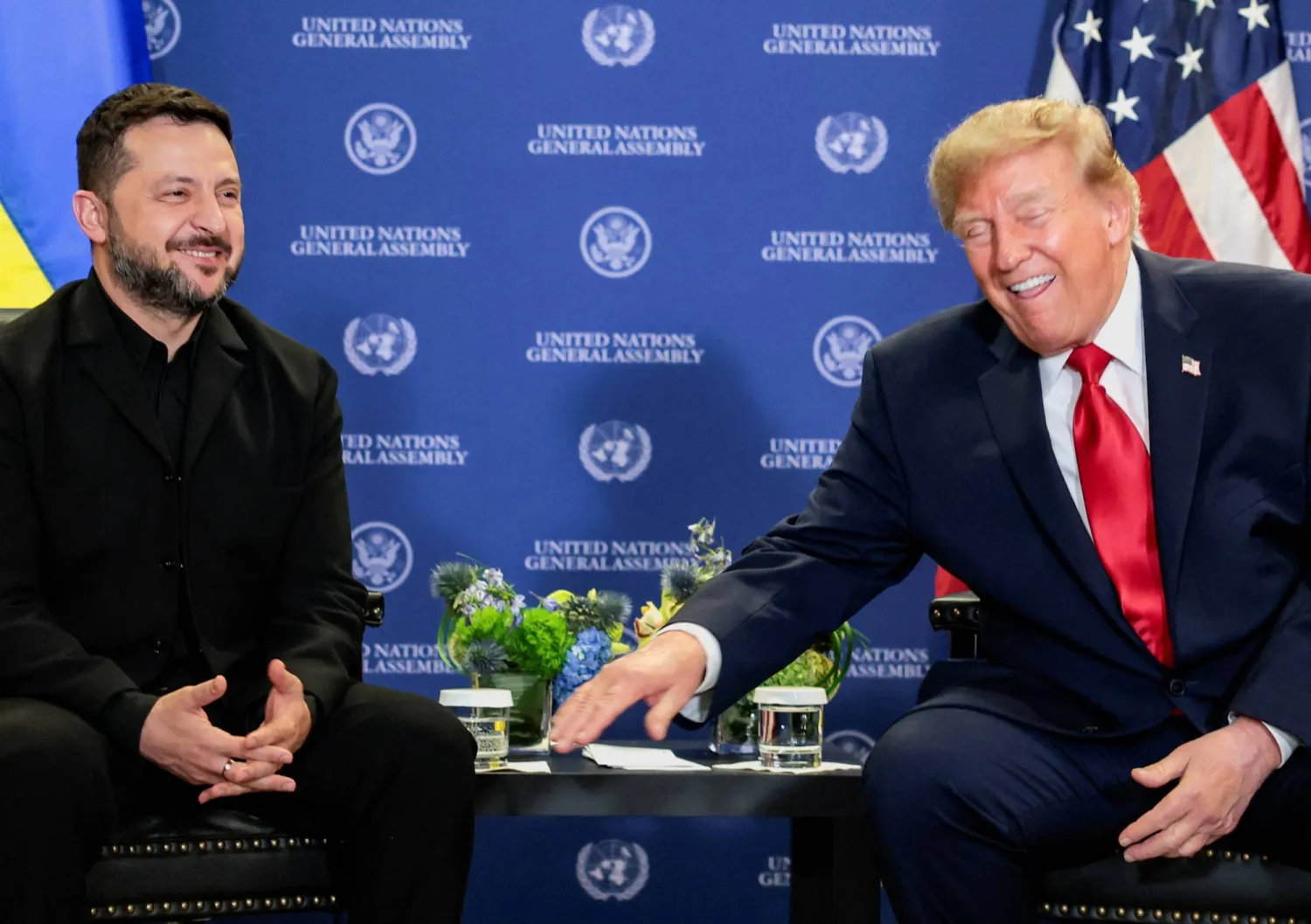
US President Donald Trump and Ukraine's President Volodymyr Zelenskiy react as they meet during the 81st United Nations General Assembly (UNGA) in New York City, US, September 22, 2026. (Reuters)

Ukrainian leader Volodymyr Zelenskiy said on Tuesday he discussed with US President Donald Trump efforts to end the 4-year-old war with Russia, including a potential bilateral ceasefire on energy-related targets.

Speaking to the media after a 40-minute meeting with Trump at UN headquarters in New York, Zelenskiy said Kyiv was ready for any format of an energy ceasefire with Moscow, but there had been no discussion of Ukraine unilaterally halting its attacks on Russian oil refineries.

Trump, whose approval ratings have slumped to a record low amid high gas prices ahead of the US midterm elections in November, had expressed concern in recent days over ‌the extensive damage done ‌to Russia's fuel-processing capacity, which he said was stoking diesel prices globally.

Zelenskiy reiterated ‌that ⁠he was ready ⁠to meet Russian President Vladimir Putin at a trilateral meeting with Trump, adding that he hoped the US would find a way to bring Moscow back to the negotiating table after talks unraveled earlier this year.

Zelenskiy, however, said he had seen no indication that Putin was ready to talk.

"I'm ready for a trilateral meeting. It means that I'm agreed to end the war," Zelenskiy said.

Before their meeting, Trump told reporters that he and Zelenskiy would discuss Ukrainian attacks on oil refineries.

"It is a serious hit on the Russians. It's ⁠also a serious hit on the price of diesel," said Trump.

He said he ‌and Zelenskiy would also talk about solutions for ending the ‌war, which began with Russia's full-scale invasion of Ukraine in 2022.

"I think it's going to happen," Trump said.

The ‌US leader announced last week that Ukraine and Russia had agreed not to strike energy targets, ‌but any semblance of a truce disappeared when Russia hit petrol stations in Kyiv the following day and Ukraine bombed a Russian oil refinery.

Zelenskiy also met with UK Prime Minister Andy Burnham, who said he lobbied Trump to press for a Ukraine-Russia energy ceasefire in his meeting with his Ukrainian counterpart. Burnham also promised further financial support ‌to Kyiv for infrastructure.

AERIAL ATTACKS

Intensifying aerial attacks by both sides in the Ukraine war in recent weeks have battered ports, warehouses, ships and energy infrastructure, as ⁠well as crippling ⁠Black Sea grain exports.

Amid fears in Ukraine that Russia will once again pound its heating and power facilities as winter approaches, Zelenskiy said he had discussed preparations with Trump and asked the US for a package of Patriot air defense missiles — the only weapon in Ukraine's arsenal capable of downing Russia's ballistic missiles.

The US war in Iran and the Ukraine war have depleted global supplies of Patriots, including US inventories.

Zelenskiy said that, in return for Patriots from US stockpiles this winter, Ukraine would swap future supplies of interceptors from its deal with Germany, which has agreed to provide Ukraine with 600 Patriots in 2027 and 2028.

He told reporters it was a "good step" that the idea was not rejected but acknowledged that Trump had not yet agreed to the proposal.

Zelenskiy said that discussions for Ukraine to begin licensed production of Patriots itself were still ongoing, and a member of his team had held a positive meeting with Raytheon, a US producer of Patriots.


Trump in Address to World Leaders at UN Defends His Decision to Start War Against Iran

US President Donald Trump speaks during the 81st United Nations General Assembly at the United Nations Headquarters in New York City, US, September 22, 2026. BRENDAN SMIALOWSKI/Pool via REUTERS
TT

Trump in Address to World Leaders at UN Defends His Decision to Start War Against Iran

US President Donald Trump speaks during the 81st United Nations General Assembly at the United Nations Headquarters in New York City, US, September 22, 2026. BRENDAN SMIALOWSKI/Pool via REUTERS

President Donald Trump returned to the UN General Assembly on Tuesday at and started his address ticking off progress — including adding private sector jobs, stemming illegal migration and curbing crime before turning to a fulsome defense of his decision to start a war with Iran.

Trump accused Iran of stalling to make a deal to fully reopen the Strait of Hormuz and negotiate an endgame to the war until after the midterm elections in the United States

“I gave absolutely no credence and will not give credence to the election when it comes to Iran," Trump said. "It doesn’t even enter my mind.”

Iran's delegation walked out as Trump railed against Tehran.

As he arrived at the UN, Trump briefly spoke to reporters, telling them it was an honor to address the world body before his attention suddenly shifted to his resentments with the news media.

Trump over the weekend announced a White House ban on CNN, MS NOW and Politico, claiming that their coverage of his presidency was biased. The news outlets have filed a lawsuit to restore their access to White House grounds. Trump snapped at a CNN reporter in the UN scrum.

“I’m surprised that CNN is here covering me,” Trump said. “You shouldn’t be here."

After his speech to the annual gathering of world leaders, Trump is expected to hold talks with new British Prime Minister Andy Burnham, Japanese Prime Minister Sanae Takaichi, Ukrainian President Volodymyr Zelenskyy, and a more informal meeting with Venezuela's acting President Delcy Rodríguez, according to the White House.

The visit to the UN comes when Trump's foreign policy approach — particularly his decision to start a war with Iran — has become a drag on his fellow Republicans' hopes of retaining control of both chambers of Congress during the coming midterm elections. Nevertheless, Trump is making the case in his address that the world is better off for his leadership.

“As president of the most extraordinary nation in history," Trump said. "I have no interest in leaving dangers to grow for another day. I do not believe in letting problems fester."

Iran war to loom large In last year's address at the UN, Trump claimed the US had “demolished” Iran's nuclear capabilities after he ordered the June 2025 bombardment of three key facilities.

He returned to the General Assembly nearing the seven-month mark of a new war against Iran that he insists is necessary to address a nuclear threat posed by Iran.