UAE’s SMEs Receive AED420 Million Trade Credit Support From ECI

UAE's Etihad Credit Insurance (ECI) supports small and medium enterprises (SMEs) - WAM
TT

UAE’s SMEs Receive AED420 Million Trade Credit Support From ECI

UAE's Etihad Credit Insurance (ECI) supports small and medium enterprises (SMEs) - WAM

Etihad Credit Insurance (ECI), the UAE Federal export credit company, has issued AED420 million (($114 million) worth of trade credit support to the small and medium enterprises (SMEs) from January to November 2020.

Mirroring its steadfast commitment to boost national export activity and economic diversification, the ECI has insured the exports of the SMEs as well as its operations in the domestic market allowing them to stay competitive in the trade industry, especially during the COVID-19 pandemic, state news agency WAM reported.

The guarantees have helped protect the liquidity of the SMEs amidst this challenging economic cycle, assisting businesses in reducing their cost of bank funding and allowing them to request their preferred bank to discount the invoices secured by the ECI at a preferential rate.

The SMEs have always been regarded as a fragile sector.

Only 50 per cent of start-up businesses make it to the fifth year of operation, and it further drops to 33 per cent on the 10th year, according to data released by US Bureau of Labor Statistics. This means that only about one in three small businesses survives after 10 years.

The latest data released by World Bank showed that the SMEs represent about 90 per cent of businesses and more than 50 per cent of employment worldwide.

In the UAE, the Federal Competitiveness and Statistics Authority showed that the contribution of the SME sector to the UAE’s GDP is estimated at 53 per cent in 2019, up from about 49 per cent in 2018. In addition, the SMEs also contribute to 95 per cent of the companies in the country and employ 86 per cent of the total workforce in the non-oil private sector.

And yet, despite being a key player to the global trade industry, their delicate lifespan is the reason the SMEs are considered as high-risk by financial institutions, leading these businesses to have difficulty getting access to credit.

To address this pressing need, the ECI had, in 2019, launched the "SME Protect" a trade credit solution to support their growth plans globally and assist them while entering high-growth markets. The launch of this product made the ECI the first government export credit company in the Middle East and Africa to offer the SMEs an online trade credit solution to secure trade and export to more than 50 countries.

Massimo Falcioni, CEO of the ECI said: "The ECI understands the vital role the SMEs play in building the nation’s economy that is why we have developed an online user-friendly solution in 2019, named 'SME Protect' to allow the SMEs in the UAE to trade safely and confidently and gain access to international markets, thereby positioning the UAE as the global hub of trade and export."

"The close cooperation with Abu Dhabi Department of Economic Development (ADDED), and the chambers of commerce of Abu Dhabi, Dubai, Sharjah and Ras Al Khaimah and Dubai Exports allowed a dedicated ECI team to develop several webinars coaching, counselling and guiding the SMEs to better understand their export potential, and understand how to enter in international markets and offer competitive payment terms with secured terms."

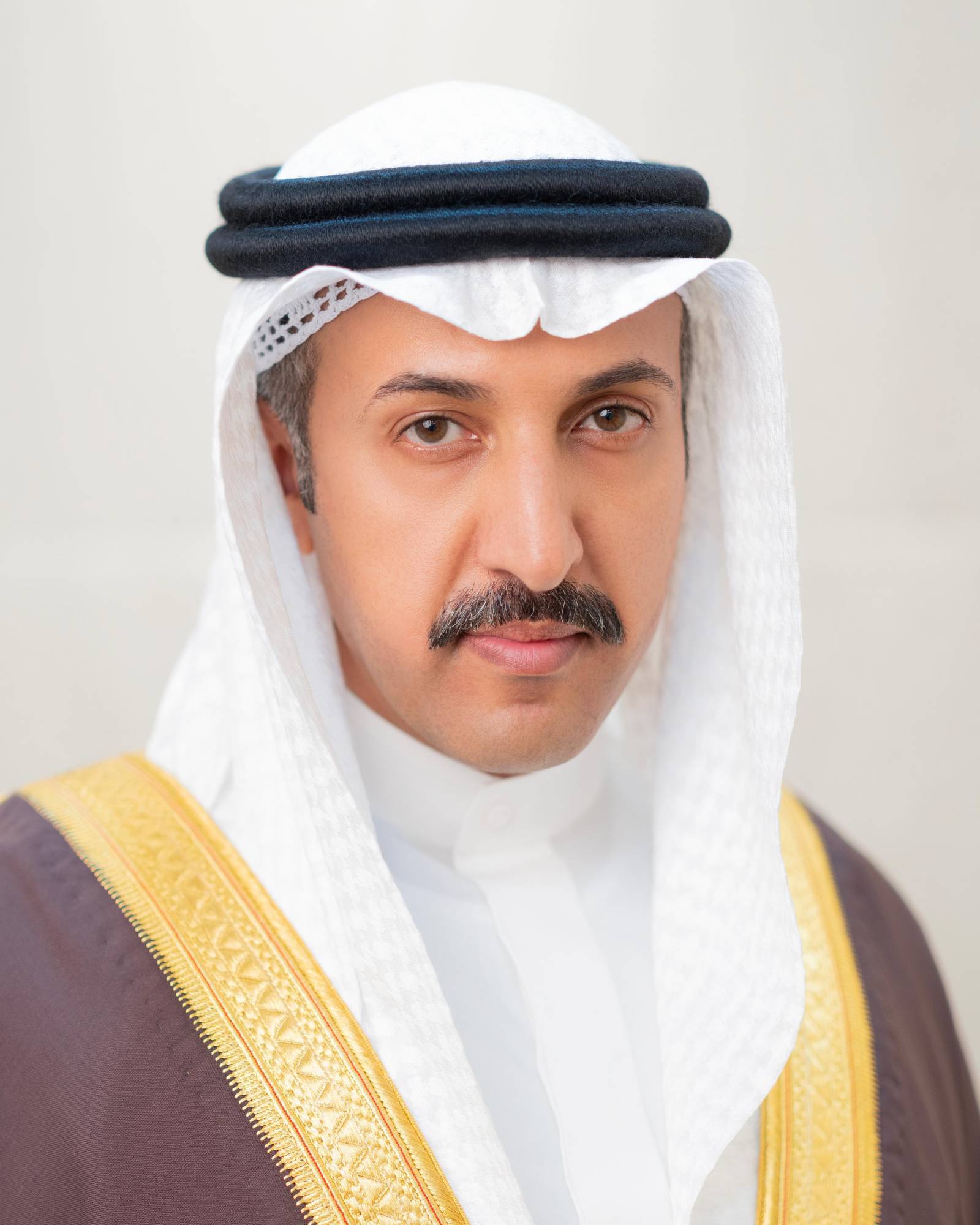

Bahraini Transport Minister to Asharq Al-Awsat: Each Country to Finance Its Share of Gulf Railway Project

A conceptual rendering of the Gulf railway interconnection project. (X)
TT

Bahraini Transport Minister to Asharq Al-Awsat: Each Country to Finance Its Share of Gulf Railway Project

A conceptual rendering of the Gulf railway interconnection project. (X)

The Gulf Cooperation Council (GCC) member states took a new step toward completing the railway interconnection project by signing the project's general agreement in Bahrain on Sunday. This comes as part of efforts to establish an integrated transport network linking the six nations and boosting the movement of passengers, goods, and commercial trade among them.

Bahraini Minister of Transportation and Telecommunications Dr. Sheikh Abdulla bin Ahmed Al Khalifa told Asharq Al-Awsat that each country will fund and execute the portion of the project located within its territory.

Meanwhile, the costs, fees, and expenses associated with the shared interconnection components among member states will be determined collectively, he added.

He explained that the agreement establishes a joint framework for the project's execution and operation, while defining the obligations of member states and their coordination mechanisms.

He noted that the network, which extends some 2,117 kilometers, aims to transport 6 million passengers and 200 million tons of freight by 2030, with the figures projected to rise to more than 8 million passengers and 271 million tons of freight by 2045.

The project spans from Kuwait, passing through Saudi Arabia, Bahrain, Qatar, and the UAE, all the way to Oman, with the goal of achieving full network operations by December 2030.

According to the minister, interconnection lines between adjacent countries can become operational as soon as their components are completed, without the need to wait for the entire Gulf network to be finalized.

National financing and potential partnerships

On private sector participation, Al Khalifa said that it remains one of the viable options for financing, executing, or operating certain components of the project, depending on the outcomes of economic and financial studies. He stressed that there is no unified public-private partnership model approved across the entire network.

There are currently no pre-existing agreements with specific international partners to finance or execute the project, he said. However, the expertise of global companies in the fields of design, engineering, technology, and operating systems could be utilized based on the project's needs and its various phases.

Bahraini Minister of Transportation and Telecommunications Dr. Sheikh Abdulla bin Ahmed Al Khalifa.

Concerning the project's announced completion rate, the minister explained that the 50 percent figure represents the average progress achieved across member states, and does not mean that half of the construction work for the entire Gulf network has been completed.

The project's cost estimates are currently undergoing review and updates in light of economic shifts, rising prices for materials and services, construction costs, and inflation, he revealed without specifying an updated total cost at the present time.

Returns beyond passenger and freight transport

Al Khalifa said that the economic impact of the project is not limited to facilitating passenger movement and freight transport, but extends to improving supply chain efficiency, boosting trade among GCC countries, and linking industrial centers, economic zones, and logistical hubs, as well as supporting employment and investment opportunities.

He added that determining the project's exact contribution to the gross domestic product (GDP) or estimating expected savings in time and costs remains premature, given that returns vary depending on transport routes, the nature of the cargo, and the points of origin and destination.

In light of the challenges facing maritime navigation in the region, the minister stressed that the Gulf railway network is not intended to serve as a substitute for maritime transport. Instead, it acts as a complementary route that boosts transport options and connectivity among GCC nations, increasing the resilience of supply chains against disruptions that could affect various modes of transportation.

He noted that integration between ports, roads, railways, and airports will strengthen the flexibility of the Gulf transport system, while connecting to broader international logistical corridors remains a future possibility contingent on completing studies, understandings, and coordination with the relevant countries and entities.

King Hamad Bridge to link Bahrain and Saudi Arabia

Regarding the connection between Bahrain and Saudi Arabia, Al Khalifa explained that the King Hamad Bridge project includes road lanes and railway lines, enabling the international passenger station in Bahrain to connect with the Saudi railway network and forming one of the essential components for completing the Gulf interconnection.

He added that work is underway on the privatization procedures for the King Fahd Causeway Authority, alongside completing the necessary studies and procedures to transition to the execution of the new bridge project.

Achieving the connection between Bahrain and Saudi Arabia is a fundamental requirement for operating the railway line between the two countries within the project's targeted timeframe in December 2030,e he said.


Egypt Seeks Faster Progress on Libya Gas, Refining and Power Projects

Egyptian Foreign Minister Badr Abdelatty speaks during a press conference with Minister of Information Diaa Rashwan (not pictured) in Cairo, Egypt, March 25, 2026. (Reuters)
TT

Egypt Seeks Faster Progress on Libya Gas, Refining and Power Projects

Egyptian Foreign Minister Badr Abdelatty speaks during a press conference with Minister of Information Diaa Rashwan (not pictured) in Cairo, Egypt, March 25, 2026. (Reuters)

Egypt aims to accelerate energy projects with Libya, including gas pipeline links, refining of Libyan crude in Egypt and an electricity interconnection, Egyptian Foreign Minister Badr Abdelatty said late on Saturday.

Abdelatty's comments were in ‌a ministry ‌statement after a meeting ‌with ⁠Libya’s acting oil ⁠and gas minister Khalifa Abdulsadek in Tripoli.

Abdelatty also ‌called for cooperation on petroleum products and the completion of projects to refine Libyan ‌oil in Egypt and re-export it, the statement said, ⁠adding ⁠that Abdulsadek had said that Libya would continue implementing existing projects and would visit Cairo soon to continue technical talks with Egypt’s petroleum and electricity ministers.

The statement did not provide details on costs or the status of the projects.


GCC: Railway Agreement Sets Joint Framework for Project Implementation and Operation

GCC transport ministers pose for a group photo following the 27th committee meeting in Kuwait. (GCC Railway Authority)
TT

GCC: Railway Agreement Sets Joint Framework for Project Implementation and Operation

GCC transport ministers pose for a group photo following the 27th committee meeting in Kuwait. (GCC Railway Authority)

Jasem Albudaiwi, secretary-general of the Gulf Cooperation Council (GCC), said on Sunday that the signing of the General Agreement on the GCC Railway Project marked an important step toward establishing an integrated regional transport network.

He said the network would facilitate the movement of citizens and residents, ease freight transport, boost intra-GCC trade efficiency and strengthen member states’ economic competitiveness and the region’s position in regional and international trade.

Albudaiwi's remarks came at the signing ceremony in the Bahraini capital, Manama, on Sunday, held under the patronage and in the presence of Bahrain’s Crown Prince and Prime Minister Salman bin Hamad Al Khalifa.

He said the project reflected the GCC’s shared ambition to connect member states and improve mobility and trade by linking their economic and industrial hubs, ports and logistics centers.

He added that the project would create opportunities for safe, reliable, affordable and environmentally friendly transport services that meet development needs, serve the aspirations of future generations and strengthen economic integration among GCC states.

Albudaiwi said the agreement sets a common framework for member states to implement and operate the project in coordination with their national railway networks, while establishing mechanisms and a timetable to accelerate its completion.

Albudaiwi praised GCC leaders and transport ministers for their support of strategic regional projects, thanking Bahrain’s crown prince and prime minister for hosting the signing ceremony and officials for advancing the railway project.