


For Over Four Decades, Saudi Arabia Has Backed Gulf Unity

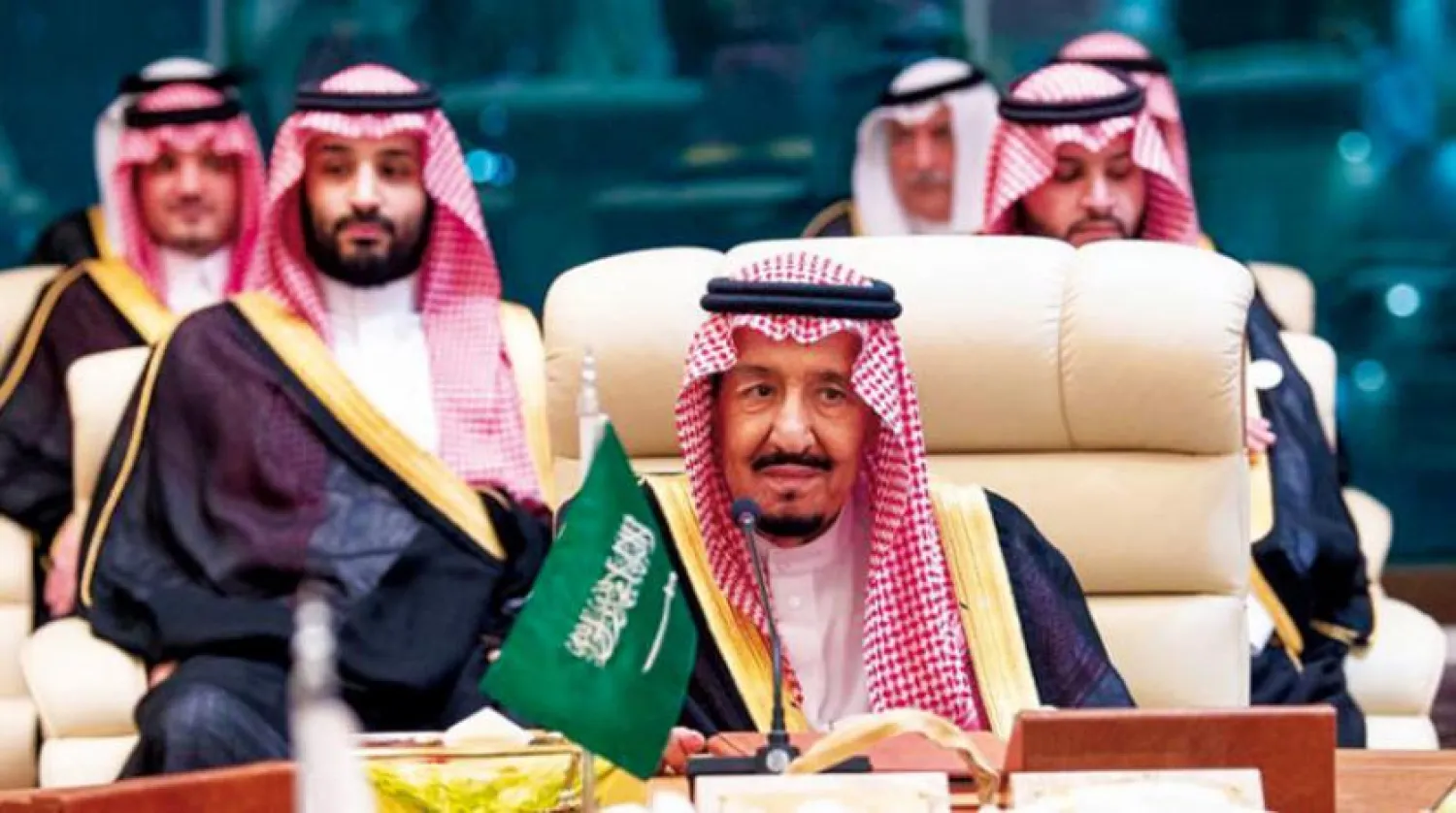
King Salman presiding the Gulf summit held at Al-Safa Palace in Makkah, Saudi Arabia. SPA file photo
TT

For Over Four Decades, Saudi Arabia Has Backed Gulf Unity

King Salman presiding the Gulf summit held at Al-Safa Palace in Makkah, Saudi Arabia. SPA file photo

For over four decades, Saudi Arabia’s policies have been designed to reflect its deep strategic weight in the world, especially in Arab and Muslim countries. The Kingdom has been exceptionally keen on uniting the ranks of Gulf states under the banners of brotherhood, religion and shared fate.

Since 1982, the year the Gulf Cooperation Council (GCC) was founded, Saudi concerted efforts have been poured into achieving common goals and aspirations and overcoming various obstacles that hinder cooperation.

Saudi Arabia, as a key GCC member, has guaranteed the preservation of unity among Gulf states and succeeded in finding settlements and efficient solutions for disputes among Gulf countries.

By boosting bonds of interdependence among GCC states and deepening cooperation, the Kingdom has managed to accomplish unity across many fields, utilizing meticulous planning centered around preserving achievements and balance among civilizations.

At GCC summits, Saudi Arabia and other Gulf states have maintained their march onward by laying out unbound support for a host of agencies that played a crucial part in bringing about a tangible revival, building strong ties, and overcoming challenges.

This aided the GCC in upholding its vision for unity within the Gulf.

A prime example of Saudi Arabia’s honorable policy can be found by invoking the memory of when the Kingdom’s late monarch King Fahd bin Abdulaziz heeded the call of Kuwait after the Iraqi invasion.
Saudi Arabia’s stance projected the strength of ties and a true understanding of having a shared destiny with Kuwait.

At the end of the 32nd GCC session, which was held in Riyadh, Gulf leaders welcomed and backed the proposal of King Abdullah bin Abdulaziz made during his opening speech, to form a GCC Union.

It called for the highest degree of economic integration between GCC countries, encompassing a customs union, monetary union and common market. It also advocated the deepening of defense and security cooperation and the activation of GCC diplomacy to serve national, Arab and Islamic causes in the world.

Believing in the importance of this proposal, GCC leaders directed the Ministerial Council to form a specialized body to be entrusted with studying all its aspects.

In 2016, Saudi Arabia and the United Arab Emirates signed a protocol to establish the Saudi-UAE Coordination Council.

Under the directive of Saudi King Salman bin Abdulaziz and UAE President Sheikh Khalifa bin Zayed Al Nahyan the deal aimed at achieving a common vision centered around highlighting the status of the two countries in the fields of economy, human development, politics and military-security integration.

Seven joint committees were established to implement a number of strategic and development initiatives and projects that achieve prosperity and security for the two brotherly peoples of Saudi Arabia and the UAE. This is part and parcel of the Saudi-UAE integration system.

Complementary committees were also formed to support achieving the vision shared between the two Gulf states. Eyeing a better future for the peoples of Saudi Arabia and the UAE, the committees work on overcoming all obstacles.

Exercising its full regional and international weight, Saudi Arabia focuses on protecting the unity of GCC member states. The Kingdom prioritizes safeguarding Gulf security against all attempts to undermine it and works hard to promote joint efforts that strive to accomplish higher goals aspired to by the GCC.



Mohammed bin Salman Welcomes Egypt’s Sisi in Jeddah

Prince Mohammed bin Salman, Crown Prince and Prime Minister, welcomes Egyptian President Abdel Fattah al-Sisi in Jeddah on Monday. (SPA)
TT

Mohammed bin Salman Welcomes Egypt’s Sisi in Jeddah

Prince Mohammed bin Salman, Crown Prince and Prime Minister, welcomes Egyptian President Abdel Fattah al-Sisi in Jeddah on Monday. (SPA)

Prince Mohammed bin Salman, Crown Prince and Prime Minister, welcomed Egyptian President Abdel Fattah al-Sisi in Jeddah on Monday.

Sisi kicked off a “fraternal” visit to Saudi Arabia as part of the two countries’ “keenness on bolstering the historic brotherly relations that bind them.”

Prince Mohammed bin Salman, Crown Prince and Prime Minister, and Egyptian President Abdel Fattah al-Sisi meet in Jeddah on Monday. (SPA)

The visit aims to continue consultations and coordination over various regional and international issues of interest, said the Egyptian presidency.

Crown Prince Mohammed also held an iftar banquet in Sisi’s honor.


GCC Secretary-General Meets Lebanese Ambassador to Saudi Arabia

Secretary General of the Gulf Cooperation Council Jasem Mohamed Albudaiwi. GCC
TT

GCC Secretary-General Meets Lebanese Ambassador to Saudi Arabia

Secretary General of the Gulf Cooperation Council Jasem Mohamed Albudaiwi. GCC

Gulf Cooperation Council (GCC) Secretary-General Jasem Albudaiwi met Lebanon's Ambassador to the Kingdom of Saudi Arabia Ali Karanouh in Riyadh on Monday.

The two sides discussed several topics, reviewing relations between the GCC and Lebanon and ways to develop them to achieve mutual interests, SPA reported.

They also addressed the latest regional and international developments and conditions.

Albudaiwi noted that the GCC has accepted an invitation to attend the International Conference in Support of the Lebanese Army and Security Forces, scheduled to take place next month in Paris, the capital of France.

He added that this participation reaffirms the GCC’s steadfast support for the brotherly Lebanese Republic and its commitment to Lebanon’s sovereignty, security, and stability.


Saudi Arabia Stresses importance of Iraq Respecting Kuwait’s Sovereignty, Territorial Integrity 

Saudi Arabia Stresses importance of Iraq Respecting Kuwait’s Sovereignty, Territorial Integrity 
TT

Saudi Arabia Stresses importance of Iraq Respecting Kuwait’s Sovereignty, Territorial Integrity 

Saudi Arabia Stresses importance of Iraq Respecting Kuwait’s Sovereignty, Territorial Integrity 

Saudi Arabia reiterated on Monday its “categorical rejections of any claims of rights by any other party in the divided submerged area within its designated boundaries with Kuwait.”

It underscored “the importance of Iraq respecting Kuwait’s sovereignty and territorial integrity and honoring bilateral and international agreements,” said a Saudi Foreign Ministry statement.

It added that Saudi Arabia was monitoring with “deep concern the coordinate lists and a map filed by Iraq with the United Nations.”

“The submissions include encroachments that extend to large parts of the divided submerged area adjacent to the Saudi-Kuwaiti divided zone.,” it noted.

“The Kingdom shares with Kuwait ownership of natural resources in that area under agreements concluded and in force between them. Those agreements are based on the provisions of the 1982 United Nations Convention on the Law of the Sea,” stressed the statement.

“The coordinates also violate the sovereignty of Kuwait over its maritime areas and its maritime elevations, including Fasht Al-Qaid and Fasht Al-Aij,” it remarked.

Kuwait’s foreign ministry said Iraq's claim infringes on Kuwait’s sovereignty by placing Kuwaiti areas, including the Fasht al-Qaid and Fasht al-Aij shoals, in Iraqi territory.

Saudi Arabia called on Iraq to comply with all relevant United Nations resolutions, especially United Nations Security Council Resolution 833. The resolution demarcated the land and maritime boundary between Kuwait and Iraq.

The ministry called for “reason, wisdom and dialogue to prevail in resolving differences,” urging “serious and responsible engagement in line with the rules and principles of international law and good neighborliness.”

Qatar, the United Emirates and Oman have issued statements in solidarity with Kuwait.