No Progress in Sudanese-Ethiopian Border Talks

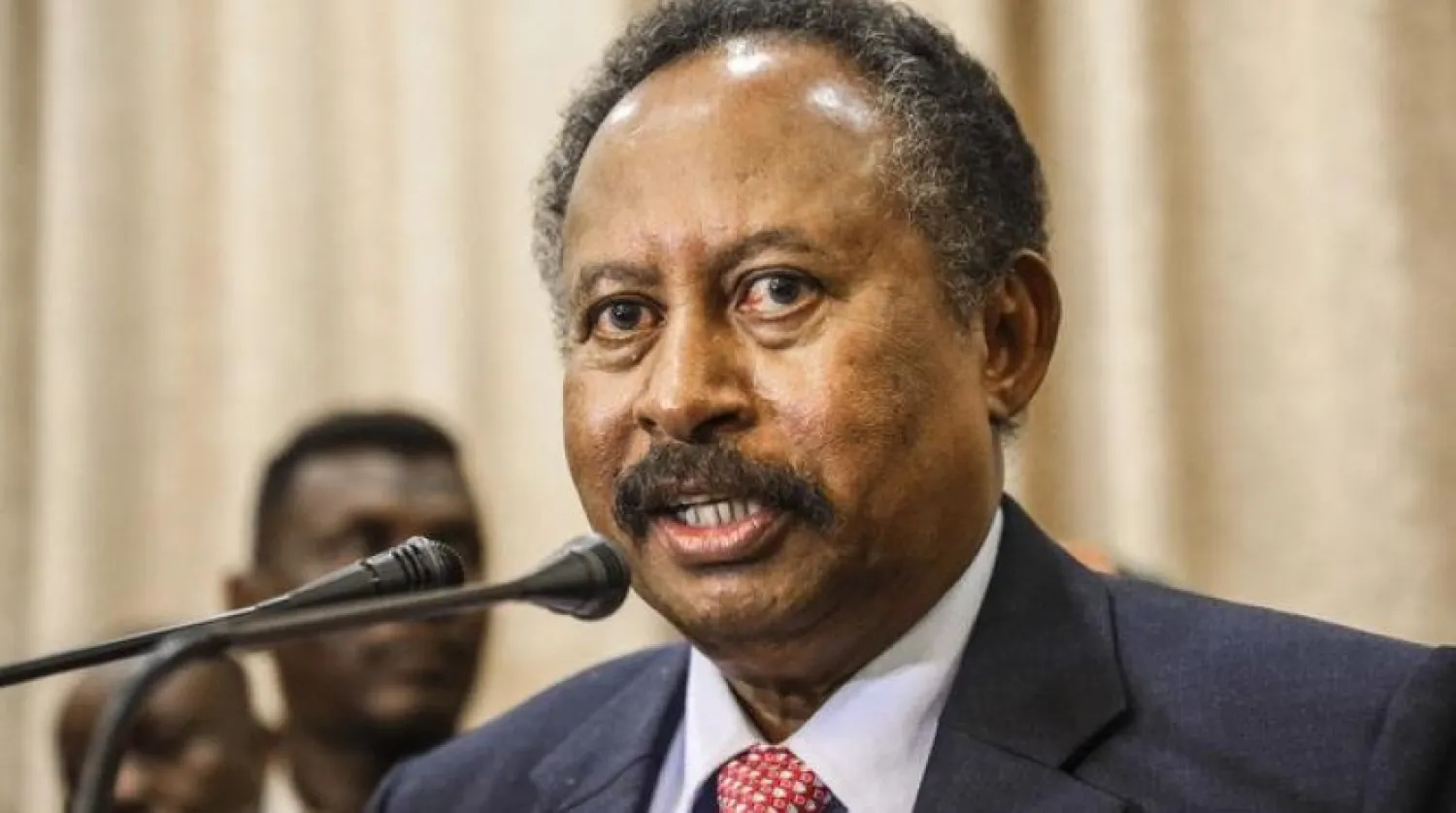
Sudanese Prime Minister Abdalla Hamdok speaks during a press conference in Khartoum, Sudan in 2019. AP file photo
TT

No Progress in Sudanese-Ethiopian Border Talks

Sudanese Prime Minister Abdalla Hamdok speaks during a press conference in Khartoum, Sudan in 2019. AP file photo

Two days of Sudanese-Ethiopian border talks have seen no progress.

Representatives from both countries agreed at the end of the meeting in Sudan’s capital, Khartoum, on Wednesday to submit reports to their leaders and hold a subsequent meeting that would be determined through diplomatic channels in Addis Ababa.

The meeting came just days after a cross-border attack by Ethiopian forces and militias in the Abu Tyour area in eastern Sudan’s al-Qadarif province.

The military had deployed “large reinforcements” into Qadarif to reclaim territories controlled by Ethiopian farmers and militias in Sudan’s al-Fashqa border area.

According to a Sudanese cabinet statement, the high-level joint political committee meeting on Sudanese-Ethiopian border issues was held in a friendly atmosphere that reflects brotherly bilateral relations that are based on the principles of good neighborliness, cooperation and mutual understanding.

The Sudanese delegation was headed by Minister of Cabinet Affairs Omar Bashir Manis, while the Ethiopian side was headed by the Deputy Prime Minister and Minister of Foreign Affairs, Demeke Mekonnen.

Sudanese Prime Minister Abdalla Hamdok had earlier stressed the importance of holding transparent dialogue between both countries’ military and political leaderships to resolve the border demarcation problem.

His remarks were made on Tuesday during his inauguration of the Supreme Committee for delineating the border between the two states.

The meetings of the joint political committee are aimed at addressing border issues through existing frameworks, and on the basis of agreed and signed documents, the cabinet explained, saying members are expected to set the date for the start of field work to demarcate the border.

Hamdok and his Ethiopian counterpart, Abiy Ahmed, agreed during their meeting on the sidelines of a summit of the Intergovernmental Authority on Development (IGAD) to speed up in convening the joint Supreme Committee.

Manis has confirmed at the opening session of the talks that the committee will resolve the outstanding border delineation issues.

Mekonnen, for his part, highlighted the importance of maintaining the deep-rooted bilateral relations and warned that the escalation would exacerbate the situation and disrupt the daily activities of both peoples.


Gaza Turns Rubble into Power with Homemade Wind Turbines

In war-ravaged Gaza, where shortages are constant, every watt counts. Eyad BABA / AFP
TT

Gaza Turns Rubble into Power with Homemade Wind Turbines

In war-ravaged Gaza, where shortages are constant, every watt counts. Eyad BABA / AFP

Above a maze of tents in a crowded displacement camp in Gaza, homemade wind turbines made from scrap metal and salvaged debris spin in the sea breeze, bringing electricity to struggling Palestinians.

In the southern Khan Yunis camp, Kamal Al-Dabary, a former engineering student, has put his skills to work for families who, like most Gazans, live in displacement with no direct access to the tiny territory's shattered power grid.

According to the World Bank, more than 90 percent of Gaza's power generation and distribution capacity was destroyed in April 2026, much of it in Israeli strikes that devastated homes and infrastructure, AFP reported.

Sitting on the ground, Dabary tinkered with electrical wires, metal parts and basic tools on a plastic table.

After carefully twisting cables together and testing them with a multimeter, a small bulb flickered on, then another, signaling that the current was flowing.

"When solar panels were still relatively affordable, we bought one and kept moving it around to follow the sun," the 60-year-old, displaced by the fighting between Israel and Hamas, told AFP.

The war was triggered by the Palestinian movement's deadly October 7, 2023 attack on Israel.

But after three years of war, prices have soared as aid and commercial supplies trickled into Gaza through crossings tightly controlled by Israel.

A single solar panel now costs at least 15,000 shekels (nearly $5,000), putting it out of reach for most Gazans, Dabary said.

- 'Changed everything' -

"We haven't had work or income for three years," he added.

"That's when the idea of a wind turbine came to mind. Why not harness the wind? So we salvaged parts from the rubble."

The turbines are built from scooter motors and old water tanks cut into blades.

As the wind turns the blades, they drive a motor that generates electricity. The power then passes through circuits assembled from parts recovered from destroyed homes before being stored in batteries.

This provides enough electricity to charge phones and run lights, fans and even electric razors, small comforts that have become a luxury for families still living in tents and shelters.

Nearly all of Gaza's residents were displaced at least once during the war, and most now live in a small area still under Hamas rule, while Israel controls more than 60 percent of the territory along its perimeter.

"They help us hold on... until God delivers us from this ordeal and we can return home," said Dabary, known locally as Abu Ayman.

The output remains modest. But in a camp where shortages are constant, every watt counts.

The system "has changed everything," said 50-year-old Saleh ben Hasan.

With healthcare and medication hard to access in Gaza, the power can also help keep medical equipment running.

"If a child needs a nebulizer (a device used to inhale medicine) in the middle of the night, who else can we turn to?" he said.

"Electricity is needed... So we turn to our brother Abu Ayman."


Egypt Offers Israel Fresh Assurances over Sinai Development Projects

The Minister of Transport inspects the railway line in Sinai (Egyptian Ministry of Transport)
TT

Egypt Offers Israel Fresh Assurances over Sinai Development Projects

The Minister of Transport inspects the railway line in Sinai (Egyptian Ministry of Transport)

Egypt issued fresh assurances to Israel over its development projects in the Sinai Peninsula, amid Israeli media reports expressing concern about the projects.

Experts told Asharq Al-Awsat that Egypt's reassurances were intended to underscore that developing Sinai was an irreversible national security priority, and that Cairo would not be swayed by Israeli claims or reservations, stressing that its development plans were an entirely domestic matter.

Egyptian Transport Minister Kamel al-Wazir said the 500-km Arish-Taba railway was primarily a development project, dismissing concerns over its purpose. He said the railway, along with plans to build villages and factories, would encourage Egyptians to settle in Sinai, describing this as essential to national security.

Israeli media reports have raised concerns about the railway's potential "strategic and military implications", arguing that it could facilitate the rapid movement of large quantities of equipment, goods and personnel across the peninsula.

Al-Wazir, speaking during a visit to North Sinai, said the railway was intended to support peaceful development and settlement, adding that there was no reason for concern.

The project forms part of a wider transport network linking the Suez Canal cities with Sinai, connecting the ports of Arish and Taba through railways, highways and logistics zones.

Military and strategic expert Major General Ayman Abdel Mohsen said the minister's remarks highlighted the role of development in national security, arguing that securing Sinai went beyond military measures and required encouraging people to settle there.

He told Asharq Al-Awsat that Egypt would press ahead with infrastructure projects in Sinai regardless of Israeli objections, rejecting concerns raised in Israeli media over the railway and logistics corridors.

Major General Adel al-Omda, an adviser at the Military Academy for Postgraduate and Strategic Studies, said the remarks followed Israeli statements about Sinai and reflected Egypt's commitment to implementing its development and security plans. He said Egypt aimed to settle between three million and eight million people in the peninsula by 2030.

Al-Omda said President Abdel Fattah al-Sisi had outlined a three-pronged plan to develop and secure Sinai, covering security, development and public awareness. He said security operations had been carried out, while new cities, including New Rafah, New Ismailia and New Port Said, had been built in and around the peninsula and connected through road and transport networks. Awareness campaigns, lectures, and seminars were also being held in Sinai.

Egypt has continued to pursue development projects across the peninsula, with the government reporting significant progress in recent years. In late 2023, Prime Minister Mostafa Madbouly said the government had spent more than 600 billion Egyptian pounds ($11.6 billion) on Sinai development over the previous decade, funding projects in infrastructure, roads, housing, water and tunnels.


Houthi Donation Boxes Target Merchants, Shoppers to Fund War Effort

Houthis launch a previous fundraising campaign to support the war effort (Houthi media).
TT

Houthi Donation Boxes Target Merchants, Shoppers to Fund War Effort

Houthis launch a previous fundraising campaign to support the war effort (Houthi media).

The Houthi group has turned markets and commercial establishments in Yemen's Houthi-held capital, Sanaa, into new sources of funding for its military activities, launching a coercive fundraising campaign targeting hundreds of companies, businesses, shops, restaurants and shopping centers, according to local and business sources.

The campaign forces business owners to install donation boxes on their premises and extracts money from merchants and residents under the pretext of supporting the group's "war effort" and the families of its fighters killed, wounded or missing on the front lines, the sources said.

The campaign, launched at the beginning of the week, reflects efforts by the Houthis to expand their sources of compulsory funding and offset military and personnel losses by shifting the financial burden of the continuing war onto businesses and residents, at a time when living conditions are deteriorating and commercial establishments are increasingly struggling to remain operational.

Sources told Asharq Al-Awsat that Houthi members and supervisors had targeted commercial establishments in several districts of Sanaa, forcing owners through threats and intimidation to accept donation boxes while conducting field visits to pressure merchants and customers into contributing money.

The sources said the group had ordered its members to visit shops and businesses daily to collect money deposited in the boxes, then transfer the proceeds to bank accounts belonging to senior Houthi leaders.

They added that the campaign went beyond collecting donations, involving mandatory financial contributions and direct pressure on business owners.

More than 320 donation boxes in two days

In a sign of the campaign's expanding reach, the Houthis distributed more than 320 donation boxes to private-sector establishments across several districts during the first two days, with plans to distribute about 4,000 additional boxes in the coming days to cover the rest of the capital and its outskirts.

The move coincided with complaints from merchants who said Houthi supervisors and armed members had entered their shops carrying donation boxes and forced them at gunpoint to install them without seeking their permission or consent.

Merchants said the group had also ordered business owners and employees to encourage customers to donate, warning that shops whose boxes were opened and found empty would face severe measures.

The threats appeared aimed at turning merchants into collectors of compulsory contributions from ordinary residents.

Ramzi, a pseudonym for a shop owner in a Sanaa neighborhood, said Houthi supervisors had forced him to place a donation box inside his store under the pretext of supporting fighters on the front lines and the families of Houthi members killed or wounded in combat.

He said Houthi members regularly visited his shop to collect the money, leaving him no opportunity to object or refuse to keep the box on his premises.

Ramzi added that repeated threats and constant monitoring by Houthi supervisors sometimes forced him to put his own money into the box to avoid being held responsible when customers failed to donate or facing punitive measures.

An empty donation box, he said, had become sufficient grounds for questioning and intimidation.

On the outskirts of Sanaa, a restaurant owner who requested anonymity complained that the campaign had become another means of extorting money from business owners.

He said Houthi supervisors not only imposed donation boxes but also pressured restaurant owners and employees to make additional payments despite declining sales and rising operating costs.

Saeed, a Sanaa resident, said he believed the Houthis were seeking to turn the city's remaining markets and shops into permanent collection points for extracting money from the public.

He said residents were increasingly overwhelmed by successive donation drives and compulsory levies at a time when many were struggling to provide basic necessities for their families.