


WHO Experts to Visit China in Hunt for Virus' Origins

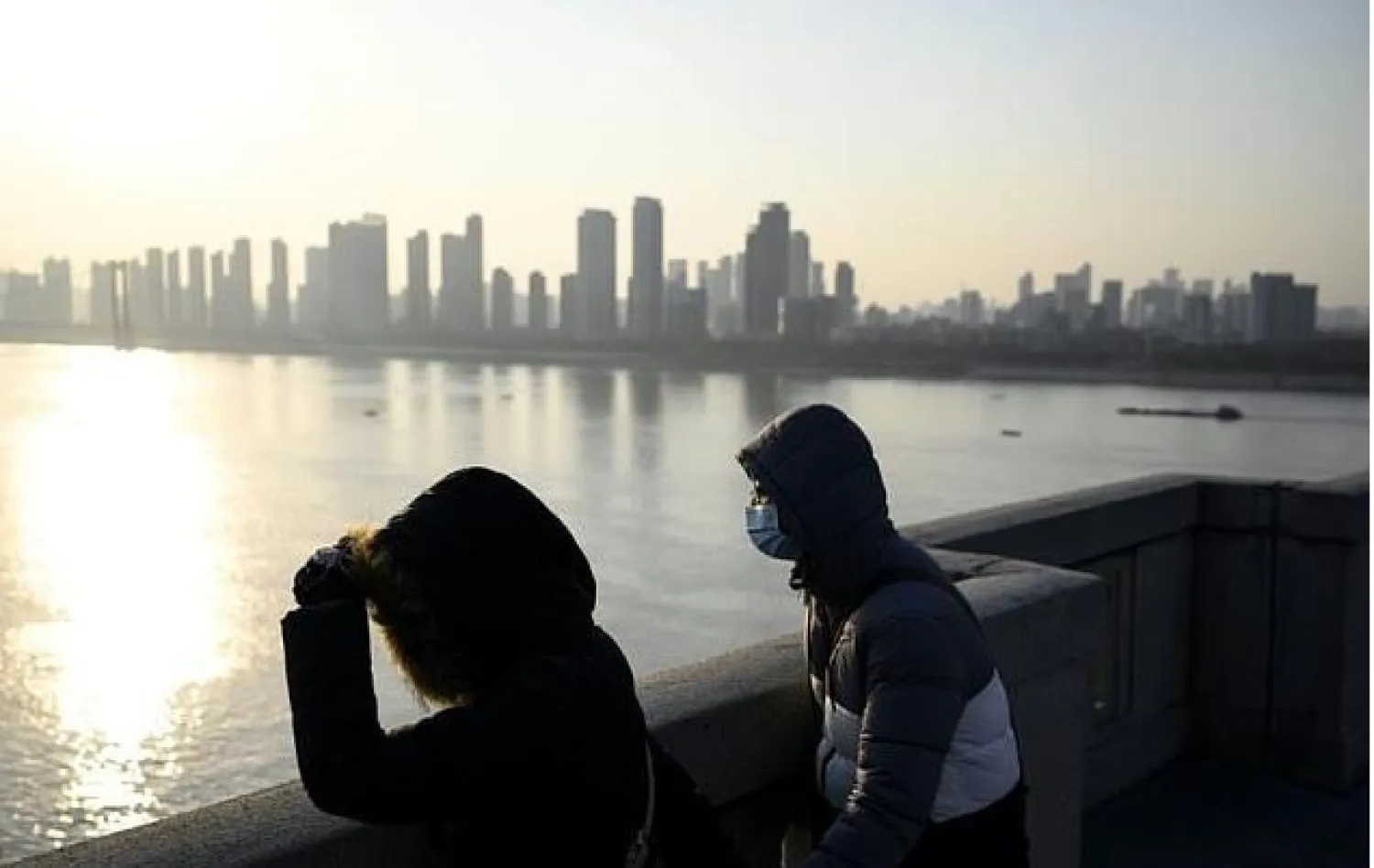
Life in Wuhan, once the epicenter of the virus, has largely returned to normal as much of the world battles the virus - AFP
TT

WHO Experts to Visit China in Hunt for Virus' Origins

Life in Wuhan, once the epicenter of the virus, has largely returned to normal as much of the world battles the virus - AFP

A year after the outbreak started, WHO experts are due in China for a highly politicized visit to explore the origins of the coronavirus, in a trip trailed by accusations of cover-ups, conspiracy and fears of a whitewash.

Under the global glare, Beijing delayed access for independent experts into China to probe the origins of the pandemic, reluctant to agree to an inquiry.

But the WHO now says China has granted permission for a visit by its experts, with a 10-person team expected to arrive shortly for a five or six week visit -- including a fortnight spent in quarantine.

Chinese authorities this week refused to confirm the exact dates and details of the visit, a sign of the enduring sensitivity of their mission, AFP reported.

Covid-19 was first detected in the central city of Wuhan in late 2019, before seeping beyond China's borders to wreak havoc, costing over 1.8 million lives and eviscerating economies.

But its origins remain bitterly contested, lost in a fog of recriminations and conjecture from the international community -- as well as obfuscation from Chinese authorities determined to keep control of its virus narrative.

The WHO team has promised to focus on the science, specifically how the coronavirus jumped from animals -- believed to be bats -- to humans.

"This is not about finding a guilty country or a guilty authority," Fabian Leendertz from the Robert Koch Institute, Germany's central disease control body who will be among the team to visit, told AFP in late December.

"This is about understanding what happened to avoid that in the future, to reduce the risk."

But doubt has been cast over what the WHO mission can reasonably expect to achieve and the state pressure they will face, raising fears that the mission will serve to rubber stamp China's official story, not challenge it.

The upcoming visit will not be the first time Covid-19 has brought WHO teams to China. A mission last year looked at the response by authorities rather than the virus origins, with another in the summer laying the groundwork for the upcoming probe.

But this time the WHO will wade into a swamp of competing interests, stuck between accusatory Western nations and a Chinese leadership determined to show that its secretive and hierarchical political system served to stem, not spread, the outbreak.

It is unclear who the experts will be able to meet when they arrive in Wuhan to retrace the initial days and weeks of the pandemic.

Inside China, whistleblowers have been silenced and citizen journalists jailed, including a 37-year-old woman imprisoned last week for four years over video reports from the city during its prolonged lockdown.

Outside, responsibility for the virus has been weaponized.

From the outset, US President Donald Trump used the virus as political bludgeon against big power rival China.

He accused Beijing of trying to hide the outbreak of what he dubbed the "China virus" and repeated unsubstantiated rumors it leaked from a Wuhan lab.

Trump then pulled the US out of the WHO, accusing it of going soft on China, a nation with which he was also engaged in a bitter trade war.

Critics say that blizzard of accusations sought to divert attention from Washington's bungled response to a crisis which has so far killed more than 350,000 Americans.

Without them, said one, "a lot of these situations that we had in January 2020 would not have played out the way it did."

"It is the geopolitics that... put the world in this situation," Ilona Kickbusch, of the Global Health Center at the Graduate Institute of International and Development Studies in Geneva, told AFP.

China has since deftly reframed its version of events, hailing its "extraordinary success" in curbing the pandemic within its borders and rebooting its economy.

Beijing now says it will ride to the rescue of poorer nations, promising cheap vaccines and seeding doubt that the virus even originated in China.

Foreign Minister Wang Yi recently repeated the unproven claim that "that the pandemic likely started in multiple points around the world."

If politics and an unprecedented health crisis continue to be conflated, experts fear deeper losses in the fight against a pandemic which knows no borders.

"There is this world-in-disorder feeling," said Kickbusch. "If the trust goes out of global health, that will make it so, so difficult to cooperate."

In that spirit, the WHO has said its international experts are expected to "augment, rather than duplicate, ongoing or existing efforts" during their upcoming visit to China, meaning it will not probe research already provided by local scientists.

"I am not optimistic. The trail is now cold," said Professor Gregory Gray at Duke University's Division of Infectious Diseases, on the likelihood of the overseas experts tracking the virus' animal origin.

But the trip may not be entirely in vain, he stressed: it may be able to lay the groundwork for "sustainable surveillance" for when future virus outbreaks hit.



Ukraine’s New Defense Minister Reveals Scale of Desertions as Millions Avoid the Draft

Ukraine's newly appointed Defense Minister Mykhailo Fedorov attends a parliamentary session in Kyiv, Ukraine, 14 January 2026. (EPA)
TT

Ukraine’s New Defense Minister Reveals Scale of Desertions as Millions Avoid the Draft

Ukraine's newly appointed Defense Minister Mykhailo Fedorov attends a parliamentary session in Kyiv, Ukraine, 14 January 2026. (EPA)

Wide-scale desertions and 2 million draft-dodgers are among a raft of challenges facing Ukraine's military as Russia presses on with its invasion of its neighbor after almost four years of fighting, the new defense minister said Wednesday.

Mykhailo Fedorov told Ukraine's parliament that other problems facing Ukraine’s armed forces include excessive bureaucracy, a Soviet-style approach to management, and disruptions in the supply of equipment to troops along the about 1,000-kilometer (600-mile) front line.

“We cannot fight a war with new technologies but an old organizational structure,” Fedorov said.

He said the military had faced some 200,000 troop desertions and draft-dodging by around 2 million people.

President Volodymyr Zelenskyy appointed 34-year-old Fedorov at the start of the year. The former head of Ukraine’s digital transformation policies is credited with spearheading the army's drone technology and introducing several successful e-government platforms.

His appointment was part of a broad government reshuffle that the Ukrainian leader said aimed to sharpen the focus on security, defense development and diplomacy amid a new US-led push to find a peace settlement.

Fedorov said the defense ministry is facing a shortfall of 300 billion hryvnia ($6.9 billion) in funding needs.

The European Union will dedicate most of a massive new loan program to help fund Ukraine’s military and economy over the next two years, European Commission President Ursula von der Leyen said Wednesday.

Fedorov said Ukraine’s defense sector has expanded significantly since Russia’s full-scale invasion in February 2022. At the start of the war, he said, the country had seven private drone companies and two firms developing electronic warfare systems. Today, he said, there are nearly 500 drone manufacturers and about 200 electronic warfare companies in Ukraine.

He added that some sectors have emerged from scratch, including private missile producers, which now number about 20, and more than 100 companies manufacturing ground-based robotic systems.


France Explores Sending Eutelsat Terminals to Iran Amid Internet Blackout

 Protesters hold up placards with pictures of victims as they demonstrate in support of anti-government protests in Iran, outside Downing Street, in London, Wednesday, Jan. 14, 2026. (AP)
Protesters hold up placards with pictures of victims as they demonstrate in support of anti-government protests in Iran, outside Downing Street, in London, Wednesday, Jan. 14, 2026. (AP)
TT

France Explores Sending Eutelsat Terminals to Iran Amid Internet Blackout

 Protesters hold up placards with pictures of victims as they demonstrate in support of anti-government protests in Iran, outside Downing Street, in London, Wednesday, Jan. 14, 2026. (AP)
Protesters hold up placards with pictures of victims as they demonstrate in support of anti-government protests in Iran, outside Downing Street, in London, Wednesday, Jan. 14, 2026. (AP)

France is looking into sending Eutelsat satellite terminals to Iran to help citizens after Iranian authorities imposed a blackout of internet services in a bid to quell the country's most violent domestic unrest in decades.

"We are exploring all options, and the one you have mentioned is among them," French Foreign Minister Jean-Noel Barrot said on Wednesday in ‌the lower house ‌after a lawmaker asked whether France ‌would ⁠send Eutelsat ‌gear to Iran.

Backed by the French and British governments, Eutelsat owns OneWeb, the only low Earth orbit constellation, or group of satellites, besides Elon Musk's Starlink.

The satellites are used to beam internet service from space, providing broadband connectivity to businesses, governments and consumers in underserved areas.

Iranian authorities in recent days have ⁠launched a deadly crackdown that has reportedly killed thousands during protests against clerical rule, ‌and imposed a near-complete shutdown of internet ‍service.

Still, some Iranians have ‍managed to connect to Starlink satellite internet service, three people ‍inside the country said.

Even Starlink service appears to be reduced, Alp Toker, founder of internet monitoring group NetBlocks said earlier this week.

Eutelsat declined to comment when asked by Reuters about Barrot's remarks and its activities in Iran.

Starlink’s more than 9,000 satellites allow higher speeds than Eutelsat's fleet of over 600, ⁠and its terminals connecting users to the network are cheaper and easier to install.

Eutelsat also provides internet access to Ukraine's military, which has relied on Starlink to maintain battlefield connectivity throughout the war with Russia.

Independent satellite communications adviser Carlos Placido said OneWeb terminals are bulkier than Starlink’s and easier to jam.

"The sheer scale of the Starlink constellation makes jamming more challenging, though certainly not impossible," Placido said. "With OneWeb it is much easier to predict which satellite will become online over a given ‌location at a given time."


China Says It Opposes Outside Interference in Iran’s Internal Affairs

Iranians walk next to a billboard reading "Iran is our Homeland" at Enqelab Square in Tehran, Iran, 13 January 2026. (EPA)
TT

China Says It Opposes Outside Interference in Iran’s Internal Affairs

Iranians walk next to a billboard reading "Iran is our Homeland" at Enqelab Square in Tehran, Iran, 13 January 2026. (EPA)

China opposes any outside interference in Iran's ​internal affairs, the Chinese foreign ministry said on Wednesday, after US President Donald Trump warned that Washington ‌would take "very ‌strong action" ‌against Tehran.

China ⁠does ​not ‌condone the use or the threat of force in international relations, Mao Ning, spokesperson at ⁠the Chinese foreign ministry, said ‌at a ‍regular ‍news conference when ‍asked about China's position following Trump's comments.

Trump told CBS News in ​an interview that the United States would take "very ⁠strong action" if Iran starts hanging protesters.

Trump also urged protesters to keep protesting and said that help was on the way.