


Samsung Elec Shares Jump on Upbeat Chip Outlook as Fourth-Quarter Profit Rises

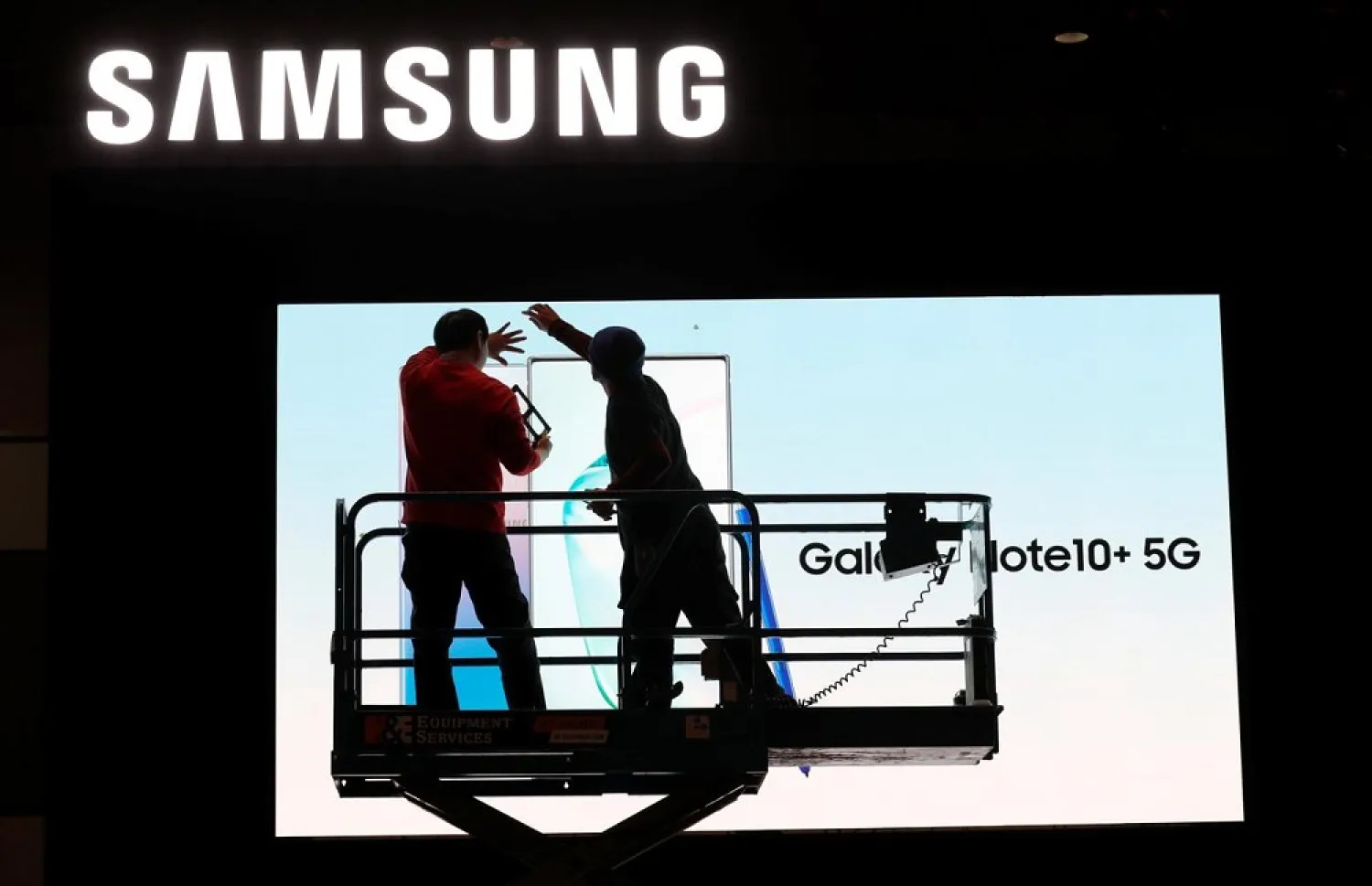
Samsung’s shares have risen about 67% since September, boosted by a global shortage of chips. (Reuters)
TT

Samsung Elec Shares Jump on Upbeat Chip Outlook as Fourth-Quarter Profit Rises

Samsung’s shares have risen about 67% since September, boosted by a global shortage of chips. (Reuters)

Samsung Electronics Co Ltd shares jumped on Friday after it said its fourth quarter operating profit likely rose 26% as coronavirus pandemic driven remote working and TV-watching fueled sales of chips and display panels.

Samsung Electronics shares rose as much as 8.6% in afternoon trade to a record high, compared to a 3.9% rise in the wider market, due to an earlier-than-expected rebound in memory chip prices, analysts said.

“DRAM chip prices appear to be turning around now, rather than later in the year as we expected,” said Song Myung-sup, analyst at HI Investment & Securities.

Samsung’s shares have risen about 67% since September, boosted by a global shortage of chips that has forced firms to scramble to secure production capacity from contract chip manufacturers, or foundries.

The 9 trillion won ($8.24 billion) estimate provided by the South Korean tech giant for profit in the December quarter was in line with a 9.1 trillion won analyst forecast by Refinitiv SmartEstimate despite weaker smartphone sales, marketing costs and a strong won versus US the dollar.

That analyst forecast was trimmed back from 9.5 trillion earlier in the week.

Samsung, the world’s biggest memory chip supplier and maker of smartphones, also said revenue likely rose 1.9% to 61 trillion won.

The company provides only estimates of quarterly revenue and operating profit in its preliminary earnings release. Full earnings are due later this month.

“Work-from-home will become entrenched,” said Park Sung-soon, analyst at Cape Investment & Securities. “Samsung’s supply comments, and investments in non-memory chips, will be issues to watch out for when full results are announced.”

Park said analysts would be closely watching for an update on an earthquake in Taiwan last month that briefly stopped memory chip production at rival DRAM makers. While demand usually rises in response to a supply disruption, researcher TrendForce said the earthquake did not seem to have caused any tangible capacity losses.

Analysts expect Samsung to report a jump in memory chip shipments in the December quarter, compared with the prior quarter, offsetting lower prices.

Those prices will likely rebound in the current quarter, analysts said, as data center customers return to buying chips, as well as demand from 5G smartphones, notebooks, graphics and automotive.

South Korea expects semiconductor exports to rise more than 10% in 2021, as the pandemic encourages companies to add bandwidth for remote work and consumers to buy devices.

US memory chip peer Micron Technology Inc on Thursday forecast second-quarter revenue above Wall Street estimates.

On the flip side, Samsung likely recorded an estimated 17.5% drop in smartphone shipments in the December quarter compared to the previous quarter, Counterpoint Research said, due to a high base from brisk sales in the September quarter and competition from Apple’s new iPhone 12.

Samsung is expected to unveil its latest flagship smartphone next week. That would be earlier than in past years, a strategy Counterpoint said was likely aimed at filling the vacuum left by Huawei Technologies losing market share after US government regulations restricted supplies.

A strong won against the US dollar also dented profits. Samsung makes the bulk of its profits in dollars but reports in won.


Siemens Energy Trebles Profit as AI Boosts Power Demand

FILED - 05 August 2025, Berlin: The "Siemens Energy" logo can be seen in the entrance area of the company. Photo: Britta Pedersen/dpa
TT

Siemens Energy Trebles Profit as AI Boosts Power Demand

FILED - 05 August 2025, Berlin: The "Siemens Energy" logo can be seen in the entrance area of the company. Photo: Britta Pedersen/dpa

German turbine maker Siemens Energy said Wednesday that its quarterly profits had almost tripled as the firm gains from surging demand for electricity driven by the artificial intelligence boom.

The company's gas turbines are used to generate electricity for data centers that provide computing power for AI, and have been in hot demand as US tech giants like OpenAI and Meta rapidly build more of the sites.

Net profit in the group's fiscal first quarter, to end-December, climbed to 746 million euros ($889 million) from 252 million euros a year earlier.

Orders -- an indicator of future sales -- increased by a third to 17.6 billion euros.

The company's shares rose over five percent in Frankfurt trading, putting the stock up about a quarter since the start of the year and making it the best performer to date in Germany's blue-chip DAX index.

"Siemens Energy ticked all of the major boxes that investors were looking for with these results," Morgan Stanley analysts wrote in a note, adding that the company's gas turbine orders were "exceptionally strong".

US data center electricity consumption is projected to more than triple by 2035, according to the International Energy Agency, and already accounts for six to eight percent of US electricity use.

Asked about rising orders on an earnings call, Siemens Energy CEO Christian Bruch said he thought the first-quarter figures were not "particularly strong" and that further growth could be expected.

"Demand for gas turbines is extremely high," he said. "We're talking about 2029 and 2030 for delivery dates."

Siemens Energy, spun out of the broader Siemens group in 2020, said last week that it would spend $1 billion expanding its US operations, including a new equipment plant in Mississippi as part of wider plans that would create 1,500 jobs.

Its shares have increased over tenfold since 2023, when the German government had to provide the firm with credit guarantees after quality problems at its wind-turbine unit.


Instagram Boss to Testify at Social Media Addiction Trial 

The Instagram app icon is seen on a smartphone in this illustration taken October 27, 2025. (Reuters)
TT

Instagram Boss to Testify at Social Media Addiction Trial 

The Instagram app icon is seen on a smartphone in this illustration taken October 27, 2025. (Reuters)

Instagram chief Adam Mosseri is to be called to testify Wednesday in a Los Angeles courtroom by lawyers out to prove social media is dangerously addictive by design to young, vulnerable minds.

YouTube and Meta -- the parent company of Instagram and Facebook -- are defendants in a blockbuster trial that could set a legal precedent regarding whether social media giants deliberately designed their platforms to be addictive to children.

Rival lawyers made opening remarks to jurors this week, with an attorney for YouTube insisting that the Google-owned video platform was neither intentionally addictive nor technically social media.

"It's not social media addiction when it's not social media and it's not addiction," YouTube lawyer Luis Li told the 12 jurors during his opening remarks.

The civil trial in California state court centers on allegations that a 20-year-old woman, identified as Kaley G.M., suffered severe mental harm after becoming addicted to social media as a child.

She started using YouTube at six and joined Instagram at 11, before moving on to Snapchat and TikTok two or three years later.

The plaintiff "is not addicted to YouTube. You can listen to her own words -- she said so, her doctor said so, her father said so," Li said, citing evidence he said would be detailed at trial.

Li's opening arguments followed remarks on Monday from lawyers for the plaintiffs and co-defendant Meta.

On Monday, the plaintiffs' attorney Mark Lanier told the jury YouTube and Meta both engineer addiction in young people's brains to gain users and profits.

"This case is about two of the richest corporations in history who have engineered addiction in children's brains," Lanier said.

"They don't only build apps; they build traps."

But Li told the six men and six women on the jury that he did not recognize the description of YouTube put forth by the other side and tried to draw a clear line between YouTube's widely popular video app and social media platforms like Instagram or TikTok.

YouTube is selling "the ability to watch something essentially for free on your computer, on your phone, on your iPad," Li insisted, comparing the service to Netflix or traditional TV.

Li said it was the quality of content that kept users coming back, citing internal company emails that he said showed executives rejecting a pursuit of internet virality in favor of educational and more socially useful content.

- 'Gateway drug' -

Stanford University School of Medicine professor Anna Lembke, the first witness called by the plaintiffs, testified that she views social media, broadly speaking, as a drug.

The part of the brain that acts as a brake when it comes to having another hit is not typically developed before a person is 25 years old, Lembke, the author of the book "Dopamine Nation," told jurors.

"Which is why teenagers will often take risks that they shouldn't and not appreciate future consequences," Lembke testified.

"And typically, the gateway drug is the most easily accessible drug," she said, describing Kaley's first use of YouTube at the age of six.

The case is being treated as a bellwether proceeding whose outcome could set the tone for a wave of similar litigation across the United States.

Social media firms face hundreds of lawsuits accusing them of leading young users to become addicted to content and suffer from depression, eating disorders, psychiatric hospitalization, and even suicide.

Lawyers for the plaintiffs are borrowing strategies used in the 1990s and 2000s against the tobacco industry, which faced a similar onslaught of lawsuits arguing that companies knowingly sold a harmful product.


OpenAI Starts Testing Ads in ChatGPT

The OpenAI logo is seen in this illustration taken May 20, 2024. (Reuters)
TT

OpenAI Starts Testing Ads in ChatGPT

The OpenAI logo is seen in this illustration taken May 20, 2024. (Reuters)

OpenAI has begun placing ads in the basic versions of its ChatGPT chatbot, a bet that users will not mind the interruptions as the company seeks revenue as its costs soar.

"The test will be for logged-in adult users on the Free and Go subscription tiers" in the United States, OpenAI said Monday. The Go subscription costs $8 in the United States.

Only a small percentage of its nearly one billion users pay for its premium subscription services, which will remain ad-free.

"Ads do not influence the answers ChatGPT gives you, and we keep your conversations with ChatGPT private from advertisers," the company said.

Since ChatGPT's launch in 2022, OpenAI's valuation has soared to $500 billion in funding rounds -- higher than any other private company. Some analysts expect it could go public with a trillion-dollar valuation.

But the ChatGPT maker burns through cash at a furious rate, mostly on the powerful computing required to deliver its services.

Its chief executive Sam Altman had long expressed his dislike for advertising, citing concerns that it could create distrust about ChatGPT's content.

His about-face garnered a jab from its rival Anthropic over the weekend, which made its advertising debut at the Super Bowl championship with commercials saying its Claude chatbot would stay ad-free.