



Saudi Crown Prince Announces Zero Carbon City in NEOM

Saudi Crown Prince Mohammed bin Salman. SPA
TT

Saudi Crown Prince Announces Zero Carbon City in NEOM

Saudi Crown Prince Mohammed bin Salman. SPA

Saudi Crown Prince Mohammed bin Salman on Sunday announced plans to build "The Line", a zero carbon city at NEOM.

The Crown Prince said in televised remarks that the city, which will be capable of housing one million residents, would comprise "carbon-positive urban developments powered by 100% clean energy.”

A statement said construction would start in Q1 2021 on the project, which is expected to contribute $48 billion to the Kingdom's GDP and provide 380,000 job opportunities by 2030.

The Crown Prince said "The Line" has "a length of 170 km that preserves 95 percent of nature within NEOM, with zero cars, zero streets and zero carbon emissions."

"Why should we sacrifice nature for the sake of development?" he asked.

"We need to transform the concept of a conventional city into that of a futuristic one," said the Crown Prince.

Crown Prince Mohammed later told reporters in the northwestern city of AlUla that the project was the conclusion of three years of preparation, adding that its infrastructure would cost $100 billion to $200 billion.

“The backbone of investment in ‘The Line’ will come from the $500 billion support to NEOM by the Saudi government, PIF and local and global investors over 10 years,” he added.

The Kingdom’s sovereign wealth fund, the Public Investment Fund (PIF), is the cornerstone investor in NEOM, a 26,500-square-km (10,230-square-mile) high-tech development on the Red Sea with several zones, including an industrial and logistics areas, planned for completion in 2025.

A Saudi statement said construction would start in the first quarter of 2021 and that the city was expected to contribute $48 billion to the Kingdom’s gross domestic product and create 380,000 jobs.
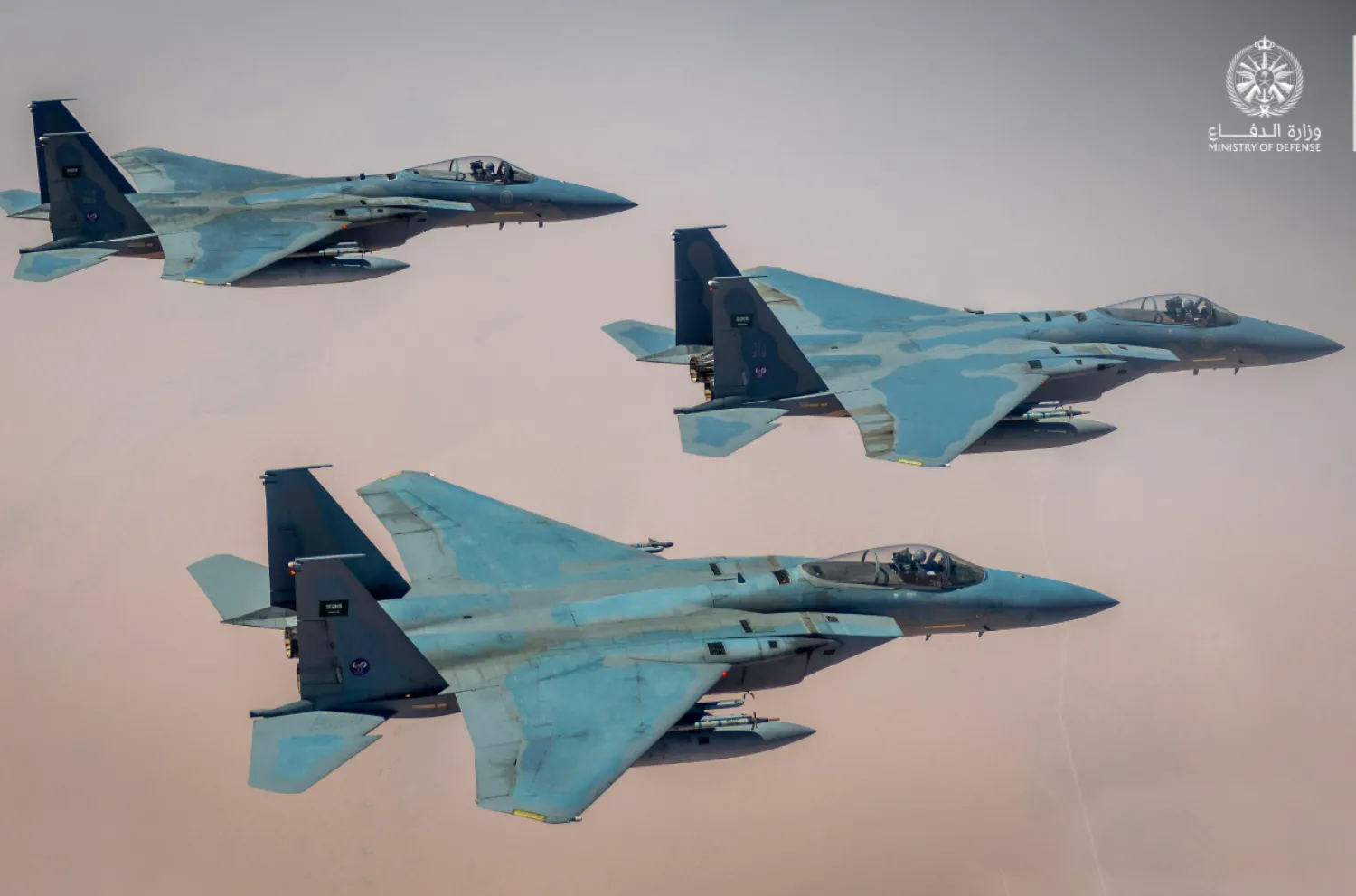



Saudi Defenses Intercept, Destroy 5 Drones and a Ballistic Missile

The armed forces' readiness succeeded in protecting the airspace and dealing with various threats without recording any damage (Ministry of Defense)
TT

Saudi Defenses Intercept, Destroy 5 Drones and a Ballistic Missile

The armed forces' readiness succeeded in protecting the airspace and dealing with various threats without recording any damage (Ministry of Defense)

Saudi air defenses intercepted five drones and a ballistic missile launched by Iran toward the Kingdom in recent hours.

The official spokesperson for the Saudi Ministry of Defense, Maj. Gen. Turki Al-Maliki, announced the interception and destruction of five drones in recent hours, as well as a ballistic missile targeting the Eastern Province.

Al-Maliki confirmed the success of the operations and the readiness of the armed forces to protect the airspace and respond to various threats, with no damage reported.


Saudi FM Discusses Regional Developments with His Japanese, Chinese Counterparts

Saudi Minister of Foreign Affairs Prince Faisal bin Farhan bin Abdullah/File Photo
TT

Saudi FM Discusses Regional Developments with His Japanese, Chinese Counterparts

Saudi Minister of Foreign Affairs Prince Faisal bin Farhan bin Abdullah/File Photo

Saudi Minister of Foreign Affairs Prince Faisal bin Farhan bin Abdullah received a phone call on Thursday from Minister for Foreign Affairs of Japan Toshimitsu Motegi.

The two sides discussed cooperation and recent regional developments.

Prince Faisal also held a separate phone call with Member of the Political Bureau of the Communist Party of the Central Committee and Minister of Foreign Affairs of the People's Republic of China Wang Yi, during which they discussed the latest developments in the region.


Saudi Arabia, Arab, and Islamic Nations Condemn Israel’s Death Penalty Law for Palestinians

Logo of the Saudi Ministry of Foreign Affairs
TT

Saudi Arabia, Arab, and Islamic Nations Condemn Israel’s Death Penalty Law for Palestinians

Logo of the Saudi Ministry of Foreign Affairs

The foreign ministers of Saudi Arabia, Egypt, Jordan, Indonesia, Pakistan, Qatar, Türkiye and the UAE strongly condemned on Thursday Israel’s law that allows the imposition of the death penalty in the occupied West Bank and its de facto application against Palestinians, the Saudi Press Agency reported.

The ministers warned against the increasingly discriminatory, escalating Israeli practices that entrench a system of apartheid and a rejectionist discourse that denies the inalienable rights and the very existence of the Palestinian people in the Occupied Palestinian Territory (OPT).

The ministers warned that this legislation represents a dangerous escalation, especially due to its discriminatory targeting of Palestinian prisoners, and emphasized that such measures could intensify tensions and further destabilize the region.

The ministers also expressed deep concern over the conditions of Palestinian prisoners in Israeli detention, warning of mounting risks amid credible reports of ongoing abuses, including torture, inhumane and degrading treatment, starvation, and denial of basic rights. They emphasized that these practices reflect a broader pattern of violations against the Palestinian people.

The ministers reiterated their firm opposition to Israel’s racially discriminatory, oppressive, and aggressive policies directed against Palestinians.

The ministers further emphasized the urgent need to refrain from measures imposed by the occupying power that risk further inflaming tensions on the ground. They stressed the importance of ensuring accountability and called for strengthened international efforts to uphold stability and prevent further deterioration.