


Scientists Decry Death by 1,000 Cuts for World’s Insects

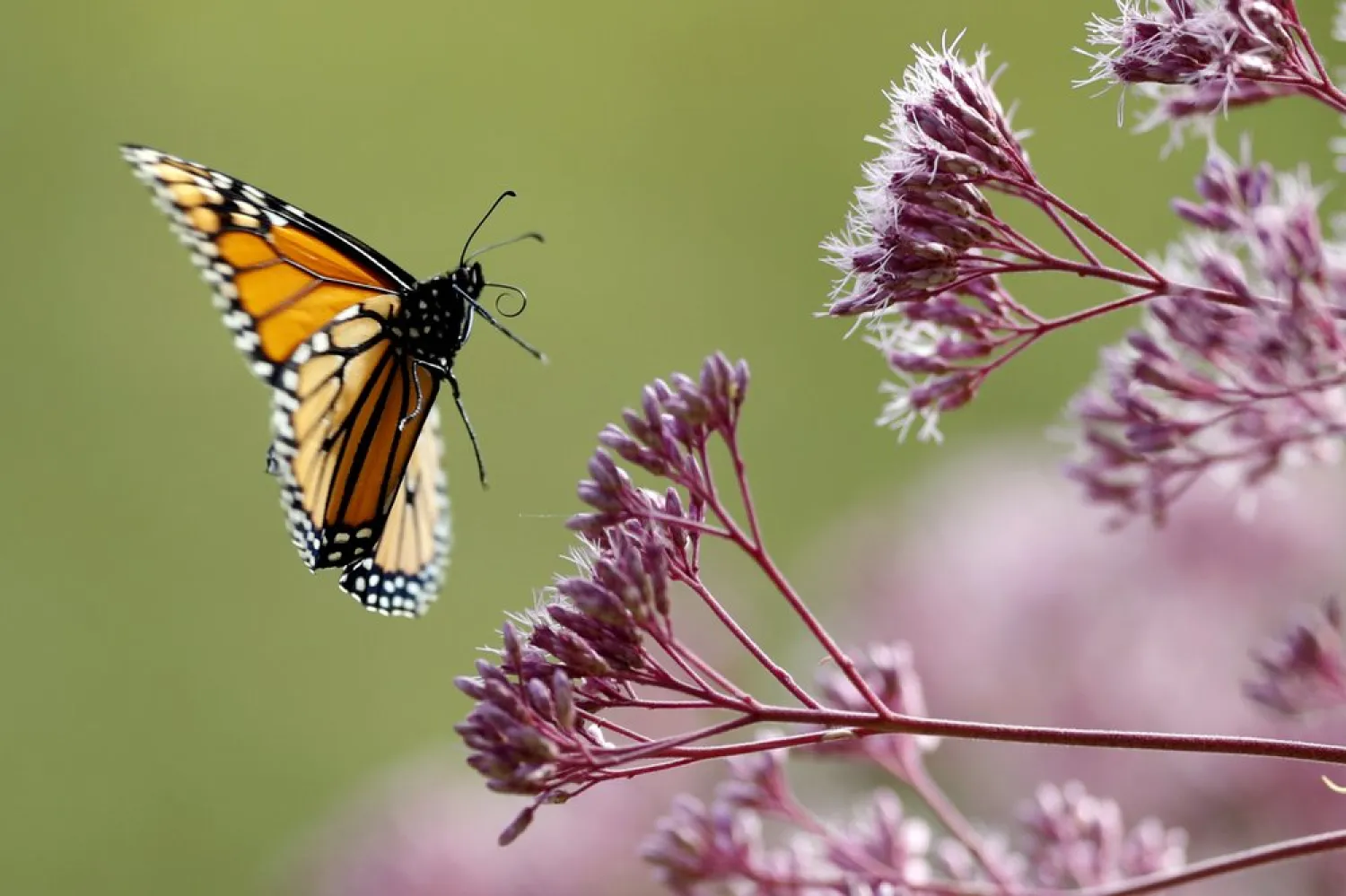
In this Aug. 28, 2019 file photo, a Monarch butterfly flies to Joe Pye weed, in Freeport, Maine. (AP)
TT

Scientists Decry Death by 1,000 Cuts for World’s Insects

In this Aug. 28, 2019 file photo, a Monarch butterfly flies to Joe Pye weed, in Freeport, Maine. (AP)

The world’s vital insect kingdom is undergoing “death by a thousand cuts,” the world’s top bug experts said.

Climate change, insecticides, herbicides, light pollution, invasive species and changes in agriculture and land use are causing Earth to lose probably 1% to 2% of its insects each year, said University of Connecticut entomologist David Wagner, lead author in the special package of 12 studies in Monday’s Proceedings of the National Academies of Sciences written by 56 scientists from around the globe.

The problem, sometimes called the insect apocalypse, is like a jigsaw puzzle. And scientists say they still don’t have all the pieces, so they have trouble grasping its enormity and complexity and getting the world to notice and do something.

Wagner said scientists need to figure out if the rate of the insect loss is bigger than with other species. “There is some reason to worry more,” he added, “because they are the target of attack” with insecticides, herbicides and light pollution.

Co-author and University of Illinois entomologist May Berenbaum, a National Medal of Science winner, said, “Insect decline is kind of comparable to climate change 30 years ago because the methods to assess the extent, the rate (of loss) were difficult.”

Making matters worse is that in many cases, people hate bugs, even though they pollinate the world’s foods, are crucial to the food chain and get rid of waste, she said.

Insects “are absolutely the fabric by which Mother Nature and the tree of life are built,” Wagner said.

Two well known ones — honeybees and Monarch butterflies — best illustrate insect problems and declines, he said. Honeybees have been in dramatic decline because of disease, parasites, insecticides, herbicides and lack of food.

Climate change-driven drier weather in the US West means less milkweed for butterflies to eat, Wagner said. And changes in American agriculture remove weeds and flowers they need for nectar.

“We’re creating a giant biological desert except for soybeans and corn in a giant area of the Midwest,” he said.

Monday’s scientific papers don’t provide new data, yet show a big but incomplete picture of a problem starting to get attention. Scientists have identified 1 million insect species, while probably 4 million more are still to be discovered, Berenbaum said.

University of Delaware entomologist Doug Tallamy, who wasn’t part of the studies, said they highlight how the world has “spent the last 30 years spending billions of dollars finding new ways to kill insects and mere pennies working to preserve them.”

“The good news is, with the exception of climate change, individuals can do much to reverse insect declines,” Tallamy said in an email. “This is a global problem with a grassroots solution.”




Imam Turki bin Abdullah Royal Reserve Launches Fifth Beekeeping Season

Jazan’s Annual Honey Festival - File Photo/SPA
TT

Imam Turki bin Abdullah Royal Reserve Launches Fifth Beekeeping Season

Jazan’s Annual Honey Festival - File Photo/SPA

The Imam Turki bin Abdullah Royal Nature Reserve Development Authority launched the fifth annual beekeeping season for 2026 as part of its programs to empower the local community and regulate beekeeping activities within the reserve.

The launch aligns with the authority's objectives of biodiversity conservation, the promotion of sustainable environmental practices, and the generation of economic returns for beekeepers, SPA reported.

The authority explained that this year’s beekeeping season comprises three main periods associated with spring flowers, acacia, and Sidr, with the start date of each period serving as the official deadline for submitting participation applications.

The authority encouraged all interested beekeepers to review the season details and attend the scheduled virtual meetings to ensure organized participation in accordance with the approved regulations and the specified dates for each season.


Hail Municipality Named Arab Green City For 2024-2025

The achievement establishes Hail as a leading Arab model for sustainable urban development - SPA
TT

Hail Municipality Named Arab Green City For 2024-2025

The achievement establishes Hail as a leading Arab model for sustainable urban development - SPA

The Hail Region Municipality has secured first place in the Arab Green City award for 2024-2025 at the 15th session of the Arab Towns Organization.

This recognition honors the municipality’s commitment to environmental sustainability, the expansion of green spaces, and the implementation of urban practices that elevate the quality of life, SPA reported.

The award follows a series of strategic environmental initiatives, including large-scale afforestation, the modernization of public parks, and the adoption of eco-friendly solutions to enhance the urban landscape and resource efficiency.

By aligning its projects with the sustainability goals of Saudi Vision 2030, the municipality continues to foster a healthy and safe environment for residents and visitors.

This achievement establishes Hail as a leading Arab model for sustainable urban development.


'Large-scale' Avalanche Kills Two Skiers in French Alps

Members of the CRS Alpes Grenoble mountain rescue team prepare to board a Securite Civile helicopter (emergency management) after after an avalanche emergency response rescue mission in an off-piste area of the Ecrins massif, French Alps on January 29, 2026. (Photo by JEFF PACHOUD / AFP)
TT

'Large-scale' Avalanche Kills Two Skiers in French Alps

Members of the CRS Alpes Grenoble mountain rescue team prepare to board a Securite Civile helicopter (emergency management) after after an avalanche emergency response rescue mission in an off-piste area of the Ecrins massif, French Alps on January 29, 2026. (Photo by JEFF PACHOUD / AFP)

An avalanche has killed two off-piste ski tourers in the French Alps, a local prosecutor said on Sunday.

According to local rescue services, the two men died when an avalanche was triggered on Saturday afternoon near the village of Saint-Veran, known as the highest village in the French Alps.

The two victims-- one born in 1997 and the other in 1991 -- were part of a group of four unguided skiers when a "large-scale" avalanche swept down the north side of the Tete de Longet mountain peak, Gap prosecutor Marion Lozac'hmeur told AFP.

The other two skiers were unharmed, Lozac'hmeur added.

An autopsy has been ordered as part of an investigation into the cause of death, according to the prosecutor.

Avalanches have already claimed the lives of more than 20 skiers across the French, Swiss and Austrian Alps so far this season.