


Saudi Arabia Reiterates Support for Washington’s Terror Designation of Houthis

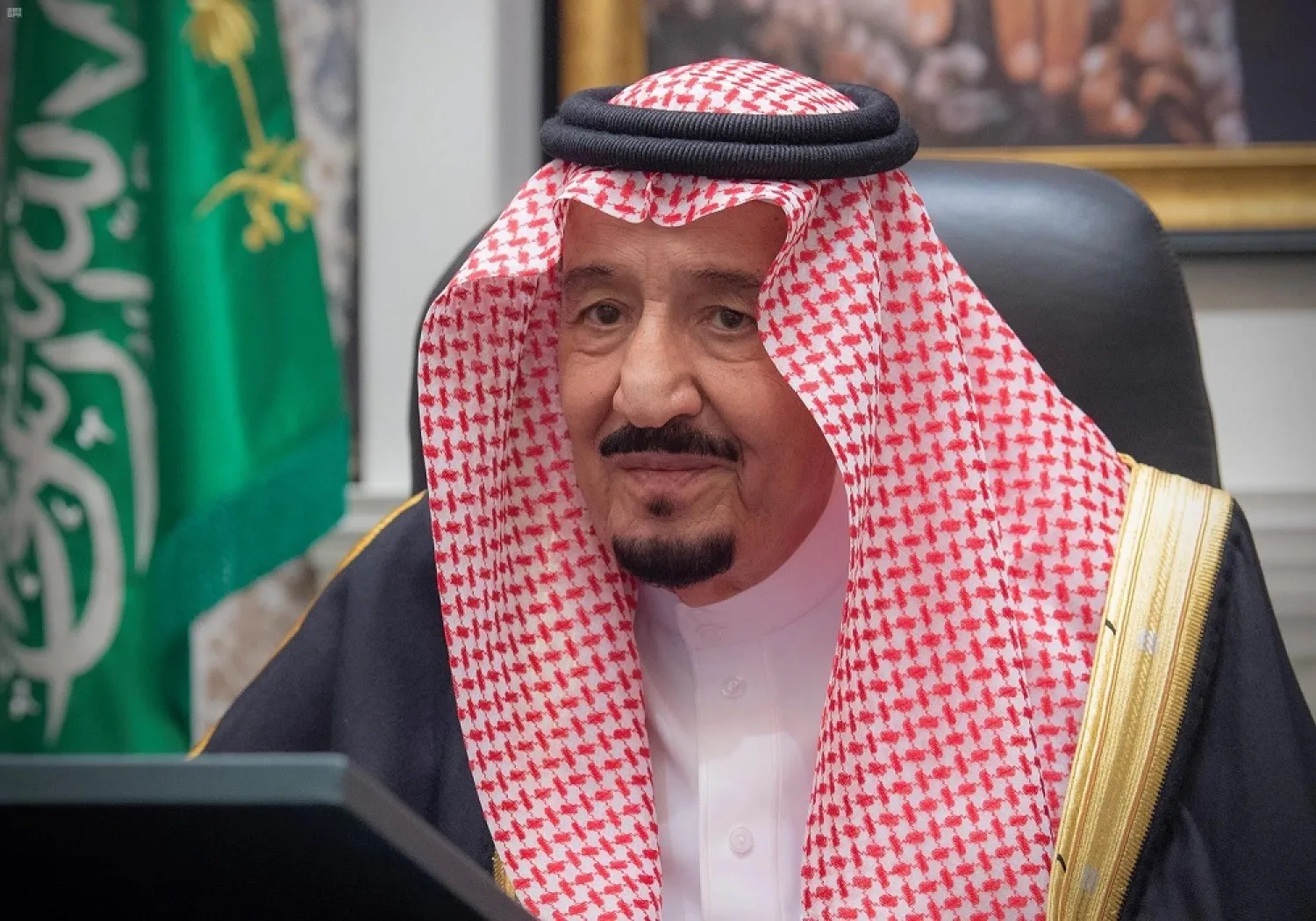
Custodian of the Two Holy Mosques King Salman bin Abdulaziz chairs a cabinet meeting on Tuesday. (SPA)
TT

Saudi Arabia Reiterates Support for Washington’s Terror Designation of Houthis

Custodian of the Two Holy Mosques King Salman bin Abdulaziz chairs a cabinet meeting on Tuesday. (SPA)

The Saudi cabinet reiterated on Tuesday the Kingdom’s support for the United States’ move to designate the Iran-backed Houthi militias in Yemen as terrorist.

Custodian of the Two Holy Mosques King Salman bin Abdulaziz chaired the cabinet meeting that was held virtually due to the ongoing coronavirus pandemic.

The ministers hoped the designation would help rein in the terrorist militias and their backers and curtail their danger against the Yemeni people, international peace and security and the global economy.

They also hoped that the designation would help support ongoing political efforts aimed at resolving the Yemeni crisis and reaching a solution based on the three references.

King Salman briefed the cabinet on the telephone call he received from Emir of Kuwait Sheikh Nawaf al-Ahmad al-Jaber al-Sabah. The two leaders tackled the outcomes of last week’s 41st Gulf Cooperation Council summit that was held in AlUla, Saudi Arabia. The leaders at the meeting agreed to resolve the Gulf rift, with Saudi Arabia, the United Arab Emirates, Bahrain and Egypt ending their diplomatic and economic ties with Qatar.

The ministers also thanked King Salman and Crown Prince Mohammed bin Salman, Deputy Prime Minister and Minister of Defense, for their support to the health sector and their constant concern since the beginning of the pandemic with ensuring the health of citizens and residents.

They hailed their move to take the necessary health precautions to protect lives and procure vaccines, which will be available for free.

Moreover, they praised King Salman and Crown Prince Mohammed for taking the vaccine, which is in line with their keenness on prevention and bolstering public health.

The cabinet reviewed the latest local and international developments related to the pandemic and the Kingdom’s efforts to open more vaccination stations throughout Saudi territories.

The ministers also lauded Crown Prince Mohammed’s launch of “The Line” zero-carbon city at NEOM and highlighted the Kingdom’s announcement that the travel ban in place over the pandemic would be lifted in March.


Gulf Talks Focus on Containing Escalation, Boosting Regional, Global Security

Bahrain’s King Hamad bin Isa Al Khalifa and UAE President Sheikh Mohamed bin Zayed Al Nahyan meet in Manama on Monday. (BNA)
TT

Gulf Talks Focus on Containing Escalation, Boosting Regional, Global Security

Bahrain’s King Hamad bin Isa Al Khalifa and UAE President Sheikh Mohamed bin Zayed Al Nahyan meet in Manama on Monday. (BNA)

Recent hours have seen a flurry of bilateral contacts across the Gulf addressing Iran-US peace negotiations and wider Middle East developments, with officials emphasizing efforts to strengthen regional and international security and stability.

In Manama, Bahrain said its forces intercepted and destroyed seven hostile drones, stressing readiness to confront any threats.

Peace negotiations

Saudi Foreign Minister Prince Faisal bin Farhan bin Abdullah held a phone call on Monday with his Iranian counterpart Abbas Araghchi, reviewing developments following Iran-US peace talks and exchanging views.

Prince Faisal later spoke with Egyptian Foreign Minister Badr Abdelatty, discussing the regional situation and ways to boost stability.

He also received a call from Kyrgyz Foreign Minister Jeenbek Kulubaev, covering bilateral ties and regional developments.

In separate calls, Prince Faisal discussed the situation with Kuwaiti Foreign Minister Sheikh Jarrah Al-Sabah, Qatari Prime Minister and Foreign Minister Sheikh Mohammed bin Abdulrahman Al-Thani, and Emirati Foreign Minister Sheikh Abdullah bin Zayed Al Nahyan.

Qatar, for its part, warned against using freedom of maritime navigation as “a tool of pressure or bargaining,” during a call between Sheikh Mohammed and Araghchi.

Sheikh Mohammed stressed the need to keep sea lanes open and ensure freedom of navigation, warning of negative consequences for regional countries, global energy and food supplies, and international peace.

He urged Washington and Tehran to respond to ongoing mediation efforts, paving the way for a sustainable agreement that addresses the roots of the crisis and prevents renewed escalation.

The two ministers also discussed ceasefire developments and the need to consolidate it to support regional stability.

Bahrain’s King Hamad bin Isa Al Khalifa and UAE President Sheikh Mohamed bin Zayed Al Nahyan met in Manama on Monday to review regional developments and their impact on international navigation, energy supplies and the global economy.

King Hamad later received Admiral Brad Cooper, Commander of the US Central Command (CENTCOM), praising longstanding strategic ties and growing defense cooperation between their countries.

Talks covered regional and international developments, with the Bahraini monarch highlighting the United States’ role, alongside allies, in supporting global stability.

Crown Prince Salman bin Hamad Al Khalifa, Bahrain’s prime minister and deputy supreme commander, also met Cooper, reviewing regional developments and issues of mutual concern.

Separately, Bahrain’s foreign ministry summoned Iraq’s chargé d’affaires in Manama Ahmed Ismail Al-Karawi to protest continued drone attacks launched from Iraqi territory toward Bahrain and other Gulf Cooperation Council states.

The ministry urged Iraq to address the threats urgently in line with international law, reaffirming Bahrain’s right to take necessary measures to protect its security.

Bahrain’s defense forces later said air defenses had intercepted seven drones, bringing the total destroyed since the start of Iranian attacks to 523 drones and 194 missiles. It said all units remain at high readiness.

Security reassurances

In Kuwait, Foreign Minister Sheikh Jarrah Jaber Al-Ahmad Al-Sabah spoke by phone with Indian External Affairs Minister Subrahmanyam Jaishankar about regional developments.

Kuwait’s interior ministry said security and military agencies are closely monitoring the regional situation in coordination with relevant authorities to ensure safety.

South Korean support for Qatar

Qatar’s Emir Sheikh Tamim bin Hamad Al-Thani received a written message from South Korean President Lee Jae-myung expressing support and solidarity following Iranian attacks on Qatar and other regional states, and voicing hope for an agreement to end the crisis.

The message was delivered to Sheikh Tamim by presidential envoy Kang Hoon-sik during a meeting in Doha, where the sides reviewed bilateral cooperation, particularly in energy and economic sectors, as well as regional developments.

Meanwhile, Oman’s Sultan Haitham bin Tariq discussed regional developments in a phone call with British Prime Minister Keir Starmer following the conclusion of US-Iran talks in Pakistan without agreement.

The two sides stressed intensifying international efforts to prevent further escalation and exchanged views on containing tensions and addressing root causes to safeguard regional interests.

They also underlined the importance of continued coordination and support for de-escalation and diplomatic solutions based on international law.


Saudi Foreign Minister, Gulf Counterparts Discuss Regional Developments

Saudi Minister of Foreign Affairs Prince Faisal bin Farhan bin Abdullah
TT

Saudi Foreign Minister, Gulf Counterparts Discuss Regional Developments

Saudi Minister of Foreign Affairs Prince Faisal bin Farhan bin Abdullah

Saudi Minister of Foreign Affairs Prince Faisal bin Farhan bin Abdullah spoke by phone with UAE Deputy Prime Minister and Minister of Foreign Affairs Sheikh Abdullah bin Zayed Al Nahyan, during which they discussed developments in the region.

Prince Faisal also spoke by phone on Monday with Qatari PM and Foreign Minister Sheikh Mohammed bin Abdulrahman Al Thani to discuss regional developments.

Also Monday, Prince Faisal received a phone call from Kuwaiti FM Sheikh Jarrah Jaber Al-Ahmad Al-Sabah. They discussed developments in the region and exchanged views on them.


GCC Secretary-General Receives Ambassador of Ukraine to Saudi Arabia

Secretary-General of the Gulf Cooperation Council (GCC) Jasem Mohamed Albudaiwi
TT

GCC Secretary-General Receives Ambassador of Ukraine to Saudi Arabia

Secretary-General of the Gulf Cooperation Council (GCC) Jasem Mohamed Albudaiwi

Secretary-General of the Gulf Cooperation Council (GCC) Jasem Albudaiwi met in Riyadh Monday Ambassador of Ukraine to the Kingdom of Saudi Arabia Anatolii Petrenko.

During the meeting, several topics were discussed, most notably reviewing cooperation relations between the GCC and Ukraine in areas of common interest, based on the Joint Action Plan between the two sides (2025-2030), and ways to enhance them to serve the desired objectives.

They also exchanged views on a number of regional and international issues, SPA reported.

The GCC secretary-general also emphasized during the meeting the GCC's position on the Ukrainian-Russian crisis, which is based on the principles of international law and the Charter of the United Nations, and on preserving the international order based on respect for the sovereignty, territorial integrity and political independence of states, non-interference in their internal affairs, and the non-use of force or the threat thereof.
