


UN: Pandemic, Surging Food Prices Leave Many in Asia Hungry

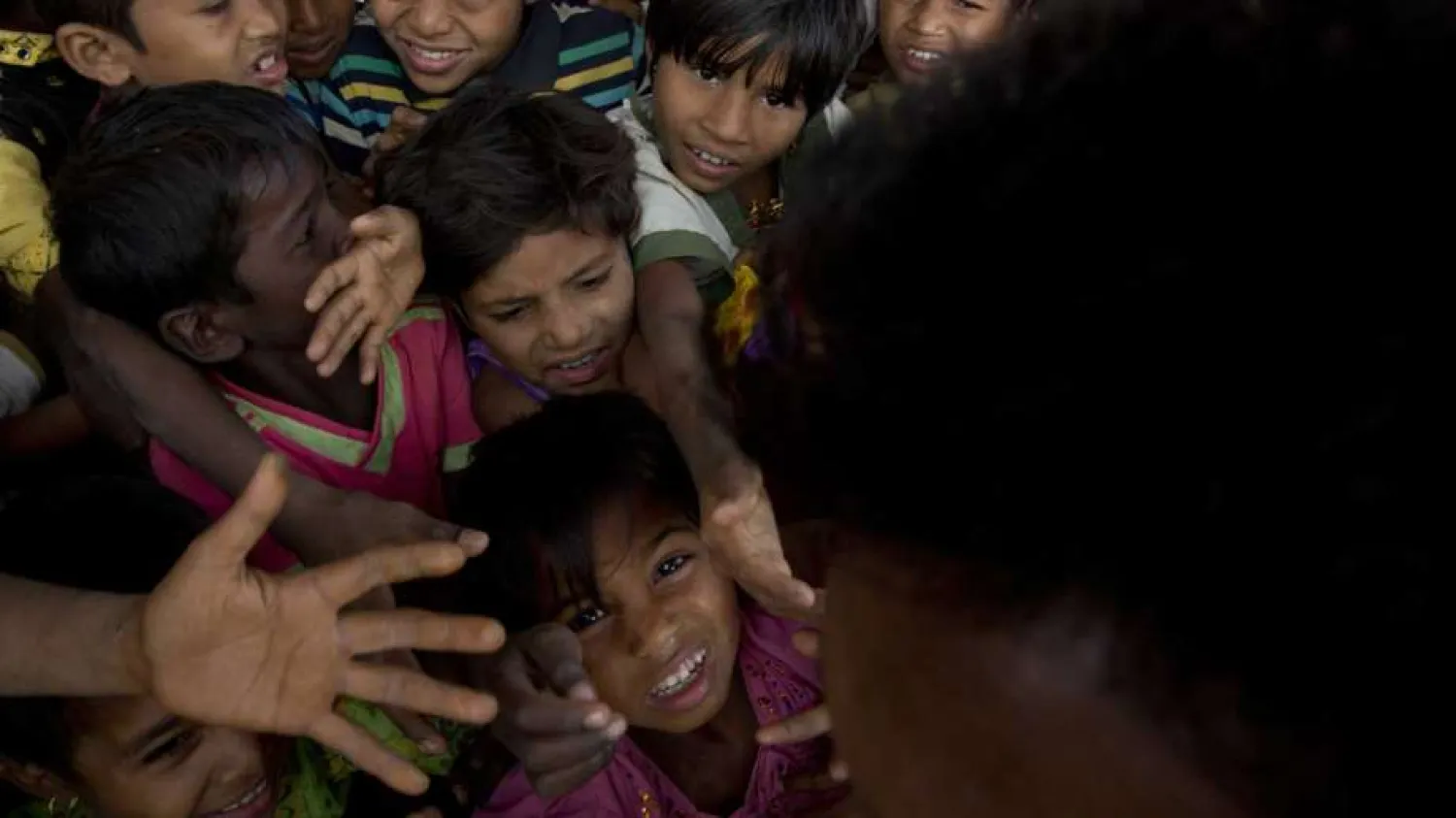
In this Wednesday, Jan. 17, 2018, file photo, Rohingya refugee children push each other to receive a packet of Khichdi, made from rice and lentils, at a food distribution centre in Balukhali refugee camp near Cox's Bazar, Bangladesh. United Nations agencies are warning that more than 350 million people in the Asia-Pacific are going hungry as the coronavirus pandemic destroys jobs and pushes food prices higher. (AP Photo/Manish Swarup, File)
TT

UN: Pandemic, Surging Food Prices Leave Many in Asia Hungry

In this Wednesday, Jan. 17, 2018, file photo, Rohingya refugee children push each other to receive a packet of Khichdi, made from rice and lentils, at a food distribution centre in Balukhali refugee camp near Cox's Bazar, Bangladesh. United Nations agencies are warning that more than 350 million people in the Asia-Pacific are going hungry as the coronavirus pandemic destroys jobs and pushes food prices higher. (AP Photo/Manish Swarup, File)

United Nations agencies are warning that more than 350 million people in the Asia-Pacific region are going hungry as the coronavirus pandemic destroys jobs and pushes food prices higher.

The report issued Wednesday by four agencies says the pandemic is making it difficult for 1.9 billion people to afford healthy diets. It follows an earlier report that forecast that in a worst case scenario that 828 million people might suffer from acute hunger because of the crisis.

The latest estimate is that nearly 688 million people globally are undernourished, more than half of them in Asia. The largest share is in South Asian countries like Afghanistan, where four in 10 people are malnourished.

The report is mostly based on data up to 2019, before the pandemic struck. But it also estimates that an additional 140 million people were likely to have fallen into extreme poverty in 2020 due to the impact of virus outbreaks and lockdowns. By the end of last year, some 265 million were estimated to be facing acute food insecurity.

A key factor is food affordability, a problem in wealthy nations like Japan as well as impoverished places like East Timor and Papua New Guinea, said the report issued by the U.N. Food and Agriculture Organization, UNICEF, the World Food Program, and the World Health Organization.

Disruptions and job losses due to the pandemic are preventing families from getting enough to eat in many places. That's evident in the long lines seen at food banks even in the United States.

In India, broken supply chains and transport problems, especially during pandemic lockdowns, have prevented surplus grain stocks from reaching all those in need. Day laborers and migrants are the most vulnerable, despite a massive public distribution system that entitles 75% of the rural population and half of those living in cities to subsidized food grains.

Since eligibility for such programs is based on a census that is nearly a decade old, many urban poor and migrants cannot tap those resources.

Across Asia, high prices for fruits, vegetables, and dairy products have made it "nearly impossible" for low-income families to have healthy diets, the report said. FAO data show food prices rose to their highest level in nearly six years in November.

Many in the region instead end up consuming high-calorie, cheap processed foods that contribute to problems with obesity and diabetes but lack vitamins and minerals.

Data in the report show that it is more expensive to eat a healthy diet in Thailand, Laos, Bhutan, and Indonesia, at about $5 per day, than it is in New Zealand and Australia, at less than $3 per day.

A nutritionally adequate diet tends to cost $2 to $3 per day in most countries, rich or poor, but is more expensive in Japan and South Korea. In most countries, the cost of a nutritious diet is two to three times that for a one just sufficient to provide enough energy.

The cost of long-term deprivation is seen in higher rates of death and illness. Tens of millions of children suffer from wasting or stunting, failing to grow well and unable to achieve their full potential.

The report said that five of the 45 countries requiring food assistance were in South, Southeast, or East Asia. They include Bangladesh, Afghanistan, Pakistan, North Korea, and Myanmar.

Over the longer term, food insecurity had been improving before the pandemic hit. The report urged governments to transform food systems to ensure all are able to have nutritious diets. It called for a multidimensional approach ensuring better health care, water and sanitation, education, and social protections.

___


Top Trump Iran Negotiator Says Visits US Aircraft Carrier in Middle East

US Special Envoy Steve Witkoff delivers a press conference upon the signing of the declaration on deploying post-ceasefire force in Ukraine, during the so-called "Coalition of the Willing" summit, at the Elysee Palace in Paris, France, January 6, 2026. (Reuters)
TT

Top Trump Iran Negotiator Says Visits US Aircraft Carrier in Middle East

US Special Envoy Steve Witkoff delivers a press conference upon the signing of the declaration on deploying post-ceasefire force in Ukraine, during the so-called "Coalition of the Willing" summit, at the Elysee Palace in Paris, France, January 6, 2026. (Reuters)

US President Donald Trump's lead Iran negotiator Steve Witkoff on Saturday said he visited the USS Abraham Lincoln aircraft carrier currently in the Arabian Sea, with Washington and Tehran due to hold further talks soon.

"Today, Adm. Brad Cooper, Commander of US Naval Forces Central Command, Jared Kushner, and I met with the brave sailors and Marines aboard the USS Abraham Lincoln, her strike group, and Carrier Air Wing 9 who are keeping us safe and upholding President Trump's message of peace through strength," said Witkoff in a social media post.

Iranian Foreign Minister Abbas Araghchi said on Saturday he hoped talks with the United States would resume soon, while reiterating Tehran's red lines and warning against any American attack.


Israel’s Netanyahu Expected to Meet Trump in US on Wednesday and Discuss Iran

Israeli Prime Minister Benjamin Netanyahu delivers a speech during a special session to mark the 77th anniversary of the Knesset's establishment and the 60th anniversary of the dedication of the current building at the Knesset, the Israeli parliament, in Jerusalem, 02 February 2026. (EPA)
TT

Israel’s Netanyahu Expected to Meet Trump in US on Wednesday and Discuss Iran

Israeli Prime Minister Benjamin Netanyahu delivers a speech during a special session to mark the 77th anniversary of the Knesset's establishment and the 60th anniversary of the dedication of the current building at the Knesset, the Israeli parliament, in Jerusalem, 02 February 2026. (EPA)

Israeli Prime Minister Benjamin Netanyahu is expected to meet US President Donald Trump on Wednesday in Washington, where they will discuss negotiations with Iran, Netanyahu's office said on Saturday.

Iranian and US officials held indirect nuclear ‌talks in the ‌Omani capital ‌Muscat ⁠on Friday. ‌Both sides said more talks were expected to be held again soon.

A regional diplomat briefed by Tehran on the talks told Reuters Iran insisted ⁠on its "right to enrich uranium" ‌during the negotiations with ‍the US, ‍and that Tehran's missile capabilities ‍were not raised in the discussions.

Iranian officials have ruled out putting Iran's missiles - one of the largest such arsenals in the region - up ⁠for discussion, and have said Tehran wants recognition of its right to enrich uranium.

"The Prime Minister believes that any negotiations must include limiting ballistic missiles and halting support for the Iranian axis," Netanyahu's office said in a ‌statement.


Italy FM Rules Out Joining Trump’s ‘Board of Peace’

Italy's Minister for Foreign Affairs Antonio Tajani speaks to the press during the EPP Leaders’ meeting, in Zagreb, Croatia, 30 January 2026. (EPA)
TT

Italy FM Rules Out Joining Trump’s ‘Board of Peace’

Italy's Minister for Foreign Affairs Antonio Tajani speaks to the press during the EPP Leaders’ meeting, in Zagreb, Croatia, 30 January 2026. (EPA)

Italy will not take part in US President Donald Trump's "Board of Peace", Italian Foreign Minister Antonio Tajani said Saturday, citing "insurmountable" constitutional issues.

Trump launched his "Board of Peace" at the World Economic Forum in Davos in January and some 19 countries have signed its founding charter.

But Italy's constitution bars the country from joining an organization led by a single foreign leader.

Prime Minister Giorgia Meloni, a Trump ally, last month noted "constitutional problems" with joining, but suggested Trump could perhaps reopen the framework "to meet the needs not only of Italy, but also of other European countries".

Tajani appeared Saturday to rule that out.

"We cannot participate in the Board of Peace because there is a constitutional limit," he told the ANSA news agency.

"This is insurmountable from a legal standpoint," he said, the day after meeting US Secretary of State Marco Rubio and US Vice President JD Vance at the Olympics in Milan.

Although originally meant to oversee Gaza's rebuilding, the board's charter does not limit its role to the Palestinian territory and appears to want to rival the United Nations.
