


Hundreds March in Tunisia as Protests Sharpen

Tunisian protesters lift placards and chant during an anti-government demonstration in the coastal city of Sfax on January 19, 2021. (AFP)
TT

Hundreds March in Tunisia as Protests Sharpen

Tunisian protesters lift placards and chant during an anti-government demonstration in the coastal city of Sfax on January 19, 2021. (AFP)

Hundreds of people marched in central Tunis on Saturday against inequality and police brutality, in defiance of a ban on demonstrations and as security forces tried to block off the city's main central avenue.

Protesters chanted "the people want the fall of the regime" - a chant popularized during the so-call Arab Spring a decade ago - and held up banners and slogans decrying the security response to more than a week of demonstrations and nightly clashes between youths and police in cities across Tunisia.

The protests, 10 years after a popular revolt against the rule of Zine El Abidine Ben Ali introduced democracy in Tunisia, represent the biggest bout of political unrest in several years, with police detaining hundreds of people.

"We can't accept a police state in Tunisia 10 years after the revolution... it is shameful," said Mahmoud, a young cafe worker who did not give his family name.

While the youths clashing with riot police after dark in poor districts of Tunisian cities have voiced few clear political aims, daytime protests have focused on the lack of jobs and on the police response to demonstrations.

The COVID-19 pandemic has aggravated an already dire economy in Tunisia, where many young people seek only to emigrate to Europe and see few opportunities at home.

At Habib Bourguiba Avenue, the stately tree-lined thoroughfare running from the sea up to the old city of Tunis, police placed barricades to stop protesters gathering.

Demonstrators instead rallied outside the central bank building and marched through the city, plainclothes police moving on each side with two-way radios.

The government banned protests last week in what it said was an attempt to reduce the spread of COVID-19.

Though protesters later managed to reach Habib Bourguiba, a symbolic focal point of the 2011 uprising, the attempt to close off the avenue underscored government unease at the momentum of the protests.



EU Condemns Israel's West Bank Control Measures

The Israeli settlement of Har Homa, seen from the West Bank city of Bethlehem, Tuesday, Dec. 17, 2024. (AP)
TT

EU Condemns Israel's West Bank Control Measures

The Israeli settlement of Har Homa, seen from the West Bank city of Bethlehem, Tuesday, Dec. 17, 2024. (AP)

The European Union on Monday condemned new Israeli measures to tighten control of the West Bank and pave the way for more settlements in the occupied Palestinian territory, AFP reported.

"The European Union condemns recent decisions by Israel's security cabinet to expand Israeli control in the West Bank. This move is another step in the wrong direction," EU spokesman Anouar El Anouni told journalists.


Atrocities in Sudan's El-Fasher Were 'Preventable Human Rights Catastrophe'

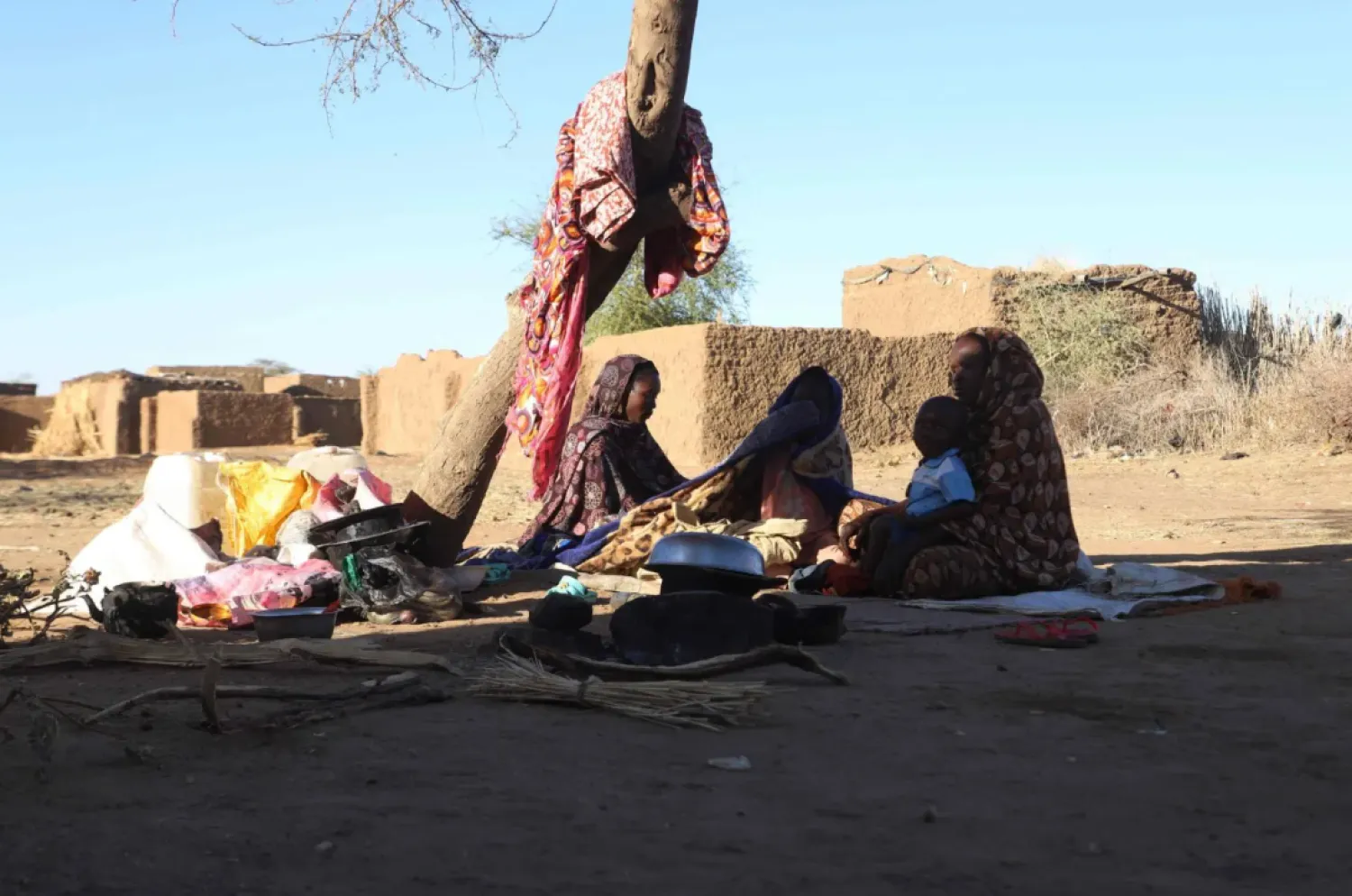
Sudanese displaced people who left El Fasher after its fall, sit in the shade in Tawila at the Rwanda camp reception point on December 17, 2025. (Photo by AFP)
TT

Atrocities in Sudan's El-Fasher Were 'Preventable Human Rights Catastrophe'

Sudanese displaced people who left El Fasher after its fall, sit in the shade in Tawila at the Rwanda camp reception point on December 17, 2025. (Photo by AFP)

The atrocities unleashed on El-Fasher in Sudan's Darfur region last October were a "preventable human rights catastrophe", the United Nations said Monday, warning they now risked being repeated in the neighbouring Kordofan region.


"My office sounded the alarm about the risk of mass atrocities in the besieged city of El-Fasher for more than a year ... but our warnings were ignored," UN rights chief Volker Turk told the Human Rights Council in Geneva.


He added that he was now "extremely concerned that these violations and abuses may be repeated in the Kordofan region".


Arab League Condemns Israel's Decisions to Alter Legal, Administrative Status of West Bank

A general view shows the opening session of the meeting of Arab foreign ministers at the Arab League Headquarters (Reuters)
TT

Arab League Condemns Israel's Decisions to Alter Legal, Administrative Status of West Bank

A general view shows the opening session of the meeting of Arab foreign ministers at the Arab League Headquarters (Reuters)

The General Secretariat of the Arab League strongly condemned decisions by Israeli occupation authorities to impose fundamental changes on the legal and administrative status of the occupied Palestinian territories, particularly in the West Bank, describing them as a dangerous escalation and a flagrant violation of international law, international legitimacy resolutions, and signed agreements, SPA reported.

In a statement, the Arab League said the measures include facilitating the confiscation of private Palestinian property and transferring planning and licensing authorities in the city of Hebron and the area surrounding the Ibrahimi Mosque to occupation authorities.

It warned of the serious repercussions of these actions on the rights of the Palestinian people and on Islamic and Christian holy sites.

The statement reaffirmed the Arab League’s firm support for the legitimate rights of the Palestinian people, foremost among them the establishment of their independent state on the June 4, 1967 borders, with East Jerusalem as its capital.