Can You Still Enjoy Six Nations When You Know about the Risk of Brain Injury?

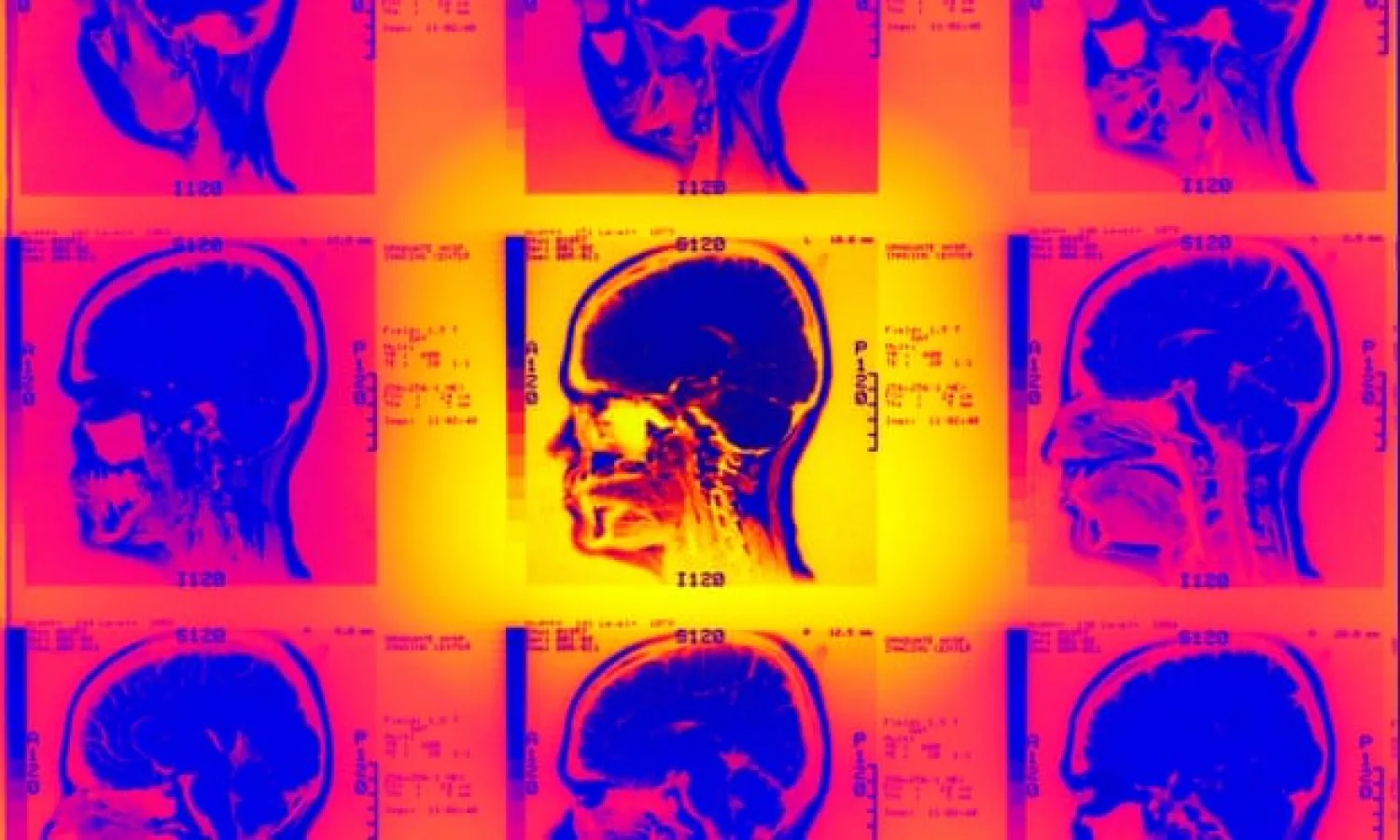
Alix Popham and four other former professionals have been diagnosed with early onset dementia and probable CTE, and Popham says more players are coming forward. Photograph: Mira/Alamy
TT

Can You Still Enjoy Six Nations When You Know about the Risk of Brain Injury?

Alix Popham and four other former professionals have been diagnosed with early onset dementia and probable CTE, and Popham says more players are coming forward. Photograph: Mira/Alamy

The bleak, unlovely month of February has two things to recommend it, and one of those is that it’s all over quickly. The other is that it brings the Six Nations with it. Since the championship starts in winter and ends in spring, it always feels like the harbinger of better things, and in the meantime there’s the welcome prospect of long weekend afternoons spent watching games at the pub or at home in front of the TV, or, if you’re lucky, a trip out to one of the grounds, maybe even a weekend away in Paris or Rome. At least, that’s how it’s supposed to be. This year the championship already feels diminished, fraught and perilous, just like everything else.

It’s not just the lack of fans, the empty grounds, the shuttered pubs, bars and restaurants. These will be the first Test matches since Steve Thompson, Alix Popham, Michael Lipman, and two other former professionals revealed that they have been diagnosed with either early onset dementia and probable CTE (chronic traumatic encephalopathy), or other post-concussion symptoms.

It gets worse. Popham tells me that behind the scenes more and more players have been coming forward to report symptoms, men and women, amateurs and professionals, in the UK, New Zealand and Australia. “The scary thing is that the numbers are growing every day.”

I was talking about it all with Peter Robinson last week. In the run-up to this year’s championship I have spent more time chatting to doctors, patients and activists than I have players and coaches. Peter’s 14-year-old son, Ben, died of Second Impact Syndrome during a school rugby game in 2011, because he was allowed to play on after he was hit in the head. Peter still watches rugby. “But I watch it differently now,” he says. “Do I enjoy it? I don’t know.”

How much do you need to know about the damage the sport can do before your enjoyment of it sours? How much do you need to know before you stop wanting to watch it altogether? “Maybe now with the latest about the litigation, people are realizing how dangerous this all is,” Robinson says.

Like a lot of the people I’ve spoken to lately, Peter is convinced that the culture of the game needs to change, so that everyone involved is more aware of the risks. He gets frustrated that the coverage of the issue is still so intermittent, that “when you get an incident on TV everybody talks about it for a week, and then it all goes away again”.

Truth is, there are times when I’ve switched on and off that way myself. I suspect almost everyone who watches the game has, because it’s so hard to reconcile our day-to-day enjoyment of it with the growing body of evidence about the long-term damage it can do to the men and women who play it. Too often, the easiest way is to ignore it, until you can’t.

Peter isn’t the only one making this argument, I’ve heard similar from plenty of other people, too. Like Dr Bennet Omalu, the neuropathologist who first diagnosed CTE in the brain of the retired American football player Mike Webster. “What we need to do is engage with the culture,” Omalu told me last week. He compares it to an oil tanker – “it will take time to turn it around, it may take one generation, or two”, but it will happen, even if it’s “one person at a time”.

And Dr Judith Gates, who is, along with Popham, one of the founders of the new charity Head For Change. “This is an epidemic,” Gates says. “This must stop now. We must all acknowledge the fragility of the brain, alongside its centrality in defining the person.”

This isn’t just about changing the attitudes of the people who play the game, or who run it or referee it, but everyone who talks about it, writes about it and watches it, too, at elite and amateur levels. One group trying to help the sport navigate this change is the Concussion Legacy Foundation, founded in 2007 by Chris Nowinski and Dr Robert Cantu.

They have been working in the United States for most of that time, and now they’re expanding into the UK. Among other things, the CLF is running a media engagement program to help educate journalists about how best to report on these issues. Their idea is that children learn most of what they know about these issues from watching sport on TV. So if you want to change the culture, then commentators are a good place to start.

The CLF held its first UK concussion reporting workshop on Monday, in partnership with Oxford Brookes University (they have a useful toolkit on their website, too, offering a free course in responsible reporting). It puts a lot of emphasis on the need to use honest, accurate and unvarnished language, which is something Robinson spoke about too. He mentioned how glad he was when he heard a commentator describe a concussion as a “traumatic brain injury” on TV, even if “it made a lot of people fall off their seats because it was such a shock”. It is a small but significant change, one that puts more emphasis on the seriousness of the injury.

“If you ask me what could improve,” Robinson says, “it would be getting that message out, consistently and clearly: that this is a traumatic brain injury, and you have to take it seriously because it can be fatal.”

It still feels like there are too many people in the game who are reluctant to acknowledge the risks, who would rather step around them, or pretend they’re not there at all. This Six Nations, hopefully we’ll see signs that the change the game needs is coming, even if it’s being done one word at a time.

The Guardian Sport


‘Not Competitive’ Brazil Can Improve, Insists Ancelotti

Brazil's head coach Carlo Ancelotti looks on before the Mizuho Blue Challenge – The Kallang Football Series international friendly match between Japan and Brazil at the National Stadium in Singapore, 14 November 2026. (EPA)
TT

‘Not Competitive’ Brazil Can Improve, Insists Ancelotti

Brazil's head coach Carlo Ancelotti looks on before the Mizuho Blue Challenge – The Kallang Football Series international friendly match between Japan and Brazil at the National Stadium in Singapore, 14 November 2026. (EPA)

Brazil coach Carlo Ancelotti on Monday promised an improved performance in the year-ending clash against Singapore, admitting that his squad was "currently not competitive."

The Selecao lost 3-2 against Japan in a friendly in Singapore on Saturday, where Ancelotti and skipper Raphinha were red-carded after Japan scored the dramatic clincher in stoppage time.

"Given that the team is currently not competitive, I want to do more," Ancelotti told reporters in Singapore, where Brazil play on Tuesday.

The Italian, Brazil's first-ever permanent foreign coach, said: "I want to do more because I enjoy being here, so that the team can become more competitive on the global stage.

"The priority is to play well first (tomorrow) and to do well."

Ancelotti, 67, is coming under increasing pressure, following a string of underwhelming performances including two defeats, two wins and a draw in Brazil's last five international outings.

Japan avenged a 2-1 defeat by Brazil in their previous meeting at this year's World Cup, when the South Americans beat them in a round-of-32 clash.

After Saturday's loss, Ancelotti faced a barrage of criticism, including from former Brazilian national team star Romario.

Ancelotti brushed off Romario's remarks, saying "like anyone he has the right to express an opinion."

But the former Real Madrid coach, who reacted with fury after Brazil appealed for a foul in the build-up to Japan's winning goal on Saturday -- which was upheld by VAR -- said that his team "didn't deserve to lose" against Japan.

Japan face Paraguay on Tuesday in the second match of the double-header at Singapore's National Stadium.


Vinicius Says Less Training and Transfer Distractions May Explain Dip in Form

 Brazil's Vinicius Junior celebrates after goal during a friendly soccer match between Japan and Brazil in Singapore, Saturday, Nov. 14, 2026. (AP)
Brazil's Vinicius Junior celebrates after goal during a friendly soccer match between Japan and Brazil in Singapore, Saturday, Nov. 14, 2026. (AP)
TT

Vinicius Says Less Training and Transfer Distractions May Explain Dip in Form

 Brazil's Vinicius Junior celebrates after goal during a friendly soccer match between Japan and Brazil in Singapore, Saturday, Nov. 14, 2026. (AP)
Brazil's Vinicius Junior celebrates after goal during a friendly soccer match between Japan and Brazil in Singapore, Saturday, Nov. 14, 2026. (AP)

Real Madrid winger Vinicius Junior says ‌his reduced training schedule, and transfer interest, may have affected his performances in an underwhelming start to his Real Madrid season.

The Brazilian signed a new contract until 2032 in August, but so far his output on the pitch has fallen short of his own previous standards. Press scrutiny in Spain has been intensified by the impressive start of Ivorian signing Yan Diomande, who has eclipsed Vinicius in his preferred left-sided role.

“I don’t think I prepared as well as I could have after the World Cup, because ‌the impact of ‌that tournament is so significant for all ‌Brazilians," ⁠he told a ⁠press conference in Singapore on Monday.

"Being knocked out so early was something we hadn’t expected. So, I took advantage of my holidays to enjoy myself, rest, relax, and spend more time with my family. I ended up training less than in previous years," he said.

“That may have affected my start to the season."

Vinicius' future ⁠at Real Madrid was a talking point in ‌Spain for months as he entered ‌the final year of his contract before re-signing in August. Premier ‌League champions Arsenal were said to be interested at the ‌time.

"On top of that, regarding my contract renewal, with so many clubs showing interest last summer, I felt truly overwhelmed, as with the situation at Real Madrid. But it’s a very long season.”

The 26-year-old said he ‌had a track record of hitting top form in the decisive moments of the season, ⁠and that he ⁠was on a positive trajectory.

“Maintaining such a high level for so long is always very difficult," said Vinicius.

"I think only Cristiano Ronaldo and (Lionel) Messi have managed to do this for so many years, reaching the same kinds of numbers."

"I am human, I often make mistakes, but I always try to improve.”

This season Vinicius has scored one goal and given three assists in his 12 Real Madrid appearances. Coach Jose Mourinho has only used him for a full 90 minutes on three occasions.

Nevertheless, he did score twice on Saturday in Brazil's 3-2 loss to Japan, and is likely to feature in another friendly against Singapore on Tuesday.


Belgium’s Lukaku Retires from International Football

Belgium's forward #09 Romelu Lukaku celebrates after scoring his team third goal during the UEFA Nations League, League A - Group 1, football match between Belgium and Turkey at the Maurice Dufrasne stadium, in Liege, eastern Belgium on October 2, 2026. (AFP)
TT

Belgium’s Lukaku Retires from International Football

Belgium's forward #09 Romelu Lukaku celebrates after scoring his team third goal during the UEFA Nations League, League A - Group 1, football match between Belgium and Turkey at the Maurice Dufrasne stadium, in Liege, eastern Belgium on October 2, 2026. (AFP)

Belgium forward Romelu Lukaku on Monday retired from international football after scoring 94 goals in 135 games for his country, saying he was "at peace" with his decision.

Lukaku featured in four World Cups for the Red Devils and helped them reach the quarter-finals of this year's tournament before losing to eventual winners Spain.

The 33-year-old, who now plays for Turkish club Fenerbahce, made his debut in 2010 as a teenager and was an unused substitute in Sunday's 4-1 Nations League win over Italy.

"These 16 years I gave all I had for the national team. It was a nice ride and I enjoyed every single moment," Belgium's record goal scorer said on Instagram.

"To the Belgium fans, thank you for the support you gave our team. I am proud to have represented my country in 4 World Cups and 3 European Championships.

"I will never forget those moments. I'm at peace with my decision to stop here," Lukaku said.

The former Chelsea, Manchester United and Inter Milan forward was part of Belgium's so-called "golden generation".

Lukaku, alongside Kevin De Bruyne, Thibaut Courtois and Eden Hazard, finished third at the 2018 World Cup, a best-ever finish for Belgium in the tournament but they failed to lift a trophy during the period.

"I played with amazing teammates that I will always be grateful for," Lukaku said.

"I want to thank them all. I want to thank all the coaches as well for pushing and trusting me to help the team," he added.

- 'Legend, my brother' -

A host of fellow Belgian players paid tribute to Lukaku.

"Legend, my brother," midfielder Axel Witsel said on Instagram.

"Thank you for everything my bro," Courtois said.

"So many amazing memories," the Real Madrid goalkeeper added.

Lukaku's last appearance for his country came in October's 4-1 loss to France.

"Beyond his exceptional performances on the pitch, he has been a true leader, with a strong personality and an essential role in the dressing room," Lukaku's former team-mate and now Belgium's technical director Simon Mignolet said in a statement from the Belgian football association.

"We respect his decision and are deeply grateful to him for everything he has brought to our national team," the former Liverpool goalkeeper added.

Belgium's first game without Lukaku will be a Nations League last-eight fixture in March.

"We must now turn our attention to the future and prepare for the Nations League quarter-finals," Mignolet said.

"With the ambition of continuing to make progress as a team," he added.