


Myanmar Military Widens Coup Dragnet as Scores Protest at University

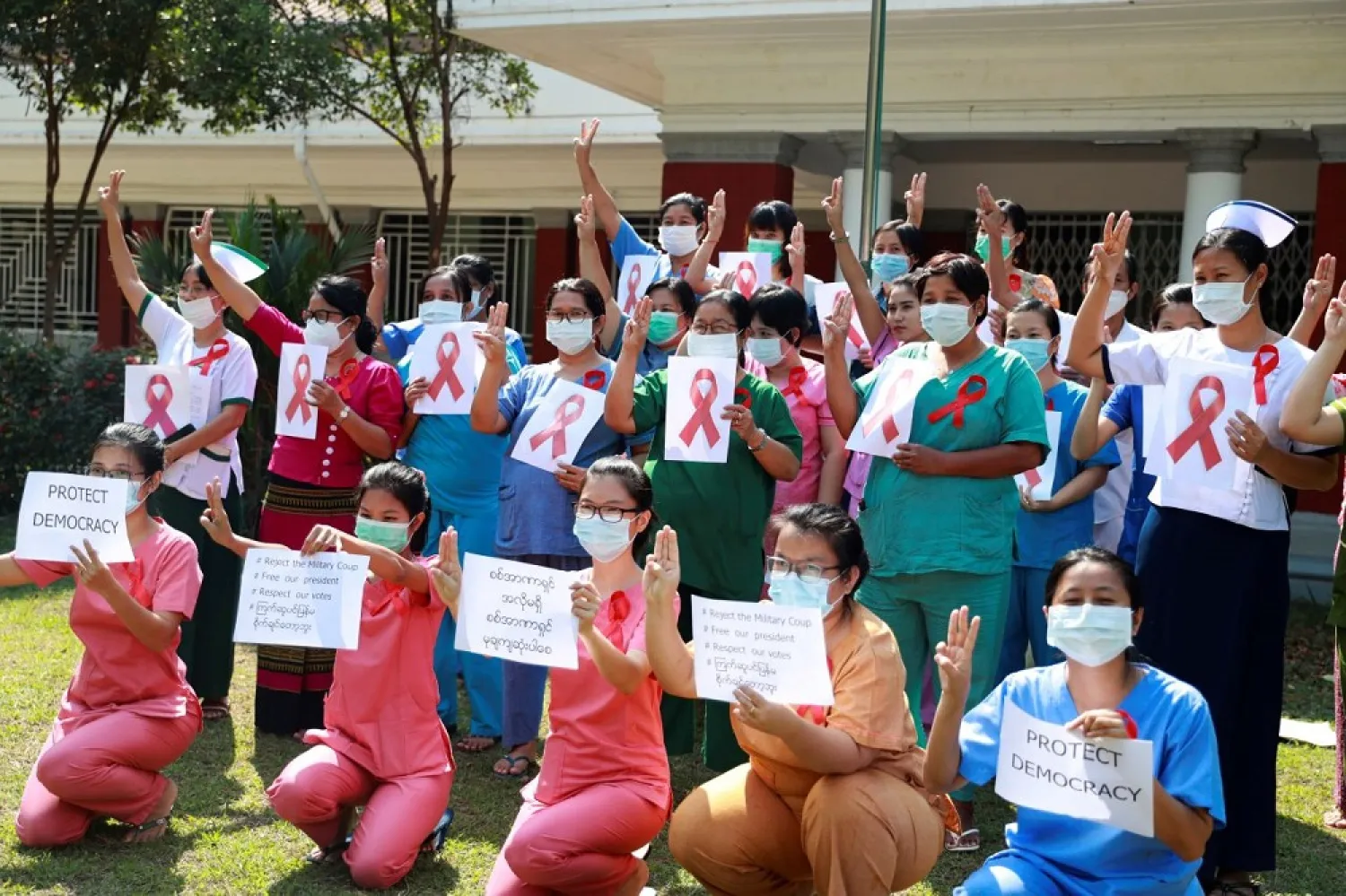
Staff of the University Hospital flash the three-finger protest gesture while holding signs that read: “Protect democracy” and “Reject the military coup, Free our president, Respect our votes” in Yangon, Myanmar, Feb 5. (AP)
TT

Myanmar Military Widens Coup Dragnet as Scores Protest at University

Staff of the University Hospital flash the three-finger protest gesture while holding signs that read: “Protect democracy” and “Reject the military coup, Free our president, Respect our votes” in Yangon, Myanmar, Feb 5. (AP)

Several hundred teachers and students protested at a Myanmar university Friday as the military widened a dragnet against officials ousted in a coup that has drawn global condemnation and the threat of new sanctions.

The rally took place after the arrest Win Htein, a key aide to de facto leader Aung Sang Suu Kyi, who was detained along with president Win Myint early Monday.

The putsch ended the country's 10-year dalliance with democracy that followed decades of oppressive junta rule, and sparked outrage and calls by US President Joe Biden for the generals to relinquish power.

On Friday, around 200 teachers and students at Yangon's Dagon University staged a rally where they displayed a three-finger salute borrowed from Thailand's democracy movements, and sang a popular revolution song.

"As a citizen, I cannot accept this military coup at all," lecturer Win Win Maw told AFP. "We have to resist this dictatorship."

Marching around the university's compound, students chanted "Long live Mother Suu" and carried red flags, the color of Suu Kyi's National League for Democracy (NLD) party.

"We will not let our generation suffer under this kind of military dictatorship," said Min Sithu, a student.

Dozens of employees from several government ministries in Naypyidaw also posed for group photographs wearing red ribbons and flashing the democracy symbol.

Hours before Friday's university protest, Win Htein was arrested at his daughter's house, said Kyi Toe, an NLD press officer.

The 79-year-old NLD stalwart, considered Suu Kyi's right-hand man, has spent long stretches in detention for campaigning against military rule.

Ahead of his arrest, Win Htein told local media the military putsch was "not wise", and called on people in the country to "oppose as much as they can".

Suu Kyi has not been seen in public since Monday.

According to the Assistance Association for Political Prisoners (AAPP), a Yangon-based group that monitors political arrests in Myanmar, more than 130 officials and lawmakers have been detained in relation to the coup.

Telecom providers in the country have been ordered to cut access to Facebook, the main means of communication and accessing the internet for millions of people in Myanmar.

'Hope broken'
With Facebook stifled, more Myanmar people have moved to Twitter in recent days or started using VPN services to bypass the blockade.

A so-called Civil Disobedience Movement has gathered steam online, calling on the public to voice opposition every night by banging pots and clanging cymbals to show their anger.

"I feel our hope is broken by the military after they seized power," said food vendor Thazin Oo, whose mobile phone case has a photo of Suu Kyi.

So far, at least 14 activists and prominent pro-democracy figures have been arrested, according to AAPP.

The nephew of filmmaker Min Htin Ko Ko Gyi -- who has previously been jailed for criticizing the military -- confirmed Friday his outspoken uncle had been picked up on the morning of the coup.

"I think they arrested all dissidents who could share the right information to the public," said Kaung Satt Naing.

'Refrain from violence'

The putsch has drawn condemnation globally.

On Thursday, President Biden reiterated his call for the generals to reverse course.

"The Burmese military should relinquish power they have seized, release the advocates and activists and officials they have detained, lift the restrictions in telecommunications, and refrain from violence," Biden said.

He spoke hours after his National Security Advisor Jake Sullivan said the White House was "looking at specific targeted sanctions both on individuals and on entities controlled by the military that enrich the military".

He did not give further details.

The United Nations Security Council took a softer tack, voicing "deep concern" -- a step down from a draft Tuesday that had condemned the coup.

Diplomats said veto-wielding China and Russia, Myanmar's main supporters at the UN, had asked for more time Tuesday to finesse the council's response.


Israel’s Netanyahu Is Meeting with Trump This Week to Push for a Far Broader Iran Deal

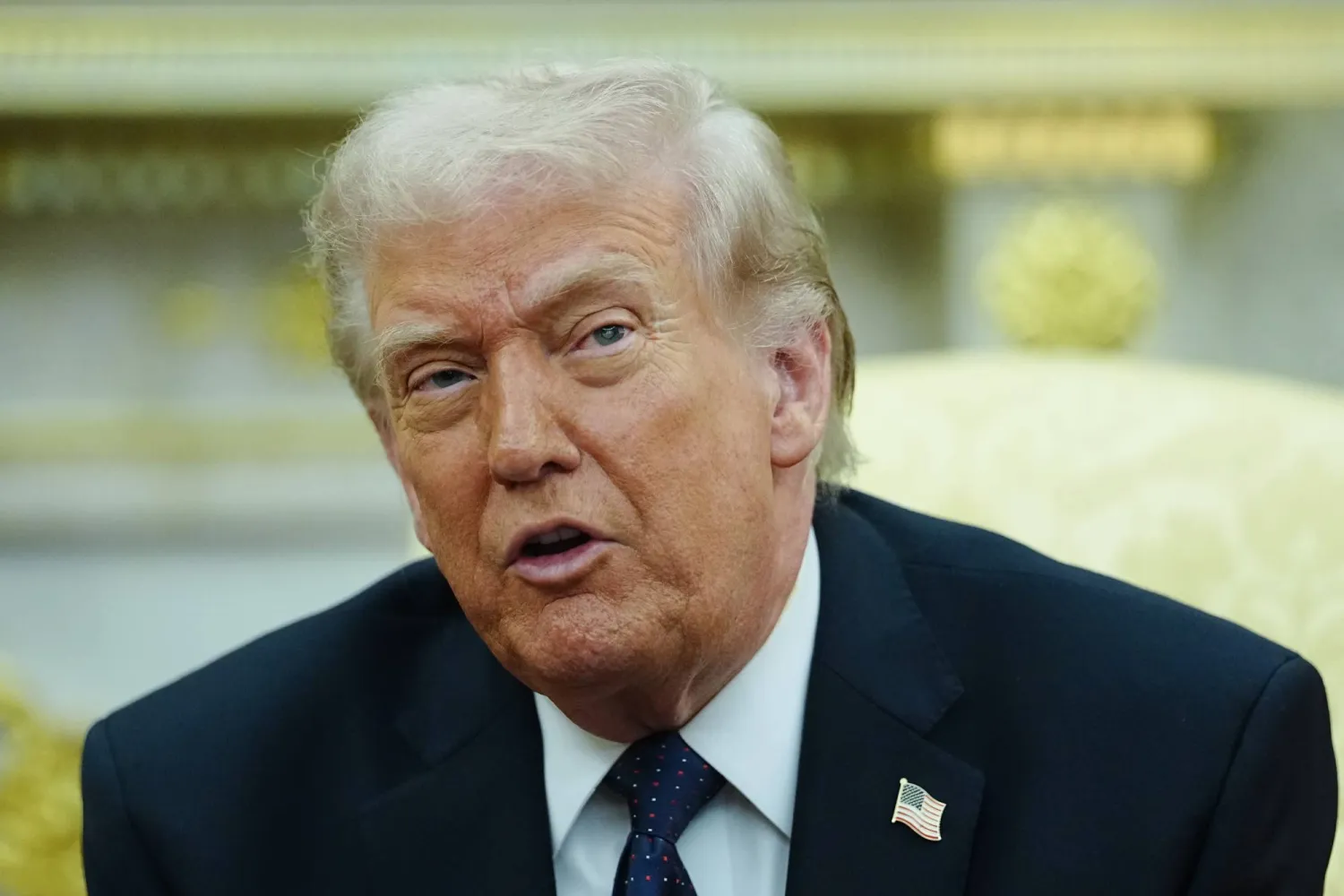
President Donald Trump answers a question from a reporter at the end of a news conference with Israel's Prime Minister Benjamin Netanyahu at Mar-a-Lago, Dec. 29, 2025, in Palm Beach, Fla. (AP)
TT

Israel’s Netanyahu Is Meeting with Trump This Week to Push for a Far Broader Iran Deal

President Donald Trump answers a question from a reporter at the end of a news conference with Israel's Prime Minister Benjamin Netanyahu at Mar-a-Lago, Dec. 29, 2025, in Palm Beach, Fla. (AP)

Prime Minister Benjamin Netanyahu is heading to Washington on Tuesday to encourage President Donald Trump to expand the scope of high-stakes nuclear talks with Iran. The negotiations resumed last week against the backdrop of an American military buildup.

Israel has long called for Iran to cease all uranium enrichment, dial back its ballistic missile program and cut ties to militant groups across the region. Iran has always rejected those demands, saying it would only accept some limits on its nuclear program in return for sanctions relief.

It's unclear if Iran's bloody crackdown on mass protests last month, or the movement of major US military assets to the region, has made Iran’s leaders more open to compromise, or if Trump is interested in broadening the already difficult negotiations.

Netanyahu, who will be in Washington through Wednesday, has spent his decades-long political career pushing for stronger US action toward Iran. Those efforts succeeded last year when the US joined Israel in 12 days of strikes on Iran's military and nuclear sites, and the possibility of additional military action against Iran is likely to come up in this week’s discussions.

Decisions are being made

Netanyahu's visit comes just two weeks after Trump’s special envoy Steve Witkoff and Jared Kushner, Trump’s son-in-law and Middle East adviser, met with the prime minister in Jerusalem. The US envoys held indirect talks in Oman with Iran's foreign minister on Friday.

“The Prime Minister believes that any negotiations must include limiting ballistic missiles and ending support for the Iranian axis,” Netanyahu's office said over the weekend, referring to Iran-backed armed groups like the Palestinian Hamas and Lebanon's Hezbollah.

Years of nuclear talks have made little progress since Trump scrapped a 2015 agreement with Iran, with strong encouragement from Israel. Iran has shown little willingness to address the other issues, even after suffering repeated setbacks. But the meeting with Trump gives Netanyahu an opportunity to shape the process and may also bolster his standing back home.

“Clearly these are the days when decisions are being made, America is expected to complete its force buildup, and it’s trying to exhaust the prospect of negotiations,” said Yohanan Plesner, head of the Israel Democracy Institute, a Jerusalem-based think tank.

“If you want to have influence on the process, only so much can be done via Zoom.”

Israel fears a narrow agreement

rump threatened a military strike against Iran last month over the killing of protesters and concerns of mass executions, moving a number of military assets into the region. Thousands were killed and tens of thousands detained at Iranian authorities crushed the protests over widespread economic distress.

As the protests largely subsided, Trump shifted his focus to Iran's nuclear program, which the US, Israel and others have long suspected is aimed at eventually developing weapons. Iran insists its program is entirely peaceful and says it has the right to enrich uranium for civilian purposes.

Sima Shine, an Iran expert formerly with Israel's Mossad spy agency who is now an analyst at Israel's Institute for National Security Studies, said Israel fears that the US might reach a narrow agreement with Iran in which it would temporarily halt uranium enrichment.

A deal in which Iran halts enrichment for several years would allow Trump to claim victory. But Israel believes any such agreement that does not end Iran's nuclear program and reduce its ballistic missile arsenal will eventually require Israel to launch another wave of strikes, she said.

Iran might be unable to enrich uranium after last year’s strikes, making the idea of a temporary moratorium more appealing.

In November, Iranian Foreign Minister Abbas Araghchi said Iran was no longer enriching uranium due to the damage from last year's war. The US and Israeli airstrikes killed nearly 1,000 people in Iran, while Iranian missile barrages killed almost 40 in Israel.

It's unclear how much damage was done to Iran's nuclear program. Inspectors from the International Atomic Energy Agency have been unable to visit the bombed nuclear sites. Satellite images show activity at two of them.

Netanyahu faces election this year

Netanyahu, who faces elections later this year, has long touted his close ties to world leaders, particularly Trump, who he has praised as the best friend Israel has ever had in the White House. This week's meeting allows Netanyahu to show Israelis he is a player in the Iran talks.

“The issue of relations between Netanyahu and Trump will be the issue of the campaign, and he is saying, ‘Only I can do this, it’s only me,’” Shine said.

Netanyahu is Israel's longest-serving prime minister, having held the office for a total of over 18 years. His government, the most nationalist and religious in Israel's history, is expected to survive until the election in October, or close to it.

Netanyahu was originally scheduled to visit Washington next week for the Feb. 19 launch of Trump's Board of Peace, an initiative that was initially framed as a mechanism for rebuilding Gaza after the Israel-Hamas war but has taken on a larger mandate of resolving global crises.

Netanyahu agreed to join the initiative, but is wary of it because it includes Türkiye and Qatar, countries he does not want to have a presence in postwar Gaza because of their relations with Hamas.

Moving the visit up could provide an “elegant solution” that allows Netanyahu to skip the launch without offending Trump, Plesner said. Netanyahu's office declined to comment.


France Accuses Iran of ‘Repression’ in Sentence for Nobel Laureate

People cross an intersection in downtown Tehran, Iran, Monday, Feb. 9, 2026. (AP)
TT

France Accuses Iran of ‘Repression’ in Sentence for Nobel Laureate

People cross an intersection in downtown Tehran, Iran, Monday, Feb. 9, 2026. (AP)

France accused Iran on Monday of "repression and intimidation" after a court handed Nobel Peace Prize laureate Narges Mohammadi a new six-year prison sentence on charges of harming national security.

Mohammadi, sentenced Saturday, was also handed a one-and-a-half-year prison sentence for "propaganda" against Iran's system, according to her foundation.

"With this sentence, the Iranian regime has, once again, chosen repression and intimidation," the French foreign ministry said in a statement, describing the 53-year-old as a "tireless defender" of human rights.

Paris is calling for the release of the activist, who was arrested before protests erupted nationwide in December after speaking out against the government at a funeral ceremony.

The movement peaked in January as authorities launched a crackdown that activists say has left thousands dead.

Over the past quarter-century, Mohammadi has been repeatedly tried and jailed for her vocal campaigning against Iran's use of capital punishment and the mandatory dress code for women.

Mohammadi has spent much of the past decade behind bars and has not seen her twin children, who live in Paris, since 2015.

Iranian authorities have arrested more than 50,000 people as part of their crackdown on protests, according to US-based Human Rights Activists News Agency (HRANA).


Iran's Supreme Leader Urges Iranians to Show 'Resolve' against Foreign Pressure

Iran's supreme leader Ali Khamenei on (File Photo/Supreme Leader's website).
TT

Iran's Supreme Leader Urges Iranians to Show 'Resolve' against Foreign Pressure

Iran's supreme leader Ali Khamenei on (File Photo/Supreme Leader's website).

Iran's supreme leader Ali Khamenei on Monday called on his compatriots to show "resolve" ahead of the anniversary of the 1979 Islamic revolution this week.

Since the revolution, "foreign powers have always sought to restore the previous situation", Ali Khamenei said, referring to the period when Iran was under the rule of shah Reza Pahlavi and dependent on the United States, AFP reported.

"National power is less about missiles and aircraft and more about the will and steadfastness of the people," the leader said, adding: "Show it again and frustrate the enemy."
