
Arab FMs Renew Support to Two-State Solution, Ending Debate over ‘Deal of Century’

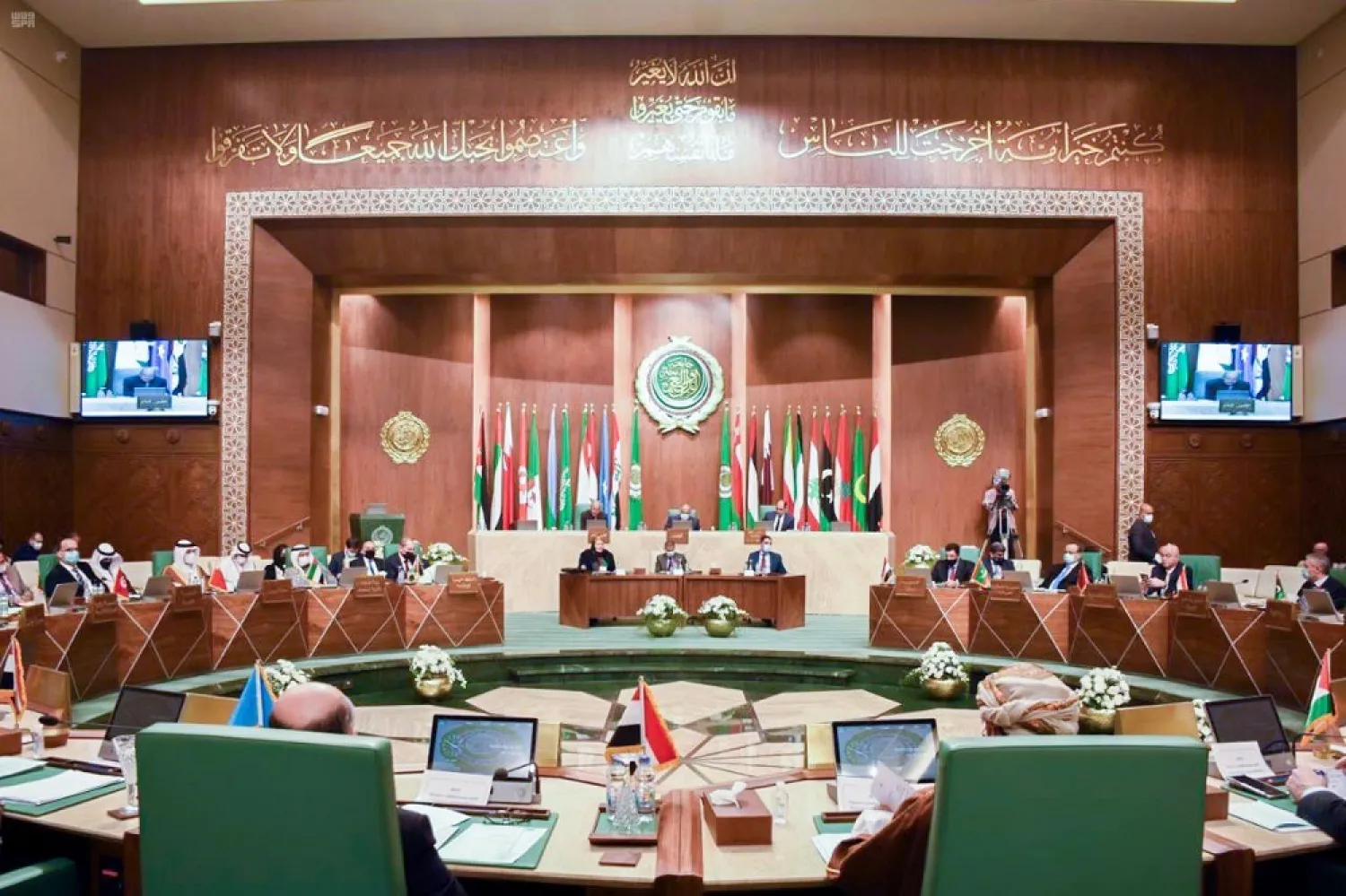
The Arab foreign ministers meet in Cairo on Monday. (SPA)
TT

Arab FMs Renew Support to Two-State Solution, Ending Debate over ‘Deal of Century’

The Arab foreign ministers meet in Cairo on Monday. (SPA)

The Arab foreign ministers effectively put an end on Monday to the debate over the so-called “deal of the century” proposal to resolve the Palestinian-Israeli conflict, by reiterating their commitment to the two-state solution.

The two-state solution is the only way to end the conflict, they declared during an emergency meeting in Cairo.

Former US President Donald Trump had unveiled the “deal of the century” peace proposal in January 2020. It was vehemently rejected by the Palestinians because it was largely biased towards Israel and dashed their hopes for an independent state with east Jerusalem as its capital.

The ten foreign ministers who met in the Egyptian capital welcomed the international and regional efforts aimed at pushing forward peace efforts, underlining the important role played by the US.

They stressed the need for these efforts to “end the Israeli occupation of Palestinian territories occupied in 1967 and achieving peace based on the two-state solution.”

Arab League Secretary-General Ahmed Aboul Gheit said the final settlement to the Palestinian-Israeli conflict can only be reached through the two-state solution. He said no alternatives that can provide the Palestinians with their own state and Israelis with security were available.

He added that the international consensus over the two-state solution should be translated into action that would save this proposal from constant Israeli attempts to undermine it.

Indirectly referring to Trump’s peace plan, Aboul Gheit remarked: “Experience over the years demonstrated that the political settlement cannot be imposed by unilateral proposals.”

Saudi Foreign Minister Prince Faisal bin Farhan bin Abdullah stressed that the Kingdom’s position “is firm in standing by the Palestinian people and supporting all efforts aimed at reaching just and comprehensive peace.”

“Peace is the strategic choice that guarantees the stability of the region,” he stressed.

“We call on the international community to exert more efforts to revive the peace process that would establish a Palestinian state based on the 1967 borders and with east Jerusalem as its capital,” he urged.

On Yemen, he condemned the threat posed by the Iran-backed Houthi militias to the security and stability of the war-torn country. He also slammed its repeated rocket and drone attacks against civilian locations and facilities in Saudi Arabia.

Moreover, Prince Faisal demanded that the countries most affected by Iranian threats be main parties in any international negotiations with the Iranian regime over its nuclear program and malign activities in the region.

He warned: “The gravest threats to the Arab region are the Iranian regime’s constant violations of international laws, treaties and norms that violate the security and stability of our countries.”

He cited Tehran’s interference in the affairs of Arab countries and support to armed militias that spread chaos and sow divisions.

Palestinian Foreign Minister Riyad al-Maliki said: “The state of Palestine is committed to the Arab peace initiative.”

He hoped that the administration of US President Joe Biden’s approach to the conflict would reflect a “deeper historical and geographic understanding” of the region and its politics.

He added that the Palestinians were ready to join “serious negotiations through an international conference that would be based on international laws.” The conference should be led by the international quartet and aim to end the Israeli occupation and grant the Palestinians their freedom and independence.


UN: Average of 47 Women and Girls Killed Daily During Gaza War

Mourners react during the funeral of Palestinians who were killed in an Israeli strike that took place on Tuesday, according to medics, at Al-Shati camp in Gaza City, April 15, 2026. REUTERS/Dawoud Abu Alkas
TT

UN: Average of 47 Women and Girls Killed Daily During Gaza War

Mourners react during the funeral of Palestinians who were killed in an Israeli strike that took place on Tuesday, according to medics, at Al-Shati camp in Gaza City, April 15, 2026. REUTERS/Dawoud Abu Alkas

An average of at least 47 women and girls were killed each day during the war in Gaza, according to figures published by UN Women on Friday, and the agency warned that deaths have continued six months into a fragile ceasefire.

More than 38,000 women and girls were killed in Gaza between October 2023 and December 2025, according to the report by UN Women, an agency that focuses on gender equality.

"Women and girls accounted for a proportion of deaths far higher than those observed in previous ⁠conflicts in Gaza," ⁠Sofia Calltorp, the agency's humanitarian action head, told reporters in Geneva.

"They were individuals with lives and with dreams," she added, according to AFP.

The agency expressed concern that the killing of women and girls has continued since an October ceasefire, though it does not know exactly how many have died due to ⁠a lack of gender-aggregated data.

October's ceasefire halted two years of full-scale war but left Israeli troops in control of a depopulated zone that makes up well over half of Gaza, with Hamas in power in the remaining, narrow, coastal strip.

More than 750 Palestinians have been killed since then, according to local medics, while militants have killed four Israeli soldiers. Israel and Hamas have traded blame for ceasefire violations.

Israel says it aims to thwart attacks by Hamas and ⁠other militant factions.

UN ⁠children's agency UNICEF said on Friday that children continued to be killed and injured at an alarming rate in Gaza, with at least 214 reported dead in the last six months.

Around one million women and girls are displaced in Gaza, UN Women said.

"Extensive damage to infrastructure has made it almost impossible for women and girls in Gaza to access their basic needs like healthcare," said Calltorp.

World Health Organization figures show more than 500,000 women lack access to essential services including antenatal and postnatal care and management of sexually transmitted infections.


Lebanon Says Israeli Strike in South Kills One Despite Truce

 An Israeli helicopter fires a projectile, as it flies over Lebanon, after a 10-day ceasefire between Lebanon and Israel went into effect, as seen from Israel, April 17, 2026. (Reuters)
An Israeli helicopter fires a projectile, as it flies over Lebanon, after a 10-day ceasefire between Lebanon and Israel went into effect, as seen from Israel, April 17, 2026. (Reuters)
TT

Lebanon Says Israeli Strike in South Kills One Despite Truce

 An Israeli helicopter fires a projectile, as it flies over Lebanon, after a 10-day ceasefire between Lebanon and Israel went into effect, as seen from Israel, April 17, 2026. (Reuters)
An Israeli helicopter fires a projectile, as it flies over Lebanon, after a 10-day ceasefire between Lebanon and Israel went into effect, as seen from Israel, April 17, 2026. (Reuters)

Lebanese state media said an Israeli strike on a motorcycle in the south killed one person on Friday, despite the start of a 10-day ceasefire in the Israel-Hezbollah war.

The truce, announced by US President Donald Trump, went into force at midnight (Thursday 2100 GMT), seeking to end more than six weeks of war that has killed nearly 2,300 people in Lebanon and displaced more than a million.

"A motorcyclist was killed in the town of Kunin, in the Bint Jbeil district, after being targeted by an enemy drone," Lebanon's state-run National News Agency reported.

Under the terms of the truce, Israel reserves the right to continue targeting Iran-backed group Hezbollah to prevent "planned, imminent or ongoing attacks".

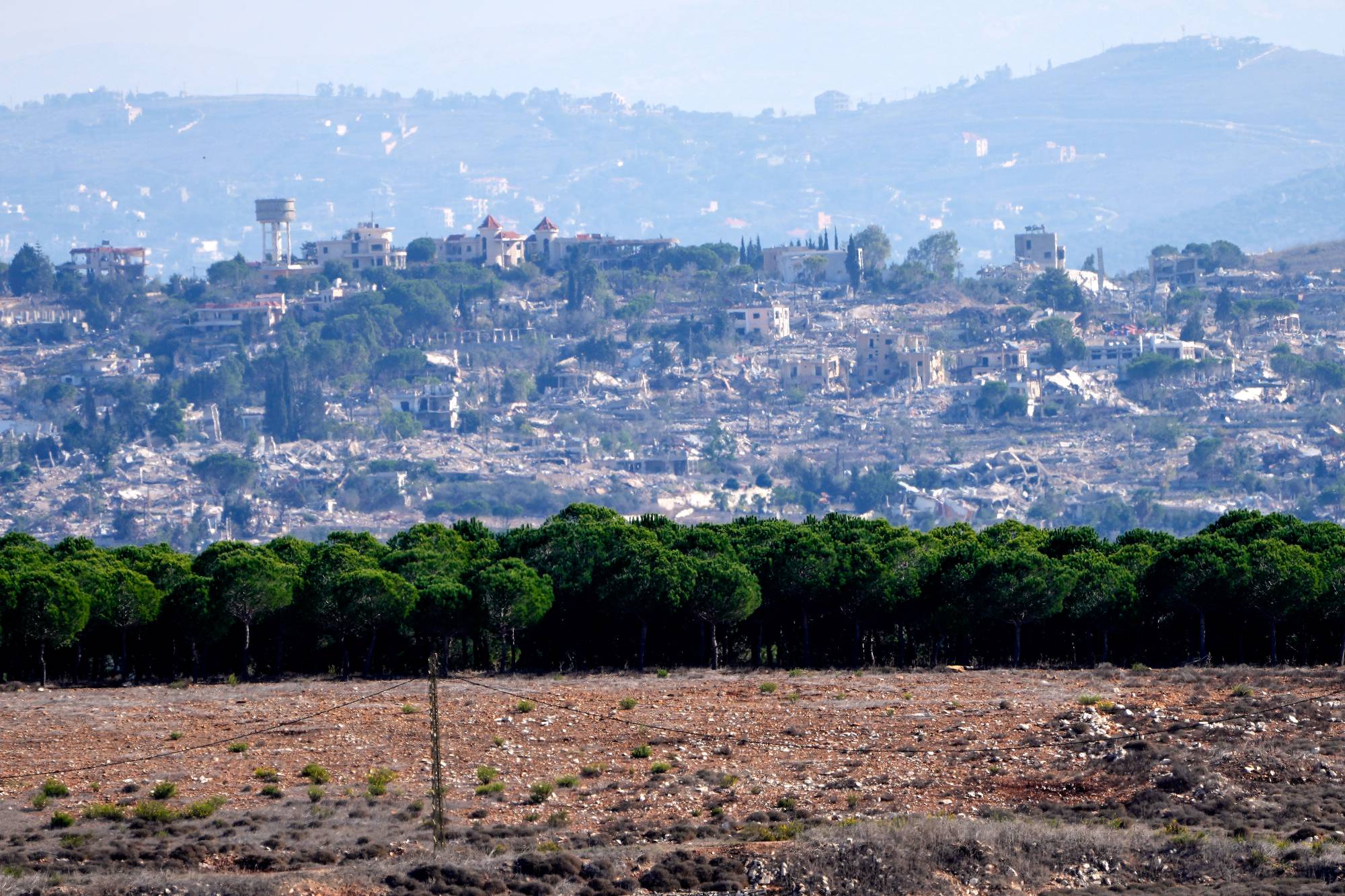
Israel also said it will maintain a 10-kilometer (six-mile) security zone along the border in southern Lebanon.

The ceasefire agreement makes no mention of an Israeli withdrawal from Lebanon.

Israeli Defense Minister Israel Katz said the area between this security zone and the Litani River, located around 30 kilometers (20 miles) north of Israel, had not yet been "cleared of terrorists and weapons", and that if diplomatic pressure did not achieve that goal, then military action could resume.

However, Trump said on his Truth Social network that "Israel will not be bombing Lebanon any longer. They are PROHIBITED from doing so by the USA. Enough is enough!!!"

After a November 2024 ceasefire that sought to end the previous war between Hezbollah and Israel, the latter continued to bomb Lebanon, usually saying it was targeting Hezbollah.


Israel Says Military Operation Against Hezbollah 'Still Not Complete'

A man next to an ambulance looks at the site of an Israeli strike carried out before a 10-day ceasefire between Lebanon and Israel went into effect, in Tyre, Lebanon, April 17, 2026. REUTERS/Louisa Gouliamaki
TT

Israel Says Military Operation Against Hezbollah 'Still Not Complete'

A man next to an ambulance looks at the site of an Israeli strike carried out before a 10-day ceasefire between Lebanon and Israel went into effect, in Tyre, Lebanon, April 17, 2026. REUTERS/Louisa Gouliamaki

Israel's defense minister said on Friday that the campaign against Hezbollah was not yet complete, just hours after a 10-day ceasefire came into force in Lebanon.

He also warned that if the fighting resumed, displaced residents returning to the country's war-torn south would have to evacuate again.

"The ground maneuver into Lebanon and the strikes on Hezbollah have achieved many gains, but they are still not complete," Defense Minister Israel Katz said in a broadcast statement.

There remained areas of the south that had not yet been cleared of Hezbollah militants, which would have to happen one way or another, he added.

"The area between the security zone and the Litani (River) line, which is currently under our control, has not yet been cleared of terrorists and weapons," Katz warned.

"This will have to be carried out either through diplomatic means or by continued IDF activity once the ceasefire ends."

As the truce took effect at midnight (2100 GMT), thousands of displaced Lebanese civilians began heading south, hoping to return to their homes.

But Katz said a fresh bout of fighting could force them to leave again.

"If the fighting resumes, those residents who return to the security zone will have to be evacuated to allow completion of the mission," AFP quoted him as saying.

According to details of the truce released by the US State Department, Israel reserves the right to continue targeting Hezbollah to prevent "planned, imminent, or ongoing attacks".

Israel, whose troops are occupying parts of southern Lebanon, has also said it will maintain a 10-kilometer (six-mile) security zone it has established along the border.

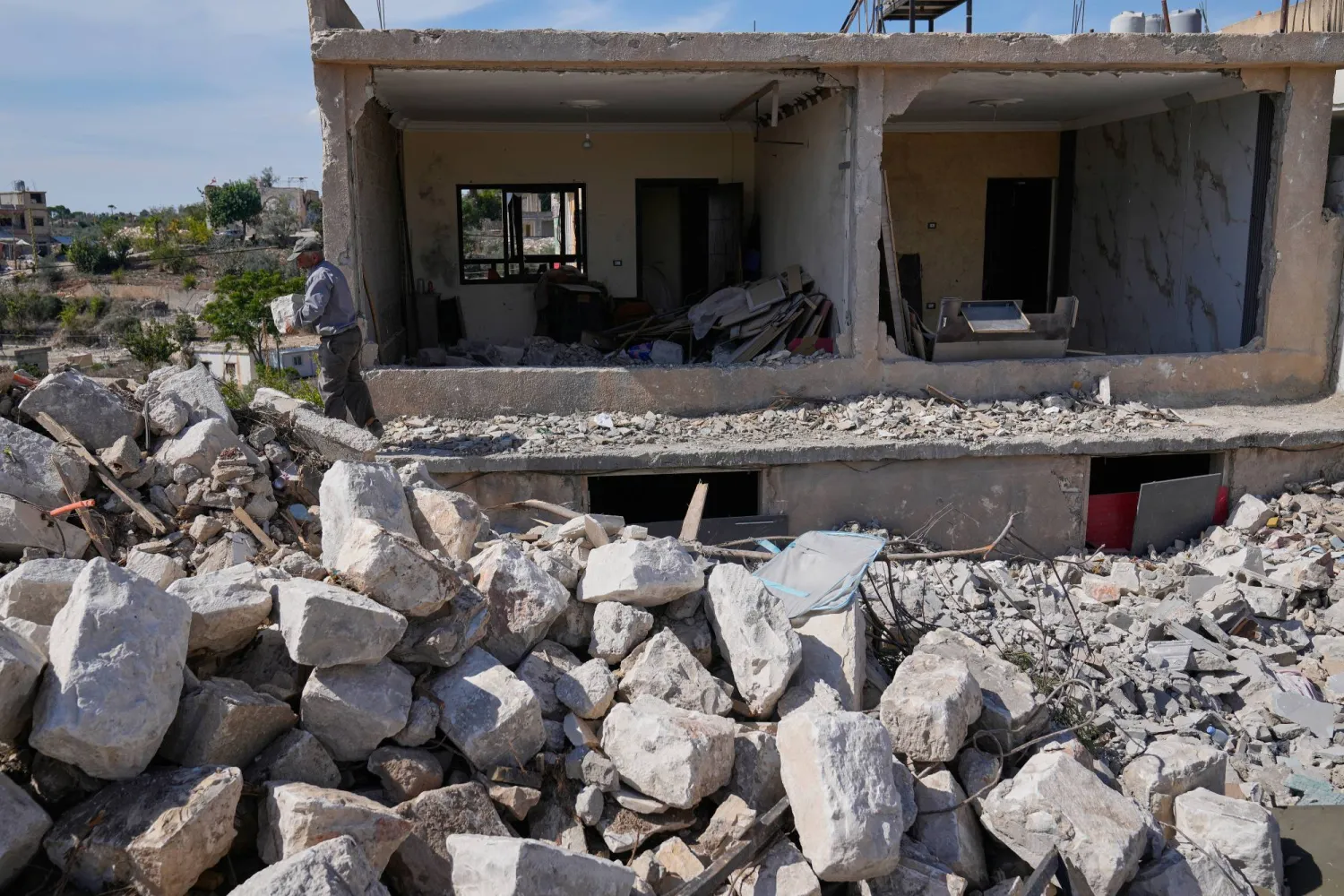
"The security zone has been cleared of militants and weapons, is empty of residents, and will continue to be cleared of terrorist infrastructure, including the destruction of homes in front-line villages that have effectively become terrorist outposts," Katz said.

The details of the truce also stipulate that Lebanon "with international support... will take meaningful steps to prevent Hezbollah" from undertaking any attacks against Israeli targets.