


Secret Recording of Iran FM Suggests Downing of Ukraine Plane was Intentional

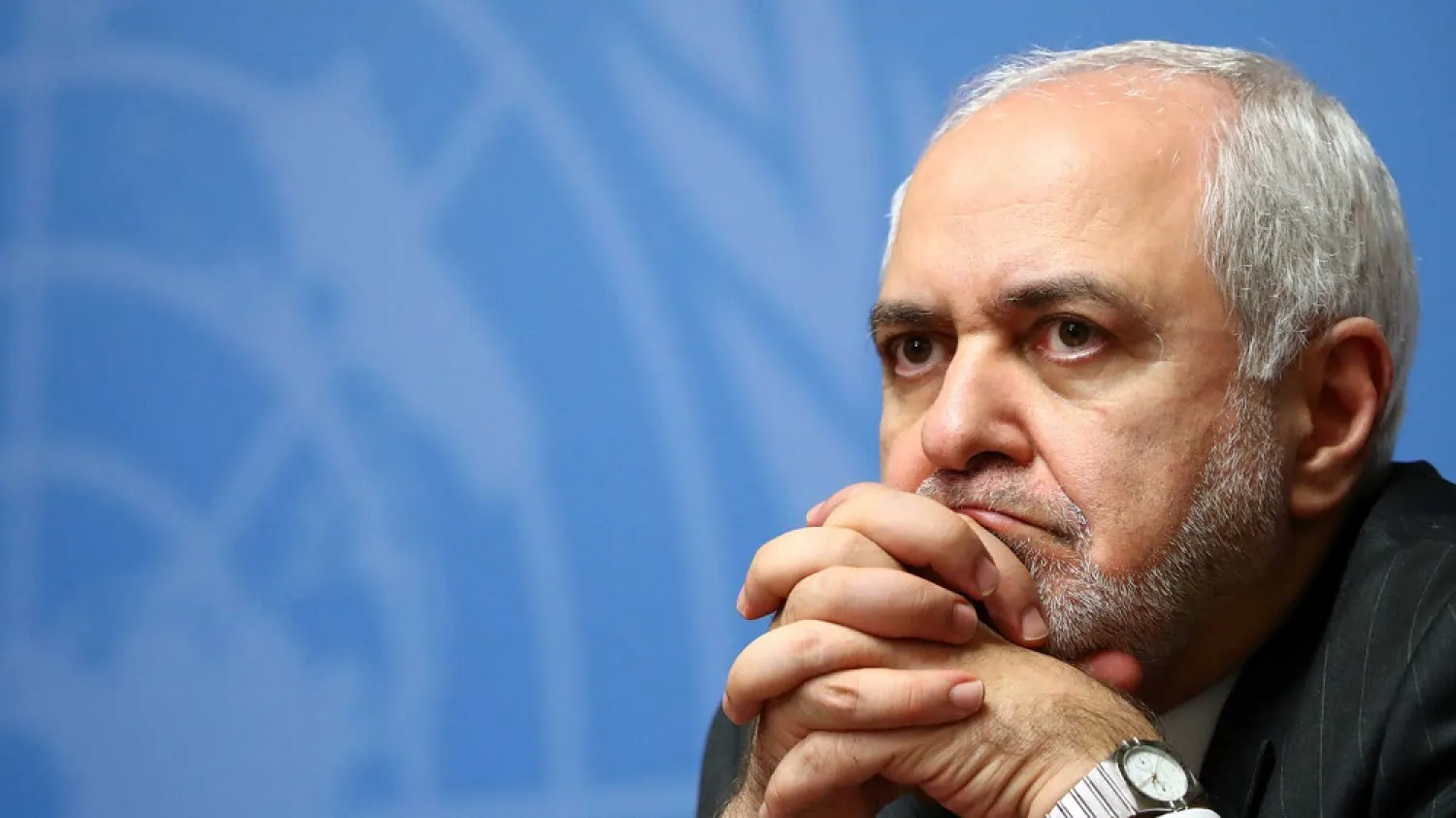
Iranian FM Mohammad Javad Zarif. (Reuters file photo)
TT

Secret Recording of Iran FM Suggests Downing of Ukraine Plane was Intentional

Iranian FM Mohammad Javad Zarif. (Reuters file photo)

The Canadian government and security agencies are reviewing an audio recording in which a man — identified by sources as Iran's foreign minister — discusses the possibility that the downing of the Ukrainian passenger plane in January 2020 was an intentional act, CBC News reported.

“The individual, identified by sources as Minister of Foreign Affairs Mohammad Javad Zarif, is heard saying on the recording that there are a ‘thousand possibilities’ to explain the downing of the jet, including a deliberate attack involving two or three ‘infiltrators’ — a scenario he said was ‘not at all unlikely’,” said the report.

He is also heard saying the truth will never be revealed by the highest levels of Iran's government and military.

“There are reasons that they will never be revealed,” he says in Farsi. “They won't tell us, nor anyone else, because if they do it will open some doors into the defense systems of the country that will not be in the interest of the nation to publicly say.”

On Jan. 8, 2020, Iran's Revolutionary Guard Corps shot down Ukraine International Airlines Flight 752 in the skies over Tehran with two surface-to-air missiles, killing all 176 people aboard, including 138 people with ties to Canada.

CBC News has listened to the recording of the private conversation, which took place in the months immediately following the destruction of Flight PS752. CBC had three people translate the recording from Farsi to English to capture nuances in the language.

The details of the conversation, and the identities of the others involved, are not being released publicly due to concerns for individuals' safety. CBC is not revealing the source of the recording in order to protect their identities.

Ralph Goodale, the prime minister's special adviser on the Flight PS752 file, said the government is aware of the recording. Canada's forensic examination and assessment team obtained a copy in November, he said, according to the report.

Goodale said the audio file contains sensitive information and commenting publicly on its details could put lives at risk.

He said the RCMP, the Canadian Security Intelligence Service and the Communications Security Establishment are evaluating the recording's authenticity. A CSE spokesperson would not offer comment on the recording, saying the agency “does not comment on intelligence operations.”

“We're treating all the evidence and all the potential evidence with the seriousness and the gravity that it deserves,” said Goodale.

‘Infiltrators’
Over the past year, Zarif has maintained the government's official claim that human error was to blame for the disaster. Shortly after the crash, Zarif said it was “brave” of the military to claim responsibility — but added military officials kept him and the president in the dark for days, continued the CBC report.

Iran originally denied any involvement in the aircraft's destruction. Three days after the crash, and in the face of mounting satellite evidence, Iran's President Hassan Rouhani admitted its military “unintentionally” shot down the plane. He blamed human error, saying the military mistook the jetliner for a hostile target in the aftermath of an American drone strike that killed a high-ranking Iranian military general in Iraq.

Former foreign affairs minister Francois-Philippe Champagne has said he does not believe the destruction of the plane can be blamed on human error.

On the Farsi-language recording reviewed by CBC News, the individual identified as Zarif is heard suggesting the downing was accidental — but later says it's possible “infiltrators” intentionally shot down the plane.

“Even if you assume that it was an organized intentional act, they would never tell us or anyone else,” says the individual. “There would have been two three people who did this. And it's not at all unlikely. They could have been infiltrators. There are a thousand possibilities. Maybe it was really because of the war and it was the radar.”

The individual goes on to say that “these things are not going to be revealed easily” by the Revolutionary Guard Corps (IRGC) or those higher up in the government.

The IRGC is an elite wing of the country's military overseen by Ali Khamenei, the country's supreme leader and commander-in-chief. The IRGC is designated as a terrorist organization by the US, Bahrain and Saudi Arabia.

In the recording, the man identified as Zarif points to Russia as an example of a country that was accused of involvement in shooting down a plane (Malaysia Airlines Flight 17 in 2014) but never admitted to it.

Push to compensate victims' families
The individual also refers more than once during the recording to compensation as a means to close “the issue” and says Iran wants to compensate victims' families to prevent other countries from turning the disaster into “an international crime.”

The individual says on the recording that while Iran would deliver the aircraft's flight recorders to France for analysis, the data recovered wouldn't show whether someone intentionally shot at the plane.

Despite international obligations stating the black boxes should be analyzed “without delay,” Iran didn't move ahead with that process until six months after the crash. Goodale's official report on Flight PS752, released in December, said Canada still hadn't seen “full disclosure ... on all relevant evidence.”

Iran proposed compensation of $150,000 for each of the victims' families, but Canada rejected that offer. Goodale said Iran doesn't have the right to offer compensation to victims' families unilaterally.

Recording is 'significant' evidence
Payam Akhavan, a former UN prosecutor and member of the permanent court of arbitration at The Hague, said the recording now in the hands of Canada's intelligence agencies is a “highly significant” piece of new evidence.

He said Zarif is not involved directly in military or intelligence operations, so the recording is not a “smoking gun” offering conclusive proof that the aircraft's destruction was intentional.

Zarif understands the inner workings of the IRGC and is a “highly influential and well-informed member of the highest level of the Iranian government,” Akhavan said, adding the recording suggests Iran did not conduct a proper investigation.

“The fact that he would say in a conversation that it is not at all unlikely that the destruction of 752 could have been organized and intentional is highly significant,” said Akhavan, who is also a senior fellow at the University of Toronto Faculty of Law.

“The fact that he sees that as a real possibility, I think, should make us pause and really consider whether there's not something far more diabolical at play.”

Ukrainian stance
Ukraine's Ambassador to Canada Andriy Shevchenko told CBC News that this is the first time Ukraine has heard about this recording, although the RCMP has been helping Ukraine with its own criminal investigation. He said he wants Ukraine to study this information carefully.

“I think it's another reason for us not to accept anything smaller than the truth,” Shevchenko said. “We do not want to see any scapegoats instead of real wrongdoers. We do not want to see the truth being hidden behind state secrecy. We want to get to the bottom of this.”

When asked if he thinks the downing of the plane was intentional, Shevchenko wouldn't rule it out.

“At this stage, we cannot exclude any possibilities,” he said.

“I think we are still so far away from having a clear picture on what happened ... We obviously lack trust in our conversation with Iran. I think we have a feeling that Iran shares as little information as possible.”



UK Police Charge Two Men with Belonging to Hezbollah, Attending Terrorism Training

Hezbollah flags flutter as protesters, mainly Houthi supporters, rally to show support to Palestinians in the Gaza Strip and Lebanon's Hezbollah, in Sanaa, Yemen September 27, 2024. (Reuters)
TT

UK Police Charge Two Men with Belonging to Hezbollah, Attending Terrorism Training

Hezbollah flags flutter as protesters, mainly Houthi supporters, rally to show support to Palestinians in the Gaza Strip and Lebanon's Hezbollah, in Sanaa, Yemen September 27, 2024. (Reuters)

Two British-Lebanese men appeared in a London court on Tuesday, charged with belonging to the banned Iran-backed group Hezbollah and attending terrorism training camps, with one of the two accused of helping procure parts for drones.

Annis Makki, 40, is charged with attending a terrorist training camp at the Birket Jabbour airbase in Lebanon in 2021, being involved in the preparation of terrorist acts, being a member of Hezbollah, and expressing support both for Hezbollah and the banned Palestinian group Hamas.

Mohamed Hadi Kassir, 33, is also accused of belonging to Hezbollah and attending a training camp in Baffliyeh in south Lebanon in 2015 and at the Birket Jabbour airbase in 2021. He indicated not guilty pleas to the charges.

Prosecutor Kristel Pous told Westminster Magistrates' Court that Kassir was "an entrenched member of Hezbollah" and that images had been found of him "training in a Hezbollah-controlled camp and undertaking hostage training exercises in 2015".

Pous also said Makki had access to a "wide-ranging Hezbollah network" which was linked to facilitating the acquisition of parts to be used in unmanned aerial vehicles.

Judge Paul Goldspring remanded both men in custody until their next court appearance at London's Old Bailey court on January 16.

The men were arrested at their home addresses in London in April and rearrested last week when they were subsequently charged.

Commander Dominic Murphy, head of London's Counter Terrorism Policing, said in a statement before Tuesday's hearing: "I want to reassure the public that I do not assess there is an ongoing threat to the wider public as a result of the activities of these two individuals."


Millions Facing Acute Food Insecurity in Afghanistan as Winter Looms, UN Warns

Boys stay on a hilltop overlooking Kabul, Afghanistan, Feb. 27, 2022. (AP)
TT

Millions Facing Acute Food Insecurity in Afghanistan as Winter Looms, UN Warns

Boys stay on a hilltop overlooking Kabul, Afghanistan, Feb. 27, 2022. (AP)

More than 17 million people in Afghanistan are facing crisis levels of hunger in the coming winter months, the leading international authority on hunger crises and the UN food aid agency warned Tuesday.

The number at risk is some 3 million more than a year ago.

Economic woes, recurrent drought, shrinking international aid and influx of Afghans returning home from countries like neighboring Iran and Pakistan have strained resources and added to the pressures on food security, reports the Integrated Food Security Phase Classification, known as IPC, which tracks hunger crises.

"What the IPC tells us is that more than 17 million people in Afghanistan are facing acute food insecurity. That is 3 million more than last year," said Jean-Martin Bauer, director of food security at the UN's World Food Program, told reporters in Geneva.

"There are almost 4 million children in a situation of acute malnutrition," he said by video from Rome. "About 1 million are severely acutely malnourished, and those are children who actually require hospital treatment."

Food assistance in Afghanistan is reaching only 2.7% of the population, the IPC report says — exacerbated by a weak economy, high unemployment and lower inflows of remittances from abroad — as more than 2.5 million people returned from Iran and Pakistan this year.

More than 17 million people, or more than one-third of the population, are set to face crisis levels of food insecurity in the four-month period through to March 2026, the report said. Of those, 4.7 million could face emergency levels of food insecurity.

An improvement is expected by the spring harvest season starting in April, IPC projected.

The UN last week warned of a "severe" and "precarious" crisis in the country as Afghanistan enters its first winter in years without US foreign assistance and almost no international food distribution.

Tom Fletcher, the UN humanitarian chief, told the Security Council on Wednesday that the situation has been exacerbated by "overlapping shocks," including recent deadly earthquakes, and the growing restrictions on humanitarian aid access and staff.

While Fletcher said nearly 22 million Afghans will need UN assistance in 2026, his organization will focus on 3.9 million facing the most urgent need of lifesaving help in light of the reduced donor contributions.


Suspected Militants Kill 2, Including a Police Officer Guarding Polio Team in Northwestern Pakistan

A health worker marks a child’s finger after administering a polio vaccination in Hyderabad, Pakistan, 15 December 2025. EPA/NADEEM KHAWAR
TT

Suspected Militants Kill 2, Including a Police Officer Guarding Polio Team in Northwestern Pakistan

A health worker marks a child’s finger after administering a polio vaccination in Hyderabad, Pakistan, 15 December 2025. EPA/NADEEM KHAWAR

Suspected militants opened fire on a police officer guarding a team of polio workers in northwestern Pakistan on Tuesday, killing the officer and a passerby before fleeing, police said.
No polio worker was harmed in the attack that occurred in Bajaur, a district of Khyber Pakhtunkhwa province bordering Afghanistan, according to local police chief Samad Khan, The Associated Press said.
No group immediately claimed responsibility for the attack, but suspicion is likely to fall on the Pakistani Taliban and other militant groups blamed by the government for similar attacks in the region and elsewhere in the country.
The shooting came a day after Pakistan launched a weeklong nationwide vaccination campaign aimed at immunizing 45 million children. According to the World Health Organization, Pakistan and Afghanistan remain the only two countries where polio has not been eradicated.
Prime Minister Shehbaz Sharif condemned the attack in a statement and vowed strong action against those responsible.
Pakistan has reported 30 polio cases since January, down from 74 during the same period last year, according to a statement from the government-run Polio Eradication Initiative.
Pakistan regularly launches campaigns against polio despite attacks on the workers and police assigned to the inoculation drives. Militants falsely claim the vaccination campaigns are a Western conspiracy to sterilize children.
More than 200 polio workers and police assigned to protect them have been killed in Pakistan since the 1990s, according to health and security officials.