


Climate Action in Fashion, as Big Clothing Brands Back Bangladesh Recycling Scheme

Antonio de Carvalho from Green World Recycling sorts through bags of clothing at the company's facility in Stourbridge, Britain, September 29, 2020. REUTERS/Phil Noble
TT

Climate Action in Fashion, as Big Clothing Brands Back Bangladesh Recycling Scheme

Antonio de Carvalho from Green World Recycling sorts through bags of clothing at the company's facility in Stourbridge, Britain, September 29, 2020. REUTERS/Phil Noble

Major fashion brands, including H&M, M&S and C&A, are getting behind an initiative in Bangladesh that aims to use more recycled materials in clothing production and significantly cut planet-heating emissions from manufacturing by 2030.

The Circular Fashion Partnership, announced this week, brings together more than 30 international brands, Bangladeshi recycling firms and garment manufacturers in a push to reuse textile waste from clothing factories to create new products.

If successful, the initiative could be replicated in other countries, such as Indonesia and Vietnam, and help cut the broader fashion industry’s emissions, said the Global Fashion Agenda (GFA), a nonprofit body that is leading the new scheme.

In 2018, the sector’s greenhouse gas (GHG) emissions were just over 2 billion tonnes, a figure that needs to be halved by 2030, to be in line with global climate goals, said the GFA, Reuters reported.

“Reducing environmental impacts such as GHG emissions and circularity go hand in hand,” said GFA spokeswoman Alice Roberta Taylor in e-mailed comments.

The partnership would cut carbon emissions from clothing production and demand for raw materials, which include fossil fuels, by slimming down the amount of waste and increasing the use of recycled materials over virgin materials, she noted.

Under the 2015 Paris climate accord, nearly 200 countries agreed to slash greenhouse gas emissions to net-zero by mid-century and limit global average temperature rise to “well below” 2 degrees Celsius above preindustrial times.

According to 2020 research by the GFA and McKinsey & Company, the fashion industry produces 4% of global climate-warming emissions - equal to the combined annual emissions of France, Germany and Britain - and needs to intensify its efforts to align with the Paris Agreement goals to curb climate change.

The UN Environment Program in 2019 put the fashion industry’s share of global carbon emissions at 10% - more than all international flights and maritime shipping combined - and said it was the second-biggest consumer of water.

Bangladesh - a low-lying nation considered highly vulnerable to climate change impacts such as intensifying floods, storms and sea level rise - is the world’s second-largest producer of clothes and its economy depends heavily on the garment industry.

But most waste from the industry is either exported or down-cycled for less valuable uses, said the GFA, adding the circular plan aims to change that by increasing the value of the waste.

Miran Ali, a director at the Bangladesh Garment Manufacturers and Exporters Association, said it was time for the fashion industry to move away from a linear business model of “take-make-dispose” and towards a circular approach.

As Bangladeshi factories produce items in large volumes, their waste is standardized, making it relatively easy to deal with, he noted. “Therefore, Bangladesh can be a global leader in the area of circular economy,” he said in a statement.

The Green Climate Fund, set up to help developing nations adopt clean energy and adapt to climate change, approved a separate project last year to help cut emissions in Bangladesh’s garment sector by enabling more efficient energy use.

H&M, one of the Bangladesh industry’s biggest clients, told the Thomson Reuters Foundation it is working on transforming its whole business to become “fully circular and climate positive.”

To get there, the Swedish fashion chain’s targets include making its supply chain “climate neutral” - meaning it does not contribute to global warming - and only using recycled or other sustainably sourced materials, both by 2030.

“As we move towards a business model based on a circular economy, our climate agenda is pushed. And we want to use our size and scale to make a difference,” Cecilia Strömblad Brännsten, H&M Group’s environmental sustainability manager, said by email.



Kering’s Fourth-Quarter Sales Fall Less Than Expected as Gucci Slide Continues

The logo of French luxury group Kering is seen at Kering headquarters in Paris, France, February 13, 2023. (Reuters)
TT

Kering’s Fourth-Quarter Sales Fall Less Than Expected as Gucci Slide Continues

The logo of French luxury group Kering is seen at Kering headquarters in Paris, France, February 13, 2023. (Reuters)

Kering reported on Tuesday a slightly smaller-than-expected drop in fourth-quarter sales, as investors await details of CEO Luca de Meo's plans ​to revive the Gucci owner's flagging fortunes.

Sales reached 3.9 billion euros ($4.64 billion), down 3% from the previous year when adjusted for currency swings. That beat analysts' consensus forecast for a 5% drop, according to Visible Alpha.

The revenue drop was 10% at Italian flagship label Gucci, which accounts for most of Kering's profits, versus analyst expectations of a 12% decline.

It ‌was the brand's ‌10th straight quarter of revenue ‌decline.

Finance ⁠Chief ​Armelle ‌Poulou told journalists Gucci saw some improvement at the end of last year in "almost all regions", helped by newly introduced products and handbag sales.

Grappling with weak sales since the maximalist styles of Gucci's former star designer Alessandro Michele fell out of fashion in 2022, Kering has faced heightened investor scrutiny over its high ⁠debt and declining profitability.

Free cash from operations fell by 35% last year ‌when excluding one-off payments from real estate ‍sales, reaching 2.3 billion euros, Kering ‍said.

"For Kering, it's really about (restoring) the broad desirability globally," said ‍JPMorgan analyst Chiara Battistini.

Facing an uncertain business outlook, the group, which also owns Gucci Balenciaga, Bottega Veneta and Yves Saint Laurent, further reduced its store network by 75 boutiques with further closures planned, Poulou said.

The ​earnings underscored the steep challenges Kering faces to catch up with peers even though its shares have ⁠risen around 50% since de Meo's appointment was announced last June.

"2025 did not reflect Kering's true potential or the strength of our brands, but it enabled us to lay the foundations for our future recovery," said Poulou.

Kering's annual operating income reached 1.63 billion euros, less than a third of its 2022 level. Kering's operating profit margin fell to 11% group-wide and 16% at Gucci, down from 28% and 36% three years earlier.

By contrast, LVMH delivered a 22% margin last year amid ‌a broader luxury slowdown, with its leather and fashion division - home to Louis Vuitton and Dior - hitting 35%.


Pieter Mulier Named Creative Director of Versace

(FILES) Pieter Mulier attends the 2025 CFDA Awards at The American Museum of Natural History on November 03, 2025 in New York City. (Photo by Dimitrios Kambouris / GETTY IMAGES NORTH AMERICA / AFP)
TT

Pieter Mulier Named Creative Director of Versace

(FILES) Pieter Mulier attends the 2025 CFDA Awards at The American Museum of Natural History on November 03, 2025 in New York City. (Photo by Dimitrios Kambouris / GETTY IMAGES NORTH AMERICA / AFP)

Belgian fashion designer Pieter Mulier has been named the new creative director of the Milan fashion house Versace starting July 1, according to an announcement on Thursday from the Prada Group, which owns Versace.

Mulier is currently creative director of the French fashion house Alaïa, and was previously the right-hand man of fellow Belgian designer and Prada co-creative director Raf Simons at Calvin Klein, Jil Sander and Dior.

In his new role, Mulier will report to Versace executive chairman Lorenzo Bertelli, the designated successor to manage the family-run Prada Group. Bertelli is the son of Miuccia Prada and Prada Group chairman Patrizio Bertelli.

“We believe that he can truly unlock Versace’s full potential and that he will be able to engage in a fruitful dialogue,’’ The Associated Press quoted Lorenzo Bertelli as saying of Mulier in a statement.

Mulier takes over from Dario Vitale, who departed in December after previewing just one collection during his short-lived Versace stint.

Mulier was honored last fall by supermodel and longtime Alaïa muse Naomi Campbell at the Council of Fashion Designers of America for his work paying tribute to brand founder Azzedine Alaïa. Mulier took the creative helm in 2021, after Alaïa’s death.


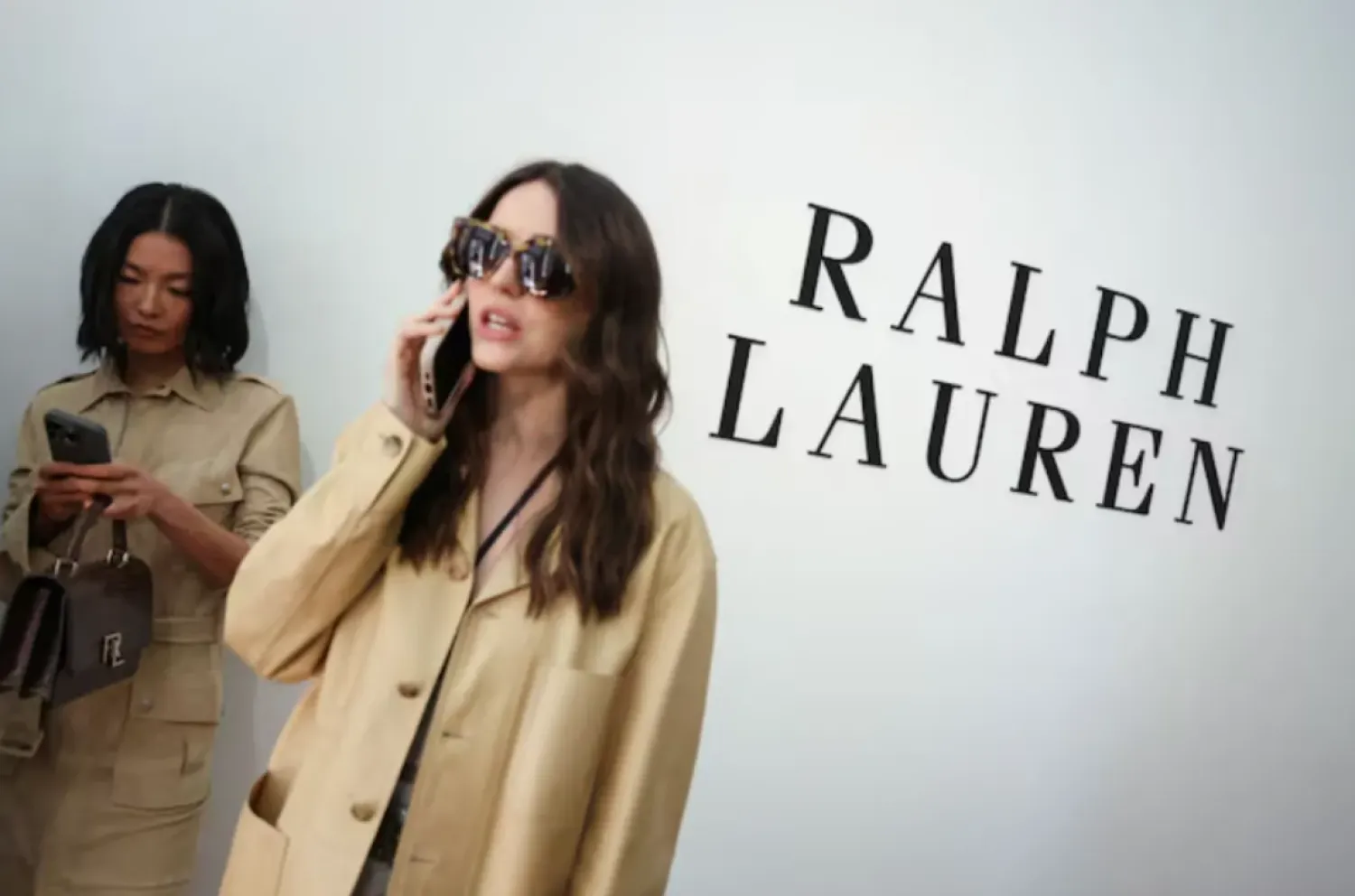
Ralph Lauren’s Margin Caution Eclipses Stronger‑than‑expected Quarterly Results

Guests wait after viewing the latest Ralph Lauren collection in New York City, US, April 17, 2025. REUTERS/Caitlin Ochs/File photo
TT

Ralph Lauren’s Margin Caution Eclipses Stronger‑than‑expected Quarterly Results

Guests wait after viewing the latest Ralph Lauren collection in New York City, US, April 17, 2025. REUTERS/Caitlin Ochs/File photo

Ralph Lauren posted third-quarter results above Wall Street estimates on Thursday, but the luxury retailer's warning of margin pressure tied to US tariffs sent its shares down nearly 6.4% in premarket trading.

The company expects fourth-quarter margins, its smallest revenue period, to shrink about 80 to 120 basis points due to higher tariff pressure and marketing spend.

Ralph Lauren, which sources its products from regions such as China, India and Vietnam, has relied on raising prices and reallocating production to regions with lower duty exposure to offset US tariff pressures, Reuters reported.

"Ralph Lauren has been able to raise prices for some time now. There is some limit on how long it can continue to do this. I think (the company's) gross margins are near peak levels," Morningstar analyst David Swartz said.

The company, which sells $148 striped linen shirts and $498 leather handbags, has tightened inventory, lifted full-price sales and refreshed core styles, boosting its appeal among wealthier and younger customers, including Gen Z.

Higher-income households are still splurging on luxury items, travel and restaurant meals, while lower- and middle-income consumers are strained by higher costs for rents and food as well as a softer job market.

The New York City-based company saw quarterly operating costs jump 12% year-on-year as it ramped up brand building efforts through sports-focused brand campaigns such as Wimbledon and the US Open tennis championship.

The luxury retailer said revenue in the quarter ended December 27 rose 12% to $2.41 billion, above analysts' estimates of a 7.9% rise to $2.31 billion, according to data compiled by LSEG.

It earned $6.22 per share, excluding items, compared to expectations of $5.81, aided by a 220 basis points increase in margins and an 18% rise in average unit retail across its direct-to-consumer channel.

Ralph Lauren now expects fiscal 2026 revenue to rise in the high single to low double digits on a constant currency basis, up from its prior forecast of a 5% to 7% growth.