


Iran's Zarif Says Ending IAEA Snap Inspections Doesn't Breach Nuclear Deal

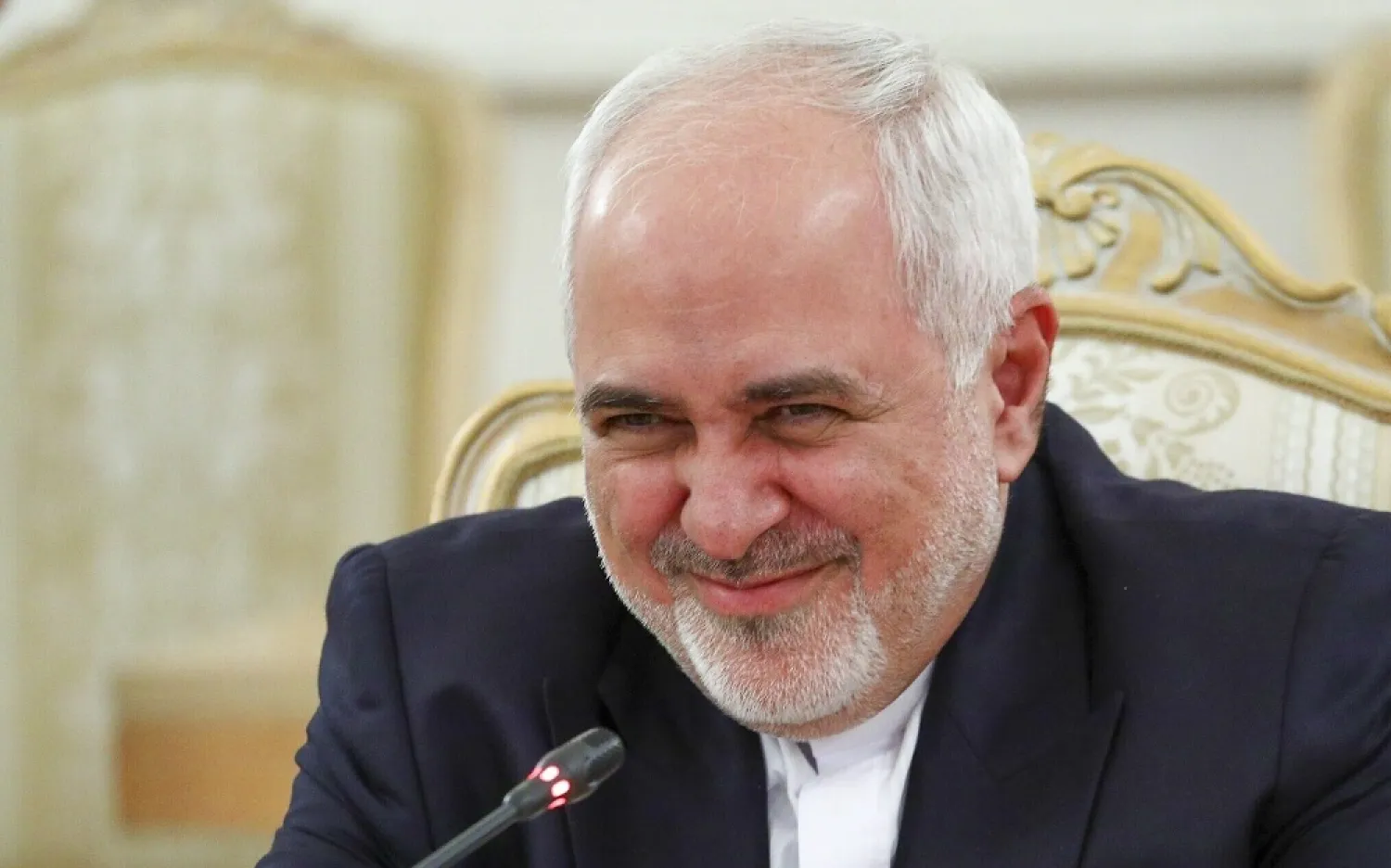
Iranian Foreign Minister Mohammad Javad Zarif smiles during talks in Moscow, Russia, September 24, 2020. (AP)
TT

Iran's Zarif Says Ending IAEA Snap Inspections Doesn't Breach Nuclear Deal

Iranian Foreign Minister Mohammad Javad Zarif smiles during talks in Moscow, Russia, September 24, 2020. (AP)

Iran’s decision to end snap inspections by UN inspectors on Feb. 23 would not mean abandoning its 2015 nuclear deal, but the United States must still lift sanctions on Tehran to rescue the pact, Foreign Minister Mohammad Javad Zarif said on Sunday.

“All our steps (to breach the deal) are reversible...The move on Feb. 23 is not abandoning the deal,” Zarif said in a televised interview with Iran’s English Language Press TV.

Under a law enacted by hardline Iranian lawmakers last year, the government is obliged on Feb. 23 to limit IAEA inspections to declared nuclear sites only, revoking its short-notice access to any location seen as relevant for information-gathering, if other parties did not fully comply with the deal.

President Joe Biden’s administration said on Thursday it was ready to talk to Iran about both nations returning to the accord, which aimed to prevent Tehran from acquiring nuclear weapons while lifting most international sanctions. Former President Donald Trump pulled the United States out of the accord in 2018 and reimposed sanctions on Iran.

But Iran and the United States have been at odds over who should take the first step to revive the accord. Iran insists the United States must first lift US sanctions while Washington says Tehran must first return to compliance with the deal.

Zarif reiterated Iran’s stance that Washington should take the first step by lifting all sanctions, if it wants to revive the accord.

“The United States must return to the deal and lift all sanctions ... The United States is addicted to sanctions but they should know that Iran will not yield to pressure,” he said. “We are not seeking nuclear weapons.”

Zarif also said that “for all practical purposes” the Biden administration is pursuing the same policy of “maximum pressure” as Trump.

Rafael Grossi, director-general of the International Atomic Energy Agency who is in Tehran to discuss the agency’s “essential verification activities” met on Sunday with Iran´s atomic chief, state media reported.

Ali Akbar Salehi, head of the Atomic Energy Organization of Iran, said on Saturday that the agency’s concerns over Iran’s ending the implementation of the IAEA’s Additional Protocol - which entails snap inspections - will be discussed during his meeting with Grossi.

No access to cameras
Zarif, who under President Hassan Rouhani helped reach the nuclear deal, said the cameras of the IAEA would be shut off despite Grossi's visit.

“This is not a deadline for the world. This is not an ultimatum,” Zarif said. “This is an internal domestic issue between the parliament and the government.”

“We have a democracy. We are supposed to implement the laws of the country. And the parliament adopted legislation — whether we like it or not.”

Zarif's comments marked the highest-level acknowledgement yet of what Iran planned to do when it stopped following the so-called “Additional Protocol,” a confidential agreement between Tehran and the IAEA reached as part of the nuclear deal. The IAEA has additional protocols with a number of countries it monitors.

Under the protocol with Iran, the IAEA “collects and analyzes hundreds of thousands of images captured daily by its sophisticated surveillance cameras,” the agency said in 2017. The agency also said then that it had placed “2,000 tamper-proof seals on nuclear material and equipment.”

In his interview, Zarif said authorities would be “required by law not to provide the tapes of those cameras.” It wasn't immediately clear if that also meant the cameras would be turned off entirely as Zarif called that a “technical decision, that's not a political decision.”

“The IAEA certainly will not get footage from those cameras,” Zarif said.

The Vienna-based IAEA did not immediately respond to a request for comment on Zarif's comments. The agency last week said the visit was aimed at finding “a mutually agreeable solution for the IAEA to continue essential verification activities in the country.”



ISIS Affiliate Claims Suicide Bombing that Killed 31 at Mosque in Pakistani Capital

Mourners attend funeral prayer of the victims of Friday suicide bombing inside a mosque, in Islamabad, Pakistan, Saturday, Feb. 7, 2026. (AP Photo/Anjum Naveed)
TT

ISIS Affiliate Claims Suicide Bombing that Killed 31 at Mosque in Pakistani Capital

Mourners attend funeral prayer of the victims of Friday suicide bombing inside a mosque, in Islamabad, Pakistan, Saturday, Feb. 7, 2026. (AP Photo/Anjum Naveed)

An affiliate of the ISIS group claimed responsibility overnight for a deadly suicide bombing inside a Shiite mosque on the outskirts of Pakistan’s capital that killed 31 people and wounded 169 others, as mourners gathered Saturday under tight security at the same mosque for funerals for the victims.

The regional ISIS affiliate, known as ISIS in Pakistan, claimed responsibility in a statement posted on its Amaq News Agency. It said the attacker arrived, opened fire on security guards who tried to stop him at the main gate and detonated his explosive vest after reaching the mosque’s inner gate.

The ISIS group suggested it viewed the Pakistani Shiites as legitimate targets, calling them a “human reservoir” that provided recruits to Shiite militias fighting ISIS in Syria.

Friday’s mosque bombing was the deadliest in Islamabad since a 2008 suicide bombing at the Marriott Hotel that killed 63 people and wounded more than 250. In November, a suicide bomber struck outside a court in the capital, killing 12 people.

The latest attack comes as Prime Minister Shehbaz Sharif’s government has had to deal with a surge in militant attacks across Pakistan. According to Pakistani authorities, the attacker was a Pakistani national who had recently traveled to Afghanistan.

Authorities said several suspects, including the brother, mother and other relatives of the bomber, were arrested during overnight raids in Islamabad and in northwestern Pakistan, and that a police officer was killed in the operation.

More than 2,000 grief-stricken mourners gathered as coffins of those killed were brought to the mosque for funerals. Senior government officials and leaders of the Shiite community were among those who attended the funerals for about a dozen victims. Funerals of other victims were to be held in their home towns.

Pakistan's Defense Minister Khawaja Mohammad Asif told reporters Friday that the attack signaled that Pakistan-based militants operating from Afghanistan could strike even in the capital.

His remarks drew a sharp response from Afghanistan’s Taliban government.

In a statement, Afghanistan’s Defense Ministry condemned the mosque attack in Islamabad but said the Pakistani defense minister had “irresponsibly” linked it to Afghanistan. Pakistan has frequently accused Afghanistan, where the Taliban returned to power in August 2021, of harboring militants, including members of the Pakistani Taliban. Kabul denies the accusations.

The attack also drew condemnation from the international community, including the United States, Russia and the European Union.

Prime Minister Sharif said he was grateful for the messages of sympathy and support received “from across the globe” following what he called a “heart-wrenching suicide attack in Islamabad.” He said international support remained critical to Pakistan’s counterterrorism efforts and vowed the perpetrators would be brought to justice.


Man Charged with Threatening to Kill US Vice President

US Vice President JD Vance and US second lady Usha Vance watch the opening ceremony of the Milano Cortina 2026 Winter Olympic Games at the San Siro stadium in Milan, northern Italy, on February 6, 2026. (AFP)
TT

Man Charged with Threatening to Kill US Vice President

US Vice President JD Vance and US second lady Usha Vance watch the opening ceremony of the Milano Cortina 2026 Winter Olympic Games at the San Siro stadium in Milan, northern Italy, on February 6, 2026. (AFP)

A federal grand jury charged a 33-year-old man with threatening to kill US Vice President JD Vance during his visit to Ohio in January, the Justice Department said on Friday.

Shannon Mathre, a resident of Toledo, Ohio, is accused of "making a threat to take the life of, and to inflict bodily harm upon" the vice president, the department said in a statement.

Mathre reportedly said he was "going to find out where he (the vice president) is going to be and use my M14 automatic gun and kill him," according to the statement. It did not say where he made the comment.

US Secret Service agents arrested Mathre on Friday.

The threat is the latest reported incident involving Vance.

Vance said in early January "a crazy person" had tried to break into his Ohio home by hammering on the windows. The vice president and his family were not home at the time, and a 26-year-old man was taken into custody, according to US media reports.

The Justice Department said on Friday it found "multiple digital files of child sexual abuse materials" in Mathre's possession while investigating the alleged threat against Vance.

Mathre made his initial court appearance before a US Magistrate Judge for the Northern District of Ohio on Friday.

He is in custody pending a detention hearing on February 11, the Justice Department said.


Iran’s FM Criticizes Israel After Nuclear Talks with US

Iran's Foreign Minister Abbas Araghchi looks on as he speaks during the 17th edition of the Al Jazeera Forum in Doha on February 7, 2026. (AFP)
TT

Iran’s FM Criticizes Israel After Nuclear Talks with US

Iran's Foreign Minister Abbas Araghchi looks on as he speaks during the 17th edition of the Al Jazeera Forum in Doha on February 7, 2026. (AFP)

Iran's Foreign Minister Abbas Araghchi on Saturday criticized what he said was a "doctrine of domination" that allows Israel to expand its military arsenal while pressuring other countries in the region to disarm.

His remarks came a day after renewed nuclear talks with Washington, with previous talks collapsing when Israel launched an unprecedented bombing campaign against Iran last June that triggered a 12-day war.

Araghchi was speaking at the Al Jazeera Forum conference in Qatar but made no reference to Friday's talks with the United States.

"Israel's expansionist project requires that neighboring countries be weakened: militarily, technologically, economically and socially," Araghchi said.

"Under this project Israel is free to expand its military arsenal without limits ... Yet other countries are demanded to disarm. Others are pressured to reduce defensive capacity. Others are punished for scientific progress," he added.

"This is a doctrine of domination."

During the 12-day war Israel targeted senior Iranian military officials, nuclear scientists and sites as well as residential areas, with the US later launching its own attacks on key nuclear facilities.

Iran responded at the time with drone and missile attacks on Israel, as well as by targeting the largest US military base in the Middle East, located in Qatar.

On Friday, Araghchi led the Iranian delegation in indirect nuclear talks with US Middle East envoy Steve Witkoff in Muscat.

The top Iranian diplomat later described the atmosphere as having been "very positive", while US President Donald Trump said the talks were "very good," with both sides agreeing to proceed with further negotiations.

The talks followed threats from Washington and its recent deployment of an aircraft carrier group to the region following Iran's deadly crackdown on anti-government protests last month.

The United States has sought to address Iran's ballistic missile program and its support for militant groups in the region -- issues which Israel has pushed to include in the talks, according to media reports.

Tehran has repeatedly rejected expanding the scope of negotiations beyond the nuclear issue.