

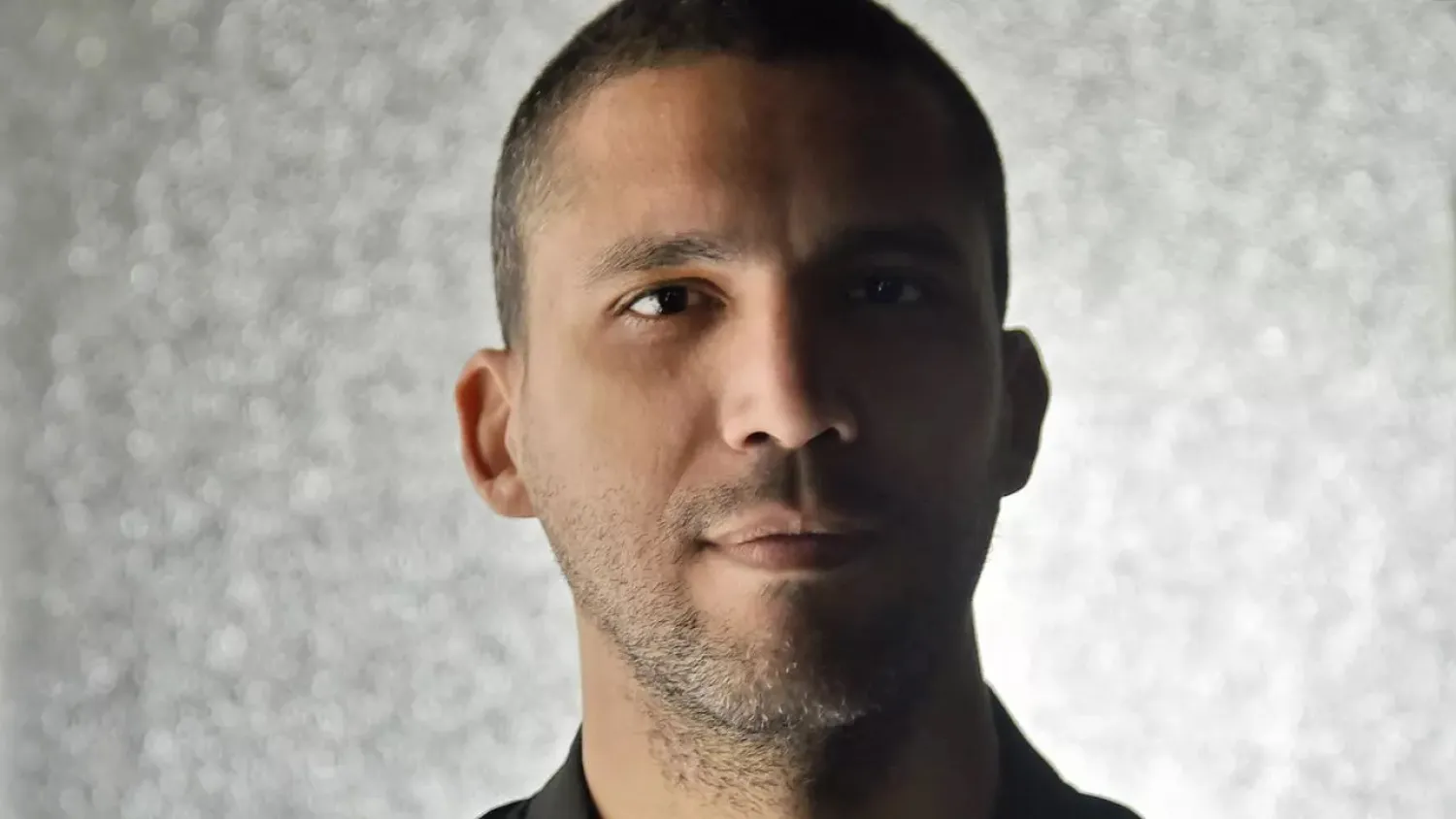

Freed Algeria Journalist Vows to Fight on for Press Freedom

Journalist Khaled Drareni has become a symbol of the fight for press freedom in Algeria. (AFP)
TT

Freed Algeria Journalist Vows to Fight on for Press Freedom

Journalist Khaled Drareni has become a symbol of the fight for press freedom in Algeria. (AFP)

Prominent Algerian journalist Khaled Drareni, released after almost a year in prison following a presidential pardon, has vowed to keep up the fight for the "sacred, untouchable" freedom of the press.

A huge crowd of well-wishers greeted Drareni, a correspondent for French-language TV5 Monde and press freedom watchdog Reporters Without Borders (RSF), when he walked out of the Kolea prison west of Algiers last Friday.

The former television presenter and founder of online news site the Casbah Tribune had become a symbol of the fight for freedom of press and expression in Algeria, at a time when authorities have cracked down on dissent, detaining and prosecuting activists, opposition figures, journalists and social media users.

"I hope that my time in prison will contribute to strengthening press freedom in Algeria and making it a sacred, untouchable freedom," Drareni told AFP, from his family home in the capital Algiers.

The 40-year-old appeared relaxed and smiling, an improvement from his gaunt appearance in September during his trial.

"I am very well, in good health, happy to see my family again," he said.

"Prison lasted a bit longer than expected, but I am very glad" to be out, he added.

'Journalists don't deserve to go to prison'
President Abdelmadjid Tebboune last week declared dozens of pardons in a gesture of appeasement, as the Hirak protest movement, which swept former strongman Abdelaziz Bouteflika from power in 2019, gathers momentum once again.

Drareni became known not only as a television presenter but also for his online activism, sharing photos and statements live from the Hirak protests on social media.

He was arrested in March last year on charges of "inciting an unarmed gathering" and "endangering national unity" after covering the demonstrations, and was sentenced on appeal in September to two years in jail.

Authorities had accused him of working for a foreign media outlet without accreditation -- a thorny bureaucratic process in Algeria -- against a backdrop of allegations of being in the service of "foreign embassies".

The independent journalist says he was only ever doing his job.

"Journalists don't deserve to go to prison," Drareni said.

"I hope to be the last Algerian journalist to end up in jail."

'Every day, in every country'
A global solidarity campaign grew up in support of Drareni, and relatives, friends, activists and even strangers have come to see him and pay their respects since his release.

They include fellow journalist and ex-detainee Fodil Boumala, and Walid Kechida, an activist in his twenties who was jailed for publishing online memes mocking the authorities and religion.

Despite the release of around 40 detainees, prisoners' rights group CNLD said around 30 people are still in custody in connection with the Hirak protest movement.

Drareni's release is only provisional, pending a supreme court appeal hearing Thursday.

But the self-described "eternal optimist" said he was ready to pick up his work as a journalist and advocate for press freedom where he left off.

"I don't know how to be anything but a journalist," he said. "It is a job that I have done with pride and pleasure for 15 years."

Reporters Without Borders ranked Algeria 146 out of 180 countries and territories in its 2020 World Press Freedom Index.

"The battle for press freedom is fought every day and in every country," Drareni said.

"It must be a universal battle, and as an Algerian journalist I am ready to keep up the fight."



Israel Demolishes Home of Palestinian Accused of Attack

A picture taken on September 30, 2025 shows the demolished house of Yahya Abu Ghaliyeh, a Palestinian from a Bedouin village near the town of Al-Eizariya, also known as Bethany, east of Jerusalem. (AFP)
TT

Israel Demolishes Home of Palestinian Accused of Attack

A picture taken on September 30, 2025 shows the demolished house of Yahya Abu Ghaliyeh, a Palestinian from a Bedouin village near the town of Al-Eizariya, also known as Bethany, east of Jerusalem. (AFP)

The Israeli army demolished on Wednesday the home of a Palestinian accused of carrying out a stabbing and shooting attack that killed an Israeli earlier this year, the military said, AFP reported.

On July 10, two attackers killed 22-year-old Shalev Zvuluny in a shopping area near Jerusalem, before the Israeli army shot them dead.

On Wednesday, Israeli army bulldozers entered the village of Bazzaryah in the occupied West Bank, destroying the family home of one of the attackers after it had been evacuated.

Israeli forces "demolished the home of the terrorist who carried out the shooting and stabbing attack at the Gush junction, during which Shalev Zvuluny... was murdered", the army said in a statement.

Hazem Yassine, head of the Bazzaryah municipal council, denounced what he called a "heinous crime".

He told AFP that Israeli forces had sealed off the village's entrances since dawn in preparation for the demolition.

"Schools were closed as a precaution," he said, adding that the assailant's family had moved out around a month ago after being notified of the decision to demolish the house.

An AFP photographer saw children climbing on piles of rubble after the demolition, waving the Palestinian flag.

Israel, whose army has occupied the West Bank since 1967, regularly demolishes the homes of Palestinians accused of carrying out deadly attacks against Israelis.

The government defends the deterrent effect of these demolitions, but critics denounce the practice as a form of collective punishment that leaves families homeless.

Violence in the West Bank surged during the war in Gaza, which erupted on October 7, 2023 with Hamas's attack on Israel.

Since then, Israeli soldiers or settlers have killed more than a thousand Palestinians in the West Bank, many of them militants but also including civilians, according to an AFP tally based on Palestinian Authority data.

At the same time, according to official Israeli figures, at least 44 Israelis, including civilians and soldiers, have been killed in Palestinian attacks or during Israeli military raids in the area.


A Blast in Gaza Wounds Soldier and Israel Accuses Hamas of Ceasefire Violation

A woman sits next to her tent on an alley of a makeshift tent camp for displaced Palestinians in Deir al-Balah, central Gaza Strip, Tuesday, Dec. 23, 2025. (AP Photo/Abdel Kareem Hana)
TT

A Blast in Gaza Wounds Soldier and Israel Accuses Hamas of Ceasefire Violation

A woman sits next to her tent on an alley of a makeshift tent camp for displaced Palestinians in Deir al-Balah, central Gaza Strip, Tuesday, Dec. 23, 2025. (AP Photo/Abdel Kareem Hana)

An explosive device detonated in Gaza on Wednesday, injuring one Israeli soldier and prompting Israel to accuse Hamas of violating the US-backed ceasefire. It was the latest incident to threaten the tenuous truce that has held since Oct. 10 as each side accuses the other of violations.

The blast came as Hamas met with Turkish officials in Ankara to discuss the second stage of the ceasefire. Though the agreement has mostly held, its progress has slowed, The AP news reported.

All but one of the 251 hostages taken in the Hamas-led attack on Oct. 7, 2023, that sparked the war have been released, alive or dead, in exchange for Palestinian prisoners and detainees. The ceasefire's second phase has even bigger challenges: the deployment of an international stabilization force, a technocratic governing body for Gaza, the disarmament of Hamas and further Israeli troop withdrawals from the territory.

Israel vows to ‘respond accordingly’ Israel's military said the explosive detonated beneath a military vehicle as soldiers were “dismantling” militant infrastructure in the southern city of Rafah. The lightly injured soldier was taken to a hospital, the military said.

Prime Minister Benjamin Netanyahu in a statement called the incident a violation of the ceasefire and said Israel would "respond accordingly.”

Israel previously launched strikes in Gaza in response to alleged ceasefire violations. On Oct. 19, Israel said two soldiers were killed by Hamas fire and it responded with a series of strikes that killed over 40 Palestinians, according to local health officials.

Hamas accuses Israel of violating the ceasefire by not allowing enough aid into the territory and continuing to strike civilians. Palestinian health officials say over 370 Palestinians have been killed by Israeli fire since the truce.

On Friday, Israeli troops fired over the ceasefire line in northern Gaza, killing at least five Palestinians, including a baby, according to a local hospital that received the casualties.

Turkish Foreign Minister Hakan Fidan met with a Hamas delegation led by Khalil al-Haya to discuss the ceasefire's second phase, according to ministry officials.

Fidan reaffirmed Türkiye's efforts to defend the rights of Palestinians and outlined ongoing efforts to address shelter and other humanitarian needs in Gaza, the officials said.

The Hamas delegation said they had fulfilled the ceasefire’s conditions but that Israel’s continued attacks were blocking progress toward the next stage. They also asserted that 60% of the trucks allowed into Gaza were carrying commercial goods rather than aid.

According to the officials, the meeting also discussed reconciliation efforts between the Palestinian factions and the situation in the Israeli-occupied West Bank, stressing that Israel’s actions there were “unacceptable.”


Algeria Passes Law Declaring French Colonization a Crime

Members of the committee drafting the law criminalizing colonialism (File Photo/ Algerian Parliament)
TT

Algeria Passes Law Declaring French Colonization a Crime

Members of the committee drafting the law criminalizing colonialism (File Photo/ Algerian Parliament)

Algeria's parliament unanimously approved on Wednesday a law declaring France's colonization of the country a crime, and demanding an apology and reparations.

Standing in the chamber, lawmakers wearing scarves in the colors of the national flag chanted "long live Algeria" as they applauded the passage of the bill, which states that France holds "legal responsibility for its colonial past in Algeria and the tragedies it caused".

The vote comes as the two countries are embroiled in a major diplomatic crisis, and analysts say that while Algeria's move is largely symbolic, it is still politically significant, AFP reported.

Parliament speaker Brahim Boughali told the APS state news agency before the vote that it would send "a clear message, both internally and externally, that Algeria's national memory is neither erasable nor negotiable".

The legislation lists the "crimes of French colonization", including nuclear tests, extrajudicial killings, "physical and psychological torture", and the "systematic plundering of resources".

It states that "full and fair compensation for all material and moral damages caused by French colonization is an inalienable right of the Algerian state and people".

France's rule over Algeria from 1830 until 1962 remains a sore spot in relations between the two countries.

The period was marked by mass killings and large-scale deportations, all the way up to the bloody war of independence from 1954-1962.

Algeria says the war killed 1.5 million people, while French historians put the death toll lower at 500,000 in total, 400,000 of them Algerian.

French President Emmanuel Macron has previously acknowledged the colonization of Algeria as a "crime against humanity", but has stopped short of offering an apology.

Asked last week about the vote, French foreign ministry spokesman Pascal Confavreux said he would not comment on "political debates taking place in foreign countries".

Hosni Kitouni, a researcher in colonial history at the University of Exeter in the UK, said that "legally, this law has no international scope and therefore is not binding for France".

But "its political and symbolic significance is important: it marks a rupture in the relationship with France in terms of memory," he said.