


Iran Arrested French Tourist 9 Months Ago, Says his Lawyer

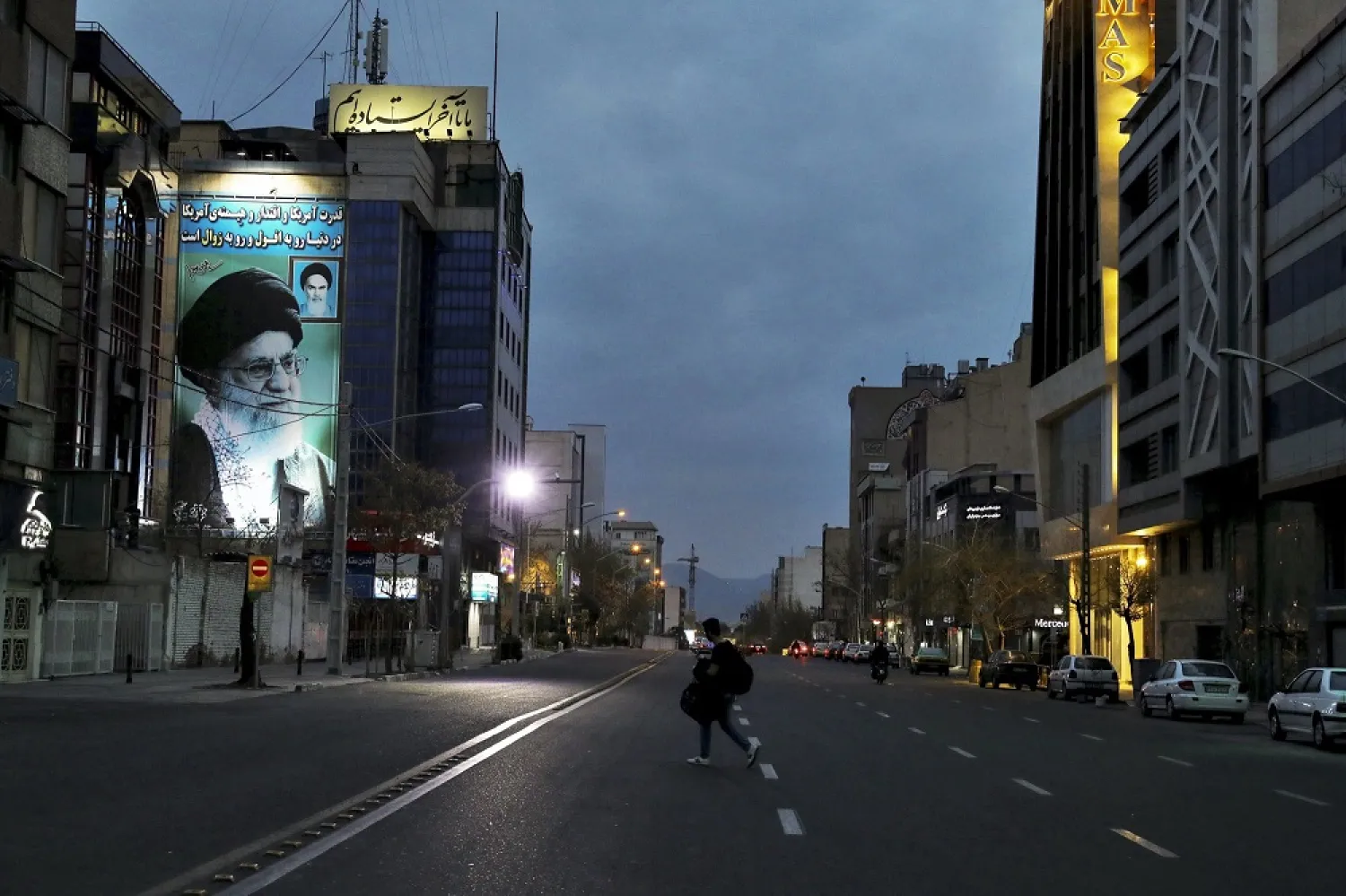
In this March 24, 2020 photo, a pedestrian crosses an empty street with a portrait of Iran's Supreme Leader Ali Khamenei, in Tehran, Iran. (AP)
TT

Iran Arrested French Tourist 9 Months Ago, Says his Lawyer

In this March 24, 2020 photo, a pedestrian crosses an empty street with a portrait of Iran's Supreme Leader Ali Khamenei, in Tehran, Iran. (AP)

Iran has detained a French tourist for nine months and his lawyers have been denied access to him, one of the lawyers, Saeid Dehghan, told Reuters on Wednesday.

The arrest comes at a sensitive time when the United States and European parties to Iran's 2015 nuclear deal are trying to restore the pact that was abandoned in 2018 by then-US President Donald Trump.

"His name is Benjamin and he is being held at the Vakilabad prison in the city of Mashhad. He was detained nine months ago and he faces contradictory and false charges," said Dehghan, who declined to give the French tourist's full name.

A person close to the family told Reuters the 35-year-old had been arrested after flying a drone in the desert near the Turkmenistan-Iran border.

French officials and his family had sought until now to keep the information secret due to the current disputes in the region, fearing it could harm potential negotiations.

Iran's judiciary was not available to comment. France's foreign ministry confirmed that a French citizen was being held in Iran, adding that it was monitoring the situation.

It said the French citizen benefited from consular protection and that embassy officials had been in regular contact with him.

The person close to the family said Benjamin, who works in the events industry, had travelled to Iran by van from France. He is in good health and has been in contact with the family three times since his arrest last May, including twice in the last few weeks, the person said.

Iran's Revolutionary Guards have arrested dozens of dual nationals and foreigners in recent years, mostly on espionage charges, including Franco-Iranian academic Fariba Adelkhah, whom Tehran sentenced to six years in prison in May 2020 for security-related charges.

However, her partner, French academic Roland Marchal, who was detained along with her, was released last year. Marchal was freed after France released Iranian engineer Jalal Ruhollahnejad, detained over alleged violations of US sanctions against Tehran.

Rights activists have accused Iran of arresting dual nationals and foreigners to try to win concessions from other countries. Tehran denies it holds people for political reasons and has accused many of the foreigners in its jails of espionage.

Adelkhah was released on furlough last October. Dehghan, who is also Adelkhah's lawyer, said she had been under house arrest since then.

"Of course, Adelkhah is wearing an ankle monitor which limits her movements to 300 m (985 feet) from home," Dehghan said.

French Foreign Minister Jean-Yves Le Drian, in a speech to the UN Human Rights Council on Monday, called for Adelkhah's release. Tehran, which does not recognize dual nationality, has rejected France's calls to release Adelkhah.

The United States has signaled it is ready to talk with Iran and global powers, including France, about how both nations could return to the 2015 agreement that aimed to prevent Tehran from acquiring nuclear weapons.

President Emmanuel Macron has previously tried to mediate between longtime foes Iran and the United States and said last month he was ready to resume that role.



Minister Says US Can Access Minerals, Military Bases in Somaliland

Minister of the Presidency of the Republic of Somaliland, Khadar Hussein Abdi looks on during an interview in Hargeisa on February 21, 2026. (Photo by Tony KARUMBA / AFP)
TT

Minister Says US Can Access Minerals, Military Bases in Somaliland

Minister of the Presidency of the Republic of Somaliland, Khadar Hussein Abdi looks on during an interview in Hargeisa on February 21, 2026. (Photo by Tony KARUMBA / AFP)

Somaliland is willing to give the United States access to its minerals and military bases, a minister has told AFP, as the breakaway region of Somalia seeks international recognition.

Israel became the only country in the world to recognize Somaliland's independence in December -- something the territory has been seeking since declaring its autonomy from Somalia in 1991.

The government in Mogadishu still considers Somaliland an integral part of Somalia even though the territory has run its own affairs since 1991, with its own passports, currency, army and police force.

"We are willing to give exclusive (access to our minerals) to the United States. Also, we are open to offer military bases to the United States," Khadar Hussein Abdi, minister of the presidency, told AFP in an interview on Saturday.

"We believe that we will agree on something with the United States."

Somaliland president Abdirahman Mohamed Abdullahi already suggested in recent weeks granting Israel privileged access to its mineral resources.

And Khadar Hussein Abdi said he could not rule out the possibility of also allowing Israel to set up a military presence.

The African Union and most Arab countries have thrown their support behind Somalia and condemned the move.

The US, however, defended what it said was Israel's right to recognize Somaliland, although President Donald Trump said he was unlikely to follow suit, despite pressure from some within his Republican party.


Senior Iranian Official: New Talks with US Planned in Early March, Interim Deal Possible

Pedestrians walk past a billboard depicting a US aircraft carrier with damaged fighter jets on its deck and a sign in Farsi and English reading, "If you sow the wind, you'll reap the whirlwind," in Tehran, Iran, Sunday, Feb. 22, 2026. (AP Photo/Vahid Salemi)
TT

Senior Iranian Official: New Talks with US Planned in Early March, Interim Deal Possible

Pedestrians walk past a billboard depicting a US aircraft carrier with damaged fighter jets on its deck and a sign in Farsi and English reading, "If you sow the wind, you'll reap the whirlwind," in Tehran, Iran, Sunday, Feb. 22, 2026. (AP Photo/Vahid Salemi)

Iran and the United States have differing views over the scope and mechanism to lift sanctions on Tehran in exchange for curbs on its nuclear program, a senior Iranian official told Reuters on Sunday, adding that new talks were planned in early March.

The official said Tehran could seriously ⁠consider a combination of ⁠exporting part of its highly enriched uranium (HEU) stockpile, diluting the purity of its HEU and a regional consortium for enriching uranium, but in return Iran's ⁠right to "peaceful nuclear enrichment" must be recognized.

"The negotiations continue and the possibility of reaching an interim agreement exists," the official said.

Iran's Foreign Minister Abbas Araqchi said on Friday that he expected to have a draft counterproposal ready within days following nuclear talks with the ⁠United ⁠States this week, while US President Donald Trump said he was considering limited military strikes.

The senior official said Tehran will not hand over control of its oil and mineral resources but US companies can always participate as contractors in Iran’s oil and gas fields.


Witkoff Says Trump Questioning why Iran Has Not 'Capitulated'

US Special Envoy Steve Witkoff listens as President Donald Trump (not pictured) speaks at the inaugural Board of Peace meeting at the US Institute of Peace in Washington, D.C., US, February 19, 2026. REUTERS/Kevin Lamarque
TT

Witkoff Says Trump Questioning why Iran Has Not 'Capitulated'

US Special Envoy Steve Witkoff listens as President Donald Trump (not pictured) speaks at the inaugural Board of Peace meeting at the US Institute of Peace in Washington, D.C., US, February 19, 2026. REUTERS/Kevin Lamarque

US envoy Steve Witkoff said on Saturday that President Donald Trump is questioning why Iran has not "capitulated" in the face of Washington's military build-up aimed at pressuring them into a nuclear deal.

The United States and Iran this week resumed Oman-mediated talks in Geneva aimed at averting the possibility of military action, after Washington dispatched two aircraft carriers, jets and weaponry to the region to back its warnings.

In a Fox News interview with Trump's daughter-in-law Lara, Witkoff said the president was "curious" about Iran's position after he had warned them of severe consequences in the event they failed to strike a deal.

"I don't want to use the word 'frustrated,' because he understands he has plenty of alternatives, but he's curious as to why they haven't... I don't want to use the word 'capitulated,' but why they haven't capitulated," AFP quoted him as saying.

"Why, under this pressure, with the amount of seapower and naval power over there, why haven't they come to us and said, 'We profess we don't want a weapon, so here's what we're prepared to do'? And yet it's sort of hard to get them to that place."

The US envoy also confirmed in the interview that he had met with Reza Pahlavi, who has not returned to Iran since before the 1979 Iranian Revolution that ousted the monarchy.

"I met him at the direction of the president," he said, without providing further details.

US-based Pahlavi last week told a crowd in Munich that he was ready to lead the country to a "secular democratic future" after Trump said regime change would be best for the country.

Witkoff's comments come after Iranian Foreign Minister Abbas Araghchi said a draft proposal for an agreement with Washington would be ready in a matter of days.

Trump said on Thursday that Iran had at most 15 days to make a deal on concerns starting with its nuclear program.

As talks between the two nations continued in Geneva, Iran's supreme leader Ali Khamenei on Tuesday said that Trump would not succeed in destroying the country.