Saudi Arabia’s sovereign wealth fund, the Public Investment Fund (PIF), has developed a strategy for expanding international assets that is centered around investing in some of the world’s most innovative companies.
This has contributed to building partnerships that will ensure placing the kingdom at the forefront of developing promising sectors and emerging industries in a way that supports the national transformation plan “Vision 2030” and the country’s efforts to diversify its economy.
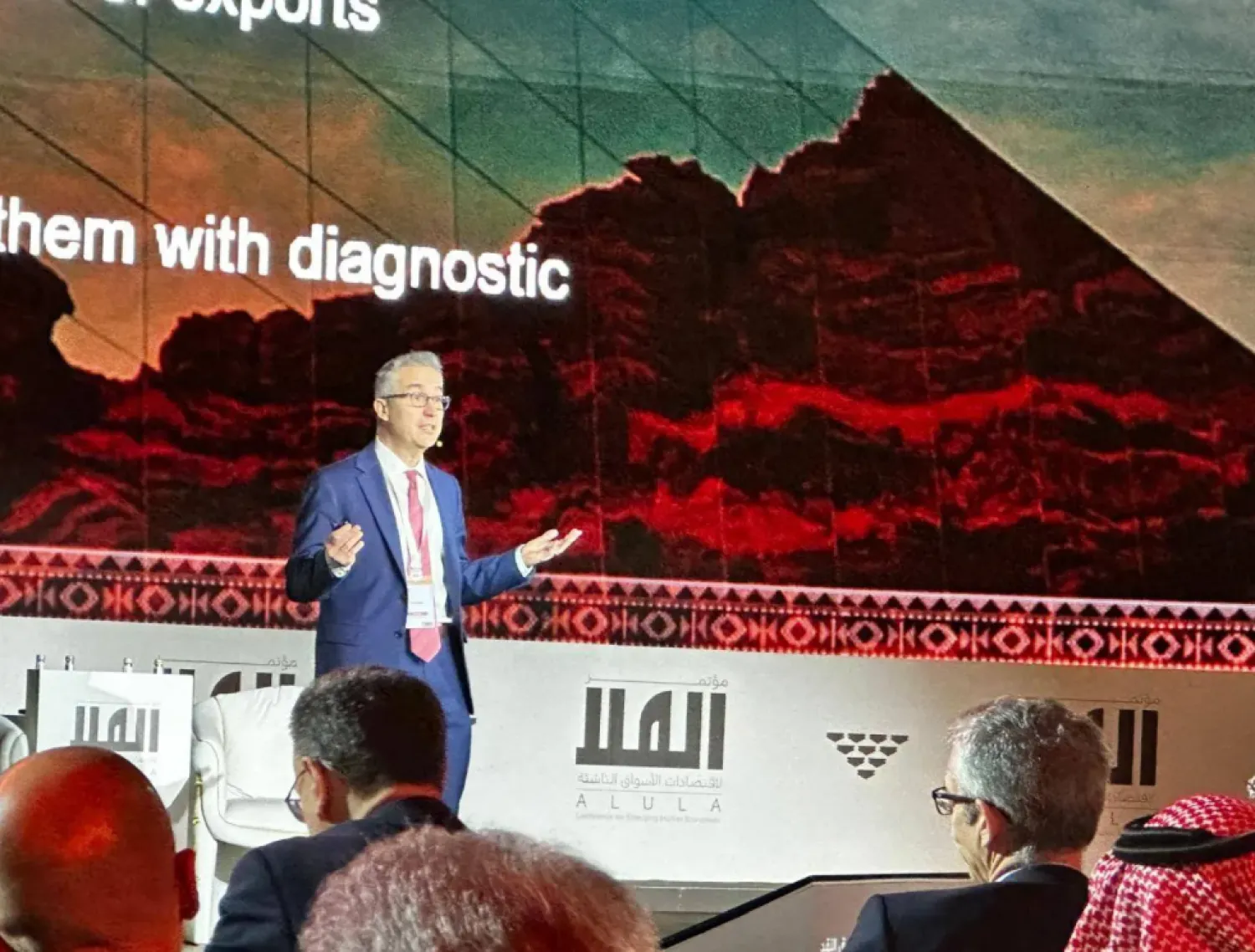
PIF’s Head of International Investments Division Turqi Al-Nowaiser said that the fund is strategically increasing the scope of its international investments across several innovative areas that are increasingly in global demand.
According to Al-Nowaiser, this will enrich the global portfolio of the fund, taking into account future global trends in investment, such as sustainable investment, technology, and innovation.
PIF currently has six investment pools, two of which are specialized for international investments.
Noting that PIF is seeking to expand its international assets, Al-Nowaiser confirmed that the fund is diversifying its investments and seizing available investment opportunities.
In the following interview with Asharq Al-Awsat, Al-Nowaiser discusses PIF’s global direction, the importance of localizing technology and knowledge, and the fund’s endeavors to seize opportunities that help achieve its objectives.
Saudi Arabia’s Crown Prince Mohammed bin Salman has launched PIF’s strategy as an engine for strategic and sustainable efforts to diversify the kingdom’s economy in line with the goals of “Vision 2030.” How will this be reflected in achieving economic diversification in Saudi Arabia?
Certainly, “Vision 2030” was based on unleashing the capabilities of promising non-oil sectors, and in this aspect, PIF was able to be an effective tool for enhancing the kingdom’s efforts for diversifying sources of revenue.
PIF’s achievements have helped realize financial sustainability, promote the growth of non-oil GDP, increase local content, empower the private sector, improve the quality of life in the kingdom, establish Saudi Arabia’s position as a global leader, and shape the future through innovation, seizing opportunities, and maximizing investments.
This aims to preserve the heritage of Saudi Arabia, achieve prosperity, and build a bright future for generations to come. As for performance, the fund was able to raise assets under management to about SR 1.5 trillion ($ 400 billion) by the end of 2020. It is seeking to further expand its assets, launch new sectors, build strategic partnerships, and localize technology and knowledge.
The fund seeks to grow its assets to SR4 trillion ($1.06 trillion) by the end of 2025, becoming one of the largest sovereign wealth funds in the world and a preferred investment partner. This will also establish the kingdom’s position in shaping the future of the global economy.
What objectives are set by the fund’s new strategy over the course of the next five years with respect to its two international investment pools?
At PIF, we are implementing an ambitious strategy that supports development and economic transformation efforts in Saudi Arabia over the next five years.
The fund has six main investment pools, two of which -- the “International Strategic Investments” and the “International Diversified Pool ”-- are dedicated to global investment.
It has already invested in a number of the most important innovative companies in the world and has built partnerships that will ensure that the kingdom is at the forefront of developing promising sectors and emerging industries, in a way that supports the country's efforts to diversify the economy in line with Vision 2030.
The fund continues to expand its international investments strategically across many innovative areas that are witnessing growth and an increase in global demand. This enriches the global portfolio of the fund while factoring in future global trends in investment that include sustainable investment, technology, innovation, and others.
More so, PIF seeks to continue earmarking capital for investments in international public and private markets. This will build the fund’s strategic partnerships, reduce risks, and achieve both long-term returns and diversification.
During the last period, the fund succeeded in building extensive relationships with various global investors, asset managers, investment banks, and international brokerage companies, becoming one of the largest investment entities in the world.
While maintaining a steady growth in assets and investments locally, the fund was able to consolidate its position internationally by increasing the volume of its global investments to more than 25% of total assets under management, compared to 5% in 2017.
Also, PIF expanded the geographic scope of its investments, reaching US, European, Asian, and other markets.
The fund has also successfully invested in various asset classes that include direct and indirect investments in public and private markets and stocks, fixed income, real estate, infrastructure, etc...
It also managed to diversify its investments in various sectors that encompass health, technology, real estate, infrastructure, consumer services, transportation, and others.
PIF’s international investments, during the coronavirus pandemic, adopted a strategy based on three axes that include: seizing opportunities, strategic investment, and emergency financing. Was this strategy able to achieve its target, and how?
Even though PIF has a long-term strategy for its investments, this does not prevent it from seizing short-term opportunities whenever they arise. For example, in 2020, the fund executed many deals in global public markets that were hit by the coronavirus pandemic and were witnessing a sharp drop in rates.
The fund seized investment opportunities in American, European, and Asian companies and made high profit. During the crisis, investment was concentrated in companies and exchange-traded funds (ETFs) in various sectors, such as pharmaceuticals, infrastructure, industries, and technology.
Saudi Arabia hopes to localize knowledge and technology and develop vital and promising sectors as part of “Vision 2030.” What is the role of international investments in this aspect, and how do they contribute to reaching these goals?
PIF seeks to help in localizing technology and knowledge through its international partnerships. Undoubtedly, this will support the kingdom's ability to assume a competitive global position.
Therefore, PIF aims to build long-term strategic international partnerships that realize its investment objectives, provide added value to transferring technologies and localizing knowledge, and increase the contribution of local content in the fund’s investments to 60% of the volume of spending by 2025.
PIF’s strategic global investment portfolio has contributed to the development of its direct and indirect assets in emerging companies and future industries. It also helped strengthen and build the fund’s relationships with innovative companies, influential investors, international counterparts, and investment managers.
Transferring capabilities and skills through strategic partnerships can be sampled through PIF’s experience exchange agreements with a number of leading international companies such as SoftBank.
PIF also worked with Lucid Motors to develop and manufacture electric vehicle technologies and build up training programs that have benefited many Saudi graduates. This will also help grow the kingdom’s electric car industry in the future.
PIF has quality investments in innovative and pioneering companies all over the world. Don't you think such companies, especially those dependent on future industries and sectors yet to be established, have a higher risk?
In general, the fund looks for suitable investment opportunities that achieve the best financial returns.
There is no doubt that the fund's investments in emerging companies and future industries are advancing the transfer of international expertise to Saudi Arabia and helping the kingdom grow its local competencies in cutting-edge technology.
It goes without saying that the diversification of the fund’s investment portfolio helps in balancing risks and returns. PIF follows a flexible and adaptive approach to ensure its success. It also persistently evaluates its assets in global markets in order to achieve the highest returns. This is the basis for the fund’s investment activities.
The technology sector is witnessing rapid growth. Humanity’s increased reliance on technology during the coronavirus pandemic has triggered a qualitative leap in the sector. What plans exist to enhance PIF’s global investments in this sector, especially in light of the fund’s efforts to become the largest technology investor over the next decade?
The fund has worked to develop strategic partnerships in the technology sector, which is intertwined with all future industries, through its international investment portfolios.
It also established a fund specialized in technology called the “SoftBank Vision Fund.” Considered one of the world’s largest investments in technology, the SoftBank Vision Fund is expected to receive up to $45 billion from PIF, making the kingdom one of the largest investors in global technology.
PIF’s international investments in the technology sector also include Uber, in which the fund has invested $ 3.5 billion. It also invested in Lucid Motors in 2018. In December 2020, Lucid Motors, partly-owned by PIF, completed the first phase of construction of its factory in Casa Grande, Arizona.
The fund also invested in India’s leading telecom operator, Jio Platforms.
In light of ongoing changes worldwide, what new directions are PIF’s investments taking in terms of sectors and markets?
The fund seeks to diversify its international portfolio by strategically increasing the scope of its international investments across several innovative areas, which are showing growth and seeing an increase in global demand.
Major trends that can enrich PIF’s global investment portfolio encompass demographic changes influenced by the increase in the size of the middle class in emerging markets, the increase in life expectancy, the increase in population, and changes in consumer habits.
Another direction includes sustainable investments that tackle climate change, reducing carbon emissions, scarcity of materials, issues of waste and pollution, urbanization, and new means of transportation.
This stems from the emergence of large cities and the need to develop infrastructure and new means of mobility.
PIF’s investments also attend to digital transformation, the global supply chain, interconnected computing systems, the sharing economy, technology, and innovations in big data, analytics, robotics, automation, and business models.
How do you evaluate the performance of the fund’s international investments that have a strategic dimension, such as those made in “SoftBank”, “Jio Platforms”, “Lucid Motors” and “Uber”, and what added value did these companies offer PIF?
PIF’s global investments, both direct and indirect, have proven very successful.
For example, we invested in the SoftBank Vision Fund, one of the largest technological investments that contribute to developing promising sectors in Saudi Arabia.
By the end of Q3 2020, investments of the SoftBank Vision Fund amounted to $83.5 billion, making approximately $9.6 billion in returns. There were 92 investments in many sectors.
More so, 10 of the SoftBank Vision Fund companies were listed for IPOs at the end of Q3 of 2020.
International assets and infrastructure development are considered some of the most attractive sectors for capital. Is there a plan for PIF’s international investments entering these vital sectors, especially in light of what they offer in terms of long-term sustainability?
There are many existing international partnerships spanning several fields, and they include investment in the field of infrastructure. One example is PIF investing $20 billion with US private equity firm Blackstone for infrastructure development in the US.
Also, PIF and the Russian Direct Investment Fund (RDIF) have inked a series of investment agreements worth approximately $10 billion, covering projects in infrastructure, manufacturing, logistics, and retail trade.
What are the criteria used for PIF’s international investment portfolios?
We implement many standards when making international investments, perhaps the most important of which is thoroughly assessing risks, the size of the investment, timing, returns, and added value for serving the fund’s strategic objectives, such as contributing to the transfer and localization of technology.
We also aim to ensure the diversification of the fund’s investment portfolio and maintain compatibility between investments in terms of the level of risks involved and the rate of projected returns.
PIF upholds the best international practices at every stage of the investment and has worked to develop a governance model for both itself and its subsidiaries.
What is the targeted annual growth rate for the fund’s international portfolios?
PIF has launched its five-year strategy for 2021-2025, which is committed to diversifying its local and international assets.
The fund's assets will range between 75%- 80% locally and 20% - 25% internationally. PIF seeks to build and develop strategic partnerships, make effective long-term investments, maximize sustainable returns, and consolidate its position as a preferred global investment partner.
This will contribute to supporting economic development and diversification in Saudi Arabia.
What are the challenges facing international investments in the coming period?
Without a doubt, the world is constantly facing events that may lead to fluctuations in global markets. This poses challenges and creates opportunities at the same time.
Recently, global economies have suffered from the coronavirus pandemic in 2020, highlighting the urgent need for future technology, such as artificial intelligence and others. PIF, through its international investments, always aims to seize opportunities that contribute to achieving its goals.