


Houthis Reject Latest Security Council Resolution, Vow to Continue War

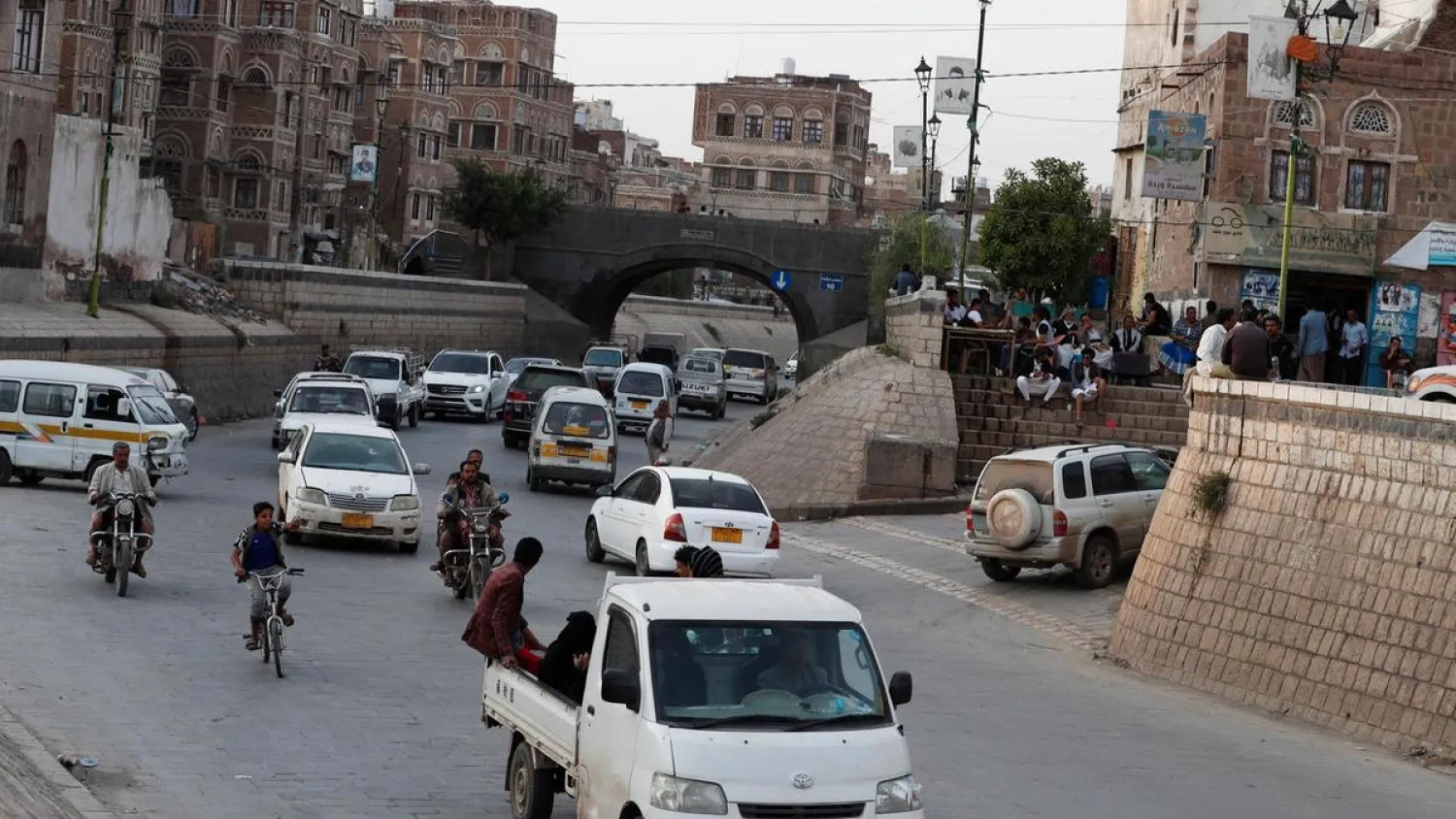
Yemenis drive past historic buildings in the old city of Sanaa, Yemen, September 2020. (EPA)
TT

Houthis Reject Latest Security Council Resolution, Vow to Continue War

Yemenis drive past historic buildings in the old city of Sanaa, Yemen, September 2020. (EPA)

The legitimate Yemeni government welcomed on Friday United Nations Security Council resolution 2564, renewing its commitment to reach peace that ends the war according to the three references.

In contrast, the Iran-backed Houthi militias rejected the resolution, vowing to continue their offensive in Marib.

On Thursday, the council extended sanctions against actors found to be responsible for impeding the peace process in Yemen. It also blacklisted a Houthi leader for his prominent role in intimidations, systematic arrests, detentions, torture, sexual violence “and rape against politically active women.”

The resolution extended the mandate of the panel of experts monitoring the implementation of sanctions in Yemen until March 28, 2022.

The Security Council strongly condemned the ongoing escalation of violence in Yemen's oil-rich central province of Marib and the continuation of Houthi attacks on Saudi Arabia. The resolution stressed the need “for de-escalation across Yemen and a nationwide ceasefire.”

It expressed “serious concern at the devastating humanitarian situation in Yemen, including the growing risk of large-scale famine and the negative consequences of the COVID-19 pandemic.”

The Yemeni Foreign Ministry said Friday that the resolution reflected the international community’s “real and sincere” desire to help achieve peace and end the war waged by the terrorist Houthis.

The ministry held the militias responsible for the suffering of the Yemeni people, the humanitarian disaster they are enduring and for destabilizing the region.

It renewed its pledge to continue to exert efforts to restore security and calm, end the Houthis coup, and achieve peace and national reconciliation according to the three references: The national dialogue, Gulf initiative and Security Council resolution 2216.

The Houthis, meanwhile, rejected Thursday’s resolution.

Mohammed Ali al-Houthi, cousin of the Houthi leader, vowed on Friday that the militias will forge on with their war in Marib, claiming that US President Joe Biden and his newly-appointed envoy to Yemen do not have a peace plan.

He also alleged that American experts were in Marib and helping the government wage its battles against the Houthis.

Another Houthi official, Mohammed al-Bakhiti, tweeted that the militias were not concerned with the Security Council resolution, claiming they “have divine instructions from the Quran” to continue the war in Marib.

The Houthis made their statements just hours after they struck Marib with two ballistic missiles. One struck the central part of the city, said government sources. No one was injured in the attack.

The militias are continuing their offensive on the city – now in its third week - from its west, northwest and south.

They have forged ahead heedless of international calls to cease the hostilities and warning that the violence would only exacerbate the humanitarian situation and lead to new waves of refugees.

Amid the unrest, the UN refugee agency (UNHCR) called on Friday for “a safe passage for the fleeing civilians. Fighting parties must spare no effort to protect the population caught in the conflict and ease its impact on civilians.”

Insecurity is increasingly hindering the delivery of aid to civilians in Marib, with dire consequences for the most vulnerable among them. The latest clashes are just a few kilometers from Marib city and people had little choice but to flee to relative safety in the urban areas, it said.




Three Dead After Flooding Hits Northwest Syria

A child watches as civil defense teams open flooded roads in Idlib. (SANA)
TT

Three Dead After Flooding Hits Northwest Syria

A child watches as civil defense teams open flooded roads in Idlib. (SANA)

Two children and a Syrian Red Crescent volunteer have died as a result of flooding in the country's northwest, state media said on Sunday.

The heavy rains in Syria's Idlib region and the coastal province of Latakia have also wreaked havoc in displacement camps, according to authorities, who have launched rescue operations and set up shelters in the areas.

State news agency SANA reported "the death of a Syrian Arab Red Crescent volunteer and the injury of four others as they carried out their humanitarian duties" in Latakia province.

The Syrian Red Crescent said in a statement that the "a mission vehicle veered into a valley", killing a female volunteer and injuring four others, as they went to rescue people stranded by flash floods.

"A fifth volunteer was injured while attempting to rescue a child trapped by the floodwaters," it added.

SANA said two children died on Saturday "due to heavy flooding that swept through the Ain Issa area" in the north of Latakia province.

Authorities said Sunday they were working to clear roads in displacement camps in flooded parts of Idlib province.

The emergencies and disaster management ministry said 14 displacement camps in part of Idlib province were affected, with tents swamped, belongings swept away and around 300 families directly impacted.

Around seven million people remain internally displaced in Syria, according to the United Nations refugee agency, some 1.4 million of them living in camps and sites in the country's northwest and northeast.

The December 2024 ouster of longtime ruler Bashar al-Assad after more than 13 years of civil war revived hopes for many to return home, but the destruction of housing and a lack of basic infrastructure in heavily damaged areas has been a major barrier.


Hamas’s Meshal Rejects Disarmament or 'Foreign Rule'

Boys walk past the rubble of destroyed buildings in the Jabalia camp for Palestinian refugees in the northern Gaza Strip on February 8, 2026. (Photo by Omar AL-QATTAA / AFP)
TT

Hamas’s Meshal Rejects Disarmament or 'Foreign Rule'

Boys walk past the rubble of destroyed buildings in the Jabalia camp for Palestinian refugees in the northern Gaza Strip on February 8, 2026. (Photo by Omar AL-QATTAA / AFP)

A senior Hamas leader said Sunday that the Palestinian movement would not surrender its weapons nor accept foreign intervention in Gaza, pushing back against US and Israeli demands.

"Criminalizing the resistance, its weapons, and those who carried it out is something we should not accept," Khaled Meshal said at a conference in Doha.

"As long as there is occupation, there is resistance. Resistance is a right of peoples under occupation ... something nations take pride in," said Meshal, who previously headed the group.

A US-brokered ceasefire in Gaza is in its second phase, which foresees that demilitarization of the territory -- including the disarmament of Hamas -- along with a gradual withdrawal of Israeli forces.

Hamas has repeatedly said that disarmament is a red line, although it has indicated it could consider handing over its weapons to a future Palestinian governing authority.

Israeli officials say that Hamas still has around 20,000 fighters and about 60,000 Kalashnikovs in Gaza.

A Palestinian technocratic committee has been set up with a goal of taking over the day-to-day governance in the battered Gaza Strip, but it remains unclear whether, or how, it will address the issue of demilitarization.

The committee operates under the so-called "Board of Peace," an initiative launched by US President Donald Trump.

Originally conceived to oversee the Gaza truce and post-war reconstruction, the board's mandate has since expanded, prompting concerns among critics that it could evolve into a rival to the United Nations.

Trump unveiled the board at the World Economic Forum in the Swiss ski resort of Davos last month, where leaders and officials from nearly two dozen countries joined him in signing its founding charter.

Alongside the Board of Peace, Trump also created a Gaza Executive Board - an advisory panel to the Palestinian technocratic committee - comprising international figures including US envoys Steve Witkoff and Jared Kushner, as well as former British prime minister Tony Blair.

On Sunday, Meshal urged the Board of Peace to adopt what he called a "balanced approach" that would allow for Gaza's reconstruction and the flow of aid to its roughly 2.2 million residents, while warning that Hamas would "not accept foreign rule" over Palestinian territory.

"We adhere to our national principles and reject the logic of guardianship, external intervention, or the return of a mandate in any form," Meshal said.
"Palestinians are to govern Palestinians. Gaza belongs to the people of Gaza and to Palestine. We will not accept foreign rule," he added.


Rescue Teams Search for Survivors in Building Collapse that Killed at Least 2 in Northern Lebanon

A Lebanese flag is pictured, in the aftermath of a massive explosion, in Beirut's damaged port area, Lebanon August 17, 2020. REUTERS/Hannah McKay
TT

Rescue Teams Search for Survivors in Building Collapse that Killed at Least 2 in Northern Lebanon

A Lebanese flag is pictured, in the aftermath of a massive explosion, in Beirut's damaged port area, Lebanon August 17, 2020. REUTERS/Hannah McKay

At least two people were killed and four rescued from the rubble of a multistory apartment building that collapsed Sunday in the city of Tripoli in northern Lebanon, state media reported.

Rescue teams were continuing to dig through the rubble. It was not immediately clear how many people were in the building when it fell.

The bodies pulled out were of a child and a woman, the state-run National News Agency reported.

Dozens of people crowded around the site of the crater left by the collapsed building, with some shooting in the air.

The building was in the neighborhood of Bab Tabbaneh, one of the poorest areas in Lebanon’s second largest city, where residents have long complained of government neglect and shoddy infrastructure. Building collapses are not uncommon in Tripoli due to poor building standards, according to The AP news.

Lebanon’s Health Ministry announced that those injured in the collapse would receive treatment at the state’s expense.

The national syndicate for property owners in a statement called the collapse the result of “blatant negligence and shortcomings of the Lebanese state toward the safety of citizens and their housing security,” and said it is “not an isolated incident.”

The syndicate called for the government to launch a comprehensive national survey of buildings at risk of collapse.