


Saudi Justice Minister Hails Development in Kingdom's Judicial Sector

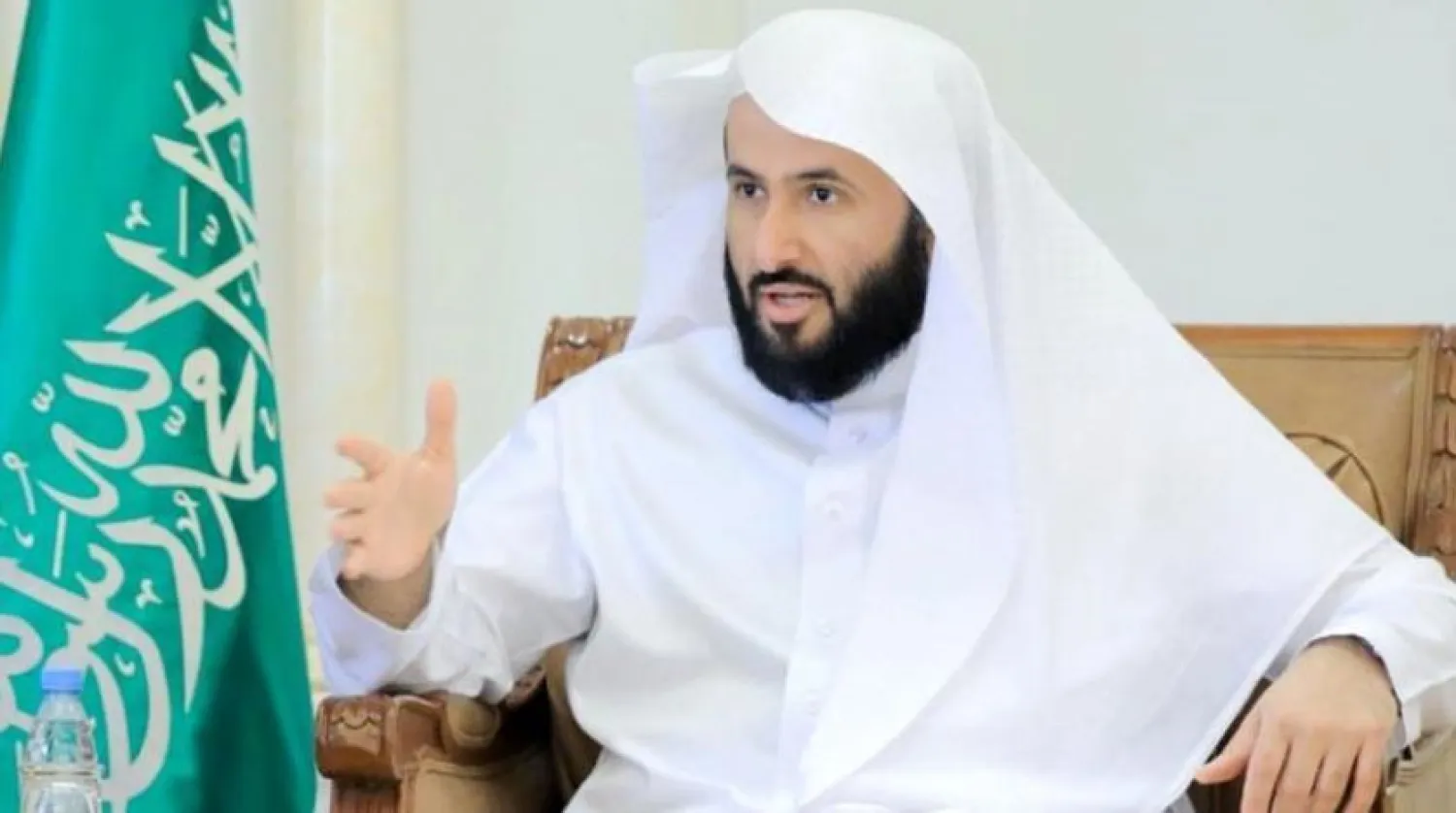
FILE: Saudi Arabia's Justice Minister Walid al-Samaani via SPA
TT

Saudi Justice Minister Hails Development in Kingdom's Judicial Sector

FILE: Saudi Arabia's Justice Minister Walid al-Samaani via SPA

Saudi Justice Minister Walid al-Samaani said in a TV interview that the specialized legislation announced by Crown Prince Mohammed bin Salman, Deputy Premier and Minister of Defense, is a major development that will complete the judiciary system.

“The Crown Prince’s announcement includes reforms of legislative methodology based on the principles of Islamic law, and the latest legal theories and human rights standards,” the minister said.

“Specialized legislation constitutes the binding substantive laws that complement the institutional judiciary, control judicial methodology, and enable prediction of outcomes,” he added, noting that the "judiciary’s role is to apply the law to the facts.”

“The draft Personal Status Law aims to maintain the marital relationship and protect the interests of parents and children. It also regulates divorces in a manner that protects the rights of children and their parents.”

Al-Samaani also noted that, under the draft Penal Law, no punishable offenses are recognized other than those stated in the Law or relevant legislation. In addition, the draft Law adopts alternative sentences and observes human rights standards in all considerations.

“In the past few years, we launched commercial and labor courts and enabled pleading before appellate courts and challenges before the Supreme Court.”

“To alleviate the administrative burden, we have launched tech and operational offices, including the Case Verification Center; and have also launched case preparation centers at the Supreme Court, appellate courts, and several first-instance courts.”

According to the minister, institutional justice depends on several levels: A Supreme Court principle must be observed by appellate and first-instance courts regardless of personal opinions.

The minister also stressed various types of judicial review like subject-matter, procedural, legal, and professional; and highlighted safeguards such as judicial reasoning, legal challenges, and publicity of hearings.

“e-Litigation was launched amid Covid measures, and any operational issues will be overcome this year,” the minister stressed.

“We are also working on artificial intelligence applications, the Model Court project, and an Integrated Case Management System to be rolled out this year.”

“The Notarization Law has established the concept of preventive justice by recognizing various contracts and declarations as enforcement instruments that can be electronically implemented by the enforcement system without any litigation.”

“Under a royal order, no title deed in an approved development plan shall be revoked or suspended: Accountability lies on the person who contributed to title deed errors, excluding those acting in good faith,” the minister asserted.

Al-Samaani also revealed that the ministry will soon launch a property exchange enabling digital trading of property titles through an accurate and reliable platform.

Regarding the development of the notarial sector, the minister said: “Over four million electronic powers of attorney have been issued, and property e-conveyances exceeded two billion riyals with over 25,000 operations."

"By the end of this year, no one will have to visit a notarial office for a notarial operation, if necessary, appearance will be through videoconferencing.”

As for the development of the enforcement system, the minister said that the ministry will launch a virtual enforcement court enabling fully digital procedures from filing an application to the enforcement of the instrument.



Attacks from Iraq on East-West Pipeline Draw Strong Condemnations

Saudi Aramco logo. Reuters
TT

Attacks from Iraq on East-West Pipeline Draw Strong Condemnations

Saudi Aramco logo. Reuters

Attacks on a key Saudi oil pipeline launched from Iraqi territory drew on Saturday strong condemnations from many countries and organizations.

The Saudi Foreign Ministry blamed the attacks on the East-West pipeline in the Riyadh and Madinah regions on several drones that came from Iraq and, in a statement, said the Kingdom would not retaliate to give the Iraqi government “an opportunity to take the necessary measures.”

For its part, the Iraqi government strongly condemned the attacks, reiterating its categorical rejection of any aggression that threatens the Kingdom's security, stability, or bilateral relations.

Iraqi Prime Minister and Commander-in-Chief of the Armed Forces Ali Al-Zaidi ordered an immediate investigation to determine the circumstances of the strikes and identify the perpetrators.

In a statement carried by the Iraqi News Agency, Spokesperson for the Commander-in-Chief of the Armed Forces Sabah Al-Numan emphasized that Baghdad will take strict legal action against anyone implicated in the assault, stressing that the state will not tolerate activities that jeopardize Iraq's national security or its ties with brotherly nations.

Al-Numan voiced appreciation for Saudi Arabia's measured response and constructive engagement with Baghdad's efforts to de-escalate tensions, noting that this stance underscores Riyadh's commitment to regional stability and bilateral cooperation.

He reaffirmed that Iraq's territory and airspace will not serve as a launchpad for hostile actions against any state. He reiterated Baghdad's dedication to upholding state sovereignty, good neighborliness, and regional diplomacy, ensuring relations with neighboring nations foster mutual stability rather than conflict.

Also, UAE, Qatar, Bahrain, Jordan, Oman, Egypt, Libya, Syria, Lebanon, Pakistan, OIC, the Arab Parliament, the Gulf Cooperation Council (GCC) and the Muslim World League (MWL) were quick to condemn the attacks.

The separate statements all stressed full solidarity with Saudi Arabia and backed all measures taken by the Kingdom to safeguard its territory. 


Saudi Foreign Minister Receives Phone Call from British Counterpart

Saudi Minister of Foreign Affairs Prince Faisal bin Farhan bin Abdullah in Moscow on July 4, 2025. (Reuters)
TT

Saudi Foreign Minister Receives Phone Call from British Counterpart

Saudi Minister of Foreign Affairs Prince Faisal bin Farhan bin Abdullah in Moscow on July 4, 2025. (Reuters)

Saudi Foreign Minister Prince Faisal bin Farhan bin Abdullah received a phone call on Saturday from Secretary of State for Foreign, Commonwealth and Development Affairs of the United Kingdom Edward Miliband.

During the call, the two sides discussed regional developments.

According to SPA, at the outset, Miliband renewed his country's solidarity with Saudi Arabia following the attacks launched by the Houthi militia, stressing the Kingdom's right to take necessary measures to defend its security and capabilities in accordance with international law.

The two sides also discussed the importance of intensifying joint efforts to ensure the security and freedom of navigation in waterways, contributing to regional security and stability and protecting global trade and supply chains from the repercussions of the current crisis.


Saudi Arabia Welcomes Launch of Global Alliance for South-South and Triangular Cooperation

File photo of the Saudi flag/AAWSAT
TT

Saudi Arabia Welcomes Launch of Global Alliance for South-South and Triangular Cooperation

File photo of the Saudi flag/AAWSAT

Saudi Arabia has welcomed the launch of the Global Alliance for South-South and Triangular Cooperation, emphasizing its importance in enhancing integration and reducing duplication of efforts while respecting countries’ national priorities.

In the Kingdom’s speech delivered on the occasion of the United Nations Day for South-South Cooperation, Saudi Permanent Representative to the United Nations Ambassador Dr. Abdulaziz Alwasil said Saudi Vision 2030 aligns with the priorities of South-South cooperation, particularly in economic diversification, digital transformation, innovation, sustainability, youth empowerment, and the private sector, SPA reported.

He noted that the Saudi Fund for Development has contributed to supporting and financing development projects and programs in more than 100 developing countries across various vital sectors, affirming Saudi Arabia’s commitment to continuing to work with member states, the United Nations, and partners to strengthen cooperation and achieve more prosperous, sustainable, and inclusive development.