


Arabs Condemn Houthi Escalation, Highlight Centrality of Palestinian Cause

Arabs Condemn Houthi Escalation, Highlight Centrality of Palestinian Cause
TT

Arabs Condemn Houthi Escalation, Highlight Centrality of Palestinian Cause

Arabs Condemn Houthi Escalation, Highlight Centrality of Palestinian Cause

Arab foreign ministers have condemned the Houthi escalation and the attacks staged against the Kingdom of Saudi Arabia.

They further stressed the centrality of the cause of Palestine, which tops Arab priorities in line with the international references and the Arab Peace Initiative.

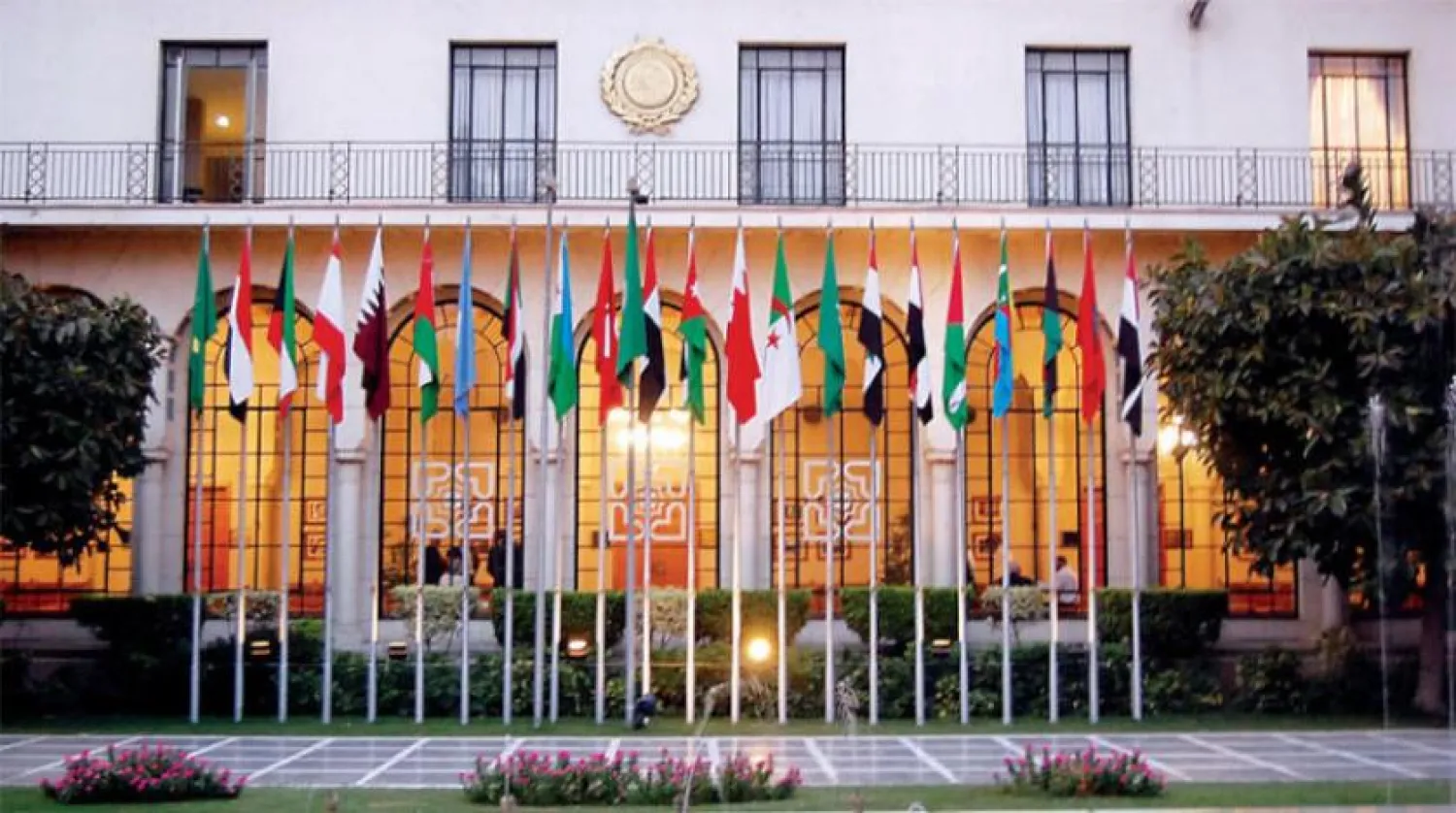
This came during the 155th regular foreign ministerial meeting of the Arab League (AL) Council that was chaired by Qatar and held at the headquarters of the AL General Secretariat in Cairo on Wednesday.

AL Secretary-General Ahmed Aboul Gheit was reappointed for a five-year second term.

During the meeting, Aboul Gheit stressed that the Arab consensus on Palestine and its cause is comprehensive and complete, and does not tolerate any compromise.

“As the new US administration takes over the reins of power, there is a chance to correct this path and launch a real peace process based on international law as a reference,” he said, adding that it shall be aimed at resolving the issue.

“We must prepare ourselves for a long diplomatic struggle to rally global public opinion and attract the international community to our just cause,” he told the Arab FMs, affirming that the solution represents a real and effective key to a comprehensive and sustainable peace in the region.

On the Yemeni issue, Aboul Gheit said Houthis have been carrying out a systematic campaign of escalation in Marib since Feb. 7 to control the city and plunder its natural resources.

The military escalation has led thousands of civilians to flee the governorate, which was a safe haven for more than one million Yemeni refugees, he noted.

The senior official considered the Houthi escalation a “response to Iranian signals and desires and comes in implementation of a reckless strategy that uses Yemen as a negotiating card.”

He held Houthis and those who back them responsible for Yemen falling victim to the world’s most dangerous humanitarian crisis.

Aboul Gheit stressed Arab condemnation of Houthis’ terrorist missile and drone attacks on Saudi territory, confirming the kingdom’s right to defend itself.

He also said the Iranian and Turkish intervention committees met and stressed their rejection of the interferences of neighboring countries in Arab affairs.

Qatari FM Sheikh Mohammed bin Abdulrahman Al Thani said his country rejects any form of intervention in another country’s affairs, noting that each country has the right to preserve its sovereignty and security.

After meeting with his Egyptian counterpart Sameh Shoukry, Sheikh Mohammed was cited as saying that both countries were keen on a return to warm relations and that the meeting was characterized by a positive spirit and optimism.

He also hailed Al-Ula Declaration, which was issued following the 41st Gulf Cooperation Council Summit in Saudi Arabia.

“It ended the Gulf crisis that lasted more than the years,” he said, adding that Qatar welcomed this statement based on its firm conviction that dialogue is the only way to resolve differences.

“Ending the crisis and implementing the Al-Ula statement will reflect positively on bolstering Gulf and Arab relations and consolidating regional stability.”

Commenting on the next meeting, scheduled to be held in Algeria, Aboul Gheit said the Algerian Foreign Minister, Sabri Boukadoum, could not attend the current meeting due to the lockdown measures.

However, he noted that the next meeting will be held soon, affirming that all preparations have been made and the date will soon be set and circulated among Arab senior officials.



Lebanon PM Pledges Reconstruction on Visit to Ruined Border Towns

This handout picture released by the Lebanese Government Press Office shows Lebanon's Prime Minister Nawaf Salam being showered with confetti as he is received by locals during a tour in the heavily-damaged southern village of Dhayra near the border with Israel on February 7, 2026. (Lebanese Government Press Office / AFP)
TT

Lebanon PM Pledges Reconstruction on Visit to Ruined Border Towns

This handout picture released by the Lebanese Government Press Office shows Lebanon's Prime Minister Nawaf Salam being showered with confetti as he is received by locals during a tour in the heavily-damaged southern village of Dhayra near the border with Israel on February 7, 2026. (Lebanese Government Press Office / AFP)

Lebanese Prime Minister Nawaf Salam visited heavily damaged towns near the Israeli border on Saturday, pledging reconstruction.

It was his first trip to the southern border area since the army said it finished disarming Hezbollah there, in January.

Swathes of south Lebanon's border areas remain in ruins and largely deserted more than a year after a US-brokered November 2024 ceasefire sought to end hostilities between Israel and the Iran-backed group.

Lebanon's government has committed to disarming Hezbollah, and the army last month said it had completed the first phase of its plan to do so, covering the area between the Litani River and the Israeli border about 30 kilometers (20 miles) further south.

Visiting Tayr Harfa, around three kilometers from the border, and nearby Yarine, Salam said frontier towns and villages had suffered "a true catastrophe".

He vowed authorities would begin key projects including restoring roads, communications networks and water in the two towns.

Locals gathered on the rubble of buildings to greet Salam and the delegation of accompanying officials in nearby Dhayra, some waving Lebanese flags.

In a meeting in Bint Jbeil, further east, with officials including lawmakers from Hezbollah and its ally the Amal movement, Salam said authorities would "rehabilitate 32 kilometers of roads, reconnect the severed communications network, repair water infrastructure" and power lines in the district.

Last year, the World Bank announced it had approved $250 million to support Lebanon's post-war reconstruction, after estimating that it would cost around $11 billion in total.

Salam said funds including from the World Bank would be used for the reconstruction and rehabilitation projects.

The second phase of the government's disarmament plan for Hezbollah concerns the area between the Litani and the Awali rivers, around 40 kilometers south of Beirut.

Israel, which accuses Hezbollah of rearming, has criticized the army's progress as insufficient, while Hezbollah has rejected calls to surrender its weapons.

Despite the truce, Israel has kept up regular strikes on what it usually says are Hezbollah targets and maintains troops in five south Lebanon areas.

Lebanese officials have accused Israel of seeking to prevent reconstruction in the heavily damaged south with repeated strikes on bulldozers, excavators and prefabricated houses.

Visiting French Foreign Minister Jean-Noel Barrot on Friday said the reform of Lebanon's banking system needed to precede international funding for reconstruction efforts.

The French diplomat met Lebanon's army chief Rodolphe Haykal on Saturday, the military said.


Over 2,200 ISIS Detainees Transferred to Iraq from Syria, Says Iraqi Official

 One of the American buses transporting ISIS fighters, according to a security source from the Syrian Democratic Forces, heads from Syria towards Iraq, in Qamishli, Syria, February 7, 2026. (Reuters)
One of the American buses transporting ISIS fighters, according to a security source from the Syrian Democratic Forces, heads from Syria towards Iraq, in Qamishli, Syria, February 7, 2026. (Reuters)
TT

Over 2,200 ISIS Detainees Transferred to Iraq from Syria, Says Iraqi Official

 One of the American buses transporting ISIS fighters, according to a security source from the Syrian Democratic Forces, heads from Syria towards Iraq, in Qamishli, Syria, February 7, 2026. (Reuters)
One of the American buses transporting ISIS fighters, according to a security source from the Syrian Democratic Forces, heads from Syria towards Iraq, in Qamishli, Syria, February 7, 2026. (Reuters)

Iraq has so far received 2,225 ISIS group detainees, whom the US military began transferring from Syria last month, an Iraqi official told AFP on Saturday.

They are among up to 7,000 ISIS detainees whose transfer from Syria to Iraq the US Central Command (CENTCOM) announced last month, in a move it said was aimed at "ensuring that the terrorists remain in secure detention facilities".

Previously, they had been held in prisons and camps administered by the Kurdish-led Syrian Democratic Forces (SDF) in northeast Syria.

The announcement of the transfer plan last month came after US envoy to Syria Tom Barrack declared that the SDF's role in confronting ISIS had come to an end.

Saad Maan, head of the security information cell attached to the Iraqi prime minister's office, told AFP on Saturday that "Iraq has received 2,225 terrorists from the Syrian side by land and air, in coordination with the international coalition", which Washington has led since 2014 to fight IS.

He said they are being held in "strict, regular detention centers".

A Kurdish military source confirmed to AFP the "continued transfer of ISIS detainees from Syria to Iraq under the protection of the international coalition".

On Saturday, an AFP photographer near the Kurdish-majority city of Qamishli in northeastern Syria saw a US military convoy and 11 buses with tinted windows.

- Iraq calls for repatriation -

ISIS seized swathes of northern and western Iraq starting in 2014, until Iraqi forces, backed by the international coalition, managed to defeat it in 2017.

Iraq is still recovering from the severe abuses committed by the extremists.

In recent years, Iraqi courts have issued death and life sentences against those convicted of terrorism offences.

Thousands of Iraqis and foreign nationals convicted of membership in the group are incarcerated in Iraqi prisons.

On Monday, the Iraqi judiciary announced it had begun investigative procedures involving 1,387 detainees it received as part of the US military's operation.

In a statement to the Iraqi News Agency on Saturday, Maan said "the established principle is to try all those involved in crimes against Iraqis and those belonging to the terrorist ISIS organization before the competent Iraqi courts".

Among the detainees being transferred to Iraq are Syrians, Iraqis, Europeans and holders of other nationalities, according to Iraqi security sources.

Iraq is calling on the concerned countries to repatriate their citizens and ensure their prosecution.

Maan noted that "the process of handing over the terrorists to their countries will begin once the legal requirements are completed".


Drone Attack by RSF in Sudan Kills 24, Including 8 Children, Doctors’ Group Says

Displaced Sudanese wait to receive humanitarian aid at the Abu al-Naga displacement camp in the Gedaref State, some 420km east of the capital Khartoum on February 6, 2026. (AFP)
TT

Drone Attack by RSF in Sudan Kills 24, Including 8 Children, Doctors’ Group Says

Displaced Sudanese wait to receive humanitarian aid at the Abu al-Naga displacement camp in the Gedaref State, some 420km east of the capital Khartoum on February 6, 2026. (AFP)

A drone attack by a notorious paramilitary group hit a vehicle carrying displaced families in central Sudan Saturday, killing at least 24 people, including eight children, a doctors’ group said.

The attack by the Rapid Support Forces occurred close to the city of Rahad in North Kordofan province, said the Sudan Doctors Network, which tracks the country’s ongoing war.

The vehicle transported displaced people who fled fighting in the Dubeiker area of North Kordofan, the doctors’ group said in a statement. Among the dead children were two infants, the group said.

The doctors’ group urged the international community and rights organizations to “take immediate action to protect civilians and hold the RSF leadership directly accountable for these violations.”

There was no immediate comment from the RSF, which has been at war against the Sudanese military for control of the country for about three years.

Sudan plunged into chaos in April 2023 when a power struggle between the military and the RSF exploded into open fighting in the capital, Khartoum, and elsewhere in the country.

The devastating war has killed more than 40,000 people, according to UN figures, but aid groups say that is an undercount and the true number could be many times higher.

It created the world’s largest humanitarian crisis with over 14 million people forced to flee their homes. It fueled disease outbreaks and pushed parts of the country into famine.