


Former US Official: Trump Administration Tried to Engage Houthis before their Terror Designation

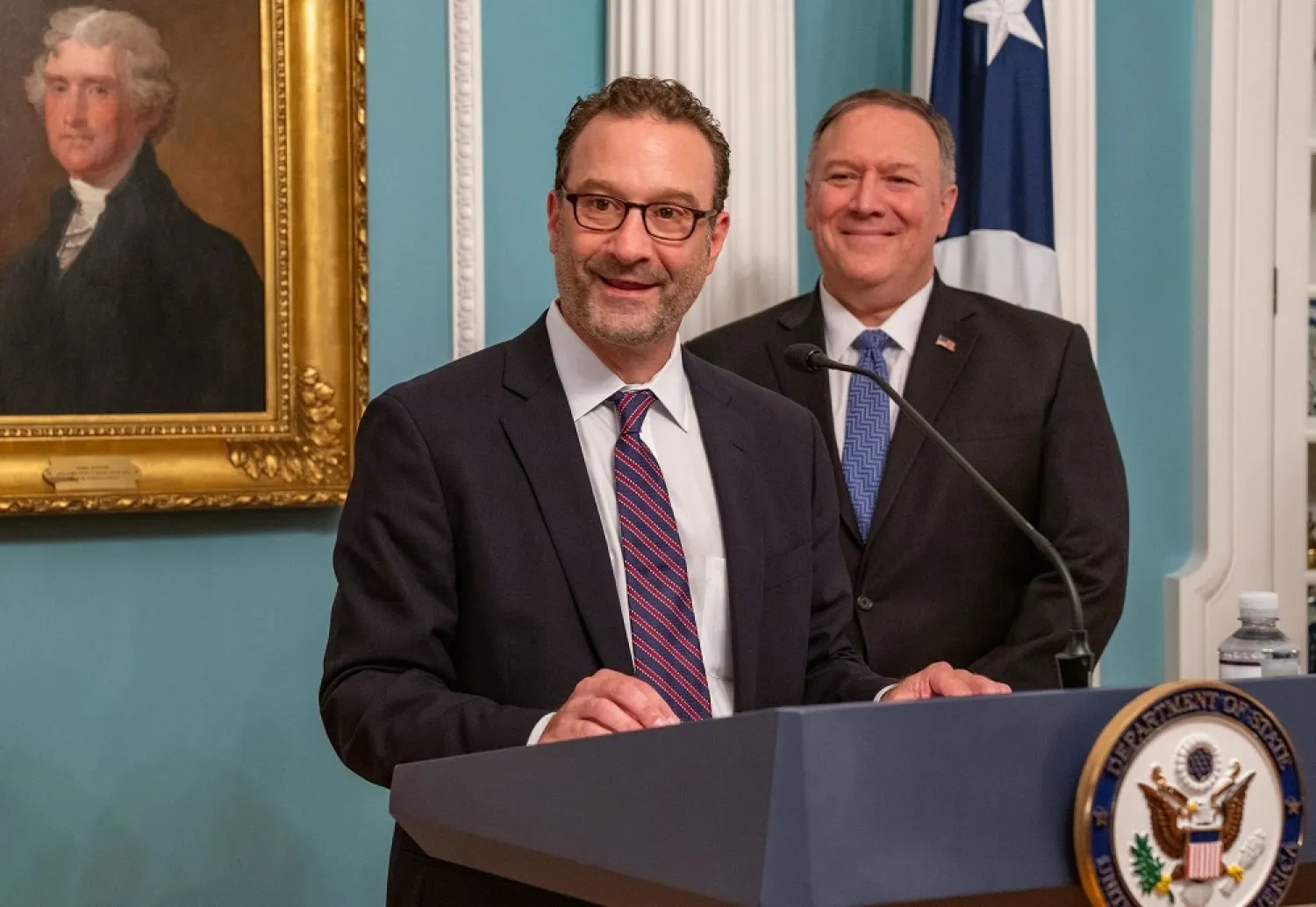
Former Assistant Secretary of State for Near Eastern Affairs David Schenker and ex-Secretary of State Mike Pompeo. (US Department of State)
TT

Former US Official: Trump Administration Tried to Engage Houthis before their Terror Designation

Former Assistant Secretary of State for Near Eastern Affairs David Schenker and ex-Secretary of State Mike Pompeo. (US Department of State)

Former US assistant secretary of Near Eastern Affairs, David Schenker revealed that the administration of ex-President Donald Trump had tried to hold direct talks with the Iran-backed Houthis in Yemen before designating the militias a terrorist in January.

In an interview with Robert Sotloff for the Washington Institute, he said that the administration tried to hold the talks with the Houthis, through an Omani mediator, in late December 2020. The militias, however, rejected the proposal.

“As to the controversy surrounding the designation of the Houthis, as of December 30, [then US Secretary of State Mike] Pompeo was I believe still considering the designation and was engaged with the ngo community,” which expressed concern over the designation, said Schenker.

“We felt we could mitigate the impact of the sanctions through waivers. The US Department of Justice would never prosecute humanitarian organizations for inadvertent leakage to the Houthis,” he added.

“And then on December 30 the Houthis carried out a missile attack against Aden airport in an attempt to kill the entire new Yemeni government just then arriving my plane. And that was it. They were designated,” he stressed.

“The Houthis meet the criteria of a foreign terrorist organization,” he said, citing the direct support they receive from the Iranian Revolutionary Guards, targeting of Yemeni civilians, Saudi infrastructure and oilfields and members of the legitimate Yemeni government, abduction of officials and civilians, recruitment of children and killing of innocents.

He said Yemen has suffered several tragedies due to the Iranian support for the Houthis, adding that he has worked tirelessly, during his time at the State Department, with Saudi officials, including Ambassador to the US Princess Reema bint Bandar bin Sultan bin Abdulaziz and Deputy Defense Minister Prince Khalid bin Salman.

“Along the way, Saudi Arabia announced a few unilateral ceasefires (…) and also donated several hundred million dollars to help feed Yemenis. The problem wasn’t the Saudis, it was and remains the Houthis, who one, lie, two, don’t keep agreements, and three, are committed to winning this war militarily,” Schenker stated.

On the designation, he remarked: “This was not about Secretary Pompeo salting the earth. I tried to meet with the Houthis during my trip to Oman in December. Abdulmalek al-Houthi gave the Omanis the message to me that they were not interested in engaging directly at that time with the administration.”

“As for critics who warned that the designation would drive the Houthis into the arms of Iran, it is a little late. The Houthis are already firmly in bed with the IRGC and for those keeping score, the Houthis have responded to their delisting by increasing escalation exponentially their operational tempo of their attacks on Saudi Arabia. Get ready, they eventually may look to target Israel,” he revealed.

He cited the constant optimism of UN envoy to Yemen Martin Griffiths, noting that he is now joined newly-appointed US envoy and veteran diplomat Tim Lenderking.

“I am optimistic about the combination,” said Schenker.

Meanwhile, Jonathan Schanzer, senior vice president for research at the Foundation for Defense of Democracies, said that President Joe Biden’s measures will not help end the war in Yemen “because the US does not have concessions to offer to the Houthis, who now have less incentive than before to make compromises.”

In televised remarks, he noted: ““What the Biden administration has done is, it has taken the military option off the table for the United States, even by way of proxy through the Saudis.”

The US also removed the Houthis from being designated as a foreign terrorist organization, and took them off the Specially Designated Global Terrorist list.

“What is left right now is diplomacy,” Schanzer said, according to CNBC.

“The reality that we are now facing is that we’ve taken really all of our other leverage off the table, and we’re simply going to hope that an Iran-backed militia will come to the table and act reasonably,” he said. “Unfortunately, I think this is wishful thinking.”

He noted that the Houthis have stepped up strikes even though the US special envoy to Yemen, Timothy Lenderking, has implored them to negotiate.

Schanzer said Saudi Arabia’s continued military operations could be “one of the few pieces of leverage” that the US could use in discussions with the Houthis.

Still, he acknowledged that there is an aversion to being involved in the conflict. “It looks … as if the Biden administration has itself tied in knots a bit,” he added.



Rescue Teams Search for Survivors in Building Collapse that Killed at Least 2 in Northern Lebanon

A Lebanese flag is pictured, in the aftermath of a massive explosion, in Beirut's damaged port area, Lebanon August 17, 2020. REUTERS/Hannah McKay
TT

Rescue Teams Search for Survivors in Building Collapse that Killed at Least 2 in Northern Lebanon

A Lebanese flag is pictured, in the aftermath of a massive explosion, in Beirut's damaged port area, Lebanon August 17, 2020. REUTERS/Hannah McKay

At least two people were killed and four rescued from the rubble of a multistory apartment building that collapsed Sunday in the city of Tripoli in northern Lebanon, state media reported.

Rescue teams were continuing to dig through the rubble. It was not immediately clear how many people were in the building when it fell.

The bodies pulled out were of a child and a woman, the state-run National News Agency reported.

Dozens of people crowded around the site of the crater left by the collapsed building, with some shooting in the air.

The building was in the neighborhood of Bab Tabbaneh, one of the poorest areas in Lebanon’s second largest city, where residents have long complained of government neglect and shoddy infrastructure. Building collapses are not uncommon in Tripoli due to poor building standards, according to The AP news.

Lebanon’s Health Ministry announced that those injured in the collapse would receive treatment at the state’s expense.

The national syndicate for property owners in a statement called the collapse the result of “blatant negligence and shortcomings of the Lebanese state toward the safety of citizens and their housing security,” and said it is “not an isolated incident.”

The syndicate called for the government to launch a comprehensive national survey of buildings at risk of collapse.


Israel to Take More West Bank Powers and Relax Settler Land Buys

A view of Israeli settlement of Maale Adumim, in the West Bank, Sunday, June 18, 2023. (AP)
TT

Israel to Take More West Bank Powers and Relax Settler Land Buys

A view of Israeli settlement of Maale Adumim, in the West Bank, Sunday, June 18, 2023. (AP)

Israel's security cabinet approved a series of steps on Sunday that would make it easier for settlers in the occupied West Bank to buy land while granting Israeli authorities more enforcement powers over Palestinians, Israeli media reported.

The West Bank is among the territories that the Palestinians seek for a future independent state. Much of it is under Israeli military control, with limited Palestinian self-rule in some areas run by the Western-backed Palestinian Authority (PA).

Citing statements by Finance Minister Bezalel Smotrich and Defense Minister Israel Katz, Israeli news sites Ynet and Haaretz said the measures included scrapping decades-old regulations that prevent Jewish private citizens buying land in the West Bank, The AP news reported.

They were also reported to include allowing Israeli authorities to administer some religious sites, and expand supervision and enforcement in areas under PA administration in matters of environmental hazards, water offences and damage to archaeological sites.

Palestinian President Mahmoud Abbas said the new measures were dangerous, illegal and tantamount to de-facto annexation.

The Israeli ministers did not immediately respond to requests for comment.

The new measures come three days before Prime Minister Benjamin Netanyahu is scheduled to meet in Washington with US President Donald Trump.

Trump has ruled out Israeli annexation of the West Bank but his administration has not sought to curb Israel's accelerated settlement building, which the Palestinians say denies them a potential state by eating away at its territory.

Netanyahu, who is facing an election later this year, deems the establishment of any Palestinian state a security threat.

His ruling coalition includes many pro-settler members who want Israel to annex the West Bank, land captured in the 1967 Middle East war to which Israel cites biblical and historical ties.

The United Nations' highest court said in a non-binding advisory opinion in 2024 that Israel's occupation of Palestinian territories and settlements there is illegal and should be ended as soon as possible. Israel disputes this view.


Arab League Condemns Attack on Aid Convoys in Sudan

A general view shows the opening session of the meeting of Arab foreign ministers at the Arab League Headquarters (Reuters)
TT

Arab League Condemns Attack on Aid Convoys in Sudan

A general view shows the opening session of the meeting of Arab foreign ministers at the Arab League Headquarters (Reuters)

Arab League Secretary-General Ahmed Aboul Gheit strongly condemned the attack by the Rapid Support Forces on humanitarian aid convoys and relief workers in North Kordofan State, Sudan.

In a statement reported by SPA, secretary-general's spokesperson Jamal Rushdi quoted Aboul Gheit as saying the attack constitutes a war crime under international humanitarian law, which prohibits the deliberate targeting of civilians and depriving them of their means of survival.

Aboul Gheit stressed the need to hold those responsible accountable, end impunity, and ensure the full protection of civilians, humanitarian workers, and relief facilities in Sudan.