


Saudi Military Chief of Staff Discusses Joint Work with Greek Counterpart

Fighter jets partaking in the Falcon Eye 1 military drill, SPA
TT

Saudi Military Chief of Staff Discusses Joint Work with Greek Counterpart

Fighter jets partaking in the Falcon Eye 1 military drill, SPA

The military Chief of Staff of Saudi Arabia, Gen. Fayyad bin Hamed Al-Ruwaili, on Friday met with his Greek counterpart, Lt. Gen. Konstantinos Floros to discuss cooperation and joint work relations between the Kingdom and Greece.

Discussions during the meeting centered around defense, but also tackled issues of common interest.

Al-Ruwaili attended a flight demonstration by combat aircraft taking part in the “Falcon Eye 1” exercises at the Souda Air Force Base in Greece and met with the participants.

Saudi Royal Air Force (RSAF) F-15C aircraft and Hellenic Air Force F-16, Mirage 2000, and F-4 Phantom aircraft performed sorties and implemented training scenarios, including counter-insurgency and air support operations, and the destruction of ground targets.

Al-Ruwaili said that the RSAF’s involvement in the “Falcon Eye 1” exercise in Greece comes as part of King Salman’s eagerness to provide unlimited support for the development of the armed forces.

He said that the goal of the exercise is to exchange military expertise between Saudi Arabia and Greece to strengthen cooperation between the armed forces of the two countries. This will help raise the level of combat readiness for both forces, he added.

The commander of the RSAF group participating in the drill, Col. Pilot Abdulrahman Bin Saeed Al-Shihri, said that the combat readiness and mastery have been shown by the participants of the RSAF, whether pilots or ground crews, is a matter of pride that deserves everyone's praise.

He stressed that this would not have been possible without the support from the wise leadership, whether at the level of training and qualification or at the level of equipping and arming.



Saudi Arabia, Pakistan Affirm Continued Joint Efforts to Confront Attacks

Saudi Minister of Defense Prince Khalid bin Salman bin Abdulaziz met with Pakistan's Chief of Army Staff and Chief of Defense Forces Field Marshal Asim Munir in Riyadh. SPA
TT

Saudi Arabia, Pakistan Affirm Continued Joint Efforts to Confront Attacks

Saudi Minister of Defense Prince Khalid bin Salman bin Abdulaziz met with Pakistan's Chief of Army Staff and Chief of Defense Forces Field Marshal Asim Munir in Riyadh. SPA

Saudi Defense Minister Prince Khalid bin Salman bin Abdulaziz said early on Saturday that he had affirmed with Pakistan's army chief, Field Marshal Asim Munir, in Riyadh continued joint efforts to confront attacks against the Kingdom in accordance with the Makkah Joint Defense Agreement.

The pact was signed by Saudi Arabia, Pakistan and Türkiye last month.

Prince Khalid met with Munir to discuss the attacks on Makkah and on civilian and economic facilities in Saudi Arabia, the Saudi Press Agency reported.

They commended the outcomes of the meeting of the chiefs of staff of the Makkah Joint Defense Agreement states and stressed the continuation of joint efforts to confront the attacks under the agreement, SPA said.

The meeting was attended by Minister of State, Cabinet Member, and National Security Adviser Dr. Musaed bin Mohammed Al-Aiban; Chief of the General Staff Gen. Fayyad bin Hamed Al-Ruwaili; and Adviser to the Minister of Defense for Intelligence Affairs Hisham bin Abdulaziz bin Saif, along with several Pakistani officials.

Hours earlier, the military chiefs of Saudi Arabia, Pakistan and Türkiye reviewed threats facing Saudi Arabia at ⁠a ⁠meeting in the Saudi capital.


Saudi Coalition Says it Intercepts Missiles, Drones

Official Spokesperson for the Coalition to Restore Legitimacy in Yemen Major General Turki Al-Malki
TT

Saudi Coalition Says it Intercepts Missiles, Drones

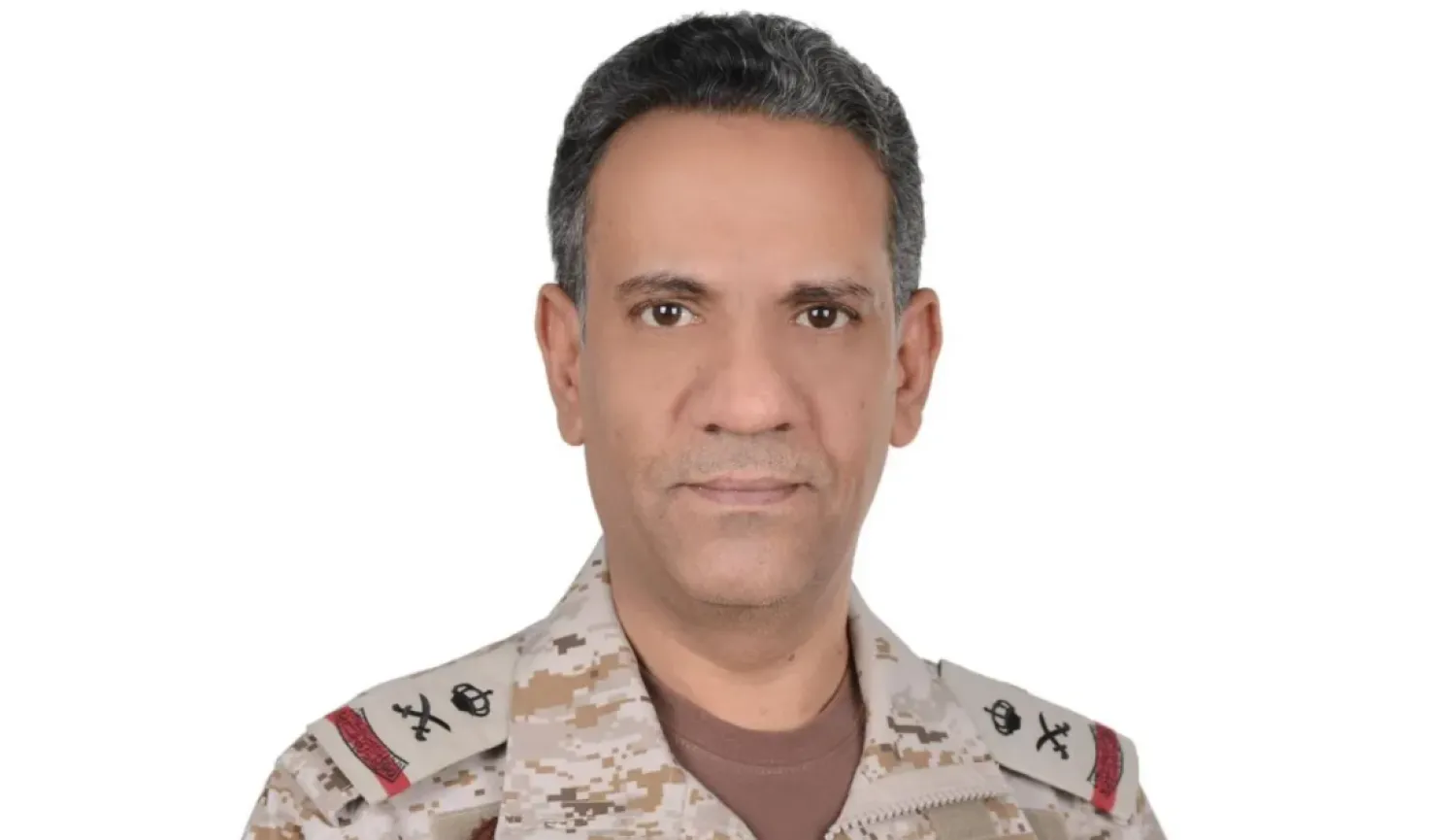
Official Spokesperson for the Coalition to Restore Legitimacy in Yemen Major General Turki Al-Malki

Official Spokesperson for the Coalition to Restore Legitimacy in Yemen Major General Turki Al-Malki said early on Saturday that the Coalition had intercepted two ballistic missiles and two drones launched by the Houthis towards the Kingdom.

Al-Malki said in separate statements that the missiles were headed towards Khamis Mushait and the drones towards the capital, Riyadh, adding that the Coalition was monitoring the missile threat and drones launched at the Kingdom.

The Saudi civil defense had ⁠sent alerts overnight ⁠for Khamis Mushait and Abha.


Albudaiwi: Water Security is Strategic Priority for Gulf Stability, Energy Security

Part of the "Water as a Strategic Imperative: From Global Challenges to Collective Action" session held on the sidelines of the 81st session of the UN General Assembly in New York (GCC)
TT

Albudaiwi: Water Security is Strategic Priority for Gulf Stability, Energy Security

Part of the "Water as a Strategic Imperative: From Global Challenges to Collective Action" session held on the sidelines of the 81st session of the UN General Assembly in New York (GCC)

Gulf Cooperation Council (GCC) Secretary-General Jasem Albudaiwi stressed that water security constitutes a strategic priority for GCC member states, directly intersecting with human security, economic prosperity, food security, and energy security as a fundamental pillar of stability.

Albudaiwi made the remarks during a panel titled "Water as a Strategic Imperative: From Global Challenges to Collective Action," organized by the Permanent Mission of the United Arab Emirates to the United Nations on the sidelines of the 81st session of the UN General Assembly in New York, SPA reported.

He noted that enduring regional water scarcity has driven GCC countries to innovate, invest, and build extensive expertise in desalination, wastewater recycling, demand management, and advanced technologies, while strengthening the water-energy-food-climate nexus.

Emphasizing that technology alone cannot guarantee water security, Albudaiwi highlighted ongoing GCC joint initiatives to establish a regional water grid interconnection. The project aims to bolster supply security, regional readiness, and emergency response capabilities during crises.

He also called for leveraging artificial intelligence, smart water management systems, and renewable energy, alongside collaborative financing models linking governments, development institutions, and the private sector to develop scalable infrastructure projects.

Albudaiwi concluded by pointing to the upcoming UN Water Conference, co-hosted by the UAE and Senegal in Abu Dhabi in December 2026, as a pivotal platform to advance multilateral water partnerships and tangible investments.