Saudi, Sudanese Naval Forces Complete 'Al-Fulk 4' Drill Preparations

Saudi, Sudanese Naval Forces Complete New Drill Preparations  - Asharq Al-Awsat
Saudi, Sudanese Naval Forces Complete New Drill Preparations - Asharq Al-Awsat
TT

Saudi, Sudanese Naval Forces Complete 'Al-Fulk 4' Drill Preparations

Saudi, Sudanese Naval Forces Complete New Drill Preparations  - Asharq Al-Awsat
Saudi, Sudanese Naval Forces Complete New Drill Preparations - Asharq Al-Awsat

The Royal Saudi Naval Forces, represented by the Western Fleet and the Sudanese Naval Forces, have completed preparations for joint naval exercises “Al-Fulk 4” to be held at King Faisal Naval Base in Jeddah.

The Sudanese Naval Forces units participating in the drill arrived at King Faisal Naval Base on Thursday and were received by a number of officers of the Royal Saudi Naval Forces' Western Fleet.

Al-Fulk 4 will be attended by marines, Special Navy Security Units, and an elite group of navy drill instructors.

It is noteworthy that the Royal Saudi Naval Forces and its Sudanese counterpart started the first joint exercise “Al-Fulk 1” in 2013 at Port Sudan, which is located in the eastern part of the North African country.

The Saudi Royal Navy completed all preparations for the launch of the joint maritime exercise dubbed Confrontation 4 this Sunday.

This drill will see the participation of units from the Eastern Fleet, the Interior Ministry’s border guard, the Presidency of State Security, and the Energy Ministry.

The Energy Ministry will be represented by Saudi Aramco and the Aramco Gulf Operations Company.

Taking place at the King Abdulaziz Naval Base in Jubail, the five-day drill will work to raise the combat readiness of all participating units.

Boosting combat preparedness will help these units confront future terrorist attacks targeting vital oil installations in the kingdom.

The drill also promotes cooperation, communication and coordination among participants.


Bahrain Crown Prince Receives Saudi and GCC Interior Ministers

Bahrain’s Crown Prince, Deputy Supreme Commander of the Armed Forces and Prime Minister Prince Salman bin Hamad Al Khalifa receives the Gulf ministers in Manama on Wednesday. (SPA)
TT

Bahrain Crown Prince Receives Saudi and GCC Interior Ministers

Bahrain’s Crown Prince, Deputy Supreme Commander of the Armed Forces and Prime Minister Prince Salman bin Hamad Al Khalifa receives the Gulf ministers in Manama on Wednesday. (SPA)

Bahrain’s Crown Prince, Deputy Supreme Commander of the Armed Forces and Prime Minister Prince Salman bin Hamad Al Khalifa received in Manama on Wednesday Saudi Minister of Interior Prince Abdulaziz bin Saud bin Naif bin Abdulaziz and the interior ministers of the Gulf Cooperation Council (GCC) member states.

Prince Abdulaziz bin Saud conveyed the greetings of Prince Mohammed bin Salman bin Abdulaziz Al Saud, Crown Prince and Prime Minister, to Prince Salman bin Hamad, along with his wishes for continued progress and prosperity for Bahrain and its people.

Prince Salman bin Hamad commended the efforts of the interior ministers during their meeting and the outcomes achieved in strengthening the security and stability of GCC member states.

The meeting also addressed security cooperation among GCC countries and ongoing efforts to boost coordination and integration in security-related fields.

GCC Secretary-General Jasem Albudaiwi attended the talks.


Coalition: Air Defenses Destroy 3 Cruise Missiles Launched by Houthis Toward Riyadh Region

Air defenses intercepted and destroyed three cruise missiles launched by the terrorist Houthi militia toward the Riyadh Region. (Saudi Defense Ministry)
TT

Coalition: Air Defenses Destroy 3 Cruise Missiles Launched by Houthis Toward Riyadh Region

Air defenses intercepted and destroyed three cruise missiles launched by the terrorist Houthi militia toward the Riyadh Region. (Saudi Defense Ministry)

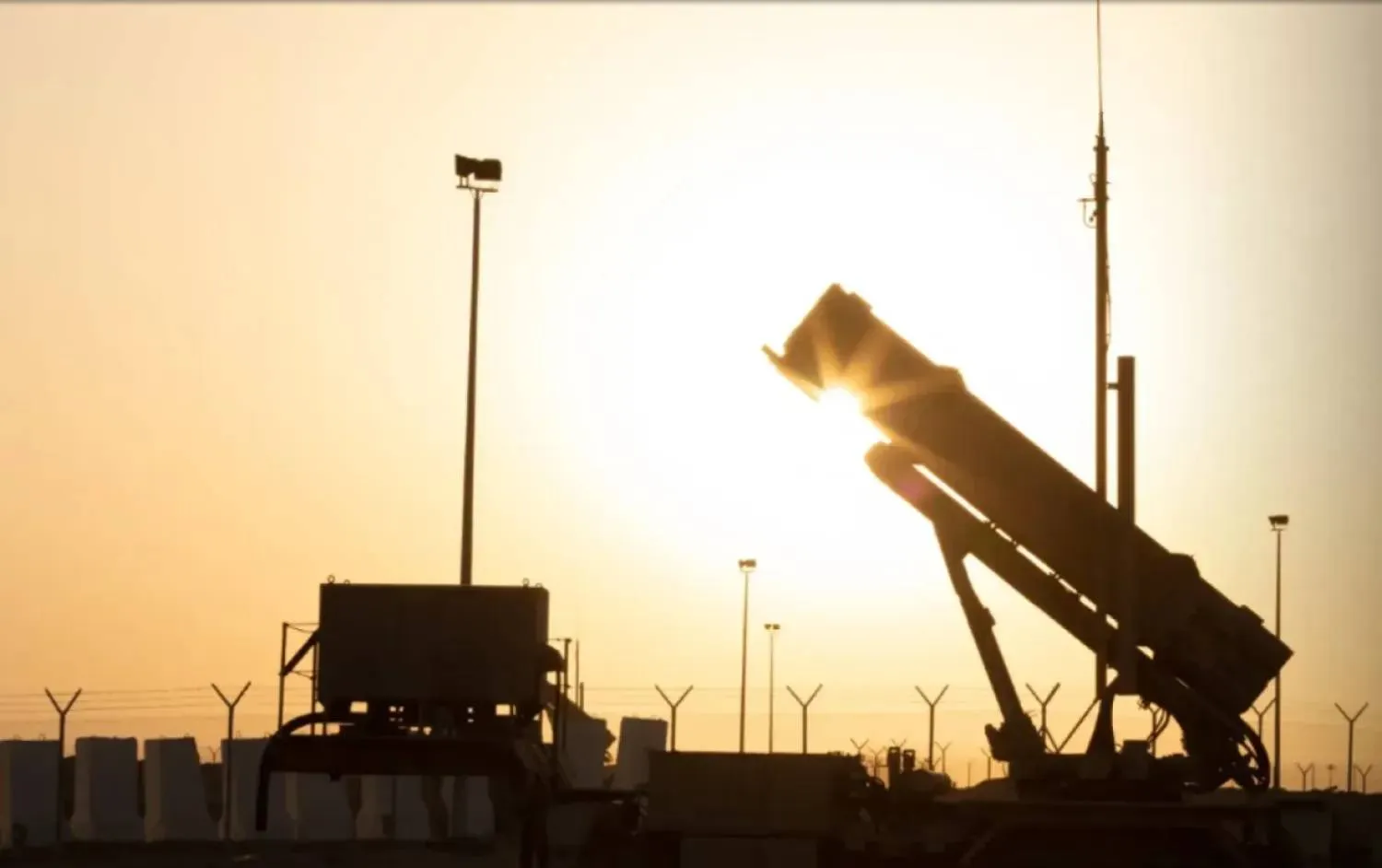
Official Spokesperson of the Coalition to Restore Legitimacy in Yemen Major General Turki Al-Malki said on Wednesday that air defenses intercepted and destroyed three cruise missiles launched by the terrorist Houthi militia toward the Riyadh Region.

On Tuesday, Al-Maliki said air defenses destroyed a Houthi ballistic missile fired at Riyadh.

They also downed a drone in the Eastern Region.


Pakistani Military to Asharq Al-Awsat: Our Commitment to Saudi Security Is Non-Negotiable

Pakistani military spokesperson Lieutenant General Ahmed Sharif Chaudhry. (Reuters)
TT

Pakistani Military to Asharq Al-Awsat: Our Commitment to Saudi Security Is Non-Negotiable

Pakistani military spokesperson Lieutenant General Ahmed Sharif Chaudhry. (Reuters)

Pakistani military spokesperson Lieutenant General Ahmed Sharif Chaudhry stressed that the transition of the Makkah Joint Defense Alliance into the practical implementation phase of its collective defense commitments entails adopting measures to enable the rapid deployment of agreed-upon forces and military capabilities inside Saudi Arabia. These steps include elevating readiness levels, bolstering military integration, sharing intelligence, and coordinating to conduct exclusively defensive operations.

In an interview with Asharq Al-Awsat, the spokesperson stressed his country's readiness, in light of current circumstances and based on the Joint Strategic Defense Agreement between Saudi Arabia and Pakistan and the Makkah Alliance, to take all necessary defensive measures to defend the Kingdom.

Islamabad's commitment to the Kingdom's security, sovereignty, and territorial integrity is "absolute and non-negotiable", he added.

Capabilities and forces

Regarding Pakistani forces and military capabilities in Saudi Arabia, Chaudhry revealed that Pakistani troops are already present in the Kingdom, operating in various capacities with their primary missions consisting of providing defensive support, exercises, and maneuvers.

Islamabad will continue to provide any required support for defensive purposes, whether in terms of military personnel, military capabilities, training, or logistical assistance, he said.

In response to a question regarding reinforcing the military presence or providing additional capabilities, including air and missile defense and intelligence sharing, he said that the necessary support will continue to be provided without specifying exact details, explaining that military alliances do not disclose troop numbers, deployment locations, or operational specifics.

Joint defense measures

Regarding the military measures to implement the alliance's commitments, Chaudhry explained that the transition to practical implementation of the Makkah Alliance obligations follows the recent attacks targeting Saudi Arabia.

He reiterated Pakistan's strong condemnation of the strikes on airports, cities, and civilian and economic infrastructure, describing them as a direct threat to Saudi Arabia's sovereignty, security, and territorial integrity, as well as a danger to regional stability and civilian safety.

Chaudhry said that those attacks raise deep concern in Pakistan, stressing that "the security of Saudi Arabia and the Two Holy Mosques is a top, non-negotiable priority,"

He also urged the need for restraint, de-escalation, and resorting to diplomatic solutions, as any further escalation serves the interest of no party.

Talks with Iran

On the diplomatic level, he explained that the meeting between representatives of the Makkah Joint Defense Alliance and Iran, held in Tehran on October 26, aimed to establish a framework for de-escalation and enhance regional cooperation.

He noted that the participation of Chief of Defense Forces Field Marshal Asim Munir in the meeting, along with his visit to Tehran days earlier, underscores Pakistan's commitment to promoting dialogue and the peaceful settlement of regional disputes.

The participants agreed to "continue dialogue to enhance cooperation among the four countries and contribute to achieving peace and stability in the region," without disclosing any other specific agreements.

Makkah Alliance and strategic defense agreement with Saudi Arabia

In explaining the differences between the "Joint Strategic Defense Agreement” between Saudi Arabia and Pakistan, announced in September of last year, and the Makkah Joint Defense Alliance between Saudi Arabia, Pakistan, and Türkiye, announced in August, Chaudhry noted that the bilateral agreement establishes a framework for defense cooperation between Pakistan and Saudi Arabia.

He added that it reflects the two countries' deep historical partnership and provides a structure for mutual support in the face of any aggression.

He added that under the bilateral Joint Strategic Defense Agreement, Saudi Arabia and Pakistan seek to deepen their longstanding strategic partnership, ensure mutual security, and continue practical defense cooperation to protect each country's sovereignty and vital interests.

The Makkah Joint Defense Alliance, meanwhile, is a trilateral framework bringing together Pakistan, Saudi Arabia, and Türkiye, establishing mechanisms for collective defense, joint readiness, and coordination, he explained.

Both are purely defensive in nature, and neither entails offensive intentions against any country, he stressed.

Chaudhry added that, looking to the future, the three countries aim to strengthen collective deterrence, deepen military integration, and consolidate regional stability.