


Turkish Lira in Crosshairs after Latest Central Bank Chief Ousted

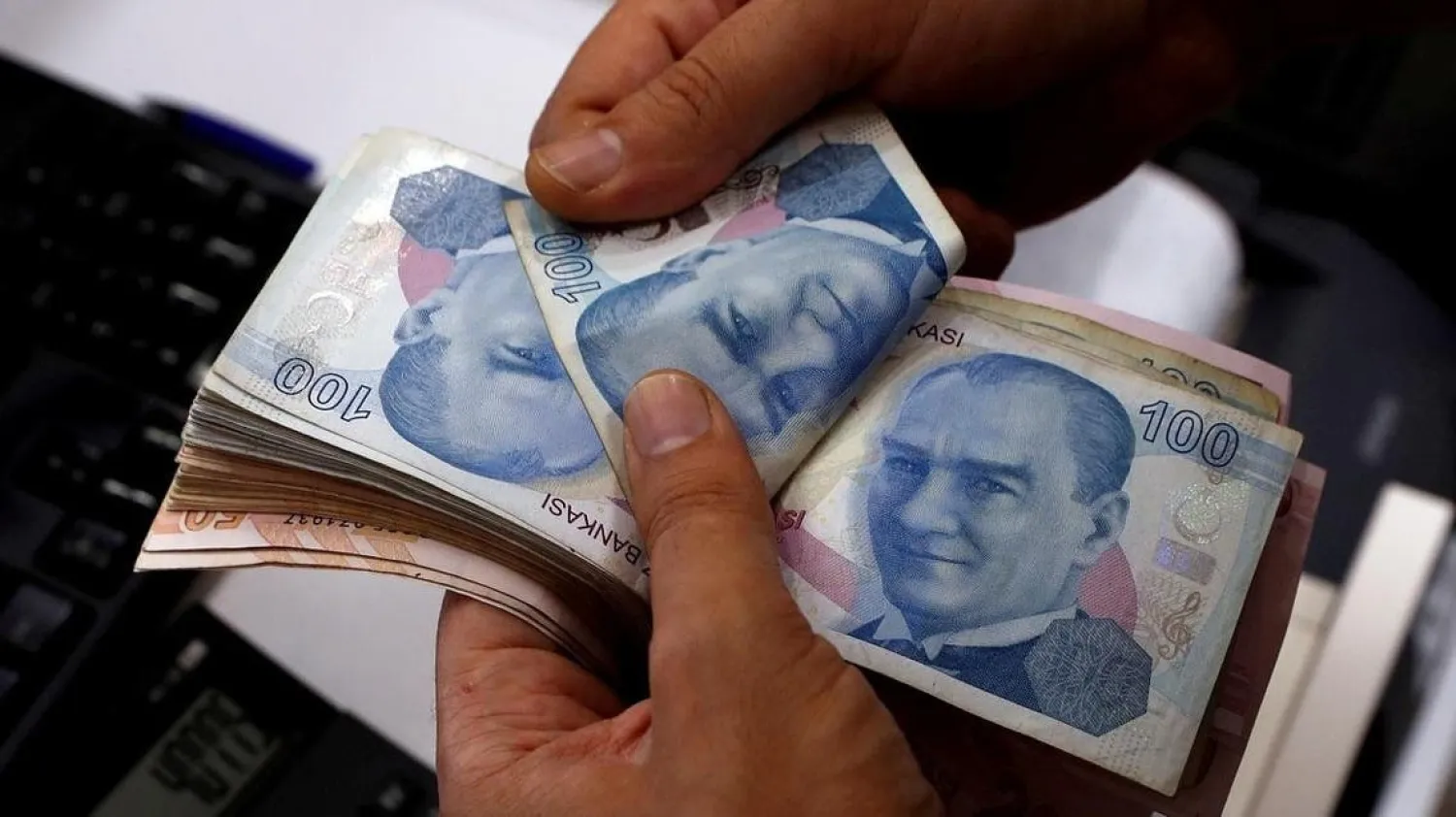
A money changer counts Turkish lira banknotes at a currency exchange office in Istanbul. (Reuters)
TT

Turkish Lira in Crosshairs after Latest Central Bank Chief Ousted

A money changer counts Turkish lira banknotes at a currency exchange office in Istanbul. (Reuters)

President Recep Tayyip Erdogan abruptly sacked Turkey’s central bank chief on Saturday, two days after a sharp interest rate hike to head off inflation, replacing him with a former ruling party lawmaker and critic of tight monetary policy.

Sahap Kavcioglu, a former member of parliament for Erdogan’s AK Party, replaces Naci Agbal who was appointed less than five months ago. Below are some reactions from analysts:

Selva Demiralp, director of the Koc University-Tusiad Economic Research Forum, in Istanbul:
“This move clarifies what the president meant by ‘putting price stability aside’ when he announced the economic reform package last Friday. It is worrisome because I now expect economic policy to literally put price stability aside.

“This implies that the government will once again try to stimulate the economy by low interest rate policies. However, pushing short term stimulus against longer term risks can not be a hand that can be overplayed. I am worried because such a priority has a high potential to backfire by causing extreme pressures on the TL (Turkish lira) and contracting the economy even further.

“Agbal was one of the most successful central bank governors appointed by the AK Party. He adopted a long term perspective, a conventional approach with clear communication. He took over an economy at the edge of the cliff and took the right steps to reestablish credibility from zero. Unfortunately, he is not given a chance to finish what he started.”

Cristian Maggio, head of emerging market strategy at TD Securities:
“This announcement demonstrates the erratic nature of policy decisions in Turkey, especially with regard to monetary matters. Kavcioglu’s appointment would suggest a higher risk of reverting to looser, unorthodox, and eventually mostly pro-growth policies from now on.

“The Turkish lira may easily sell-off 10-15%.... We will see this start on Monday, when Asia trading kicks in. The (central bank) and other Turkish authorities will try to lean against this move, likely deploying an array of measures. They may be somewhat effective for a start, but we question their ability to be successful for long in the current environment.”

Wolfango Piccoli, co-president of Risk Advisory Teneo:
“There are no institutions left in the country with any sort of independence and authority ... Erdogan is playing with fire at the worst possible time given (the) fragility of the key external backdrop.”

Jason Tuvey, analyst, Capital Economics:
The move is “likely to trigger large falls in the lira when markets open on Monday. It looks like the central bank’s efforts to fight the country’s inflation problem may come to an end, and a messy balance of payments crisis has become (once again) a real possibility.

“President Erdogan’s move leaves little doubt that all of the power in Turkey rests with him and this will result in rate cuts. This will simply make Turkey’s inflation problem even worse and risk premia on Turkish assets are likely to rise sharply.”

Tim Ash, senior EM sovereign strategist, Bluebay Asset Management:
“This decision is almost as bad as Brexit in terms of being the worst public policy decision I can remember in a country’s history ... Markets will express their opinions on Monday and it is likely to be an ugly reaction.”



Saudi E-Commerce Hits Record Monthly Sales over SAR30.7 Billion in October

A view of Riyadh, Saudi Arabia. (SPA file)
TT

Saudi E-Commerce Hits Record Monthly Sales over SAR30.7 Billion in October

A view of Riyadh, Saudi Arabia. (SPA file)

E-commerce sales in Saudi Arabia via "mada" cards soared to an all-time monthly high in October 2025, surpassing SAR30.7 billion.

The surge in sales represents a 68% year-on-year increase, totaling about SAR12.4 billion more than the SAR18.3 billion recorded in October 2024, according to the Saudi Central Bank (SAMA) statistical bulletin on Wednesday.

E-commerce sales for the third quarter (Q3) of 2025 hit SAR88.3 billion, up 15.2% from the previous quarter, representing an increase of about SAR11.6 billion over the SAR76.6 billion recorded in Q2.

On a monthly basis, e-commerce sales in October rose 6%, gaining approximately SAR1.6 billion over September’s total of SAR29.1 billion.

From January to October, "mada" data showed e-commerce sales grew 47.3%, rising by around SAR9.9 billion over the SAR20.9 billion recorded in January.

These figures cover transactions made via "mada" cards on e-commerce websites, apps, and digital wallets, and do not include credit-card payments.


Jeddah's King Abdulaziz Airport Launches First Direct Flight to Moscow

The expansion supports Jeddah Airports Company’s goal of broadening travel options and increasing air traffic revenue, leveraging the Kingdom's strategic location. (SPA)
TT

Jeddah's King Abdulaziz Airport Launches First Direct Flight to Moscow

The expansion supports Jeddah Airports Company’s goal of broadening travel options and increasing air traffic revenue, leveraging the Kingdom's strategic location. (SPA)

Jeddah's King Abdulaziz International Airport (KAIA) celebrated the launch of its first direct flynas flight to Moscow, operating three weekly flights between Jeddah and Vnukovo International Airport.

This initiative, in partnership with the Saudi Tourism Authority and the Air Connectivity Program, boosts air links between Saudi Arabia and Russia.

It marks KAIA's third direct Russian destination, following Makhachkala and Mineralnye Vody, which were inaugurated earlier this month by Azimuth Airlines.

The expansion supports Jeddah Airports Company’s goal of broadening travel options and increasing air traffic revenue, leveraging the Kingdom's strategic location.


China Widens Foreign Investment Incentive List to Stem Falling Inflows

People visit a shopping center in Beijing on December 20, 2025. (AFP)
TT

China Widens Foreign Investment Incentive List to Stem Falling Inflows

People visit a shopping center in Beijing on December 20, 2025. (AFP)

China on Wednesday listed more sectors eligible for foreign investment incentives, from tax breaks to preferential ​land use, in its latest effort to stem a prolonged decline in overseas capital inflows.

Under the 2025 edition of the catalogue of industries for encouraging foreign investment, China added more than 200 and revised about 300, with a ‌focus on ‌advanced manufacturing, modern services and ‌green ⁠and ​high-tech ‌sectors, the list jointly issued by the National Development and Reform Commission and the commerce ministry showed.

The new catalogue, which takes effect on February 1, 2026, replaces the 2022 version and continues a policy framework ⁠that offers foreign-invested enterprises tariff exemptions on imported equipment, preferential ‌land pricing, reduced corporate income ‍tax rates in ‍designated regions and tax credits for reinvestment ‍of profits.

The catalogue also extends incentives to central and western regions, as well as the northeast and Hainan, as Beijing seeks to attract ​more foreign investment into less developed areas.

China has in recent months ⁠taken a raft of measures to boost foreign investment, including pilot programs in Beijing, Shanghai and other regions to expand market access in services such as telecoms, healthcare and education, amid trade tensions with the United States.

Foreign direct investment in China totaled 693.2 billion yuan ($98.84 billion) from January to November this year, down 7.5% from the ‌same period last year, data from the commerce ministry showed.