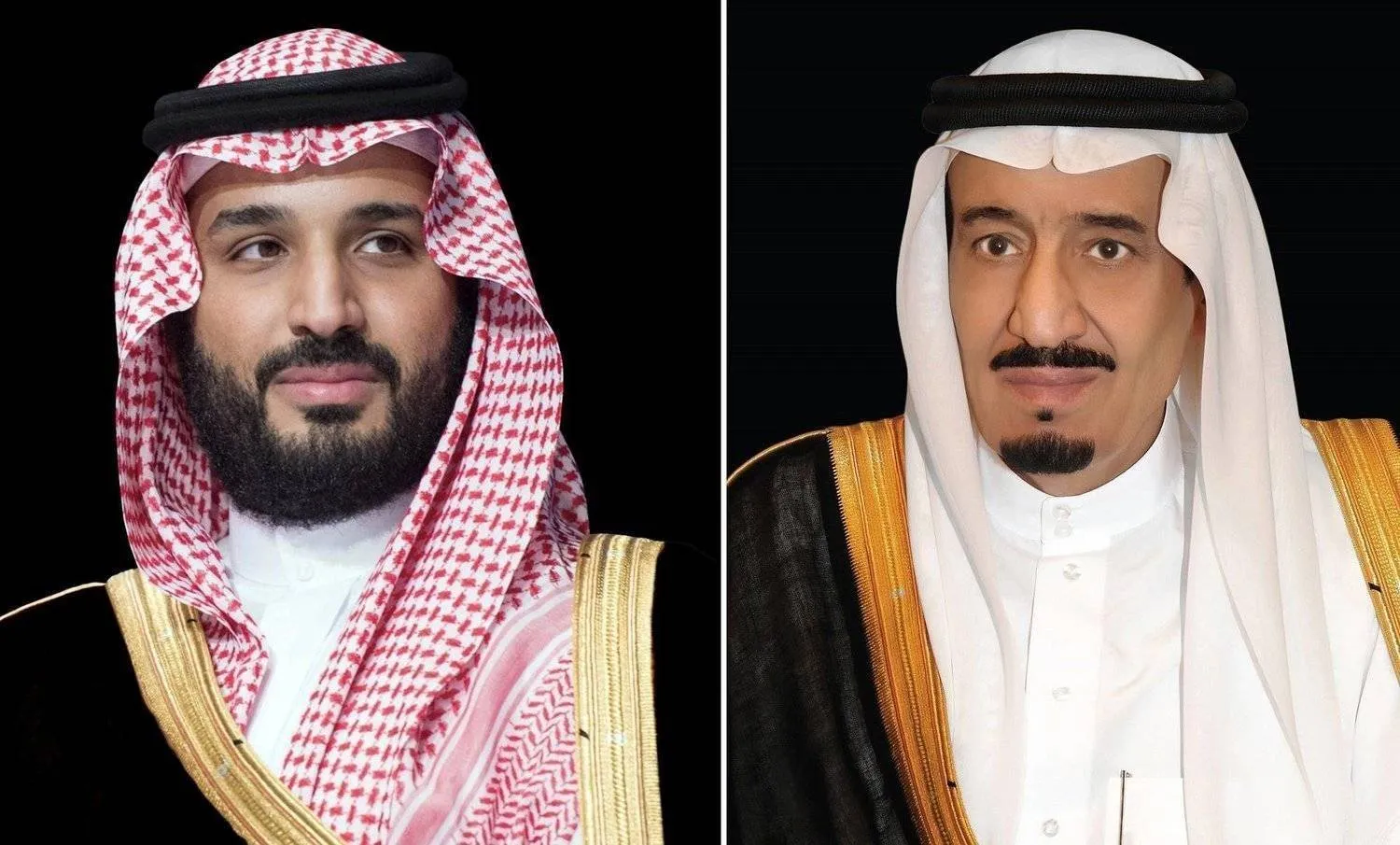
Crown Prince Mohammed bin Salman, Deputy Prime Minister and Minister of Defense, announced on Saturday the Saudi Green Initiative and the Middle East Green Initiative.
The initiatives, which will be launched soon, aim to chart a path for Saudi Arabia and the region in protecting the planet, by clearly defining an ambitious road map that rallies the region and significantly contributes to achieving global targets in confronting climate change, said Crown Prince Mohammed, according to the Saudi Press Agency.
He remarked that as a leading global oil producer, “the Kingdom fully recognizes its share of responsibility in advancing the fight against the climate crisis. Just as the Kingdom underpinned energy markets during the oil and gas era, it is going to become a global leader in forging a greener world.”
He said Saudi Arabia and the region face significant climate challenges, such as desertification, which is an immediate economic risk to the Kingdom and region (USD 13 billion is currently lost due to dust storms in the region every year).
Air pollution from greenhouse gases is also estimated to have shortened average Saudi life expectancy by 1.5 years.
“We will work through the Saudi Green Initiative to raise vegetation cover, reduce carbon emissions, combat pollution and land degradation, and preserve marine life,” said Crown Prince Mohammed.
The initiative will include a number of ambitious plans, most notably the planting of 10 billion trees in the Kingdom in the upcoming decades, or the equivalent to rehabilitating roughly 40 million hectares of degraded lands, translating to a twelvefold increase from current tree cover.
This represents the Kingdom's contribution of more than 4% in achieving the goals of the global initiative to limit the degradation of lands and fungal habitats, and 1% of the global target to plant 1 trillion trees.
The Kingdom will also work to raise the percentage of protected areas to more than 30% of its total land area, representing roughly 600,000 square kilometers, exceeding the current global target of 17%, in addition to launching a number of ambitious initiatives to protect Marine and Coastal Environments, continued Crown Prince Mohammed.
The Saudi Green Initiative will also work to reduce carbon emissions by more than 4% of global contributions, through an ambitious renewable energy program that will generate 50% of the Kingdom’s energy from renewables by 2030. It will also focus on several other projects in the fields of clean hydrocarbon technologies, estimated to eliminate more than 130 MT of carbon emissions and raising the rate of waste diversion from landfills to reach 94% in the Kingdom.
“While there is still a lot more to be done, the Kingdom is determined to make a lasting global impact. We will start working on The Middle East Green Initiative in coordination with neighboring and sister countries of the Gulf Cooperation Council (GCC) and Middle Eastern countries to plant an additional 40 billion trees in the region,” said Crown Prince Mohammed.
“This overall regional 50 billion tree planting program is the largest reforestation program in the world and twice the size of the Great Green Wall in the Sahel (the second largest such regional initiative). The project will restore an area equivalent to 200 million hectares of degraded land, representing 5% of the global target of planting 1 trillion trees and reducing 2.5% of global carbon levels,” he continued.
“Today the share of clean energy production in the Middle East doesn’t exceed 7%, and technologies used in hydrocarbon production in the region are not efficient. The Kingdom therefore, will work with regional partners to transfer our knowledge and share our experiences, which will contribute to reducing carbon emissions resulting from hydrocarbon production in the region by more than 60%,” he added.
These joint efforts and various other initiatives, will achieve a reduction in carbon emissions by more than 10% of global contributions.
“These two initiatives are a continuation of the environmental efforts in the Kingdom over the past few years in line with our Vision 2030,” he stressed. “The initiatives are a testimony of the Kingdom’s serious desire to address the environmental challenges it has faced, from increase in temperatures and dust waves to low levels of rain and desertification.”
“In this regard the Kingdom has carried out a comprehensive restructuring of the environmental sector, established the Environmental Special Forces in 2019, raised the percentage of natural reserves from 4% to more than 14% and increased vegetation cover by 40% in the past four years,” he added.
“The Kingdom was also able to achieve the most efficient levels of carbon emission of hydrocarbon producing countries, alongside other initiatives that have already started on the ground and resulted in tangible positive results for the environment. This is all part of the Kingdom’s efforts to promote public health and raise quality of life for its citizens and residents,” he declared.
“On a global level, these initiatives emanate from the Kingdom's leadership role towards common international issues, and a continuation of Kingdom’s efforts to protect the planet during its presidency of the G20 summit last year,” Crown Prince Mohammed said.
The 2020 summit witnessed the declaration of a dedicated environmental. The concept of Circular Carbon Economy was adopted, and the first environmental taskforce was established, alongside the launching of two global initiatives to reduce land degradation and protection of coral reefs.
“I am proud to announce the Saudi and Middle East Green Initiatives, but this is only a start,” said Crown Prince Mohammed.
“The Kingdom, the region and the world need to go much further and faster in combatting climate change. Given our starting point, beginning this journey to a greener future has not been easy. But in line with our overall modernization philosophy, we are not avoiding tough choices,” he went on to say.
“Climate action will enhance competitiveness, spark innovation and create millions of high-quality jobs. Young people, both in the Kingdom and the world, are demanding a cleaner, greener and more inclusive future, and we owe it to them to deliver on this,” he stressed.
“The Kingdom will work with all international partners to further develop these two initiatives and the various programs and timelines entailed in them,” he said.
The details of the Saudi Green Initiative will be announced in following months, and a global forum with international partners for the Middle East Green Initiative will be launched and held in the second quarter of next year.