

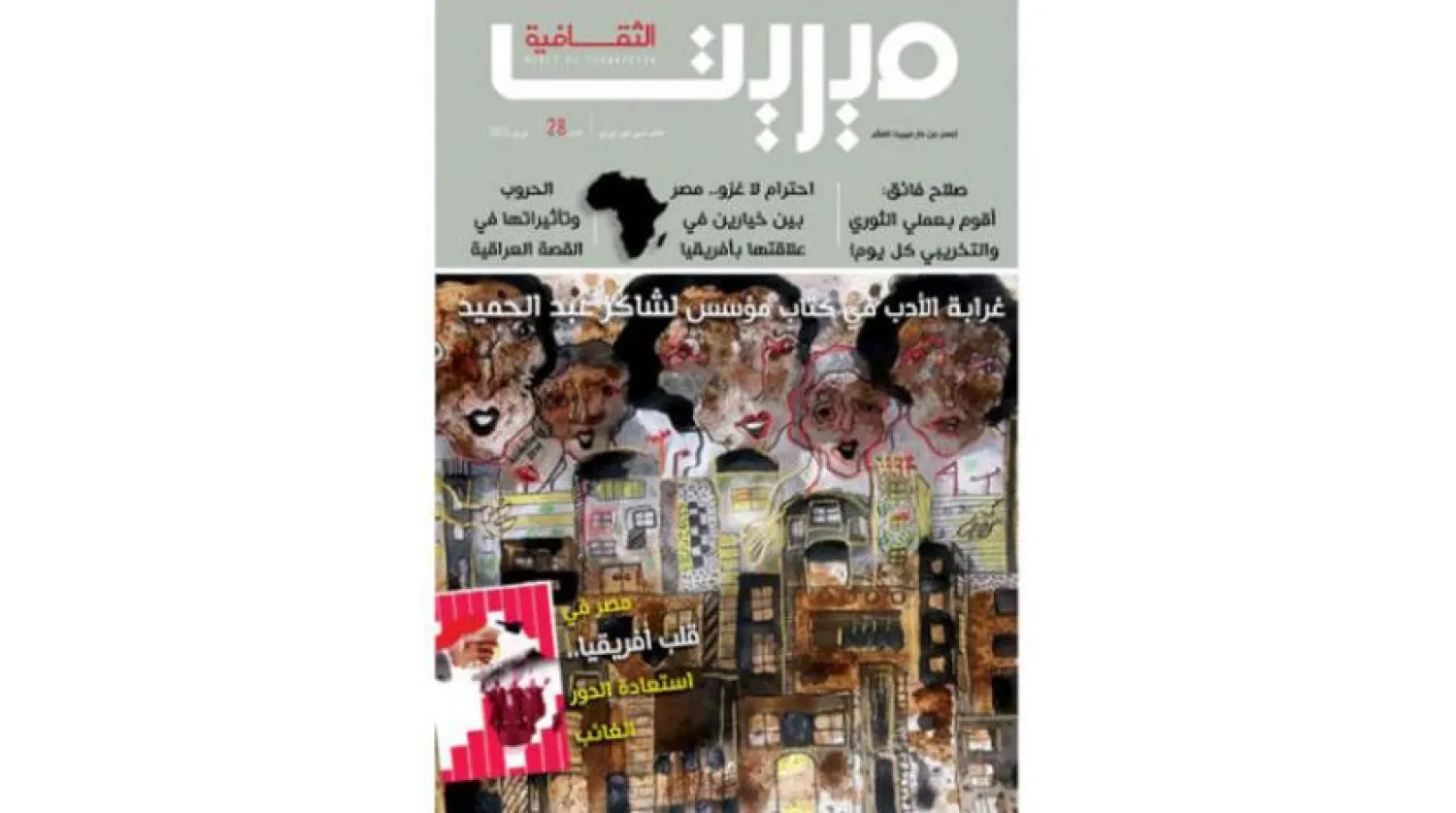

Merit Magazine Explores War and Its Effect on Iraqi Story

Merit Magazine Explores War and Its Effect on Iraqi Story
TT

Merit Magazine Explores War and Its Effect on Iraqi Story

Merit Magazine Explores War and Its Effect on Iraqi Story

The April issue of the Merit Cultural Magazine published by the Merit publishing house, Cairo, features a series of critical articles, and major literary and artistic contributions.

The "Creation and Creators" section includes an article by Dr. Amani Fouad on Dr. Shaker Abdul Hamid's book "Alienation…Concept, and Expression in Literature", in addition to five other articles by Novelist Tarek Imam on Poet Hamad Yamani's poetry collection "Goodbye in Small Triangle"; "Praise, an Arab Cultural Mark" by Dr. Ahmed Yahia Ali; "The Egyptian Revolution" by Dr. Ahmed Alwani; a reading on Mohamed al-Mansi Kandil's "Doctor of the Countryside" by Poet Rasha al-Fawal; and "Dialectic of the I and the Other in the Arab Novel" by Moroccan researcher Mohammed al-Sahel.

The Poetry Section features ten poems by Najat Ali, Zizi Shoushah, Naji Abdul Latif, Said Abdul Maksoud, Mohammed Tawfik, Rida Ahmad, Dima Mahmoud, Abir Zaki, Mohammed Husni Ibrahim, and Mohammed Ali Azab. The Story Section includes stories, chapters, and novels by Raouf Masa'd, Naim Sabri, Mohsen Youness, Hamdi Abu Jalil, Safaa al-Najjar, Mounir Otaiba, Mostafa al-Balki, Abdullah Al-Salama, and Hatem Mamdouh.

The "Noun Al Neswa" section discusses several African matters in two articles entitled "Women in African Life" by Dr. Inas Hussam al-Dine, and "Women in African Theater…Verse to Express Oneself" by researcher Farida Bendari.

The "Around the World" section includes three translations: "Introduction to Prose Poem" by American poet and novelist Peter Johnson translated by Dr. Adel Dergham; "The Beaudelairean Theater", an article written by French intellect Rolland Barthes translated by Tunisian poet Abdul Wahab al-Melawah; and five poems written by Lebanese-American poet Hayan Charara translated by Palestinian poet Dr. Helmi al-Risha.

The section "Cultures and Arts" offers an interview by Poet Samar Lashin with Iraqi poet Salah Fayeq. It also includes three important articles: "Wars and their Effects on the Iraqi Story" by Dr. Nadia Hinawi (Iraq); "Writing with the Hidden and Obvious Language…Reading on Stories of Mahmoud Abdul'al" by Dr. Hassan Atiah Taman; and "Writing of Academic Research Papers" by Dr. Ali Afifi Ali Ghazi.

In the "Art" section, Dr. Manal Al Boustani (Iraq) wrote "A reading of the Displacement Mural" exploring a mural by Iraqi Artist Mowaffak Ahmed, in addition to two other articles: "Architecture and Cinema" by Alaa Halifi (Morocco) and "Omraniya Youth Embrace Hamlet" by Dr. Fawzi al-Shami discussing the role of actor Mohammed Sobhi in the interaction between the art academy and its surrounding in the Omraniya neighborhood

The "Books" section includes three readings: "Transcendent Text in Works of Hassan al-Nassar" by Dr. Mohammad Ahmad Abdul Radi; "From the pictures of death in the poetry collection of Wadad Nabi's Death as if it was Junk" by Abduallah al-Mutaki (Morocco); and a news story about "The Dry Land and its Interference with the Human Heritage", a book by Iraqi poet Fadel al-Sultani.

The issue also offers studies of six Arabic translations of a famous poem by English poet T.S. Eliot.

The editing board of Merit Cultural Magazine is composed of Publisher Mohammed Hashem, Editor in Chief Poet Samir Darwish, Assistant Editor Adel Samih, and Editor Secretary Sara al-Iskafi. The paintings featured inside the magazine and on its cover are done by Jordanian artist Hilda Hiari..


Greece’s Oldest Modern-Era Museum Reopens on the Acropolis After a Major Restoration

Visitors tour the Acropolis, with the old Acropolis Museum on the left and the Parthenon on the right, as Greece's Culture Ministry presents the museum's reopening following renovation and conversion to new uses, in Athens, Greece, Monday, Nov. 23, 2026. (AP)
TT

Greece’s Oldest Modern-Era Museum Reopens on the Acropolis After a Major Restoration

Visitors tour the Acropolis, with the old Acropolis Museum on the left and the Parthenon on the right, as Greece's Culture Ministry presents the museum's reopening following renovation and conversion to new uses, in Athens, Greece, Monday, Nov. 23, 2026. (AP)

A museum that has stood on the Acropolis since 1874, making it the oldest in modern Greece, reopened Monday after a high-tech makeover.

The squat stone building often goes unnoticed by visitors. It had been closed to the public since 2007, three years before the country was plunged into a massive financial crisis.

The seven-year restoration cost 6.2 million euros ($6.8 million), raised through public funds and private donations, Culture Minister Lina Mendoni said.

The site will host ancient artifacts never before exhibited, digital displays tracing the monuments’ 2,500-year history and a viewing gallery where Culture Ministry technicians will carry out restoration work on ancient objects.

The museum opened in 1874, making it the first museum purpose-built since modern Greece gained independence several decades earlier.

It closed in 2007, becoming an administrative building after cranes carefully lowered its renowned sculptures and other masterpieces to the new Acropolis Museum at the foot of the hill.

“For us, it was inconceivable, almost an affront, that this historic building, with its uniquely privileged location, should be converted into offices and storerooms,” Mendoni said.

“We therefore decided that the museum should reopen in accordance with its original purpose,” she said.

The Parthenon and other temples on the Acropolis remain Greece’s most visited ancient site, with more than 4.6 million admissions recorded last year.

Restoration work continues even during the peak summer months. The Parthenon recently shed its heavy scaffolding for the first time in years.

Prime Minister Kyriakos Mitsotakis attended Monday’s inauguration and described the reopening as another milestone for Greece’s cultural heritage.

He used the occasion to restate Greece’s long-running demand for the return of the Parthenon Sculptures held by the British Museum in London.

“The rightful home of these priceless masterpieces is here, beneath the Attic light and in direct proximity to the temple to which they belong,” he said, adding that Greece would not accept the return of the sculptures as a loan.

“No solution and no agreement can be based on the recognition of foreign ownership over our national treasures,” Mitsotakis said.

“I reaffirm my commitment that we will continue this effort with responsibility, seriousness and determination,” he added. “And in the end, we will succeed.”


Saudi Arabia's History, National Heritage Showcased at 'Bridge of Civilizations' Art Exhibition in Cairo

The exhibition features more than 60 visual artists from Saudi Arabia, Egypt, and Russia. (SPA)
TT

Saudi Arabia's History, National Heritage Showcased at 'Bridge of Civilizations' Art Exhibition in Cairo

The exhibition features more than 60 visual artists from Saudi Arabia, Egypt, and Russia. (SPA)

The "Bridge of Civilizations" art exhibition opened in Cairo, highlighting the power of art to foster closer ties between civilizations and peoples, reported the Saudi Press Agency on Monday.

The exhibition features more than 60 visual artists from Saudi Arabia, Egypt, and Russia, with prominent artists and art enthusiasts in attendance.

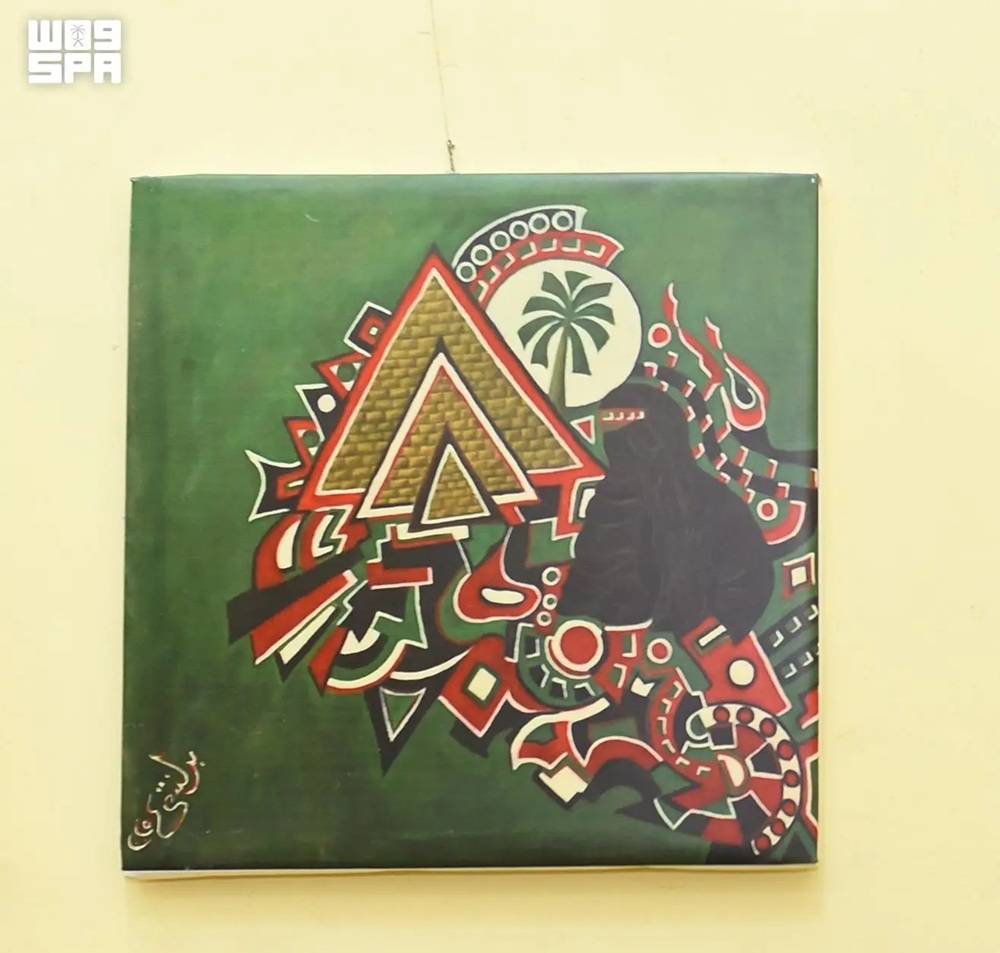
At the three-day exhibition, around 30 Saudi visual artists will present a diverse collection of works highlighting the Kingdom's history, national symbols, and heritage passed down through generations.

An artwork featured at the exhibition in Cairo. (SPA)

The Saudi artists' paintings document Islamic heritage, the Prophet Muhammad's biography, and historical sites associated with the Two Holy Mosques. They also highlight the Kingdom's development achievements, including the Haramain High Speed Railway, as well as its cultural and architectural heritage, such as Najdi Sadu weaving and Al-Masmak Palace.

Participating Saudi artists told SPA that they aim to introduce audiences to the Kingdom's history, identity, and heritage through contemporary artistic approaches while highlighting the development of visual arts in Saudi Arabia.


Red Sea Museum Showcases Jeddah's Black Coral Prayer-Bead Making Heritage

The gallery also features a wall displaying shells, molluscs and pieces of coral from the Red Sea - SPA
TT

Red Sea Museum Showcases Jeddah's Black Coral Prayer-Bead Making Heritage

The gallery also features a wall displaying shells, molluscs and pieces of coral from the Red Sea - SPA

The Red Sea Museum represents a valuable addition to Jeddah's cultural and tourism landscape, offering an educational experience that brings the history of the Red Sea to life and highlights Saudi Arabia’s rich civilization and cultural heritage associated with navigation, trade and Hajj.

As one of Saudi Arabia’s prominent cultural and educational destinations, the museum presents art exhibitions and cultural and educational programs that explore the history and civilization heritage of the Red Sea and document its connection with navigation, trade and human life through experiences that bring together visual arts, architecture, cinema and storytelling, SPA reported.

The Red Sea Museum showcases the craft of prayer-bead making. An identification label accompanying a set of prayer beads made from black coral on display at the museum bears the name of craftsman Ahmed Al-Halabi, who made the beads in Jeddah. The beads tell part of his family's history, as it is one of the oldest families known for this craft in the city.

The gallery also features a wall displaying shells, molluscs and pieces of coral from the Red Sea.

Visitors can observe coral in its natural form before seeing how the craftsman shaped black coral into beads, threaded them together to make a string of prayer beads, and designed them to pass smoothly between the fingers.
