



Syria Reporters Start Spain's First Refugee-Led News Site

The founders of Baynana, the first refugee-led digital magazine in Spain - AFP
TT

Syria Reporters Start Spain's First Refugee-Led News Site

The founders of Baynana, the first refugee-led digital magazine in Spain - AFP

Before arriving in Madrid, Muhammed, Ayham, Okba and Moussa honed their skills as journalists during Syria's bloody civil war and now they have opened Spain's first refugee-led digital magazine.

Launched on April 7, Baynana is an innovative online 'magazine' whose Arabic name means "Between us".

All four are originally from the southern Syrian city of Deraa, birthplace of the 2011 revolt against President Bashar al-Assad that sparked the war, AFP reported.

In early 2019, they fled to Turkey, then in May that year, they flew to Madrid with the help of the Committee to Protect Journalists (CPJ), the New York-based press freedom watchdog.

"When the war started I was 12, but I knew very well what was going on because many people were out protesting -- near my home, in the mosque," says Okba Mohamed, the youngest of the four who is now 22.

Just four years later, he began working for local news outlets, "recording protests, bombings".

Muhammed Subat, 31, told AFP he initially studied psychology in Damascus before going on to work for an Istanbul-based opposition channel called Syria TV, first in Syria, then in Turkey.

Spain was a place he had always wanted to visit because of the football, but he'd never imagined being there "as a refugee or migrant".

"I imagined coming here as a traveller or as a student. But that's life," he shrugs.

With articles written in Arabic and Spanish, Baynana's aim is to show "the good face of migrants here in Spain," says Ayham al-Ghareeb, 32, who came to Madrid with his wife and two young daughters.

The fourth member of the team is Moussa al-Jamaat, 39, who also worked as a journalist in Syria and built and maintains the Baynana website.

So far, the focus has been on successful migrant stories, such as that of Ashraf Kachach, a YouTuber with Moroccan roots who fights Islamophobia, or Malak Zungi, the Lebanese founder of a project to train refugees as chefs in Spain.

Another report profiled Sevilla striker Youssef en-Nesyri, whose success in Spain's top-flight football league incarnates the dreams of many youths in the Middle East and North Africa.

At the same time, Baynana seeks to provide "useful information" to Spain's Arabic-speaking community, especially migrants who face many challenges in their daily lives.

"There is not a lot of information in Arabic on how to get your residency papers," says Ghareeb, citing just one example.

It's a problem they themselves have faced while they wait for their asylum claims to be processed.

According to the Spanish Commission for Refugee Aid (CEAR), more than 20,000 Syrians have sought refuge in Spain since 2011.

"I have been in Spain for nearly two years and I still can't travel so I can't see my family," says Mohamed, whose relatives are refugees in Jordan.

He last saw them in 2014.

Although life in Spain is "very safe", there is "racism against migrants and refugees", Ghareeb said, giving the example of problems trying to rent a flat.

Baynana presents itself as Spain's first refugee-run media outlet.

A similar project already exists in Germany where 10 journalists from Afghanistan, Egypt, Iran and Syria write for a magazine called Amal, Berlin! which is Arabic for "Hope, Berlin!".

Baynana's potential audience within Spain -- home to around one million Arabic speakers, mostly from Morocco -- "is very broad", says its Madrid-based editor Andrea Olea, who also translates into Spanish what her Syrian colleagues write.

And there is great diversity among Spain's Arabic-speaking residents, who range from Moroccans "who come over to work on farms" to refugees with university degrees, she said.

Baynana's staff share a modest office at the headquarters of Spanish foundation Por Causa which promotes investigative journalism about migration and is providing them logistical support.

Even so, funding for the project remains tight with the staff launching a crowd-funding campaign on social media.



Rescue Teams Search for Survivors in Building Collapse that Killed at Least 2 in Northern Lebanon

A Lebanese flag is pictured, in the aftermath of a massive explosion, in Beirut's damaged port area, Lebanon August 17, 2020. REUTERS/Hannah McKay
TT

Rescue Teams Search for Survivors in Building Collapse that Killed at Least 2 in Northern Lebanon

A Lebanese flag is pictured, in the aftermath of a massive explosion, in Beirut's damaged port area, Lebanon August 17, 2020. REUTERS/Hannah McKay

At least two people were killed and four rescued from the rubble of a multistory apartment building that collapsed Sunday in the city of Tripoli in northern Lebanon, state media reported.

Rescue teams were continuing to dig through the rubble. It was not immediately clear how many people were in the building when it fell.

The bodies pulled out were of a child and a woman, the state-run National News Agency reported.

Dozens of people crowded around the site of the crater left by the collapsed building, with some shooting in the air.

The building was in the neighborhood of Bab Tabbaneh, one of the poorest areas in Lebanon’s second largest city, where residents have long complained of government neglect and shoddy infrastructure. Building collapses are not uncommon in Tripoli due to poor building standards, according to The AP news.

Lebanon’s Health Ministry announced that those injured in the collapse would receive treatment at the state’s expense.

The national syndicate for property owners in a statement called the collapse the result of “blatant negligence and shortcomings of the Lebanese state toward the safety of citizens and their housing security,” and said it is “not an isolated incident.”

The syndicate called for the government to launch a comprehensive national survey of buildings at risk of collapse.


Israel to Take More West Bank Powers and Relax Settler Land Buys

A view of Israeli settlement of Maale Adumim, in the West Bank, Sunday, June 18, 2023. (AP)
TT

Israel to Take More West Bank Powers and Relax Settler Land Buys

A view of Israeli settlement of Maale Adumim, in the West Bank, Sunday, June 18, 2023. (AP)

Israel's security cabinet approved a series of steps on Sunday that would make it easier for settlers in the occupied West Bank to buy land while granting Israeli authorities more enforcement powers over Palestinians, Israeli media reported.

The West Bank is among the territories that the Palestinians seek for a future independent state. Much of it is under Israeli military control, with limited Palestinian self-rule in some areas run by the Western-backed Palestinian Authority (PA).

Citing statements by Finance Minister Bezalel Smotrich and Defense Minister Israel Katz, Israeli news sites Ynet and Haaretz said the measures included scrapping decades-old regulations that prevent Jewish private citizens buying land in the West Bank, The AP news reported.

They were also reported to include allowing Israeli authorities to administer some religious sites, and expand supervision and enforcement in areas under PA administration in matters of environmental hazards, water offences and damage to archaeological sites.

Palestinian President Mahmoud Abbas said the new measures were dangerous, illegal and tantamount to de-facto annexation.

The Israeli ministers did not immediately respond to requests for comment.

The new measures come three days before Prime Minister Benjamin Netanyahu is scheduled to meet in Washington with US President Donald Trump.

Trump has ruled out Israeli annexation of the West Bank but his administration has not sought to curb Israel's accelerated settlement building, which the Palestinians say denies them a potential state by eating away at its territory.

Netanyahu, who is facing an election later this year, deems the establishment of any Palestinian state a security threat.

His ruling coalition includes many pro-settler members who want Israel to annex the West Bank, land captured in the 1967 Middle East war to which Israel cites biblical and historical ties.

The United Nations' highest court said in a non-binding advisory opinion in 2024 that Israel's occupation of Palestinian territories and settlements there is illegal and should be ended as soon as possible. Israel disputes this view.


Arab League Condemns Attack on Aid Convoys in Sudan

A general view shows the opening session of the meeting of Arab foreign ministers at the Arab League Headquarters (Reuters)
TT

Arab League Condemns Attack on Aid Convoys in Sudan

A general view shows the opening session of the meeting of Arab foreign ministers at the Arab League Headquarters (Reuters)

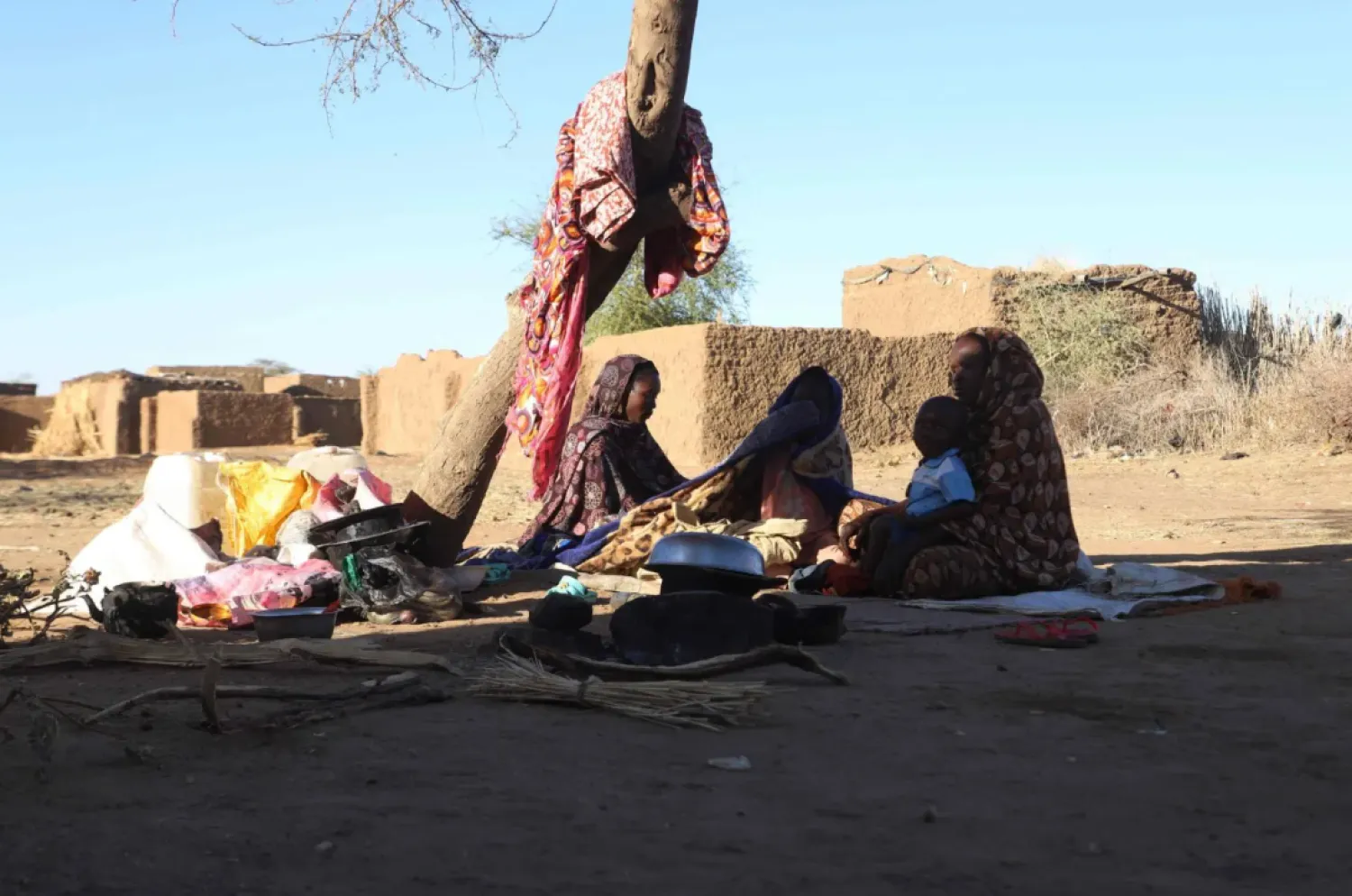
Arab League Secretary-General Ahmed Aboul Gheit strongly condemned the attack by the Rapid Support Forces on humanitarian aid convoys and relief workers in North Kordofan State, Sudan.

In a statement reported by SPA, secretary-general's spokesperson Jamal Rushdi quoted Aboul Gheit as saying the attack constitutes a war crime under international humanitarian law, which prohibits the deliberate targeting of civilians and depriving them of their means of survival.

Aboul Gheit stressed the need to hold those responsible accountable, end impunity, and ensure the full protection of civilians, humanitarian workers, and relief facilities in Sudan.