


With Food and Fuel, Hezbollah Braces for the Worst In Lebanon Collapse

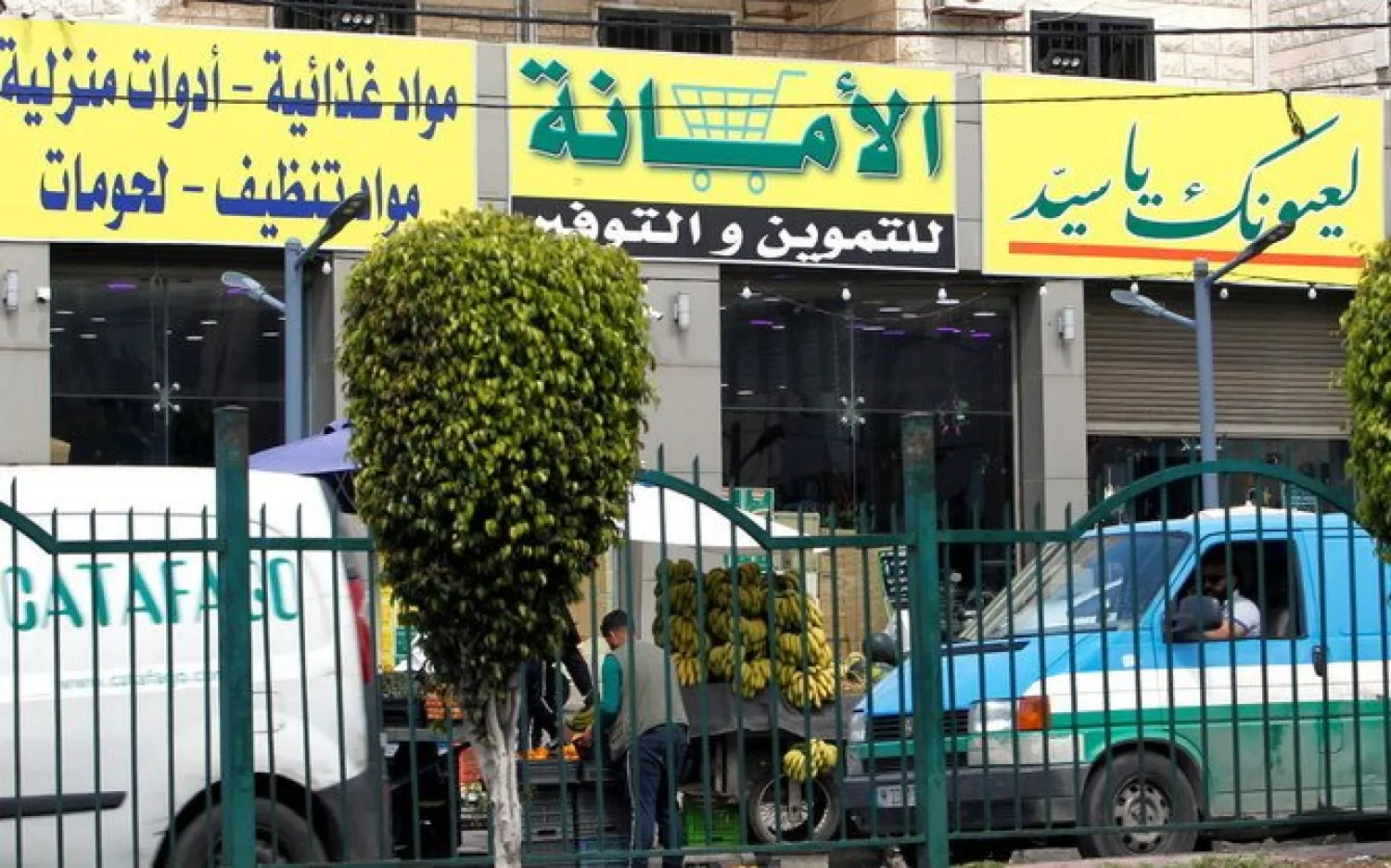
A view shows a market for groceries with a Hezbollah slogan on it, in Beirut suburbs. (REUTERS)
TT

With Food and Fuel, Hezbollah Braces for the Worst In Lebanon Collapse

A view shows a market for groceries with a Hezbollah slogan on it, in Beirut suburbs. (REUTERS)

Lebanon’s Hezbollah has made preparations for an all-out collapse of the fracturing state, issuing ration cards for food, importing medicine and readying storage for fuel from its patron Iran, three sources familiar with the plans told Reuters.

The moves, responding to a grave economic crisis, would mark an expansion of services provided by the armed movement to its support base, with a network that already boasts charities, a construction firm and a pension system.

The steps highlight rising fears of an implosion of the Lebanese state, in which authorities can no longer import food or fuel to keep the lights on.

They underline Hezbollah’s growing role in tackling the emergency with services that the government would otherwise provide.

The plan chimes with worries in Lebanon that people will have to rely on political factions for food and security, such as in militia days during the 1975-1990 civil war.

In response to a question about Hezbollah’s plans, Leila Hatoum, an adviser to the caretaker prime minister, said the country was “in no condition to refuse aid” regardless of politics.

The sources from the pro-Hezbollah camp, who declined to be named, said the plan for a potential worst-case scenario has gathered pace as an end to subsidies looms in the coming months, raising the specter of hunger and unrest.

Lebanon’s currency has crashed as the country runs out of dollars, with no state rescue in sight. Food prices have shot up 400%.

Fights in supermarkets are now commonplace, as are people rummaging through trash. A brawl over food packages this week killed one person and injured two others.

“The preparations have begun for the next stage...It is indeed an economic battle plan,” said one of the sources, a senior official.

Already, the new ration card, seen by Reuters, helps hundreds of people buy basic goods in the local currency — largely Iranian, Lebanese and Syrian cheaper items at a discount up to 40%, subsidized by the party, the sources said.

The card can be used at co-ops, some of them newly opened, in the southern Beirut suburbs and parts of southern Lebanon where Hezbollah holds sway.

An Iran-funded paramilitary force which critics once called “a state within a state,” Hezbollah has grown more entangled in Lebanese state affairs in recent years.

Washington, which deems Hezbollah a terrorist group, has ramped up sanctions to choke off its sources of funding, including what it estimates as hundreds of millions of dollars from Tehran yearly.

Some factions have issued aid baskets to their patronage communities, but the Iran-backed network remains outsized in comparison.

“They’re all doing it...But Hezbollah’s scope is much bigger and more powerful, with more resources to deal with the crisis,” said Joseph Daher, a researcher who wrote a book on Hezbollah’s political economy.

“This is more about limiting the catastrophe for its popular base. It means the dependency on Hezbollah particularly will increase.”

And while Hezbollah gives ration cards, the state, hollowed out by decades of graft and debt, has talked up the idea of such a card for poor Lebanese for nearly a year without acting.

Ministers have said the need for parliamentary approval has stalled the cabinet’s plan for cards.

Photos on social media of shelves stacked with canned goods, reportedly from one of Hezbollah’s co-ops, spread across Lebanon last week.

A second source said Hezbollah had filled up warehouses and launched the cards to extend services outside the party and plug gaps in the Lebanese market, where cheap alternatives are more common than pre-crisis.

He said the card offers a quota, based on the family size, for needs like sugar and flour.

The goods are backed by Hezbollah, imported by allied companies or brought in without customs fees through the border with Syria, where Hezbollah forces have a footing since joining the war to back Damascus alongside Iran.

The source added that Hezbollah had similar plans for medicine imports. Some pharmacists in the southern suburbs of Beirut said they had received training on new Iranian and Syrian brands that popped up on the shelves in recent months.

Two of the sources said the plan included stockpiling fuel from Iran, as Lebanon’s energy ministry warns of a possible total blackout. The senior official said Hezbollah was clearing storage space for fuel in next-door Syria.



Sudan Drone Attack on Darfur Market Kills 10

Sudanese refugee girls carry water supplies near a polling station in the refugee camp of Zamzam, on the outskirts of el-Fasher, Darfur, Sudan, on April 13, 2010. (AP)
TT

Sudan Drone Attack on Darfur Market Kills 10

Sudanese refugee girls carry water supplies near a polling station in the refugee camp of Zamzam, on the outskirts of el-Fasher, Darfur, Sudan, on April 13, 2010. (AP)

A drone attack on a busy market in Sudan's North Darfur state killed 10 people over the weekend, first responders said on Sunday, without saying who was responsible.

The attack comes as fighting intensified elsewhere in the country, leading aid workers to be evacuated on Sunday from Kadugli, a besieged, famine-hit city in the south.

Since April 2023, Sudan's army and the paramilitary Rapid Support Forces have been locked in a conflict which has killed tens of thousands of people, displaced nearly 12 million and created the world's largest displacement and hunger crisis.

The North Darfur Emergency Rooms Council, one of hundreds of volunteer groups coordinating aid across Sudan, said a drone strike hit Al-Harra market in the RSF-controlled town of Malha on Saturday.

The attack killed 10 people, it said.

The council did not identify who carried out the attack, which it said had also sparked "fire in shops and caused extensive material damage".

There was no immediate comment from either the Sudanese army or the RSF.

The war's current focal point is now South Kordofan and clashes have escalated in Kadugli, the state capital, where a drone attack last week killed eight people as they attempted to flee the army-controlled city.

A source from a humanitarian organization operating in Kadugli told AFP on Sunday that humanitarian groups had "evacuated all their workers" from the city because of the security conditions.

The evacuation followed the United Nations' decision to relocate its logistics hub from Kadugli, the source said on condition of anonymity, without specifying where the staff had gone.

- Measles outbreak -

Kadugli and nearby Dilling have been besieged by paramilitary forces since the war erupted.

Last week, the RSF claimed control of the Brno area, a key defensive line on the road between Kadugli and Dilling.

After dislodging the army in October from the western city of el-Fasher -- its last stronghold in the Darfur region -- the RSF has shifted its focus to resource-rich Kordofan, a strategic crossroads linking army-held northern and eastern territories with RSF-held Darfur in the west.

Like Darfur, Kordofan is home to numerous non-Sudanese Arab ethnic groups. Much of the violence that followed the fall of el-Fasher was reportedly ethnically targeted.

Communications in Kordofan have been cut, and the United Nations declared a famine in Kadugli last month.

According to the UN's International Organization for Migration, more than 50,000 civilians have fled the region since the end of October.

Residents have been forced to forage for food in nearby forests, according to accounts gathered by AFP.

Doctors without Borders (MSF) said on Sunday that measles was spreading in three of the four states in Darfur, a vast region covering much of western Sudan.

"A preventable measles outbreak is spreading across Central, South and West Darfur," the organization said in a statement.

"Since September 2025, MSF teams have treated more than 1,300 cases. Delays in vaccine transport, approvals and coordination, by authorities and key partners are leaving children unprotected."


Foreign Press Group Welcomes Israel Court Deadline on Gaza Access

A Palestinian man carries the body of his 5-month-old brother, Ahmed Al-Nader, who was reportedly killed the previous day along with other family members in an Israeli shelling on a school-turned-shelter in the Tuffah neighborhood of Gaza City, ahead of his funeral on December 20, 2025. (AFP)
TT

Foreign Press Group Welcomes Israel Court Deadline on Gaza Access

A Palestinian man carries the body of his 5-month-old brother, Ahmed Al-Nader, who was reportedly killed the previous day along with other family members in an Israeli shelling on a school-turned-shelter in the Tuffah neighborhood of Gaza City, ahead of his funeral on December 20, 2025. (AFP)

The Foreign Press Association in Jerusalem on Sunday welcomed the Israeli Supreme Court's decision to set January 4 as the deadline for Israel to respond to its petition seeking media access to Gaza.

Since the start of the Gaza war in October 2023, sparked by Palestinian group Hamas's attack on Israel, Israeli authorities have prevented foreign journalists from independently entering the devastated territory.

Israel has instead allowed, on a case-by-case basis, a handful of reporters to accompany its troops into the blockaded Palestinian territory.

The Foreign Press Association (FPA), which represents hundreds of foreign journalists in Israel and the Palestinian territories, filed a petition to the supreme court last year, seeking immediate access for international journalists to the Gaza Strip.

On October 23, the court held a first hearing on the case, and decided to give Israeli authorities one month to develop a plan for granting access.

Since then, the court has given several extensions to the Israeli authorities to come up with their plan, but on Saturday it set January 4 as a final deadline.

"If the respondents (Israeli authorities) do not inform us of their position by that date, a decision on the request for a conditional order will be made on the basis of the material in the case file," the court said.

The FPA welcomed the court's latest directive.

"After two years of the state's delay tactics, we are pleased that the court's patience has finally run out," the association said in a statement.

"We renew our call for the state of Israel to immediately grant journalists free and unfettered access to the Gaza Strip.

"And should the government continue to obstruct press freedoms, we hope that the supreme court will recognize and uphold those freedoms," it added.


One Dead in Israeli Strikes on South Lebanon

Smoke rises from the site of a series of Israeli airstrikes that targeted the outskirts of the southern Lebanese village of al-Katrani on December 18, 2025. (AFP)
TT

One Dead in Israeli Strikes on South Lebanon

Smoke rises from the site of a series of Israeli airstrikes that targeted the outskirts of the southern Lebanese village of al-Katrani on December 18, 2025. (AFP)

Israeli strikes in south Lebanon on Sunday killed one person and wounded another, the Lebanese health ministry said, as Israel's military said it targeted Hezbollah members.

Israel has kept up regular strikes on Lebanon, usually saying it is targeting Hezbollah infrastructure or operatives, despite a November 2024 ceasefire that sought to end more than a year of hostilities with the Iran-backed group that erupted over the Gaza war.

It has also kept troops in five south Lebanon areas that it deems strategic.

The health ministry in Beirut said "two Israeli enemy strikes today, on a vehicle and a motorbike in the town of Yater" killed one person and wounded another.

Yater is around five kilometers (three miles) from the border with Israel.

In separate statements, the Israeli military said it "struck a Hezbollah terrorist in the area of Yater", adding shortly afterwards that it "struck an additional Hezbollah terrorist" in the same area.

Also on Sunday, Lebanon's army said in a statement that troops had discovered and dismantled "an Israeli spy device" in Yaroun, elsewhere in south Lebanon near the border.

Under heavy US pressure and amid fears of expanded Israeli strikes, Lebanon has committed to disarming Hezbollah and plans to do so south of the Litani River, about 30 kilometers from the border with Israel, by year end.

Israel has questioned the Lebanese military's effectiveness and has accused Hezbollah of rearming, while the group itself has rejected calls to surrender its weapons.

During a visit to Israel on Sunday, US Senator Lindsey Graham also accused Hezbollah of rearming.

"My impression is that Hezbollah is trying to make more weapons... That's not an acceptable outcome," Graham said in a video statement issued by Israeli Prime Minister Benjamin Netanyahu's office.

More than 340 people have been killed by Israeli fire in Lebanon since the ceasefire, according to an AFP tally of Lebanese health ministry reports.

This week at talks in Paris, Lebanon's army chief agreed to document the military's progress in disarming Hezbollah, the French foreign ministry said.

On Friday, Lebanese and Israeli civilian representatives took part in a meeting of the ceasefire monitoring committee for a second time, after holding their first direct talks in decades earlier this month under the committee's auspices.

Israel said Friday's meeting was part of broader efforts to ensure Hezbollah's disarmament and strengthen security in border areas.