Russia Says its Airstrike in Syria Killed 200 Militants

Russian Mikoyan MiG-31 supersonic interceptor aircraft fly above the Kremlin during the rehearsal for a military parade at the Red Square in Moscow, Russia, May 4, 2019. (EPA)
TT

Russia Says its Airstrike in Syria Killed 200 Militants

Russian Mikoyan MiG-31 supersonic interceptor aircraft fly above the Kremlin during the rehearsal for a military parade at the Red Square in Moscow, Russia, May 4, 2019. (EPA)

The Russian military said Monday that its airstrike killed about 200 militants in eastern Syria.

Rear Adm. Alexander Karpov, the head of the Russian military's Reconciliation Center in Syria, said Russian warplanes hit two militant hideouts northeast of Palmyra.

Karpov said in a statement carried by Russian news agencies that the air raid killed some 200 militants and destroyed 24 vehicles and about 500 kilograms (over 1,100 pounds) of ammunition and explosives. He said the militants' base had served as a staging ground for terror attacks across Syria.

Russia has waged a military campaign in Syria since 2015, helping President Bashar Assad's government retake control over most of the country after a devastating 10-year conflict.

The Syrian Observatory for Human Rights reported the airstrikes, saying they preceded a sweep by Russian troops and the Syrian Fifth Corps in search of ISIS group cells in the Homs desert. The Observatory said 26 ISIS militants were killed.

The Observatory said the raid might have been in response to the group's claims that it had killed two Russian soldiers in the desert. The ground operation began Monday under the heavy cover by Russian military helicopters.


Erdogan to Visit Libya for 1st Time in 15 Years for Türkiye-Africa Summit in December

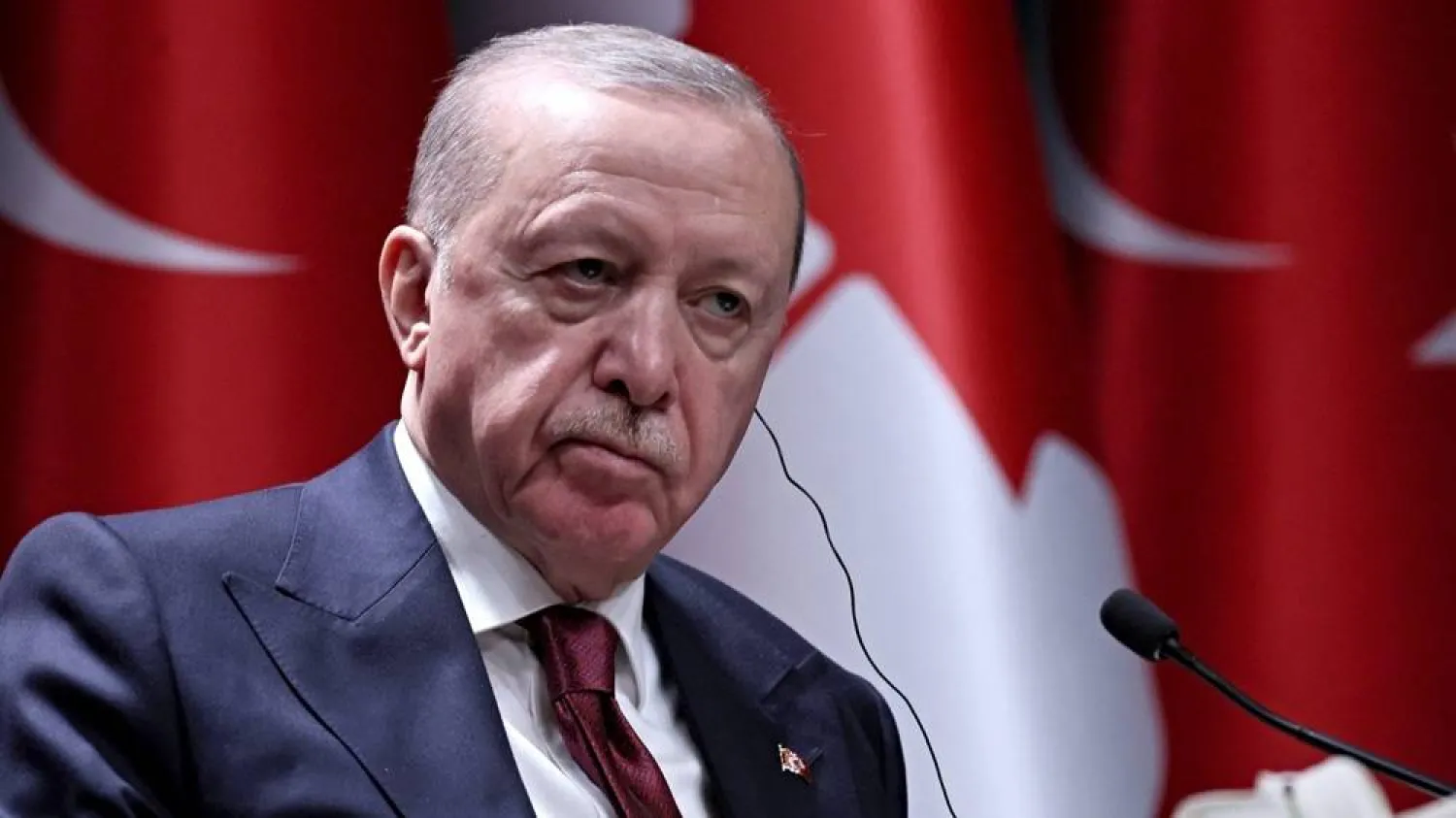
Turkish President Recep Tayyip Erdogan attends a joint press conference with Canadian Prime Minister Mark Carney in Ankara, October 22, 2026. (AFP)
TT

Erdogan to Visit Libya for 1st Time in 15 Years for Türkiye-Africa Summit in December

Turkish President Recep Tayyip Erdogan attends a joint press conference with Canadian Prime Minister Mark Carney in Ankara, October 22, 2026. (AFP)

Turkish President Recep Tayyip Erdogan will visit Libya next month for the first time in more than 15 years to attend the Türkiye-Africa Summit, scheduled to take place in Tripoli on December 8-9.

Turkish Foreign Minister Hakan Fidan announced the visit just hours after he and Turkish intelligence chief Ibrahim Kalin met with Abdulhamid Dbeibah, head of Libya’s Government of National Unity (GNU), in Istanbul on Saturday.

In a televised interview Saturday evening, the Turkish foreign minister described his talks with Dbeibah as “highly productive,” adding that the Libyan prime minister had expressed his anticipation of Erdogan’s visit.

Erdogan last visited Libya on September 16, 2011, when he was prime minister. He traveled to Tripoli and Benghazi following the fall of Moammar al-Gaddafi’s regime, meeting Mustafa Abdul Jalil, then head of the National Transitional Council, and Mahmoud Jibril, head of its executive office. Several cooperation agreements were signed during the visit.

Fidan described Erdogan as the key figure in defending western Libya and preventing the complete collapse of the GNU.

“During the war in Libya, we fought on one side, but we also established a comprehensive framework of high-level diplomacy and peacebuilding tactics to achieve peace and prevent another war,” he said.

The minister noted that Türkiye had since strengthened its ties with eastern Libya to a level approaching its relations with the west.

“We are now using our relations with both sides to unify the country,” he added.

Fidan stressed the importance of the Türkiye-Africa Summit, saying it would focus on strengthening the partnership between Türkiye and African countries across various sectors.

The summit will also address developments in Libya, including political efforts to reunify the country and hold elections.

Fidan recalled that Erdogan had discussed developments in Libya and efforts toward national reunification with Dbeibah during a meeting on the sidelines of the 31st Conference of the Parties to the UN Framework Convention on Climate Change (COP31) on November 12.

The Istanbul meeting between Fidan, Kalin and Dbeibah followed the Libyan prime minister’s visit to Egypt, where he met President Abdel Fattah al-Sisi.

Their discussions covered ways to strengthen bilateral relations, Libya’s political developments, efforts to achieve stability and regional issues of mutual concern.


Türkiye Warns of Possible Israeli Military Operation in Syria

Turkish Foreign Minister Hakan Fidan. (Reuters)
TT

Türkiye Warns of Possible Israeli Military Operation in Syria

Turkish Foreign Minister Hakan Fidan. (Reuters)

Türkiye has warned that Israel could launch a military operation in Syria, potentially escalating regional tensions, while stressing that Ankara and Damascus share the same position on regional stability.

Turkish Foreign Minister Hakan Fidan accused Israel of supporting a Druze group in southern Syria in an attempt to provoke the Syrian army and create a pretext for military intervention.

In a televised interview late Saturday, Fidan said Ankara “had warned its regional allies, the United States and European countries of the possibility, cautioning that such a move could trigger fresh conflicts and instability across the region.”

He accused Israel “of seeking to keep neighboring countries unstable and divided rather than allowing strong, stable states to emerge along its borders.”

Fidan described Syria’s Druze community as “divided into three major clans, two of which support the Syrian government and oppose Israel.”

“The third receives Israeli support, including weekly deliveries of weapons and ammunition by helicopter,” he revealed.

According to Fidan, the group is seeking to provoke the Syrian army.

He warned that “any Israeli military intervention could have repercussions beyond Syria, urging international actors to closely monitor developments in the country’s south.”

Turning to Syria’s transition following the overthrow of Bashar al-Assad in 2024, Fidan pointed to “genuine progress toward stability and reconstruction, although the process has sometimes been slow because of the scale of the destruction.”

He noted that the “devastation extended beyond buildings to institutions and administrative systems, making the restoration of hope a lengthy process.”

“The return of Syrians to their homeland is essential to reviving the economy,” he stressed, alongside the lifting of international sanctions. He also praised the Syrian government and leadership “for demonstrating responsible conduct toward the international community.”

He urged the international community to take responsibility for halting Israel’s policies toward Syria and emphasized the need to uphold the 1974 Disengagement Agreement between the two countries.

“Preserving stability in Syria remains Türkiye’s top priority,” he added.

His remarks followed talks in Ankara last Tuesday involving Fidan, Turkish Defense Minister Yasar Guler and their Syrian counterparts, Asaad al-Shaibani and Murhaf Abu Qasra.

The discussions focused on developments in Syria, strengthening military and security cooperation, counterterrorism and border security, as well as expanding cooperation in trade, investment, energy, transportation, health, education and other economic sectors.

The ministers also discussed initial steps toward activating the joint high committee responsible for bilateral relations.

Fidan stressed that “Syria’s policies of avoiding instability, terrorism and aggression in the region were fully aligned with Türkiye’s approach.”

However, he acknowledged that Syria continued to face internal challenges, particularly the issue of the Kurdish-led Syrian Democratic Forces (SDF).

The issue is also linked to Türkiye’s ongoing “Terror-Free Türkiye” initiative, centered on the dissolution and disarmament of the Kurdistan Workers’ Party (PKK), a process the Kurdish side refers to as the “Peace and Democratic Society Process.”

Fidan outlined two dimensions to the SDF issue: one tied to developments within Türkiye and the other to the process underway in Syria.

He suggested that both were moving toward an outcome that could benefit the two countries, referring to efforts to integrate the SDF into Syrian state institutions.

Against this backdrop, Fidan stressed that “the withdrawal of US forces from Syria and Iraq was crucial to Türkiye’s goal of establishing a terrorism-free region.”



Ukraine Claims Strikes on Two Russian Boats off Libya

A satellite image shows a Russian naval ship and the northern port area before an explosion aboard a Russian ship docked at the Benghazi naval base, in Benghazi, Libya, November 21, 2026. (Vantor/Handout via Reuters)
TT

Ukraine Claims Strikes on Two Russian Boats off Libya

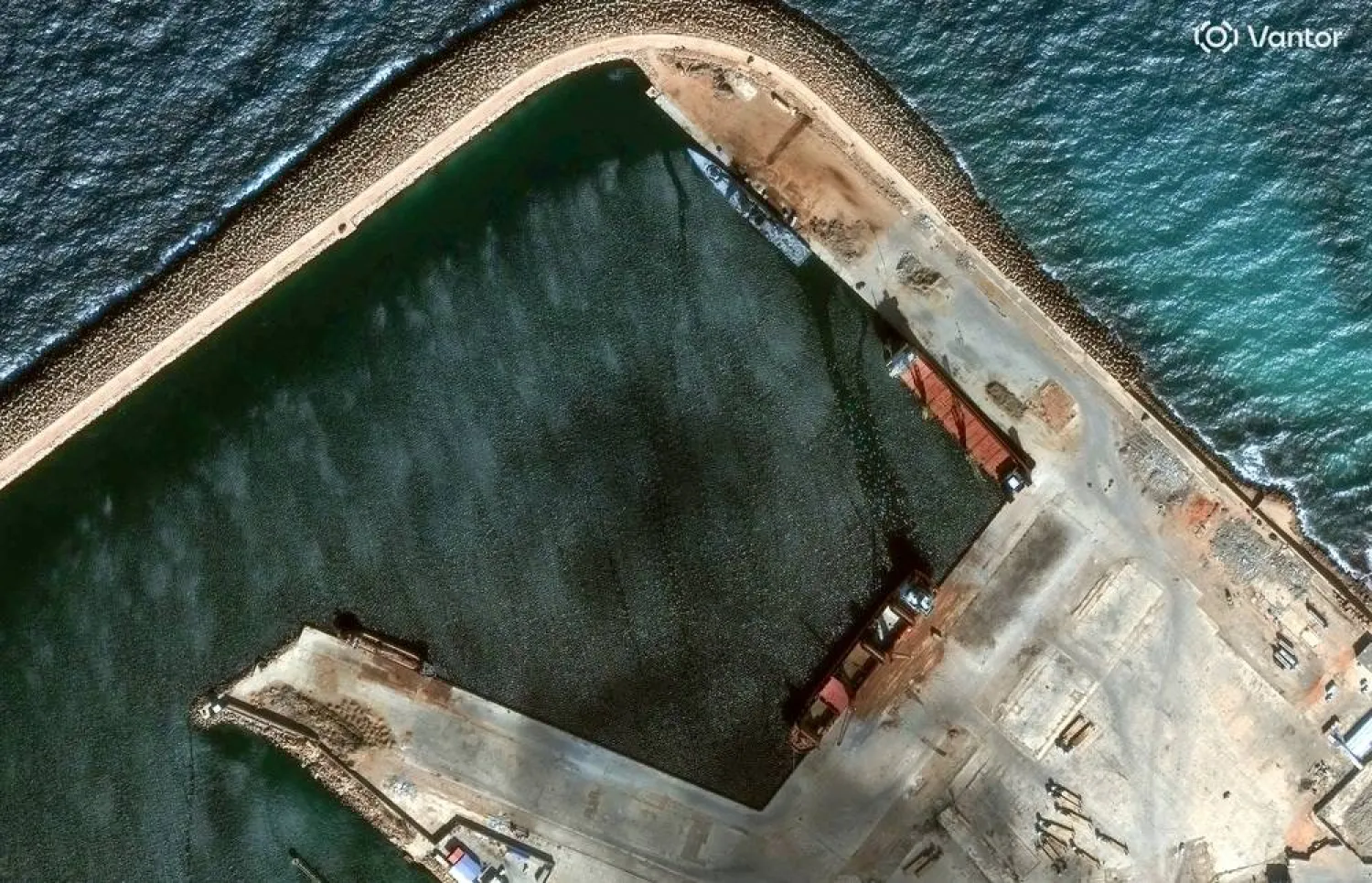
A satellite image shows a Russian naval ship and the northern port area before an explosion aboard a Russian ship docked at the Benghazi naval base, in Benghazi, Libya, November 21, 2026. (Vantor/Handout via Reuters)

Ukrainian President Volodymyr Zelenskyy said his country was behind an attack on a Russian warship off Libya on Sunday, claiming Ukrainian naval drones sank the vessel. 

Zelenskyy said Monday in a post on X that Ukrainian forces deployed seven domestically made naval drones in the operation, which sank a Russian corvette. The Ukrainian leader described the ship as one of Russia’s newest vessels commissioned in 2023 during the invasion. 

“We continue our operations in designated waters. We are responding to Russia’s aggression. We are developing Ukrainian weapons,” he said. 

Ukrainian forces also struck the Russian dry cargo ship MV Angara, which Zelenskyy said Moscow used to transport weapons. He added that a Ka-27 military helicopter was destroyed in the attack. 

Zelenskyy thanked the Security Service of Ukraine, known as the SBU, and other Ukrainian defense forces that took part in what he described as “an exemplary Ukrainian operation in response to Russia’s war.” 

Zelenskyy said he received detailed briefings on Sunday and Monday and that “the targets we set were achieved.” 

The strike by sea drones severely damaged the Russian navy corvette at the Benghazi Naval Base in eastern Libya, according to two Libyan officials. 

Residents in Benghazi heard loud explosions and saw fire at the base early Sunday. Civil defense rushed to the site and extinguished t the fire, authorities in eastern Libya said. 

The vessel had docked to refuel and take on supplies as part of a cooperation agreement between Russia and the eastern-based government in Libya, the statement said without providing details about the vessel or its cargo.