


Americans Update their Closets as they Emerge from Pandemic

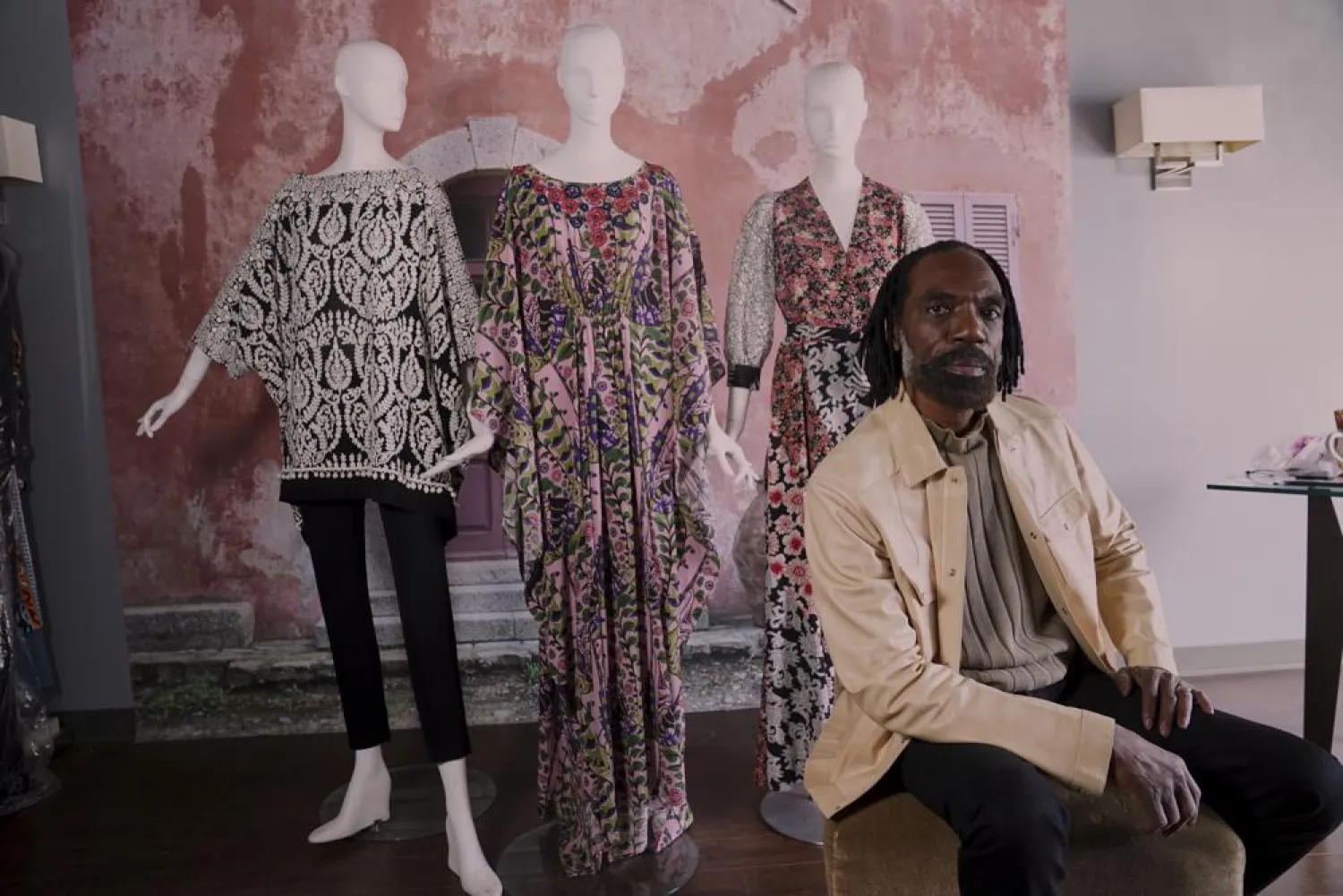
Fashion designer Kevan Hall pauses for a picture at his "Luxe Leisure Collection" haute couture atelier in West Los Angeles Thursday, March 18, 2021. (AP)
TT

Americans Update their Closets as they Emerge from Pandemic

Fashion designer Kevan Hall pauses for a picture at his "Luxe Leisure Collection" haute couture atelier in West Los Angeles Thursday, March 18, 2021. (AP)

After a year of being stuck in sweatpants, pajamas and fuzzy slippers, Americans are starting to dress up and go out again.

Levi Strauss is seeing a resurgence in denim while demand for dresses at Macy’s, Anthropologie and Nordstrom is going up as proms and weddings resume. And teen retailer American Eagle Outfitters said sales are rising due to “pent-up” demand for its fashions.

During the three months ended February, market research firm NPD Group said jeans and casual pants began to cut their previous declines by more than half, indicating consumers are gearing up to spend more time out of the home. And more than half of US consumers plan to buy clothing in the coming months, catapulting it back to the top category of anticipated spending, followed by footwear and beauty products, according to NPD’s consumer survey.

“My plan is to dress up and enjoy the things in my wardrobe,” said Beth Embrescia, 51, an executive fundraiser who for the last year paired dressy tops with sweatpants and Birkenstocks for work Zoom calls but recently bought collared shirts and loafers with a wedge heel while on a recent vacation in Florida. “I will not be going out to dinner in joggers.”

Such signs of renewed interest offer a much-needed boost for clothing sales, which have been in the dumps for a year. They also serve as hopeful indications of a strong economic recovery as Americans show more willingness to travel and dine out as President Joe Biden’s vaccination plan proceeds ahead of schedule.

Major transactions at full service restaurants rose more than twofold this March compared to year ago, though down 25% compared to two years ago, according to NPD. Hotels are making a comeback too, with demand during the week ended April 11 surging more than fourfold compared with a year ago and up 10.9% compared with the same week in 2019, according to Koddi, an advertising technology company.

Through the first 20 days in April, the Transportation Security Administration screened an average of 1.4 million people per day, a significant climb from a year ago when the number was just under 99,000 a day. But travel is still off from 2019, which averaged more than 2.3 million people a day over a comparable period.

The data on clothing sales is preliminary, and retailers and designers are still trying to figure out how a year of being homebound will change the way people think about dressing up. Casual wear was already strong before COVID-19, and many experts believe the pandemic only accelerated the trend.

A year ago, Los Angeles-based fashion designer Kevan Hall quickly moved away from his trademark gowns and cocktail dresses to caftans, tunics and pull-on pants. Now Hall is adding back some dressier looks, but he’s eliminating the full skirts and scaling back the beading in favor of simple gowns and dresses in knit and tulle fabrics.

“I don’t know whether women will ever want to go back to being with so much structure,” said Hall, who has been getting calls from clients and stores in recent weeks asking for dressed-up looks. “I think people are going to lean into comfort even more — even when they are getting dressed for evening or galas.”

Retail executives are also looking at how business attire will change. While some corporations are starting to re-open their offices, many are extending work-from-home indefinitely or moving to a hybrid model, eliminating the need for office wear five days a week.

At the onset of the pandemic, sales of clothing and accessories cratered when non-essential stores were forced to temporarily close. But now business is starting to rebound above pre-pandemic levels. In March, spending at clothing and accessory stores rose 18.3% to $22.86 billion from the month before, according to the Commerce Department’s most recent monthly retail report. That was almost double compared with the same month in March 2020 and up 2.3% compared with March 2019.

Retailers, burned by the sudden switch away from formal looks last year, are being cautious about how much to add back.

Janice Elliott, a buyer for designer clothing boutique Gus Mayer’s Nashville, Tennessee location, says she’s optimistic about people’s return to going-out-clothes this spring and fall, but she’s staying away from ordering items like structured sheaths and leaning toward flowy cotton dresses.

Before the pandemic, more than 50% of the business at Gus Mayer was in formal clothes; during the height of COVID-19, that fell to less than 10%.

“I think there is going to be a pent-up demand, but I still think there will be a more relaxed way of dressing going forward,” Elliott said.

Deirdre Quinn, CEO and co-founder of upscale clothing brand Lafayette 148 New York, says her team is designing multi-purpose items like blouses that can be worn from day into evening.

She noted that business was down 30% last year from a year earlier and this year has started out weak. Quinn hasn’t seen any pickup in dresses yet and believes sales won’t rebound to pre-pandemic levels until 2023.

“I don’t want to rush back to where we were,” she said. “I am going to control how quickly I grow. It is a reset time.”


Pieter Mulier Named Creative Director of Versace

(FILES) Pieter Mulier attends the 2025 CFDA Awards at The American Museum of Natural History on November 03, 2025 in New York City. (Photo by Dimitrios Kambouris / GETTY IMAGES NORTH AMERICA / AFP)
TT

Pieter Mulier Named Creative Director of Versace

(FILES) Pieter Mulier attends the 2025 CFDA Awards at The American Museum of Natural History on November 03, 2025 in New York City. (Photo by Dimitrios Kambouris / GETTY IMAGES NORTH AMERICA / AFP)

Belgian fashion designer Pieter Mulier has been named the new creative director of the Milan fashion house Versace starting July 1, according to an announcement on Thursday from the Prada Group, which owns Versace.

Mulier is currently creative director of the French fashion house Alaïa, and was previously the right-hand man of fellow Belgian designer and Prada co-creative director Raf Simons at Calvin Klein, Jil Sander and Dior.

In his new role, Mulier will report to Versace executive chairman Lorenzo Bertelli, the designated successor to manage the family-run Prada Group. Bertelli is the son of Miuccia Prada and Prada Group chairman Patrizio Bertelli.

“We believe that he can truly unlock Versace’s full potential and that he will be able to engage in a fruitful dialogue,’’ The Associated Press quoted Lorenzo Bertelli as saying of Mulier in a statement.

Mulier takes over from Dario Vitale, who departed in December after previewing just one collection during his short-lived Versace stint.

Mulier was honored last fall by supermodel and longtime Alaïa muse Naomi Campbell at the Council of Fashion Designers of America for his work paying tribute to brand founder Azzedine Alaïa. Mulier took the creative helm in 2021, after Alaïa’s death.


Ralph Lauren’s Margin Caution Eclipses Stronger‑than‑expected Quarterly Results

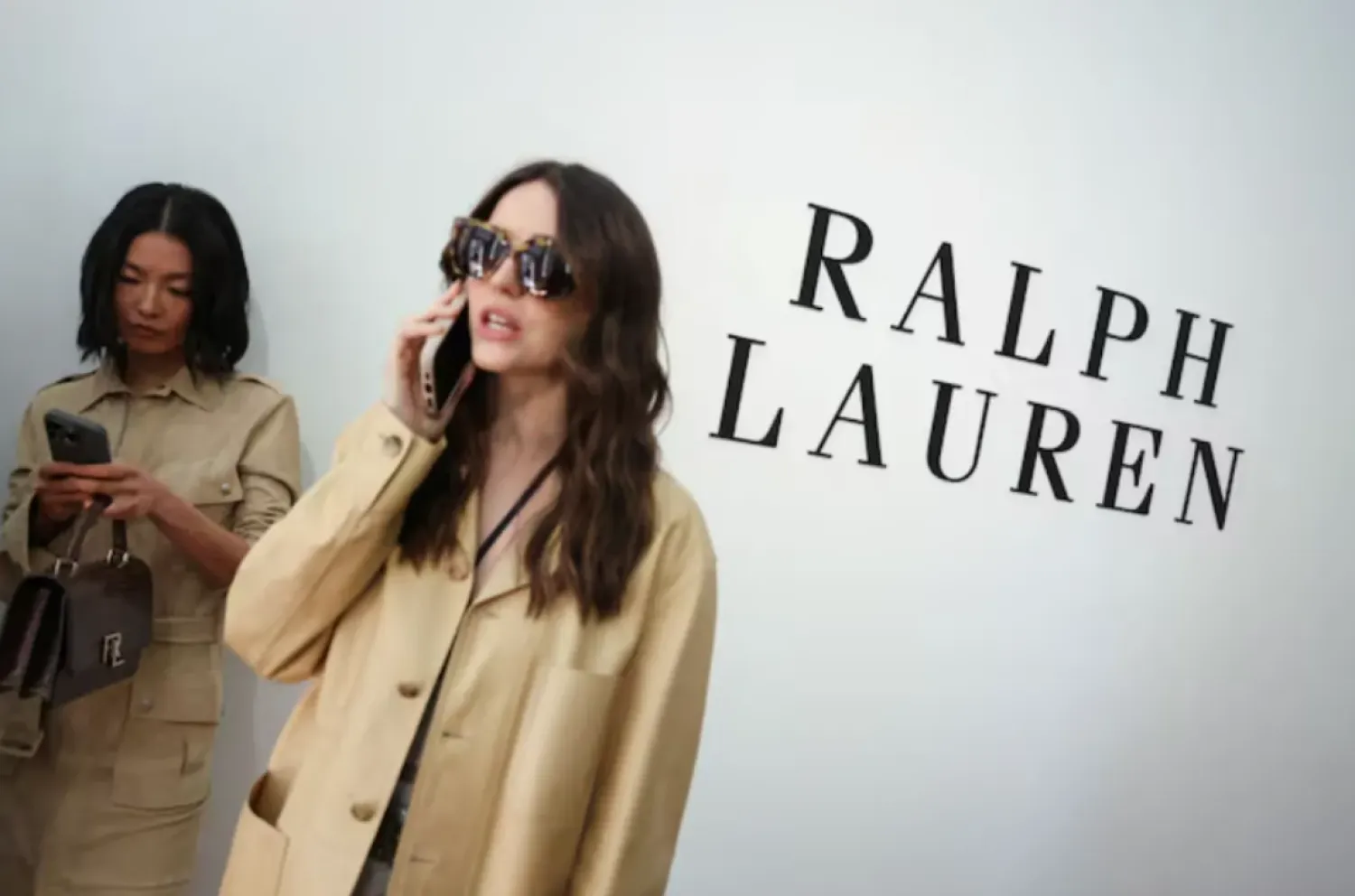
Guests wait after viewing the latest Ralph Lauren collection in New York City, US, April 17, 2025. REUTERS/Caitlin Ochs/File photo
TT

Ralph Lauren’s Margin Caution Eclipses Stronger‑than‑expected Quarterly Results

Guests wait after viewing the latest Ralph Lauren collection in New York City, US, April 17, 2025. REUTERS/Caitlin Ochs/File photo

Ralph Lauren posted third-quarter results above Wall Street estimates on Thursday, but the luxury retailer's warning of margin pressure tied to US tariffs sent its shares down nearly 6.4% in premarket trading.

The company expects fourth-quarter margins, its smallest revenue period, to shrink about 80 to 120 basis points due to higher tariff pressure and marketing spend.

Ralph Lauren, which sources its products from regions such as China, India and Vietnam, has relied on raising prices and reallocating production to regions with lower duty exposure to offset US tariff pressures, Reuters reported.

"Ralph Lauren has been able to raise prices for some time now. There is some limit on how long it can continue to do this. I think (the company's) gross margins are near peak levels," Morningstar analyst David Swartz said.

The company, which sells $148 striped linen shirts and $498 leather handbags, has tightened inventory, lifted full-price sales and refreshed core styles, boosting its appeal among wealthier and younger customers, including Gen Z.

Higher-income households are still splurging on luxury items, travel and restaurant meals, while lower- and middle-income consumers are strained by higher costs for rents and food as well as a softer job market.

The New York City-based company saw quarterly operating costs jump 12% year-on-year as it ramped up brand building efforts through sports-focused brand campaigns such as Wimbledon and the US Open tennis championship.

The luxury retailer said revenue in the quarter ended December 27 rose 12% to $2.41 billion, above analysts' estimates of a 7.9% rise to $2.31 billion, according to data compiled by LSEG.

It earned $6.22 per share, excluding items, compared to expectations of $5.81, aided by a 220 basis points increase in margins and an 18% rise in average unit retail across its direct-to-consumer channel.

Ralph Lauren now expects fiscal 2026 revenue to rise in the high single to low double digits on a constant currency basis, up from its prior forecast of a 5% to 7% growth.


Saudi Fashion Commission, Kering Launch 'Kering Generation Award X MENA'

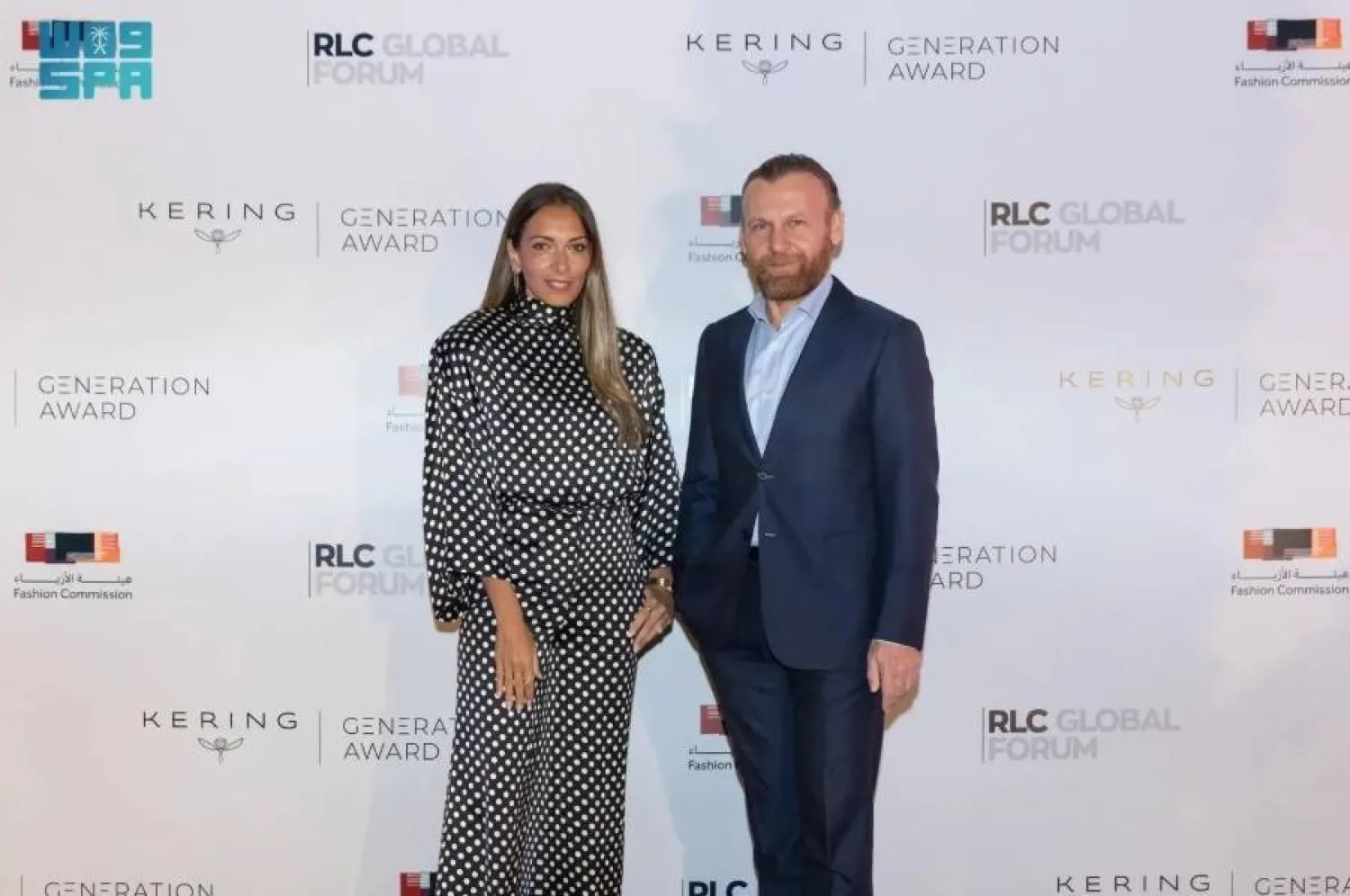
This year's award builds on the strong success of the 2025 award, which attracted more than 500 applications, shortlisted 21 finalists, and recognized three winners. SPA
TT

Saudi Fashion Commission, Kering Launch 'Kering Generation Award X MENA'

This year's award builds on the strong success of the 2025 award, which attracted more than 500 applications, shortlisted 21 finalists, and recognized three winners. SPA

Saudi Arabia’s Fashion Commission and global luxury group Kering have launched the "Kering Generation Award X MENA" across the Middle East and North Africa (MENA) for 2026.

The announcement was made on Tuesday during the opening of the RLC Global Forum, hosted at the French Embassy in Riyadh.

This year's award builds on the strong success of the 2025 award, which attracted more than 500 applications, shortlisted 21 finalists, and recognized three winners.

Participants benefited from mentorship programs, workshops, and opportunities to strengthen their global presence. Building on this momentum, the 2026 program seeks to expand its impact across the MENA region.

The 2026 award focuses on four key areas of sustainable fashion: innovation in regenerative materials and clean production, circular design and sustainable business models, nature conservation and animal welfare, and consumer awareness and cultural engagement.

The program targets startups across the MENA region that operate in, or positively influence, the sustainable fashion sector, provided they demonstrate innovation capabilities and the ability to deliver measurable sustainability outcomes.