Tunisia’s Chahed Will Reportedly Replace Mechichi

FILE - Former Tunisian Prime Minister Youssef Chahed addresses the parliament on the country's anti-corruption fight on July 20, 2017, in Tunis. AFP
TT

Tunisia’s Chahed Will Reportedly Replace Mechichi

FILE - Former Tunisian Prime Minister Youssef Chahed addresses the parliament on the country's anti-corruption fight on July 20, 2017, in Tunis. AFP

Former Tunisian Prime Minister Youssef Chahed, head of the Long Live Tunisia movement, is a candidate to replace PM Hichem Mechichi, according to leaks made by some opposition parties.

Chahed will likely be named prime minister after the Islamist Ennahda Movement pressured Mechichi to implement a cabinet reshuffle, which President Kais Saeid strongly opposes.

Political sources agree that Chahed is supported by the President, and Ennahda does not mind naming him as PM, especially that it supported him in 2017 and 2018 following demands to oust him.

Political parties are considering several possible scenarios to solve the current crisis between the president, prime minister, and speaker.

Some are suggesting removing Mechichi from office, a demand supported by Saeid as a condition to launch political dialogue.

Leading Ennahda member Rafik Abdel Salam accused the president on Tuesday of willingly fabricating the political and constitutional crisis.

Abdel Salam warned that some people want to use the president as a tool to fight their battles by proxy and eliminate their opponents through coups and military trials.

Chahed has urged political parties to commit to a truce, especially since the government is not politically supported, and the parliament is ravaged by crises, noting that it will lead to solving the constitutional and political crisis.

In a related development, MP of the Democratic Bloc Hichem al-Ajbouni accused Ennahda of escalating the crisis with the President by supporting the prime minister, under the pretext of preserving government stability.

During a radio interview, Ajbouni said the PM yielded to the blackmail of Ennahda and its allies through recent appointments in the Ministry of Interior.


Lebanon Judge Issues Warrants for Five Detained Hezbollah Members

A Hezbollah supporter holds up a Hezbollah flag in Beirut, Lebanon, on July 26, 2025. (AP)
TT

Lebanon Judge Issues Warrants for Five Detained Hezbollah Members

A Hezbollah supporter holds up a Hezbollah flag in Beirut, Lebanon, on July 26, 2025. (AP)

A Lebanese judge on Wednesday issued arrest warrants for five Hezbollah members detained this month in the country's north and ordered three others to be brought in for questioning, a judicial official told AFP.

The move came as pressure mounts on the Iran-backed group to surrender its weapons, after it was weakened by two wars with Israel in recent years.

Lebanon's government decided last year to disarm the group after a November 2024 Israel-Hezbollah ceasefire. An Israel-Lebanon deal agreed this year after the latest war erupted also involves the group's disarmament.

The judicial source said that a judge on Wednesday questioned the five men for several hours, issued formal "arrest warrants against them" and ordered security forces to bring "three Hezbollah members connected with this cell" in for questioning.

Security forces had detained the five in a mountainous area between Batroun and Bsharre in northern Lebanon, a region far from Hezbollah's main strongholds, in possession of "maps and documents", a judicial official had previously told AFP.

Judicial proceedings were subsequently launched against them for allegedly "forming an armed group, recruiting members, equipping them and supplying them with weapons".

On Tuesday, Hezbollah lawmaker Hussein al-Hajj Hassan said that the five, and others arrested over a truckload of explosives seized last month, had been "unjustly and forcibly detained", accusing authorities of "committing grave and dangerous errors against their people".

In October, authorities seized half a ton of explosives that Hezbollah subsequently said "belong to the resistance" against Israel, demanding that the shipment be returned.


Boulos to Asharq Al-Awsat: US Efforts Have Achieved Tangible Progress Between Libyan Parties

Massad Boulos, senior advisor to US President Donald Trump for Arab and African affairs. (AP file)
TT

Boulos to Asharq Al-Awsat: US Efforts Have Achieved Tangible Progress Between Libyan Parties

Massad Boulos, senior advisor to US President Donald Trump for Arab and African affairs. (AP file)

Massad Boulos, senior advisor to US President Donald Trump for Arab and African affairs, said diplomatic efforts led by Washington to unify Libyan institutions and reach a political settlement to the crisis have achieved “tangible: progress, stressing his country's support for a Libyan-led political track culminating in unified governance and credible elections.

In remarks to Asharq Al-Awsat, Boulos reiterated that the US is seeking to establish a unified Libyan executive authority capable of administering all Libyan territory, providing security and economic stability for the population, and paving a credible path toward holding successful national elections.

US efforts have succeeded in narrowing many gaps of disagreement between the Libyan parties over more than a year, he added, without providing details on the nature of the understandings reached or whether they are tied to a timeline for forming a unified executive authority.

Boulos’s remarks come amid renewed diplomatic activity on the Libyan crisis, as political and institutional division persists between the east- and west-based governments, military and security centers of influence remain fragmented, and efforts to organize national elections to end the transitional phase continue to falter.

In recent months, media reports have circulated details of a US initiative to unify authority in Libya, under which Saddam Haftar, deputy commander of the Libyan National Army (LNA), would assume the presidency of the Presidential Council, while Government of National Unity (GNU) Prime Minister Abdul Hamid al-Dbeibah would head a unified government.

Boulos did not disclose details regarding this formula in his remarks.

He stressed that the work of the United Nations Support Mission in Libya complements the US initiative and efforts aimed at enabling the country to reach a unified executive authority capable of extending state sovereignty.

He signaled continued coordination between Washington and the UN on the political track.

However, Boulos’s remarks did not include a direct stance on the recent naval attacks targeting the port of Benghazi, or on their potential repercussions for Libya's security and sovereignty, amid fears that the fallout of the Russia-Ukraine war could spill over into Libya, and concerns over the country being drawn into international and regional conflicts.

He also did not clarify Washington's position on the demand by the parliament-designated government for an international investigation into the attacks, or on the UN mission's call to open an immediate, independent inquiry to uncover the circumstances and determine responsibility.

Amid ongoing Libyan division, the attacks raise questions about the ability of security and military institutions to handle external threats, as well as the extent to which international developments affect the country's sovereign interests at a time when US efforts are focused on unifying political, economic, and security institutions.

On Monday, the US State Department renewed its call for forming a unified Libyan government and holding credible elections, affirming that Washington supports the establishment of an executive authority capable of extending its control over all Libyan territory.


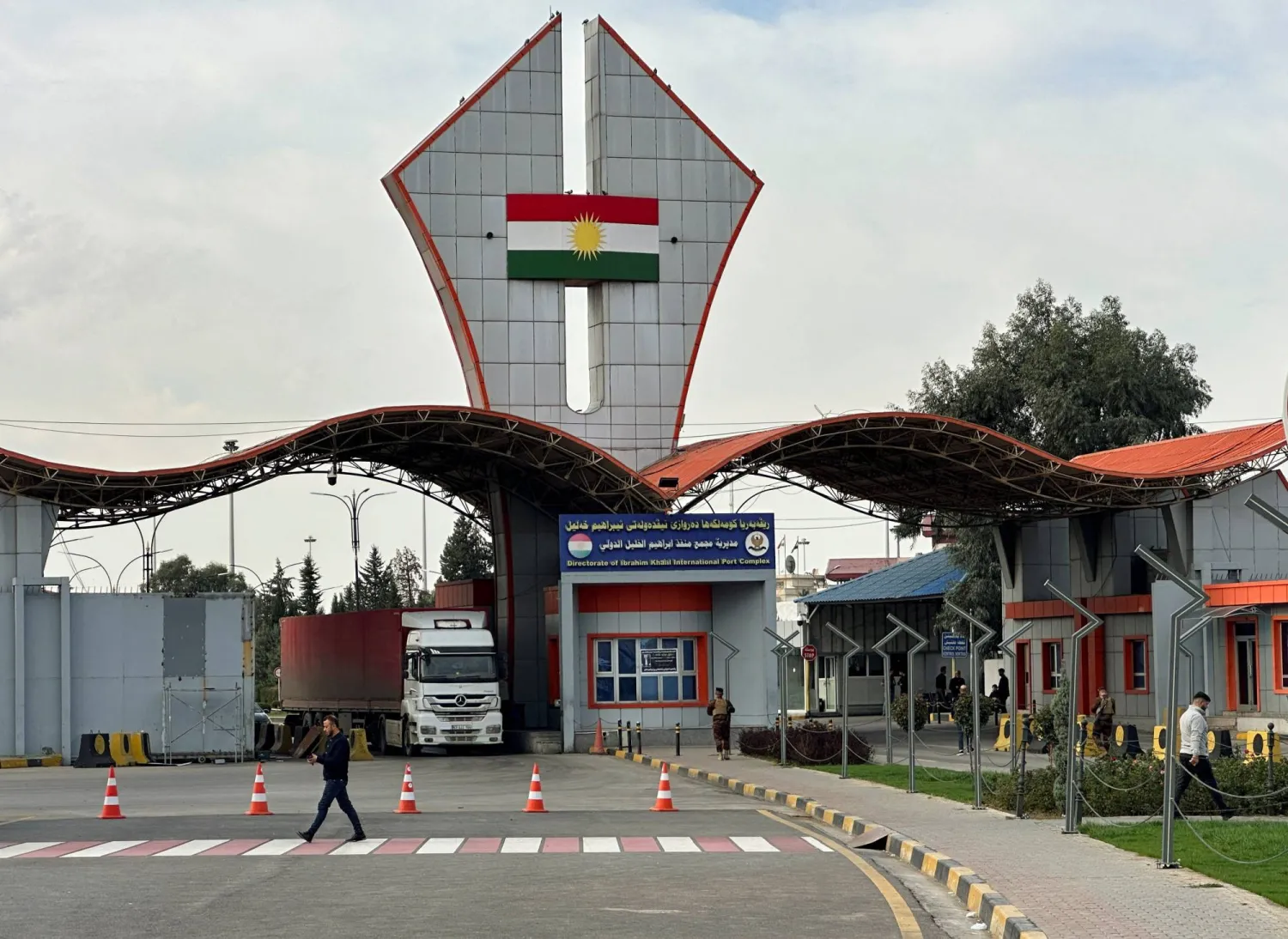
Iraq’s Top Court Says Baghdad Can Deploy Troops to Secure Borders in Kurdistan Region

The Ibrahim Khalil border crossing between Iraq and Türkiye, on the outskirts of Zakho, in Duhok province, Iraq, November 24, 2026. (Reuters)
TT

Iraq’s Top Court Says Baghdad Can Deploy Troops to Secure Borders in Kurdistan Region

The Ibrahim Khalil border crossing between Iraq and Türkiye, on the outskirts of Zakho, in Duhok province, Iraq, November 24, 2026. (Reuters)

Iraq's highest court ruled on Wednesday that Baghdad can deploy federal forces along all international borders, including in the semi-autonomous Kurdistan region, backing Prime Minister Ali al-Zaidi's push to assert more central control. 

Al-Zaidi ordered federal authorities on Tuesday to take over border crossings run by the Kurdistan Regional Government, and has also demanded authority over oil fields controlled by Kurdish security forces, following a probe into smuggling at the state-run North Oil Company. 

The moves escalate tensions with the Kurdish authorities, and have been seen as part of a two-pronged pitch to assert central government authority, just a week after he also took on Kataib Hezbollah, a powerful armed faction aligned with Iran. 

The court decision, reported by Iraqi state TV, appears to be a victory for al-Zaidi, a 41-year-old multimillionaire businessman and political novice who came to power in a compromise just six ‌months ago. 

But political ‌analysts say it may yet prove difficult to implement moves that challenge the interests of ‌factions ⁠that have accrued substantial ⁠power over decades of ethnic and sectarian warfare, such as the Kurds and heavily armed factions loyal to Iran. 

London-based Renad Mansour, Deputy Director of the Middle East and North Africa Program and Director of the Iraq Initiative at Chatham House, said al-Zaidi is trying to establish a centralized political order. 

“Iraq's judiciary is very much supportive of the government's campaign... And the judiciary is important because if you look at the decisions being made, most of them come down to legal definitions. Most of them come down to corruption, illegality, sovereignty. These are hugely legal terms...,” he said. 

“So what this drive is about is the Iraqi government trying to reclaim some sovereignty... because it's such a fragmented state ⁠where there isn't a center.” 

A senior Shiite politician close to al-Zaidi told Reuters the prime ‌minister is focused on dismantling the model of a state within a state ‌that has prevailed in Iraq, a major global oil producer. 

Al-Zaidi’s strategy seeks to restrain armed factions who operate ‌above state authority and draw clearer limits on the Kurdistan region's independent exercise of authority over strategic economic and security matters, ‌the politician said. 

KURDISTAN REJECTS 'THREATS' 

The Federal Supreme Court ruled that federal authorities could oversee agencies operating at all border crossings, including those in the Kurdistan region, though they must coordinate with regional and provincial governments on customs administration, state television reported. 

The court said the federal oil ministry can also oversee and audit oil and gas fields, while Baghdad shares responsibility for managing the oil and gas they produce with regional governments and producing provinces, ‌state TV reported. 

Al-Zaidi has directed the federal oil ministry to manage oil fields under Kurdish security control in Kirkuk, Nineveh, Diyala and Salahuddin provinces, all of which are outside the ⁠Kurdistan region but have seen areas ⁠come under Kurdish forces' authority. 

The Kurdistan Regional Government on Wednesday rejected what it called "military language and threats" in a statement from the spokesman for the Iraqi military announcing the new measures. It said it was working with federal authorities to combat corruption and called for an end to oil smuggling across Iraq. 

Iraq's state news agency, citing what it said was an Iraqi government intelligence report, said oil belonging to the state-owned North Oil Company was being diverted and smuggled from Kirkuk, as well as from Sulaymaniyah inside Kurdistan, to Iran and onward to Afghanistan. 

A senior Iraqi security source close to recent military and security developments told Reuters a direct military confrontation with Kurdish regional forces was not an option for Baghdad, but the coming days could witness the deployment of additional federal forces in the vicinity of oilfields the government wants brought under central control. 

Oil smuggling allegations were also behind al-Zaidi's confrontation last week with Kataib Hezbollah. 

He ordered troops to stand by to enter the city of Jurf al-Sakhar in the Euphrates valley south of Baghdad, a Kataib Hezbollah stronghold. The group initially responded with defiance but allowed soldiers into the city under a compromise brokered by Shiite politicians.