

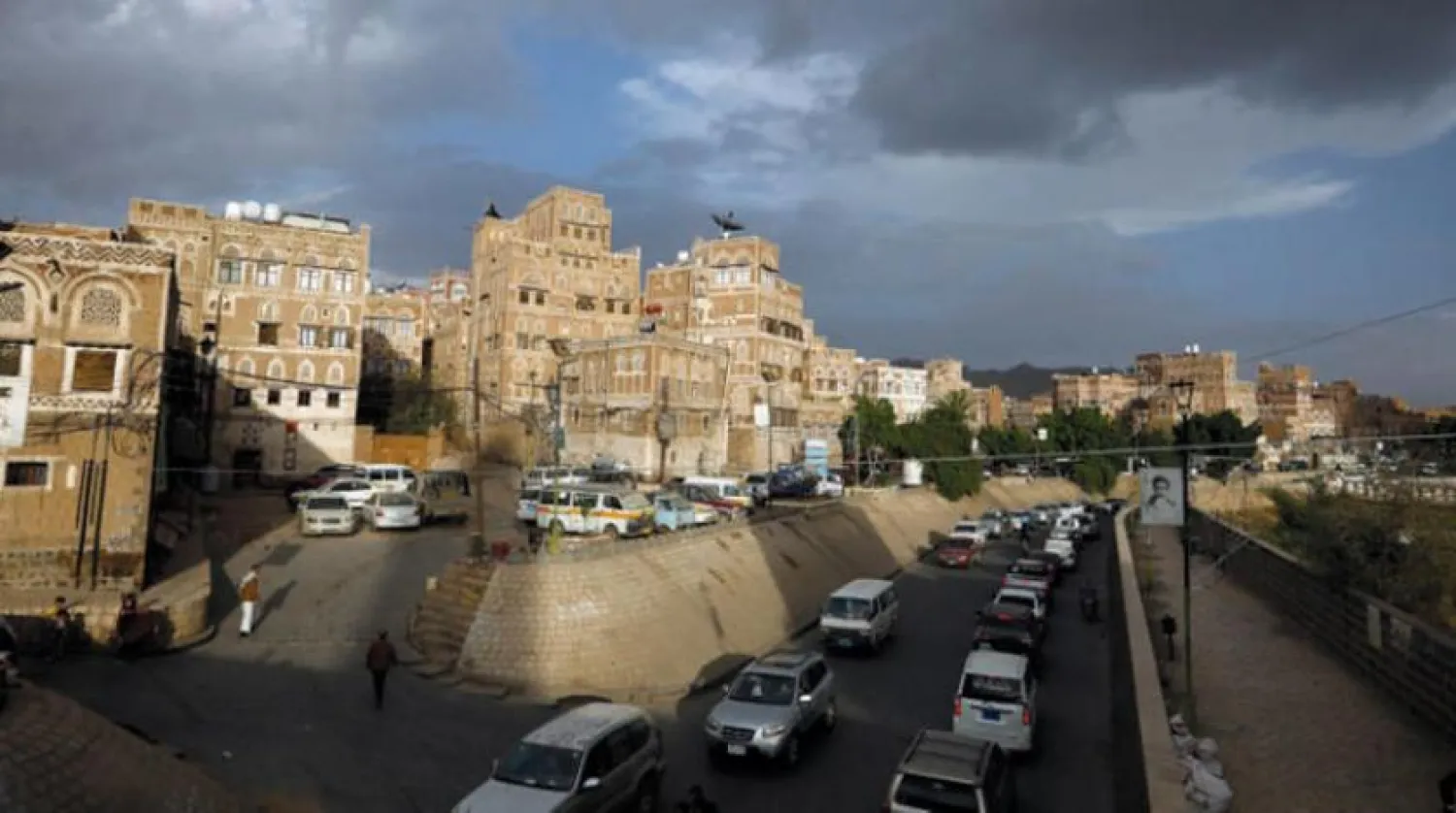

Yemeni Fears for Sanaa Old City Exacerbate as Houthis Seek Hezbollah-Styled Stronghold

General view of the Old City of Sanaa, Yemen (EPA)
TT

Yemeni Fears for Sanaa Old City Exacerbate as Houthis Seek Hezbollah-Styled Stronghold

General view of the Old City of Sanaa, Yemen (EPA)

Yemen’s world heritage site, the Old City of Sanaa, is under increasing threat of being carved out into an exclusive stronghold for Iran-backed Houthi militias and molded into an epicenter for sectarianism in the war-torn country, warned Sanaa-based Yemeni sources.

Houthis have been actively suppressing journalists and press freedoms in the Yemeni capital, Sanaa, they added.

Last month, a documentarian was banned from entering the Old City to film a special covering the early days of Ramadan 2021. Despite working for a pro-Iran broadcaster, they were turned away by Houthi intelligence officers in civilian clothing.

The officers said there were official orders to stop the taping at the UNESCO-recognized historical area and advised the photographer to go elsewhere for their report.

Another similar incident was reported later in which Houthi patrolmen dispatched across the Old City’s alleyways had detained a young photographer who was taking pictures of shops and buildings in the area.

Even though they were released after their relative pulled some strings, the tight security monitoring and the crackdown on media access gave rise to concerns about Houthis having other plans for the cultural neighborhood.

“For a while, we’ve been noticing signs of transforming the Old City of Sanaa into a sectarian canton comparable to the Hezbollah stronghold in the Lebanese capital’s Dahieh suburb,” Sanaa-based sources, who requested anonymity, told Asharq Al-Awsat.

While the content of the daily pictures flowing out of Sanaa might not be directly regulated by Houthi militias, the group keeps a log of all the information about photographers and journalists working in the capital.

“Houthi security units can easily reach any photojournalist or correspondent whenever the group sees necessary,” a logistics agent working for Sanaa-based media companies told Asharq Al-Awsat.

Moreover, Iran’s ambassador to Sanaa Hassan Eyrlou has started work for closing off the Old City completely, sources warned, adding that Houthis are likely looking to move their control center there.

Before launching a nationwide coup in 2014, Houthi presence in Sanaa was mainly concentrated in the Geraf neighborhood near the Sanaa International Airport.



EU Condemns Israel's West Bank Control Measures

The Israeli settlement of Har Homa, seen from the West Bank city of Bethlehem, Tuesday, Dec. 17, 2024. (AP)
TT

EU Condemns Israel's West Bank Control Measures

The Israeli settlement of Har Homa, seen from the West Bank city of Bethlehem, Tuesday, Dec. 17, 2024. (AP)

The European Union on Monday condemned new Israeli measures to tighten control of the West Bank and pave the way for more settlements in the occupied Palestinian territory, AFP reported.

"The European Union condemns recent decisions by Israel's security cabinet to expand Israeli control in the West Bank. This move is another step in the wrong direction," EU spokesman Anouar El Anouni told journalists.


Atrocities in Sudan's El-Fasher Were 'Preventable Human Rights Catastrophe'

Sudanese displaced people who left El Fasher after its fall, sit in the shade in Tawila at the Rwanda camp reception point on December 17, 2025. (Photo by AFP)
TT

Atrocities in Sudan's El-Fasher Were 'Preventable Human Rights Catastrophe'

Sudanese displaced people who left El Fasher after its fall, sit in the shade in Tawila at the Rwanda camp reception point on December 17, 2025. (Photo by AFP)

The atrocities unleashed on El-Fasher in Sudan's Darfur region last October were a "preventable human rights catastrophe", the United Nations said Monday, warning they now risked being repeated in the neighbouring Kordofan region.


"My office sounded the alarm about the risk of mass atrocities in the besieged city of El-Fasher for more than a year ... but our warnings were ignored," UN rights chief Volker Turk told the Human Rights Council in Geneva.


He added that he was now "extremely concerned that these violations and abuses may be repeated in the Kordofan region".


Arab League Condemns Israel's Decisions to Alter Legal, Administrative Status of West Bank

A general view shows the opening session of the meeting of Arab foreign ministers at the Arab League Headquarters (Reuters)
TT

Arab League Condemns Israel's Decisions to Alter Legal, Administrative Status of West Bank

A general view shows the opening session of the meeting of Arab foreign ministers at the Arab League Headquarters (Reuters)

The General Secretariat of the Arab League strongly condemned decisions by Israeli occupation authorities to impose fundamental changes on the legal and administrative status of the occupied Palestinian territories, particularly in the West Bank, describing them as a dangerous escalation and a flagrant violation of international law, international legitimacy resolutions, and signed agreements, SPA reported.

In a statement, the Arab League said the measures include facilitating the confiscation of private Palestinian property and transferring planning and licensing authorities in the city of Hebron and the area surrounding the Ibrahimi Mosque to occupation authorities.

It warned of the serious repercussions of these actions on the rights of the Palestinian people and on Islamic and Christian holy sites.

The statement reaffirmed the Arab League’s firm support for the legitimate rights of the Palestinian people, foremost among them the establishment of their independent state on the June 4, 1967 borders, with East Jerusalem as its capital.