


US-African Efforts Racing against Time to Resolve GERD Crisis

Water flows through Ethiopia's Grand Renaissance Dam as it undergoes construction work on the river Nile in Ethiopia. (Reuters file photo)
TT

US-African Efforts Racing against Time to Resolve GERD Crisis

Water flows through Ethiopia's Grand Renaissance Dam as it undergoes construction work on the river Nile in Ethiopia. (Reuters file photo)

The joint US and African efforts to resolve the Grand Ethiopia Renaissance Dam (GERD) crisis are racing against time, as Ethiopia insists on implementing the second filling next July, while Egypt and Sudan reject any partial solution.

US Special Envoy for the Horn of Africa Jeffrey Feltman concluded on Monday his tour to Egypt, Sudan, and Ethiopia where he met with the Ethiopian Minister of Water, Irrigation, and Energy Seleshi Bekele, in the presence of the Ethiopian GERD negotiating team.

Bekele briefed the special envoy on the process of building the dam and the tripartite negotiations, explaining that the GERD is a source of cooperation and helps achieve regional integration.

Feltman, who was recently assigned to his post, asserted that he will focus on resolving the dispute. He is expected to hold talks with UN and African Union (AU) officials in Addis Ababa.

Cairo views the dam on the main tributary of the Nile River as an "existential threat", warning that it will have a negative impact on its limited water share, while Khartoum fears that the GERD will affect its dams. They are both insisting on an agreement that regulates the filling and operation.

The US envoy’s tour coincides with AU efforts, which sponsored the stalled negotiations between the three countries launched in July last year, to reduce tensions.

Congolese President Felix Tshisekedi, who chairs the African Union, conducted a similar round of talks in an attempt to resume negotiations.

Tshisekedi put forward a new initiative to bring the parties together and reach a solution before the second filling.

Addis Ababa announced in 2020 that it had completed the first phase of filling the dam, achieving its target of 4.9 billion cubic meters, which allowed the testing of the first two turbines of the dam. This year, it is targeting filling an additional 13.5 billion cubic meters.

The dam is expected to become the largest hydroelectric power station in Africa, with an expected capacity of 6,500 megawatts to meet the needs of Ethiopia’s 110 million people.

A spokesman for the Ethiopian Foreign Ministry said that the construction and filling of the dam would proceed according to plan, adding that Addis Ababa is determined to make fair use of the Nile's resources without harming the two downstream countries.

Over the past weeks, Ethiopia reintroduced an old proposal, by signing a procedure agreement on the second filling only and offered to exchange data of the second filling. However, Egypt insists on a binding legal agreement.

President Abdel-Fattah al-Sisi has told Tshisekedi that his country would not accept a compromise of its water security over the ongoing dispute.

Sisi stressed the need for a legally binding deal that preserves Cairo’s water rights and averts further tensions and instability in the region.


Arab League Condemns Israeli Attacks on Lebanon, Welcomes US-Iran Ceasefire Agreement

Arab League
Arab League
TT

Arab League Condemns Israeli Attacks on Lebanon, Welcomes US-Iran Ceasefire Agreement

Arab League
Arab League

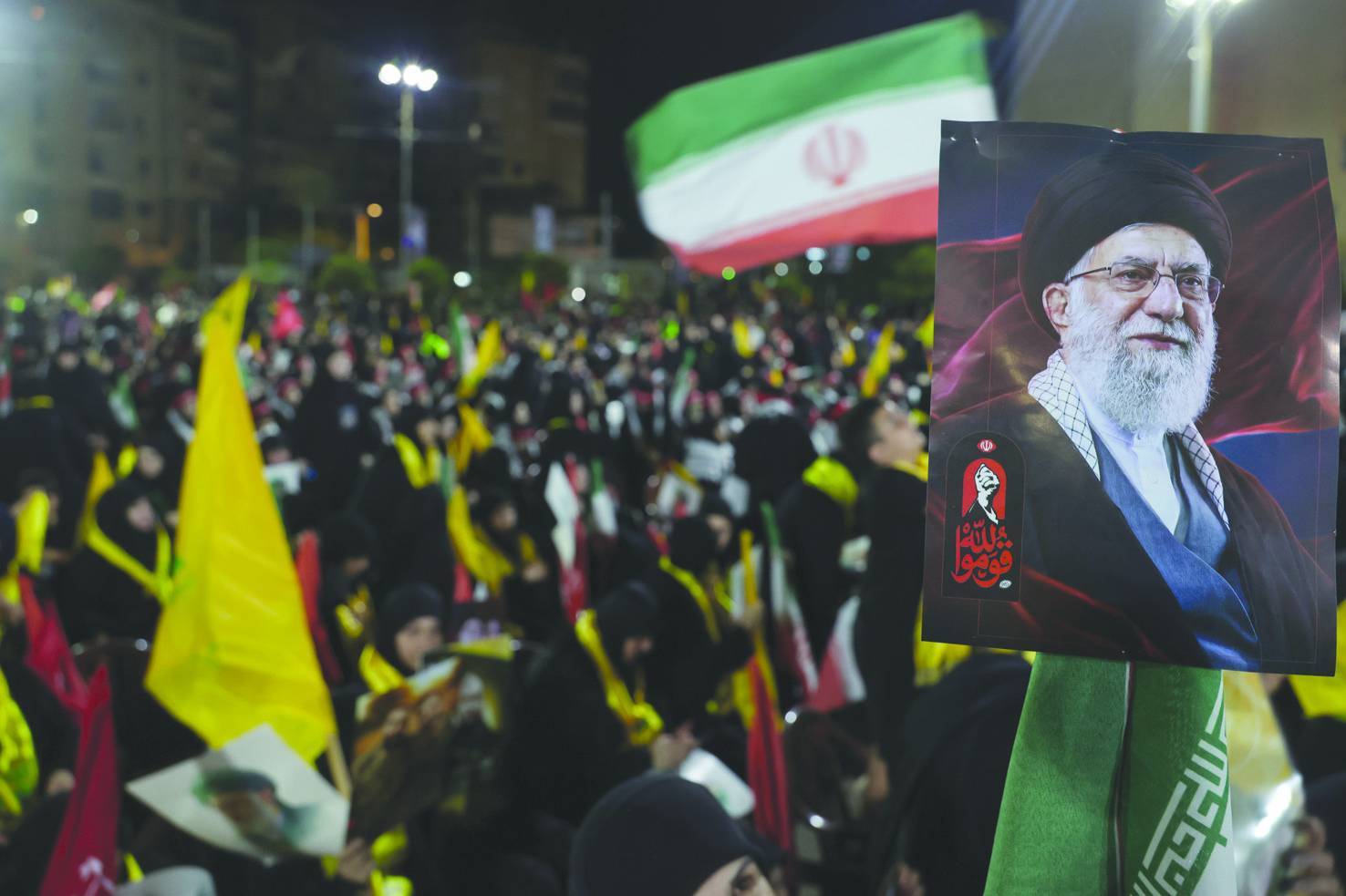
The Arab League on Wednesday welcomed a newly agreed temporary ceasefire between the United States and Iran, calling it an important step toward de‑escalation, while sharply condemning ongoing Israeli attacks on Lebanon as a grave violation of international law that threatens to undermine the truce and regional stability.

Secretary-General of the Arab League Ahmed Aboul Gheit strongly condemned the Israeli attacks on Lebanon that left hundreds of civilians dead and injured. He accused Israel of seeking to undermine the ceasefire agreement between the United States and Iran.

In a statement issued Wednesday, Aboul Gheit said that while the international community is working to de-escalate tensions and the region is seeking a path toward a sustainable settlement, Israel continues to pursue policies that undermine efforts to restore stability, through its ongoing escalation in Lebanon.

The secretary-general reiterated the Arab League’s call—based on the council’s declaration issued on March 29—urging key international actors to pressure Israel to immediately halt its attacks on Lebanon and comply with relevant international resolutions.

He also reaffirmed the Arab League’s full solidarity with Lebanon and its people.

Earlier, Aboul Gheit welcomed the agreement between the United States and Iran on a two-week ceasefire, describing it as an important step in the right direction to prevent the region from sliding into catastrophic scenarios.

He stressed the need for Iran to immediately halt all military attacks, reopen the Strait of Hormuz to maritime navigation, and ensure the security of energy supplies.

He emphasized that any future arrangements between the United States and Iran must safeguard the interests of Arab Gulf states affected by Iranian attacks, respect their sovereignty, and take into account their security requirements.

Spokesperson Gamal Roshdy conveyed the secretary-general’s reaffirmation that regional security is indivisible and that the principles outlined in the joint Arab vision for security and cooperation remain the foundation for sustainable peace.


Arab Parliament: Israeli Attacks on Lebanon Aim to Drag Region into Widespread Chaos

Arab Parliament logo
TT

Arab Parliament: Israeli Attacks on Lebanon Aim to Drag Region into Widespread Chaos

Arab Parliament logo

Arab Parliament Speaker Mohammed bin Ahmed Al-Yamahi condemned the brutal Israeli attacks against Lebanon, which have left hundreds of civilians dead or injured and caused widespread material damage, the Saudi Press Agency said on Thursday.

He said the attacks constitute a flagrant violation of international law and established norms and conventions, warning they risk deepening regional instability and undermining ongoing international efforts to de-escalate tensions.

Al-Yamahi called on the international community to intervene immediately to halt these attacks targeting vital facilities, civilian sites, and infrastructure.

He reaffirmed the Arab Parliament’s support for the Republic of Lebanon and its full solidarity with the country in overcoming this phase.


Is Hamas Counting on Iran Talks to Resolve the Disarmament Crisis?

Palestinians inspect damage after an Israeli strike in Gaza City on Monday (Reuters)
TT

Is Hamas Counting on Iran Talks to Resolve the Disarmament Crisis?

Palestinians inspect damage after an Israeli strike in Gaza City on Monday (Reuters)

As Iranian officials link any halt in fighting with the US and Israel to all fronts of the so-called “axis of resistance,” with a focus on Hezbollah in Lebanon, Hamas and other Palestinian factions in Gaza are negotiating a disarmament plan while pushing to retain part of their arsenal.

Israel and the United States insist on full disarmament. The al-Qassam Brigades, Hamas’s armed wing, reject that demand.

A two-week ceasefire announced by Washington and Tehran, meant to pave the way for a final deal, has raised questions over whether Hamas will use it to delay or reshape disarmament.

Field sources in Hamas and other factions say they fear Israel could escalate again in Gaza, increasing targeted killings and possibly striking new targets, whether the war with Iran ends temporarily or permanently.

Two field sources from Hamas and Palestinian Islamic Jihad said there are signs of Israeli escalation, but without large-scale ground operations, adding that factions are on heightened alert.

Limited reliance

A senior Hamas official said the group’s stance is rooted in “national constants,” including keeping its weapons to deter any aggression, a duty it cannot abandon.

He described Iran’s call to link all fronts as “important,” but said Hamas does not fully rely on it and sees no such option for now. Israel and the United States, he said, have worked for more than two years to separate the fronts.

Three Hamas sources said the group had previously counted on linking fronts, during talks on Lebanon and Yemen and during the 12-day war on Iran in June 2025, but “circumstances imposed a different reality.”

A Hamas source in Gaza said tying Gaza talks to other fronts had failed before, leaving no clear reliance on that approach now.

He added Iran’s position may relate more to Lebanon than Gaza, stressing that relying on it is misplaced, as Israel and the US would reject it, as they have before.

“What Hamas is relying on now is its own position, alongside the Palestinian factions, as it enters the most difficult phase of negotiations,” he said.

Two Hamas sources said the group’s strategy is to remove any pretext for Israel to resume the war, while rejecting proposals from the “Board of Peace” or mediators as fixed terms without amendments.

Core demands

Hamas and other factions said they had told mediators in a unified position that they want “full Israeli commitment” to the first phase before moving to the second, including the issue of weapons.

They also demand that reconstruction and aid not be tied to other files, a full Israeli withdrawal, a complete halt to violations, guarantees against interference in Palestinian political affairs, particularly governance in Gaza, and an end to restrictions on movement through the Rafah crossing and on the entry of goods.

New meetings between Hamas and mediators are expected early next week as disarmament talks continue.

A senior Hamas delegation met in Cairo about a week ago with Nickolay Mladenov, the high representative for Gaza at the “Board of Peace,” for the second time in two weeks.

The group’s leadership also met Turkish President Recep Tayyip Erdogan earlier this week on the same issue.
