Turkish Soldier Killed, 4 Hurt in Attack in Syria

Turkish Army officers block the outskirts of the village of Sugedigi, Turkey, on the border with Syria, Sunday, Jan. 21, 2018..(AP Photo/Lefteris Pitarakis)
TT

Turkish Soldier Killed, 4 Hurt in Attack in Syria

Turkish Army officers block the outskirts of the village of Sugedigi, Turkey, on the border with Syria, Sunday, Jan. 21, 2018..(AP Photo/Lefteris Pitarakis)

A rocket attack on a Turkish military supply convoy in Syria’s northwestern Idlib province has killed one soldier and wounded four others, Turkey’s Defense Ministry said Tuesday.

Turkish forces retaliated to the attack by firing on targets they identified in the region, the Defense Ministry said in a statement.

It did not elaborate or say who was responsible for the attack late Monday, according to The Associated Press.

The Britain-based Syrian Observatory for Human Rights, an opposition war monitoring group, said a roadside bomb exploded when a Turkish convoy of seven vehicles was passing on a road between the border crossing point of Bab al-Hawa and the Syrian border village of Kfar Lousin.

The Observatory said one of the vehicles suffered a direct hit. Ambulances, it said, rushed to the areas to evacuate Turkish troops who suffered injuries.

It added that Turkish troops cordoned off the area for some time preventing people from reaching it.

Last year, Turkey and Russia reached a cease-fire agreement that stopped a Russian-backed Syrian government offensive on Idlib - the last major opposition stronghold in Syria.

Despite sporadic violations, the agreement has held since then.

Russia is the Syrian government’s main military ally, while Turkey has backed the Syrian opposition.


Cairo, Tripoli Deepen Ties Despite Maritime Dispute

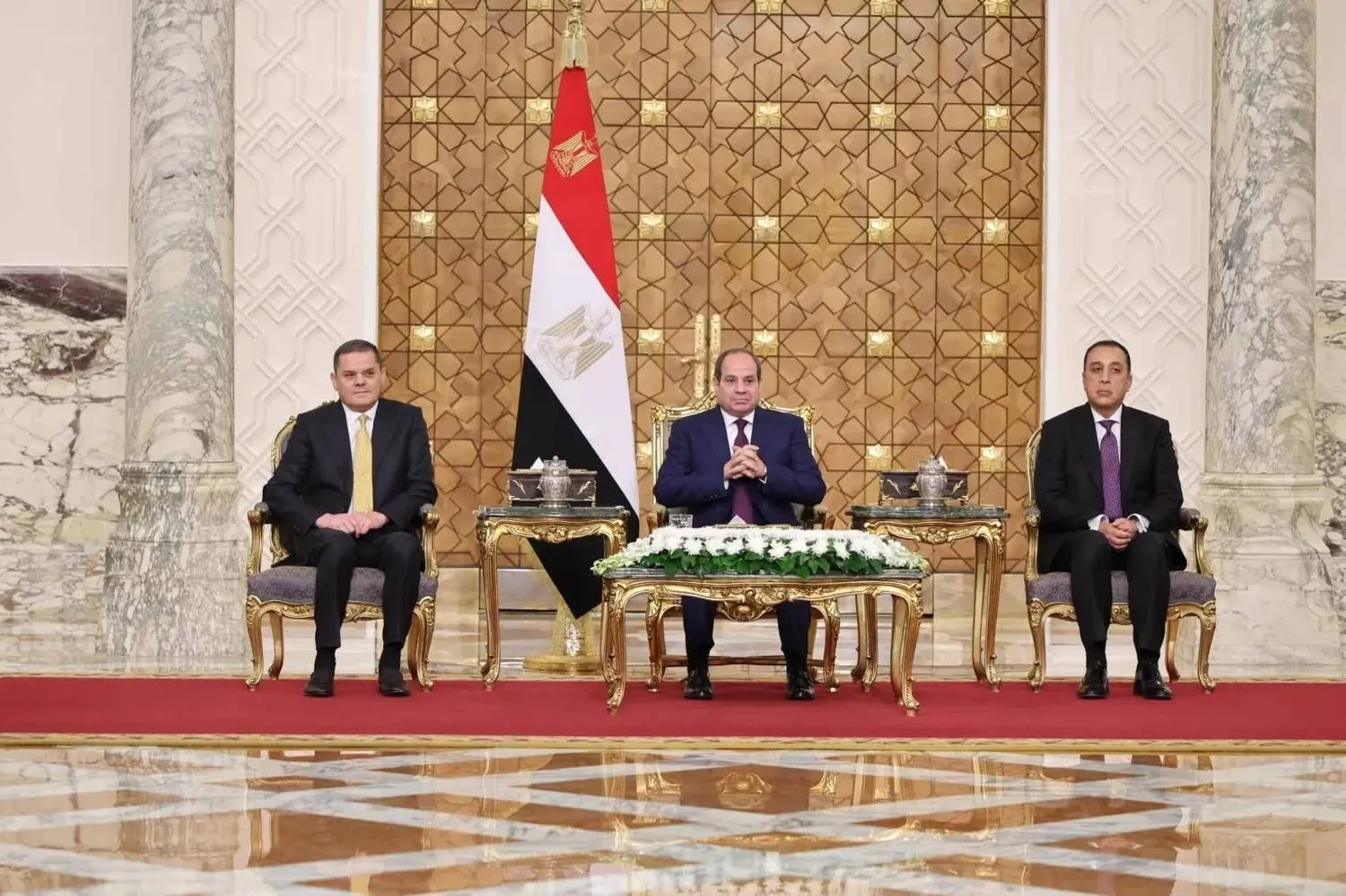
(From left to right) Libya’s interim Prime Minister Abdul Hamid al-Dbeibeh, Egyptian President Abdel Fattah al-Sisi and Egyptian Prime Minister Mostafa Madbouly in Cairo on Thursday. (Egyptian Presidency)
TT

Cairo, Tripoli Deepen Ties Despite Maritime Dispute

(From left to right) Libya’s interim Prime Minister Abdul Hamid al-Dbeibeh, Egyptian President Abdel Fattah al-Sisi and Egyptian Prime Minister Mostafa Madbouly in Cairo on Thursday. (Egyptian Presidency)

Egyptian President Abdel Fattah al-Sisi met Libya’s interim Prime Minister Abdul Hamid al-Dbeibeh in Cairo on Thursday, strengthening political and economic ties with western Libya despite a dispute over a maritime agreement between Libya and Türkiye.

The meeting marked Dbeibeh’s fourth visit to Egypt and his first since Cairo rejected the agreement approved by Libya’s House of Representatives on October 20.

Dbeibeh arrived Wednesday evening with a high-level ministerial delegation and was received by Egyptian Prime Minister Mostafa Madbouly.

The talks, seen as a sign of unprecedented rapprochement, covered bilateral relations, Libya’s political developments, regional security and cooperation in trade, investment, energy and reconstruction.

Egypt presidential spokesman Mohamed el-Shennawy said Sisi stressed the importance of strengthening the two countries’ historic ties and expanding cooperation in priority sectors.

Sisi also reaffirmed Egypt’s commitment to Libya’s security, stability, unity and territorial integrity.

Dbeibeh expressed his government’s determination to strengthen bilateral relations and praised Cairo’s efforts to preserve stability in Libya, said the Egyptian presidency.

Diplomatic engagement intensifies

Dbeibeh’s visit followed two trips to Tripoli by senior Egyptian officials this month.

Foreign Minister Badr Abdelatty reopened Egypt’s embassy in the Libyan capital during a November 7 visit, while intelligence chief Hassan Rashad traveled there on November 16.

Cairo’s intensified engagement with western Libya comes amid disagreements with eastern Libyan authorities over the maritime agreement, which Egypt continues to reject.

Analysts have linked the diplomatic shift to those differences, although Cairo has maintained contacts with both sides of Libya’s political divide.

Dbeibeh signaled flexibility during an October 24 telephone conversation with Rashad, expressing a willingness to address Egyptian concerns through dialogue and coordination while protecting both countries’ legitimate maritime rights and interests.

Egypt considers the agreement null and void, without legal effect, and maintains that its ratification by Libya’s House of Representatives creates no legal obligations for Cairo.

The Egyptian Foreign Ministry previously announced that Abdelatty had conveyed Cairo’s categorical rejection of the ratification to Turkish Foreign Minister Hakan Fidan during talks in Istanbul.

Economic agreements

Sisi and Dbeibeh witnessed the signing of several agreements and memoranda of understanding covering infrastructure development, natural gas, petroleum refining, natural resources, scientific research and labor.

Other agreements addressed training, capacity-building, technical support, professional development, leadership training, small and medium-sized enterprises, media cooperation, government communications and institutional coordination, as well as fisheries and lake development.

The latest agreements build on earlier economic cooperation between Egypt and western Libyan authorities.

In September 2021, the two sides signed 13 agreements during a meeting of their joint higher committee attended by Dbeibeh and Madbouly.

Those agreements covered transportation, electricity, petroleum, infrastructure, youth and sports, and social insurance. The committee had not met since 2009.

Egyptian companies are also involved in major reconstruction projects in Libya.


Iraqi Security Forces to Deploy in Jurf al-Sakhar, Security Officials Say

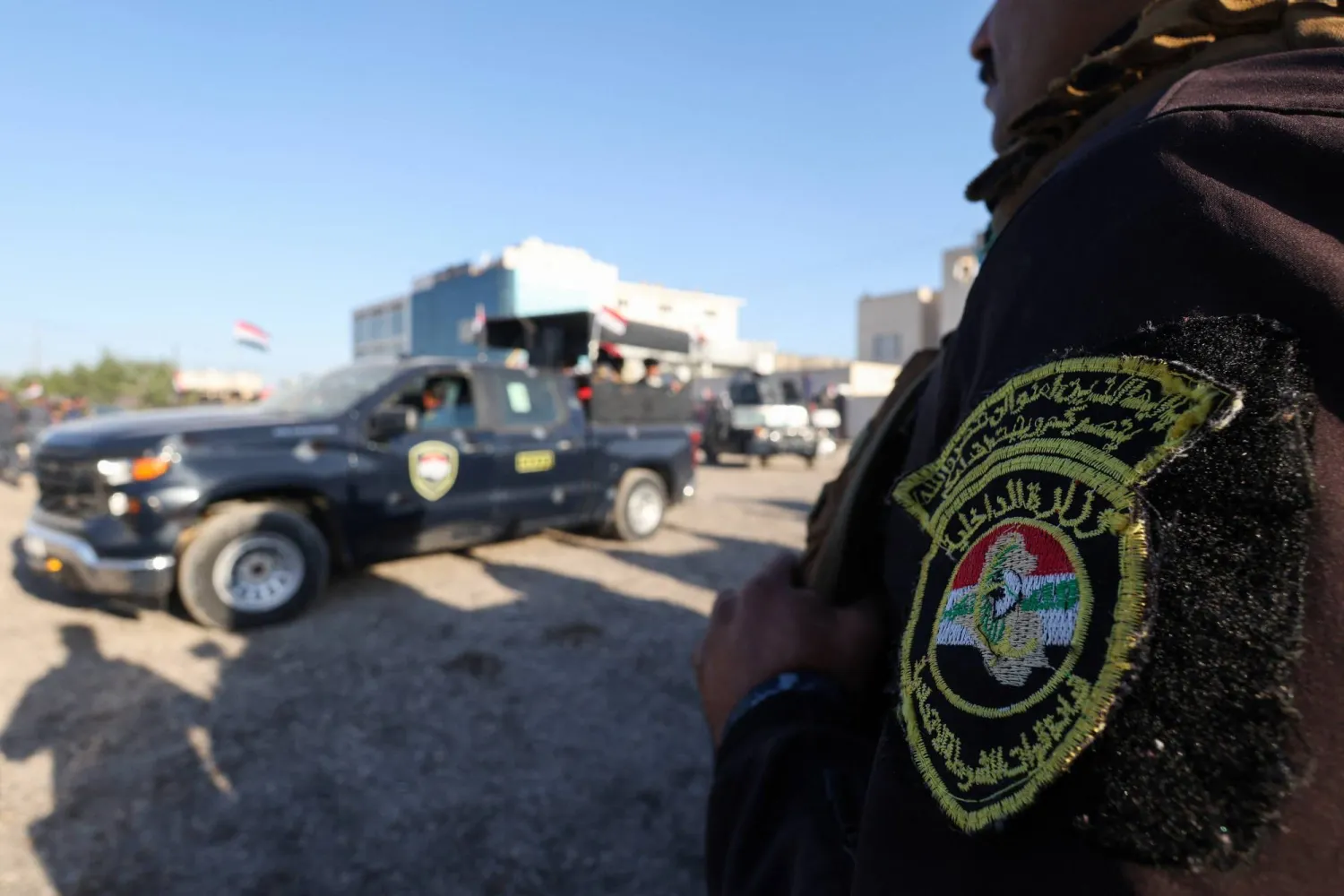
 Members of the Iraqi police take part in a security deployment on the outskirts of Jurf al-Sakhar, Babil province, Iraq, November 20, 2026. (Reuters)
Members of the Iraqi police take part in a security deployment on the outskirts of Jurf al-Sakhar, Babil province, Iraq, November 20, 2026. (Reuters)
TT

Iraqi Security Forces to Deploy in Jurf al-Sakhar, Security Officials Say

 Members of the Iraqi police take part in a security deployment on the outskirts of Jurf al-Sakhar, Babil province, Iraq, November 20, 2026. (Reuters)
Members of the Iraqi police take part in a security deployment on the outskirts of Jurf al-Sakhar, Babil province, Iraq, November 20, 2026. (Reuters)

Iraqi security forces will deploy in Jurf al-Sakhar, a stronghold of the Kataib Hezbollah armed group, on Friday, security officials told a press conference, under a compromise deal designed to ease tensions with the most powerful Iran-aligned armed faction in the country. 

Prime Minister Ali al-Zaidi earlier this week ordered security forces to prepare to move against Kataib Hezbollah, which officials accused of running an oil smuggling network siphoning state-owned oil worth hundreds of millions of dollars. 

Under the deal, brokered by Shiite politicians, Kataib members were expected to withdraw to other parts of Iraq, a major oil producer and ally of both the United States and Iran. 

Kataib Hezbollah, ‌branded a terrorist group by the United States, has rejected ‌the ⁠smuggling accusations. So far, ⁠nine senior security and oil officials have been dismissed following an investigation focused on Jurf al-Sakhar in Babil province, a Kataib stronghold about 50 km (30 miles) south of Baghdad. 

Any direct confrontation with the Iran-backed armed factions in Iraq could be risky. 

After one of al-Zaidi's predecessors ordered a similar crackdown on factions five years ago, the prime minister's Baghdad home was hit in a drone strike that authorities described at the time as an assassination attempt. 

US President Donald Trump has pressured ⁠al-Zaidi to disarm the factions that have struck US troops and facilities ‌in Saudi Arabia and the United Arab Emirates in ‌solidarity with Tehran since the United States and Israel launched attacks on Iran at the end of February. ‌Kataib Hezbollah and other groups have refused to hand over their weapons to the ‌state. 

Pro-Iranian factions, including Kataib Hezbollah, enjoy a semi-official status in Iraq, which critics say encourages them to act with impunity. A shadowy group with no announced leadership structure, Kataib Hezbollah has thousands of hardened fighters. 

It forms several battalions in Iraq's Popular Mobilization Forces (PMF), a grouping of armed factions set up in 2014 to fight ‌ISIS and subsequently recognized as an official security force. 

Fighters receive state salaries and Kataib Hezbollah members, including some designated as terrorists ⁠by the US, hold senior ⁠positions in the PMF. 

While it is technically under the command of Iraq's prime minister as part of the PMF, the group often operates outside the chain of command and has defied and challenged government statements calling for an end to attacks on US forces. 

Kataib Hezbollah has its own political party, called Huquq, or Rights, with five lawmakers. An Iraqi official report said the group also generates cash through businesses, such as construction, housing, trade, tourism and currency exchange, though the group denies this and says it is dedicated to security. 

In August, Iraqi special forces reporting directly to the prime minister arrested the intelligence chief of the Iran-aligned faction Harakat al-Nujaba on accusations of involvement in drone attacks against US interests. 

The detention, which lasted 48 hours, triggered threats of retaliation from the group and prompted intervention by senior Shiite politicians who helped defuse tensions. A week later, Iraqi special forces arrested four faction members over allegations they facilitated attacks on US interests. 


Lebanese Journalist Wounded by Israel Honored at CPJ Awards

Lebanese journalist Christina Assi attends the 2026 Committee to Protect Journalists (CPJ) International Press Freedom Awards at The Glasshouse in New York on November 19, 2026. (AFP)
TT

Lebanese Journalist Wounded by Israel Honored at CPJ Awards

Lebanese journalist Christina Assi attends the 2026 Committee to Protect Journalists (CPJ) International Press Freedom Awards at The Glasshouse in New York on November 19, 2026. (AFP)

AFP journalist Christina Assi, who lost a leg in an Israeli strike reporting from the Lebanese border and has become a vocal campaigner for reporters' safety, was honored by the Committee to Protect Journalists on Thursday.

In October 2023, Reuters journalist Issam Abdallah was killed and six others were wounded, including AFP journalists Assi and Dylan Collins, while covering the conflict near the Israeli border.

An independent AFP investigation concluded that two Israeli 120mm tank shells were fired from the Jordeikh area in northern Israel.

The findings were corroborated by other international investigations, including those conducted by Reuters, CPJ, Human Rights Watch, Amnesty International and Reporters Without Borders.

Since the attack Assi, a Lebanese photographer and photo editor, has campaigned tirelessly for justice for her slain colleague, to improve safety for journalists in war zones, and to support a program aimed at helping reporters injured in the field.

In July 2024, she carried the Olympic flame in Paris, in tribute to journalists who died on assignment.

"I am happy and honored, but at the same time, angry and sad by the reasons for it," Assi told AFP ahead of the awards.

"We lost so many colleagues in the past three years, and everything we've done so far and our advocacy just feels like it's not enough."

AFP News Director Phil Chetwynd said ahead of the award ceremony that "the attack on Christina and her journalist colleagues is a clear war crime."

"AFP has repeatedly demanded answers from Israel and has received only silence. We cannot allow a culture of impunity to be accepted," he added.

Other journalists decorated with CPJ's Press Freedom Award on Thursday included Hungarian investigative reporter Szabolcs Panyi, who probed graft under Viktor Orban, and Colombian journalist Estefany Rodriguez, who was arrested in the United States while reporting on immigration enforcement.

CPJ is an independent US-based organization dedicated to defending press freedom around the world.