Iraqi Army Warns of Repercussions of Lockheed Martin’s Withdrawalhttps://english.aawsat.com/home/article/2969041/iraqi-army-warns-repercussions-lockheed-martin%E2%80%99s-withdrawal
Iraqi Army Warns of Repercussions of Lockheed Martin’s Withdrawal
An F-16 aircraft at Balad base north of Baghdad. Reuters
The Iraqi army warned of the implications of Lockheed Martin’s withdrawal from the country after the company decided to remove its contractors working on the maintenance of F-16 fighter jets at an Iraqi military base over security concerns.
In a statement to the state-owned news agency, Tahsin al-Khafaji, spokesman for Iraq’s Joint Operations Command, said that F-16 jets are very important, describing them as the backbone of the Iraqi air force in its fight against ISIS.
Khafaji added that the companies involved in the maintenance of these aircraft have a direct impact on training Iraqi technicians
He hoped the technicians are equipped to maintain the fighter jets, warning that any interruption in the maintenance will negatively affect the training and the army's engineering and technical capabilities.
The company’s vice president for communications, Joseph LaMarca Jr., said that in coordination with the US government and with employee safety as a top priority, Lockheed Martin is relocating its Iraq-based F-16 team.
According to an Iraqi official, the company has 70 employees at the Balad base, and 50 of them will be sent back to the US, while 20 will be sent to Erbil in the Kurdistan region.
The withdrawal of personnel and technicians comes due to repeated missile attacks on the base launched by armed groups affiliated with Iran.
A recent report by the US Department of Defense said that during the first three months of this year, the militias focused on attacking the main bases in Iraq, which prompted the US contractors to leave al-Balad base of the Iraqi air force temporarily.
Lockheed Martin's decision will stop the remaining number of F-16 fighters in the Iraqi fleet from operating, which casts doubts on Iraq's ability to fight ISIS militants without US assistance.
Security expert Fadel Abu Ragheef, told Asharq Al-Awsat that the only remaining foreign forces in Iraq are maintenance companies, noting that their presence is necessary for the maintenance of F-16 jets bought from the US.
Abu Ragheef said that the withdrawal of the employees of this company will cause very serious harm, warning that these jets will become useless.
Is Israel Signaling a Wider Occupation of Southern Lebanon?https://english.aawsat.com/arab-world/5330380-israel-signaling-wider-occupation-southern-lebanon
Is Israel Signaling a Wider Occupation of Southern Lebanon?
Israeli soldiers near the Litani River in southern Lebanon (File photo - Israeli military)
Israel has escalated threats to expand its occupation of southern Lebanon, with Defense Minister Israel Katz warning that the Nabatieh and Litani areas could be added to what he called a permanent security zone if Hezbollah joins a possible confrontation between Israel and Iran.
The warnings have raised questions over which areas Israeli forces may seek to seize and whether they are preparing for a broader ground operation, as military activity continues and Israel moves closer to Knesset elections.
Katz had threatened to evacuate residents from broad areas of southern Lebanon as far as the Zahrani and Awali rivers, as well as Beirut’s southern suburbs. He said more than one million people could be displaced and that the Israeli military was ready to carry out a ground maneuver.
The threats come after Israeli forces expanded their deployment toward strategic high ground, including Beaufort Castle and Ali al-Taher near Nabatieh. Israeli strikes have also hit the Rihan, Sajd and Jabal al-Rafi heights, raising questions over whether Israel could seek wider control of elevated terrain and geographic corridors.
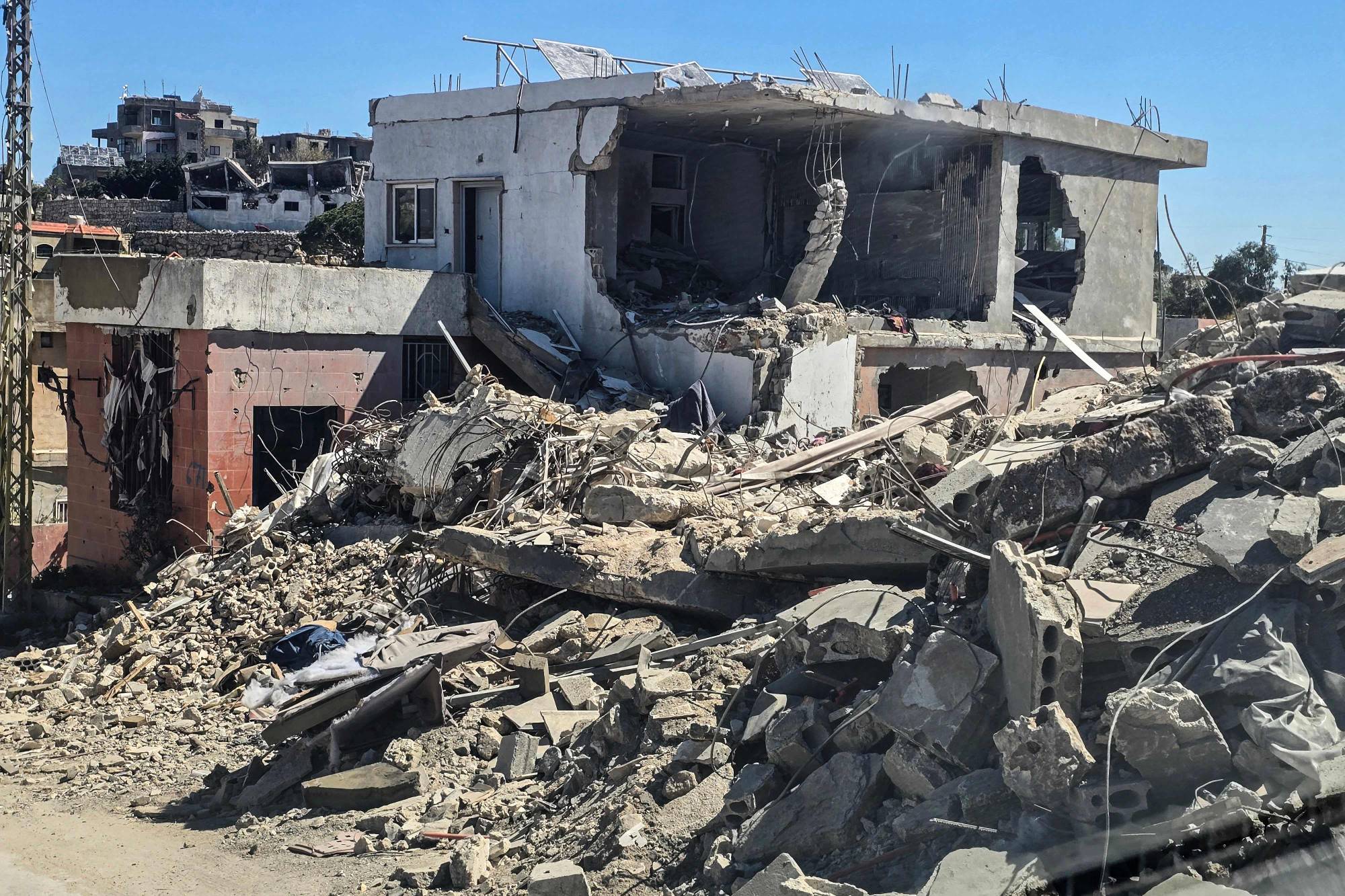
The remains of a home destroyed by the Israeli army in the southern Lebanese village of Beit Lif, in the Bint Jbeil district on April 22, 2026. (Photo by Kawnat HAJU / AFP)
Israel seeks natural geographic barriers
Retired Brigadier General Fadi Daoud said Israel’s threats went beyond targeting Hezbollah and dismantling its military infrastructure, pointing to broader political and geographic aims.
“Military positions and ground operations, regardless of their size or depth, must serve the concept of a military maneuver on the ground, and that maneuver in turn serves a major political objective,” Daoud told Asharq Al-Awsat.
“The Israeli objective is not limited to striking Hezbollah positions and dismantling its military infrastructure. It goes beyond that to objectives linked to geography and control of territory.”
Daoud said Israeli movements in southern Lebanon should be viewed alongside developments in southern Syria, particularly in the Quneitra countryside and the Mount Hermon area, where he said the two tracks appeared interconnected within an Israeli approach centered on using geography to create security zones.
He said Israeli intentions should be read from developments on the ground rather than statements alone, adding that Israel had not yet reached the phase line it was seeking and that any military advance would unfold in stages, regardless of the distance involved.
“Any military action, even if the required advance is no more than 100 meters, is divided into stages, beginning with preparatory fire and securing the flanks, followed by launching the attack and consolidating positions,” he said.
Military phase lines, he added, are typically based on natural geographic barriers that allow attacking forces to consolidate their deployment and organize their defenses.
“What matters is not what Israel says, but what it does on the ground and the positions it is seeking to reach,” Daoud said.
“Israeli forces are seeking to stop at a clear geographic line. They cannot stop in the middle of an area without relying on a geographic barrier that allows them to consolidate their presence.”
Daoud said Israeli military ambitions could extend to the Awali River, north of Sidon. Reaching and controlling that line, he said, would push the security belt deep into Lebanese territory and affect all areas to its south, including Iqlim al-Tuffah and surrounding villages.
Escalation linked to Iran
Retired Brigadier General Naji Malaeb linked the Israeli threats to military preparations and the prospect of a confrontation with Iran as Israeli elections approach.
“Israeli Defense Minister Israel Katz’s talk of possibly reaching the Awali River means the threats are no longer confined to Nabatieh district or the Litani area, but now cover a broader geographical area extending to Sidon and its surroundings,” Malaeb told Asharq Al-Awsat.
He said the threats also extended beyond southern Lebanon to Beirut’s southern suburbs, reflecting a sharp escalation in Israeli rhetoric ahead of the elections.
Malaeb pointed to what he described as significant Israeli military activity on the ground. The Israeli military’s 282nd Artillery Brigade, he said, had completed extensive drills on countering drones used by Hezbollah and on evacuation operations during combat.
The brigade then moved directly to southern Lebanon, he said, giving Israel additional artillery forces alongside those already deployed and ready to act if orders are issued.
Malaeb said any expansion of Israeli military operations would depend less on specific locations than on Israel’s political and military decision-making and on the extent of Hezbollah’s involvement in any renewed confrontation between Israel and Iran.
He said several scenarios were possible, including Iran seeking to use the Israeli election period to launch attacks or influence the electoral process, or Israel moving to expand the war against Iran before or during the elections.
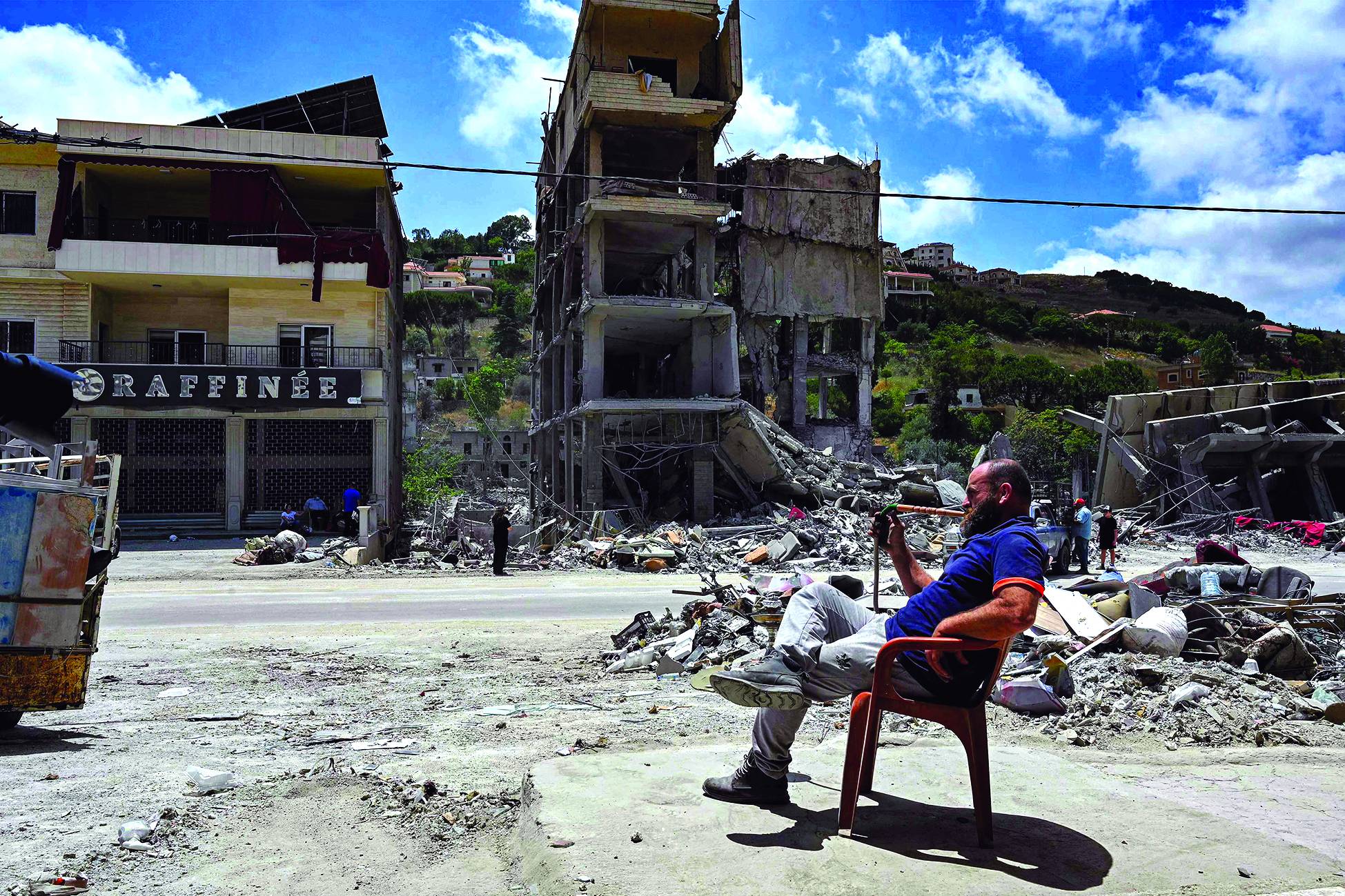
A man smokes a waterpipe as he sits by the rubble in the town of Nabatieh al-Fawqa in southern Lebanon on June 23, 2026. (Photo by Fadel ITANI / AFP)
Malaeb said the prospect of a broader confrontation with Iran had been discussed between the United States and Israel, amid reservations expressed by Israeli Chief of Staff Eyal Zamir over the consequences of entering a conflict that could have difficult repercussions for Israel, particularly if it was not militarily prepared and with elections approaching.
On Hezbollah’s preparations, Malaeb said the seizure by Lebanese security forces of one truck loaded with explosives and linked to the group did not necessarily mean it was the only one to have crossed, as others could have passed without being intercepted.
That, he said, raised the possibility that Hezbollah was preparing for military action if a new regional confrontation erupted.
“The main question today is not which positions Israel may seek to control, but whether the political and military decision to expand the operations will be taken,” he said.
Developments on the ground
Israeli warplanes on Friday carried out a heavy strike on Kfar Tibnit in Nabatieh district, as air and artillery attacks intensified in the districts of Tyre and Bint Jbeil.
The attacks included three strikes on Mansouri and a fourth on Wadi Zibqin. Artillery fire hit Baraachit and Haddatha, the outskirts of Haris, areas around Zibqin and Shaqra, and later Mansouri and Majdal Zoun before dawn.
Warplanes also carried out simulated air raids over Tyre and nearby villages and dropped illumination flares over Mansouri and Bayt al-Sayyad.
Lebanon’s Health Ministry said two people, including a four-year-old child, were wounded in a strike on Haddatha.
In Kfar Shouba, an Israeli force prevented Lebanese farmers from entering the areas of Azrael and Bastara to harvest olives, as residents of border villages continued to face difficulties reaching their farmland.
Sanaa Tribes Hamper Houthi Push to Expand Recruitmenthttps://english.aawsat.com/arab-world/5330371-sanaa-tribes-hamper-houthi-push-expand-recruitment
Sanaa Tribes Hamper Houthi Push to Expand Recruitment
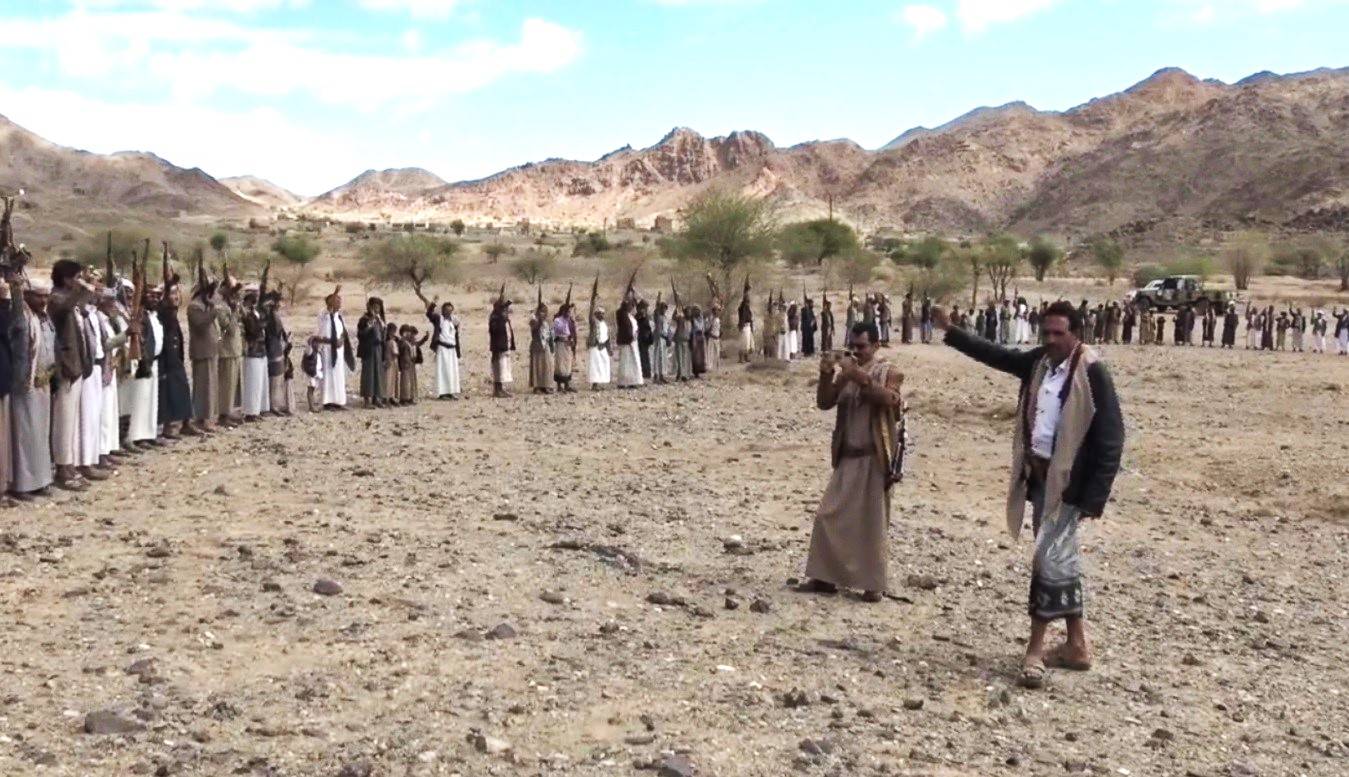
A gathering called for by the Houthi group in the southern suburbs of Sanaa (Houthi media)
Houthi efforts to expand mobilization and recruitment around Yemen’s Houthi-held capital Sanaa are facing growing tribal resistance after the group failed to rally residents in several districts for armed gatherings backing its military escalation, as it steps up pressure on tribal sheikhs to send more young men to the front lines and offset mounting losses.
Local and tribal sources told Asharq Al-Awsat that Houthi leaders have intensified contacts in rural Sanaa since the start of this month, pressing tribal sheikhs to raise readiness for what the group calls “tribal mobilization,” stage armed gatherings and provide new batches of fighters to reinforce the fronts.
The campaign has targeted Bani Matar, Sanhan and Bani Bahloul, Bilad al-Rus, Khawlan, Jihana, Hamdan, Arhab, Nihm, Saafan and Manakha.
But the push has met reluctance from a number of sheikhs and local dignitaries, the sources said, amid growing resentment over the continued depletion of tribal communities in battles whose human and economic costs are borne by families and local communities.
Some tribal leaders have told the Houthis they are unable to provide new fighters, the sources added, as recruitment calls draw fewer responses and fears grow over sending more young men to fronts where the group is suffering repeated losses.
Houthis use killing, displacement, and abduction to subjugate tribes (Facebook)
Threats and incentives
The Houthis have gone beyond outreach and mobilization calls, the sources said, putting pressure on tribal sheikhs to comply with their demands.
The measures have included threats to withdraw privileges and impose financial penalties on those who fail to comply, while offering cash and material incentives to those who agree to supply fighters to the fronts.
Through these tactics, the group is seeking to shift responsibility for providing fighters onto tribal sheikhs and use their social influence to recruit men from their communities, as casualties mount on fronts in Taiz, the western coast, Marib, al-Jawf, Lahj and al-Dhalea.
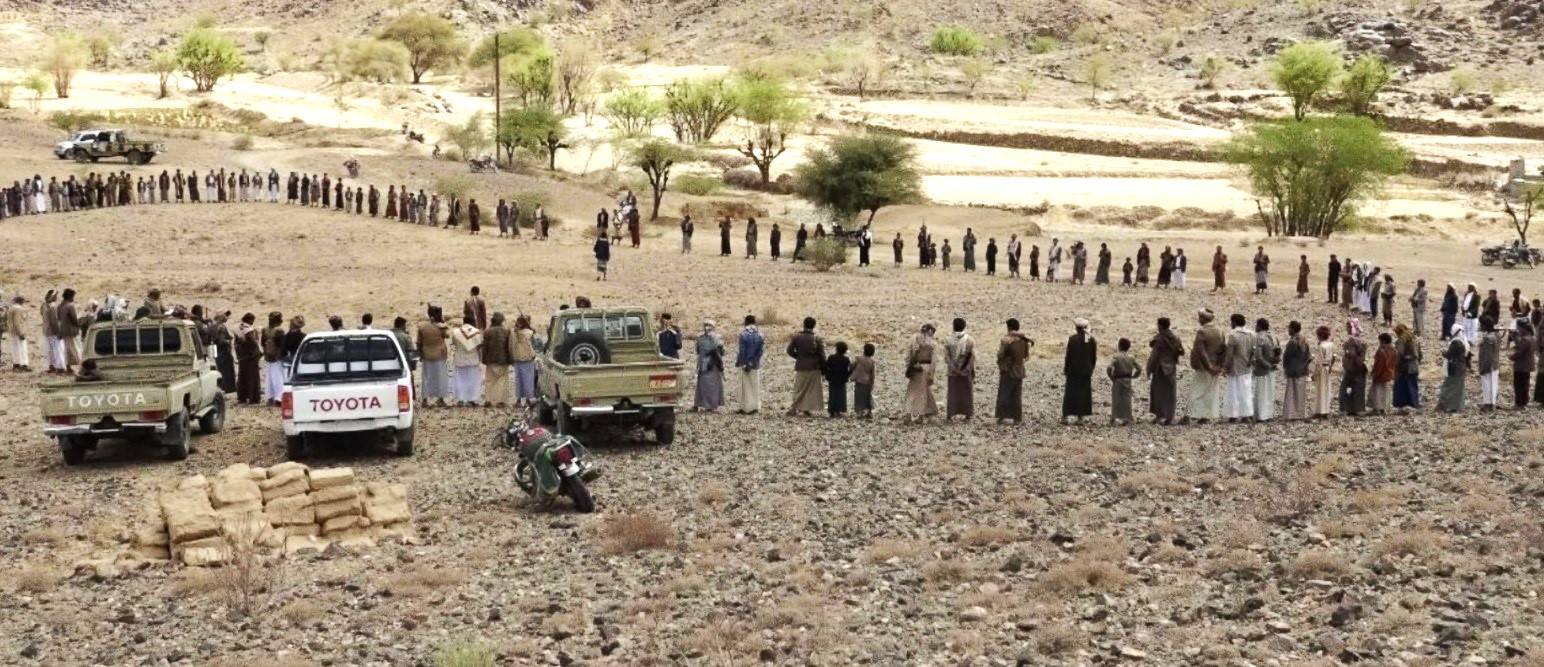
In a sign of the difficulties facing the recruitment drive, areas in Bani Matar, Sanhan and Nihm in Sanaa province recently held separate tribal gatherings called by the Houthis, but turnout was limited, local sources said.
The group used its media outlets to portray the gatherings as expressions of tribal support, seeking to bolster its image and justify continued military activity while pushing to recruit more fighters.
The limited turnout, according to the sources, underscores the difficulty of turning Houthi appeals into broad tribal mobilization, particularly as objections grow to the depletion of young men and the use of tribal ties to serve the group’s military objectives.
The recruitment drive coincides with continued restrictions and pressure on residents of rural Sanaa, amid accusations that the Houthis are tightening their grip on opponents and continuing to seize privately owned land and property, further fueling public resentment.
As living conditions and public services deteriorate, families are facing heavier economic burdens while the group continues to focus its efforts on mobilization campaigns and military activity rather than residents’ basic needs.
Sanaa rural tribesmen forced to chant Houthi slogans (Facebook)
Families fear for their sons
The campaign comes as the Houthis continue efforts to reinforce the fronts with fighters, while families grow increasingly fearful that their sons could be killed or return with permanent injuries, at a time of worsening economic hardship and declining basic services in Houthi-controlled areas.
Residents of the targeted districts in rural Sanaa are calling for an end to recruitment and mobilization campaigns and for efforts to be redirected toward easing economic hardship and improving services, rather than sending their sons to the front lines.
The Yemeni government has called on tribal sheikhs, fathers and mothers in those areas to prevent their children from joining Houthi ranks, warning against sending them into battles that, in its view, serve Iran’s project and regional agenda at the expense of Yemeni lives and the country’s future.
The government accuses the group of exploiting social influence and economic hardship, alongside intimidation and inducements, to draw young people into mobilization camps and onto the front lines instead of providing conditions that would allow them to work and live away from war.
17,000 Strikes on Houthis Since Launch of Operation Dawn of Yemenhttps://english.aawsat.com/arab-world/5330369-17000-strikes-houthis-launch-operation-dawn-yemen
17,000 Strikes on Houthis Since Launch of Operation Dawn of Yemen
Fighters loyal to Yemen’s government on one of the front lines against the Houthis (AP)
Yemen’s armed forces said air and ground strikes carried out with support from the Coalition to Support Legitimacy had topped 17,000 since the launch of Operation Dawn of Yemen, as government forces repelled fierce Houthi attacks in Taiz and Lahj.
More than 1,250 strikes were carried out in the past 24 hours, neutralizing about 700 Houthi fighters and destroying or disabling more than 150 vehicles and pieces of military equipment, the armed forces said.
The heaviest fighting centered on western Taiz, where government forces said they repelled a Houthi assault that lasted about 12 hours, along with attacks in Al-Dhabab, Al-Aqrud and Al-Shaqab. Clashes also erupted on the Al-Mudaraba and Al-Wazi’iya fronts in Lahj province.
Colonel Majid al-Nuzaili, spokesman for Yemen’s armed forces, said operations over the past day targeted positions, fortifications, trenches, firing points, observation and reconnaissance posts, forward command-and-control centers, and Houthi assembly and supply areas.
He said the strikes were aimed at weakening the group’s defensive lines and limiting its ability to launch attacks, with a particular focus on the Taiz fronts.
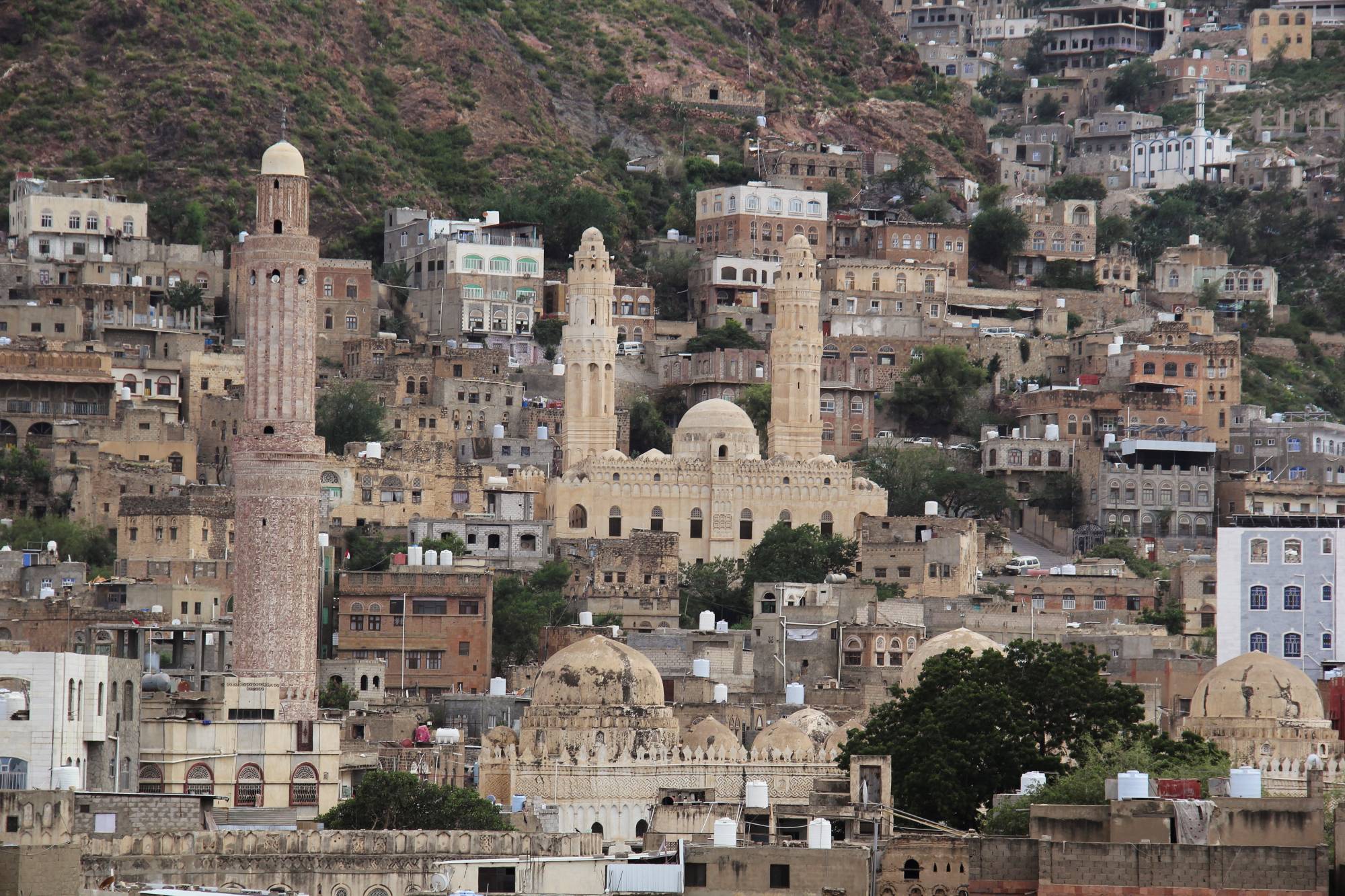
Buildings stand in the southwestern city of Taiz, Yemen, October 15, 2026. REUTERS/Anees Mahyoub
Heavy fighting broke out west of Taiz city after a large-scale Houthi attack around Jabal Han that lasted about 12 hours, according to field accounts from government forces.
The forces said they repelled the assault and forced the attackers to withdraw from positions they had tried to seize.
Clashes spread to the old airport area, Ghurab and Bir Basha, with heavy and medium weapons, artillery and rockets used in the fighting. Confrontations also continued around the Republican Palace east of the city, amid reports of Houthi shelling of residential neighborhoods in the old airport area.
Government forces said they held their positions at Jabal Han and recaptured sites infiltrated by the attackers.
In southern Taiz province, government forces repelled Houthi attacks on the Al-Aqrud and Al-Shaqab fronts, while airstrikes hit a convoy of tanks and military vehicles in the Ras al-Najd area of Al-Misrakh district.
Other strikes targeted Houthi positions on Sofitel Hill east of Taiz city, as well as a tank and a military vehicle on the Al-Dhabab front to the west.
Government forces said the clashes and airstrikes killed or wounded dozens of Houthis. No independent casualty figures were available.
Reinforcements and attrition in Lahj
In western Lahj province, along the border with Taiz, the Southern Giants Brigades, led by Presidential Leadership Council member Abdulrahman al-Muharrami, sent reinforcements from the 6th Infantry Division and support units to the Al-Mudaraba front.
The deployment was aimed at reinforcing forces in the area and countering Houthi infiltration attempts.
The Giants Brigades said they destroyed Houthi military vehicles and equipment while repelling infiltration attempts.
Their media outlets also said the last company of the group’s 11th Reserve Brigade had been eliminated, describing it as part of the losses suffered by Houthi formations during the fighting.
The moves came as fighting continued on the Al-Wazi’iya front west of Taiz, where government forces are seeking to thwart attacks and prevent the Houthis from making gains toward areas bordering Lahj province.
The forces are also seeking to prevent the Houthis from outflanking government troops at Bab al-Mandab in an effort to break the siege of Houthi pockets.
Alongside the ground fighting, local authorities in Marib said the Houthis fired nine ballistic missiles and seven other projectiles at residential neighborhoods in the city on Thursday evening.
The authorities warned against continued attacks on populated areas and called on the international community and the United Nations to act to halt them.
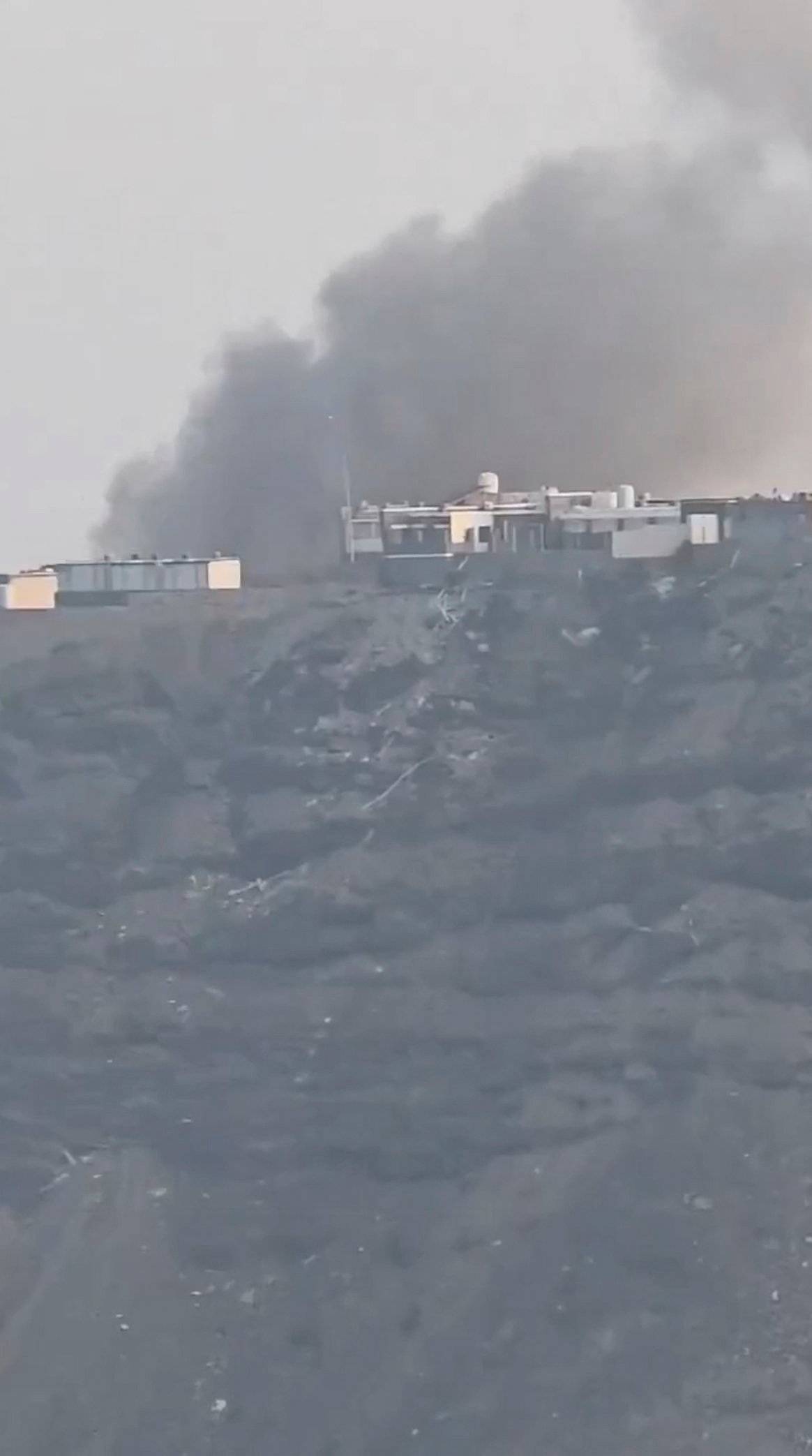
In Aden, the death toll from a missile attack targeting the presidential Maashiq Palace and the Al-Buraiqa area west of the city rose to five, with 16 wounded, according to Public Health and Population Minister Qasem Buhaibeh.
He said the casualties included security personnel and civilian employees.
Smoke billows from the presidential palace complex following an attack by Yemen's Houthis, according to government officials, in Aden, Yemen, October 15, 2026, in this screen grab obtained from a social media video. Social Media/via REUTERS
Operation continues
Chairman of Yemen’s Presidential Leadership Council Rashad al-Alimi reviewed developments in Operation Dawn of Yemen and fighting across the various fronts during briefings from senior military and local officials.
The briefings were delivered by Defense Minister Lieutenant General Taher al-Aqili, Chief of the General Staff and Commander of Joint Operations Lieutenant General Sagheer bin Aziz, Commander of the Fourth Military Region Major General Hamdi Shukri, and the governors of Taiz and Lahj.
According to the briefings, the armed forces, with support from the Coalition to Support Legitimacy, had carried out more than 17,000 air and ground strikes since the operation began, targeting Houthi positions, concentrations and military capabilities across multiple fronts.
Al-Alimi praised the performance of the armed forces, military formations and popular resistance forces, and commended Saudi Arabia’s support and the role of the Coalition to Support Legitimacy in backing the Yemeni state and its armed forces.
He said the operation would continue in line with its stated objectives of restoring state institutions and extending state authority across all Yemeni territory, ultimately reaching the capital, Sanaa.
The briefings also covered humanitarian and public service conditions in Taiz and Lahj, including measures to respond to waves of displacement and secure basic services and supply routes amid the military escalation.
Al-Alimi accused the Houthis of imposing coercive measures in areas they had infiltrated in Taiz province, including forced recruitment, ideological mobilization and attempts to alter the identity of educational and community institutions.
He warned of the consequences of such practices and said the state was responsible for protecting citizens and holding those involved in violations accountable.
لم تشترك بعد
انشئ حساباً خاصاً بك لتحصل على أخبار مخصصة لك ولتتمتع بخاصية حفظ المقالات وتتلقى نشراتنا البريدية المتنوعة