Saudi Arabia: Vaccination Needed to Enter Govt, Private Offices

Vaccination will be required to "enter any government or private establishments" as well as to access any entertainment or sports activities, the interior ministry said
TT

Saudi Arabia: Vaccination Needed to Enter Govt, Private Offices

Vaccination will be required to "enter any government or private establishments" as well as to access any entertainment or sports activities, the interior ministry said

Saudi Arabia on Tuesday said vaccination against Covid-19 will be mandatory from August 1 to enter any government and private establishments as well as to use public transport. Vaccination will be required to "enter any government or private establishments" as well as to access any entertainment or sports activities, the interior ministry said in a statement published by the official Saudi Press Agency. It will also be required to enter any education institutions and use public transport, it added. Saudi Arabia's health ministry said it has administered more than 12 million coronavirus vaccine doses. On Monday, the government permitted citizens immunized against Covid-19 to travel abroad. The interior ministry said three categories of people would be considered immunized -- those who have received two doses of a coronavirus vaccine, those administered a single dose at least 14 days prior to travel, and people who have recovered from the infection within the previous six months.


Saudi Air Defenses Thwart Attempt to Target Shaybah Oilfield

Saudi Aramco's Shaybah oilfield (Asharq Al-Awsat)
TT

Saudi Air Defenses Thwart Attempt to Target Shaybah Oilfield

Saudi Aramco's Shaybah oilfield (Asharq Al-Awsat)

Two people were killed and two others were injured after Saudi air defenses intercepted a drone that was attempting to hit a facility at Saudi Aramco's Shaybah oilfield, the Energy Ministry said.

The two people killed were Nepali and Filipino nationals, while the injured were Pakistani and Indian nationals, it said.

The falling debris also sparked a fire in a contractor’s vehicle at the Shaybah oilfield, the ministry added in a statement.


1 Killed, 8 Injured in Dammam Airport Attack

King Fahd International Airport in Dammam. SPA
TT

1 Killed, 8 Injured in Dammam Airport Attack

King Fahd International Airport in Dammam. SPA

One resident was killed in an attack on King Fahd International Airport in Dammam in eastern Saudi Arabia, the General Authority of Civil Aviation (GACA) announced early Thursday.

The authority also said eight people were injured in the late Wednesday attack and the airport suffered some material damages.

“All injured individuals were immediately transported to hospital to receive the necessary medical care,” GACA added.


Saudi, Jordanian FMs Discuss Houthi Attacks, Sign Protocol on Higher Coordination Council

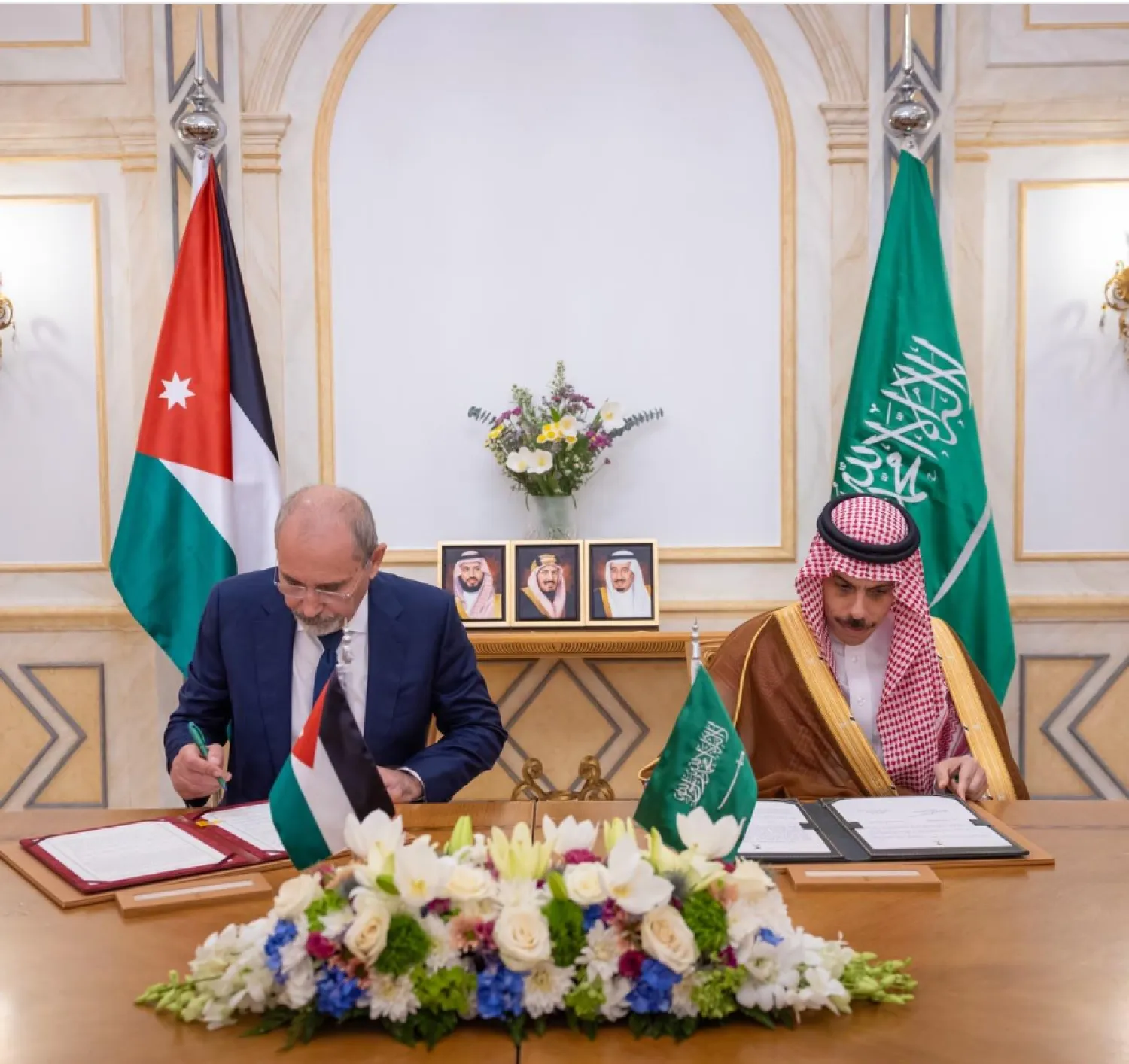
Saudi Minister of Foreign Affairs Prince Faisal bin Farhan bin Abdullah and Jordanian Deputy Prime Minister and Minister of Foreign Affairs and Expatriates Ayman Safadi sign an amended protocol to the minutes establishing the Saudi-Jordanian Higher Coordination Council. (SPA)
TT

Saudi, Jordanian FMs Discuss Houthi Attacks, Sign Protocol on Higher Coordination Council

Saudi Minister of Foreign Affairs Prince Faisal bin Farhan bin Abdullah and Jordanian Deputy Prime Minister and Minister of Foreign Affairs and Expatriates Ayman Safadi sign an amended protocol to the minutes establishing the Saudi-Jordanian Higher Coordination Council. (SPA)

Saudi Minister of Foreign Affairs Prince Faisal bin Farhan bin Abdullah received in Riyadh on Wednesday Jordanian Deputy Prime Minister and Minister of Foreign Affairs and Expatriates Ayman Safadi for talks on bilateral relations and ways to support and develop them in a manner that serves their mutual interests.

They discussed the latest developments in the region, foremost among them the continued attacks by the terrorist Houthi militia on Saudi territory.

Safadi stressed Jordan's full solidarity with Saudi Arabia in confronting these attacks and its full support for all measures the Kingdom takes to protect its security, stability, sovereignty, and the safety of its citizens and residents.

The FMs reviewed efforts to de-escalate tensions, prevent conflicts from spreading, and restore security and stability. These efforts aim to uphold respect for international law, the principles of good neighborliness and non-interference in the affairs of states, and ensure the safety and freedom of navigation through the Strait of Hormuz and the Bab al-Mandeb Strait, contributing to the stability of global markets and the smooth flow of trade.

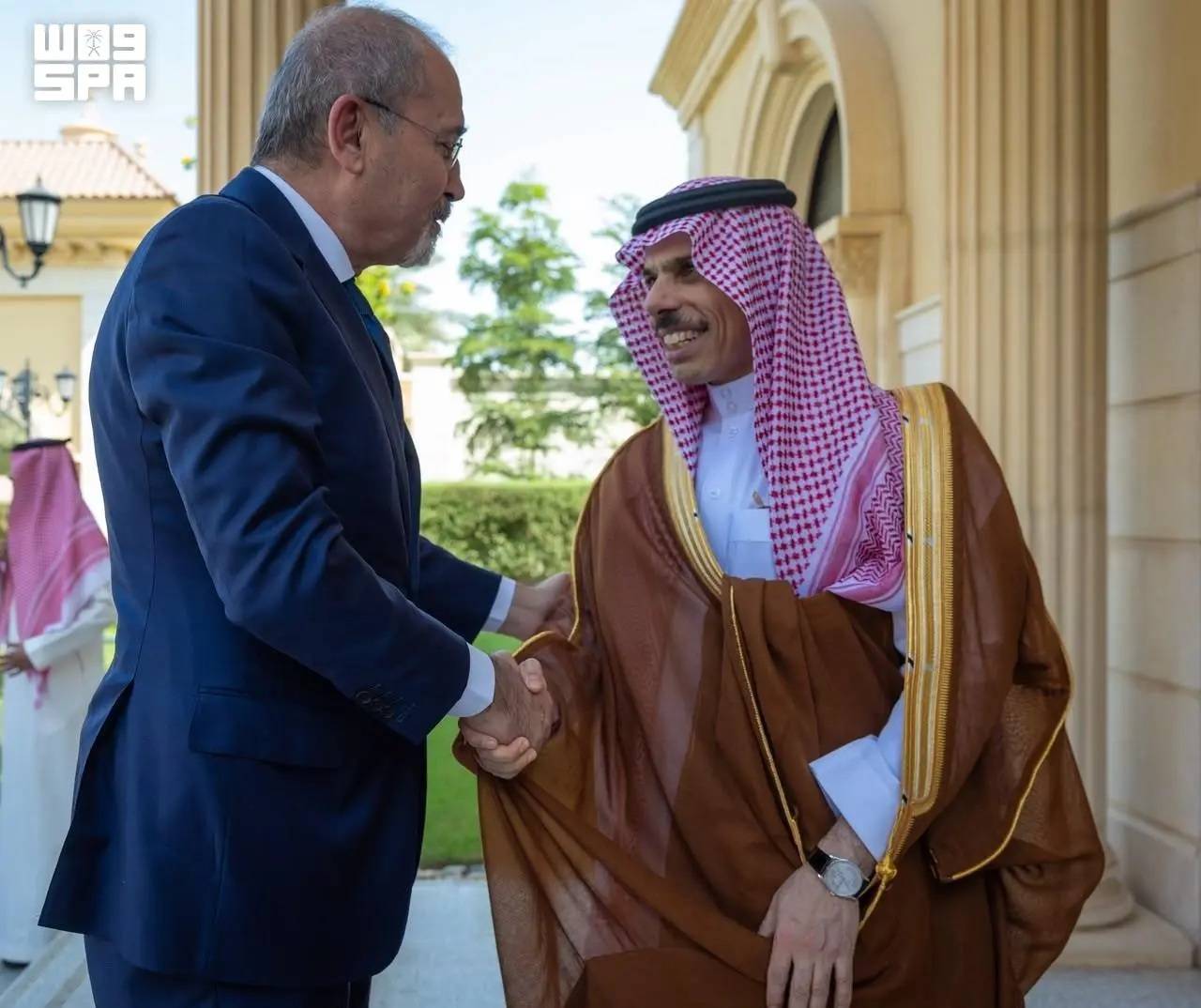
Saudi Minister of Foreign Affairs Prince Faisal bin Farhan bin Abdullah greets Jordanian Deputy Prime Minister and Minister of Foreign Affairs and Expatriates Ayman Safadi. (SPA)

The FMs also signed an amended protocol to the minutes establishing the Saudi-Jordanian Higher Coordination Council, to be chaired by Prince Mohammed bin Salman bin Abdulaziz Al Saud, Saudi Crown Prince and Prime Minister, and Jordan’s King Abdullah II.

The council aims to strengthen cooperation and coordination across various fields to serve both countries' interests and their brotherly peoples.

The two countries' foreign ministers will head the council's general secretariat, while their respective foreign ministries will oversee its work, including preparations for its meetings and those of the ministerial committees operating under it.