


US Envoy: Marib is Not Falling Now, It’s Not Going to Fall in Foreseeable Future

A Yemeni soldier mans a position near the frontline facing Iran-backed Houthis in the country's northeastern province of Marib, on May 13, 2021. (Photo by STR / AFP)
TT

US Envoy: Marib is Not Falling Now, It’s Not Going to Fall in Foreseeable Future

A Yemeni soldier mans a position near the frontline facing Iran-backed Houthis in the country's northeastern province of Marib, on May 13, 2021. (Photo by STR / AFP)

US Special Envoy Tim Lenderking asserted that his country is ready to play a constructive role in bringing Yemeni parties together, while announcing that Washington is imposing sanctions on Houthi commanders.

The international community is more troubled with the group’s use of violence in Yemen and the US is “troubled by the fact that the Houthis continue to fight in Marib,” Lenderking said in a call with reporters, asserting that despite all their predictions, the city did not fall during Ramadan.

"It’s not falling now and it’s not going to fall anytime in the foreseeable future. So, the Houthis aren’t winning in Marib and instead, they are putting a great deal of stress on an already very fragile humanitarian situation.”

The new sanctions were imposed on the head of the general staff leading the Houthi offensive in Marib, Mohamad Abdulkarim al-Gamali, and prominent Houthi leader Yousuf al-Madani.

“If there were no offensive, if there was a commitment to peace, if the parties were all showing up to deal constructively with the UN envoy there would be no need for designations,” Lenderking said.

He indicated that the US is imposing sanctions on the two officials to show the international community that Washington “does have levers to press” and it is “dissatisfied with the actions of the Houthis.”

The envoy said the US “constantly and continually” assesses Houthi behavior and actions.

Lenderking’s resentment was evident during his statements, and he was displeased with the Houthis for refusing to meet with UN Special Envoy Martin Griffiths.

The envoy’s statements revealed disparities between the US administration and the UN. However, he stressed that Washington agrees with the objectives of the UN peace plan.

“We are not the United Nations. We are the United States. We have our own voice. We have our own perspective. We have our own expertise. We have our own views on the conflict and how to resolve it. And in that regard, we are very clear with the United Nations, very open conversations that we have with them, about the way forward. And it’s an excellent relationship, and we have great respect for the UN Special Envoy Martin Griffiths,” asserted Lenderking.

Asharq Al-Awsat asked the envoy about the possibility of meeting the Houthis after they refused to hold talks with Griffiths. Lenderking indicated that he met them over the years on a number of occasions and at different levels, and certainly there is no restriction from the administration on meeting with them, describing it as a “constructive engagement.”

“Houthis have an important role to play in Yemen, and we’re eager to get beyond the military conflict so that the Houthis can play that role and begin to talk about – begin a real conversation and a sustained conversation that brings Yemenis together to decide the future of their country,” said the envoy.

He also stressed that the international community has a responsibility which it is eager to meet to create that platform so that Yemenis can be talking together, noting that “we’re all impatient to get there. And as the fighting continues, it becomes more difficult to get to that very important objective.”

Lenderking pointed out that during his five trips to the Gulf region since his appointment, he had contact with all of the Gulf countries, and has been in very close contact with European partners.

On his last trip, Lenderking traveled with Griffiths and US Senator Chris Murphy, which he thinks "showed the alignment between the branches of the US Government and the United States and the United Nations. And I do think, as an observer, as a keen observer of the Yemen conflict for the last six years, I haven’t seen this level of alignment between the administration and Congress.”

He noted that there is also a “very strong alignment” between member states of the UN Security Council toward a resolution of the Yemen conflict.

The envoy said he was disappointed that on his last trip to Oman, the Houthis declined to meet with the UN special envoy, noting that wasn’t just that particular meeting that was problematic.

“It’s a trend, where the Houthis while showing constructive engagement on a number of occasions with different stakeholders, have then backtracked or, as we say in sports terminology, moved the goalposts to what has been agreed to. And there won’t be a peace deal without strong Houthi support.”

He also indicated that Houthis are putting a “great deal of stress on an already very fragile humanitarian situation,” and putting the lives of “one million internally displaced people – these are people who have already fled from war in Yemen they’re putting their lives in danger as well.”

“The offensive in Marib is not going anywhere. There’s a significant amount of intimidation of Yemeni tribes and families that are involved to get young men to go to the battlefield. They’re not dying for a valuable cause, in the view of the United States and in the view of the international community,” Lenderking told reporters.

He noted that the international community has become more aligned on the fact that the Marib offensive is deeply troubling, and also counter to claims by the Houthis to want to make peace.

The envoy also addressed the talks between Saudi Arabia and Iran, saying it is “potentially a constructive engagement, and we wish both parties success because it will be not only good for the overall tensions in the region, but there should be a positive impact on the Yemen conflict in particular.”

“We are not a part of that discussion directly, as you know. But it also hearkens back to, I think, an important softening of tone in the Saudi crown prince’s interview some weeks ago both toward Iran and both toward the Houthis.”

The US welcomes any change toward the positive side from the Iranians on the Yemen conflict. However, “we don’t see it. We see continued Iranian support for the Houthi military effort both in Marib, both across the border, in trading and supplying sophisticated weaponry which inflames the conflict.”

Lenderking stated that the US is consistently one of the largest donors to the Yemen conflict, lauding the US citizens and taxpayers for supporting a distant conflict and the suffering that’s going on there.

“I believe that that support will continue, and I think that the US intends to lead by example,” indicated the envoy, pointing out that since the beginning of the conflict, the United States has funded more than $3.4 billion toward relief in Yemen, and that includes across many sectors of the Yemeni economy and the Yemeni social structure and for COVID relief as well.

He asserted that the US would uphold its interests and stand by its “friends in the region,” adding that Washington is committed to consulting closely with its allies regarding its policy on Iran.

The Envoy asserted that the US supports dialogue between countries in the region in the interest of security and stability, noting that if Iran wants to show it can be a reasonable actor, “now is the time to start doing so by not meddling and fueling the conflict in Yemen, and by supporting peace talks.”


Lebanon PM Pledges Reconstruction on Visit to Ruined Border Towns

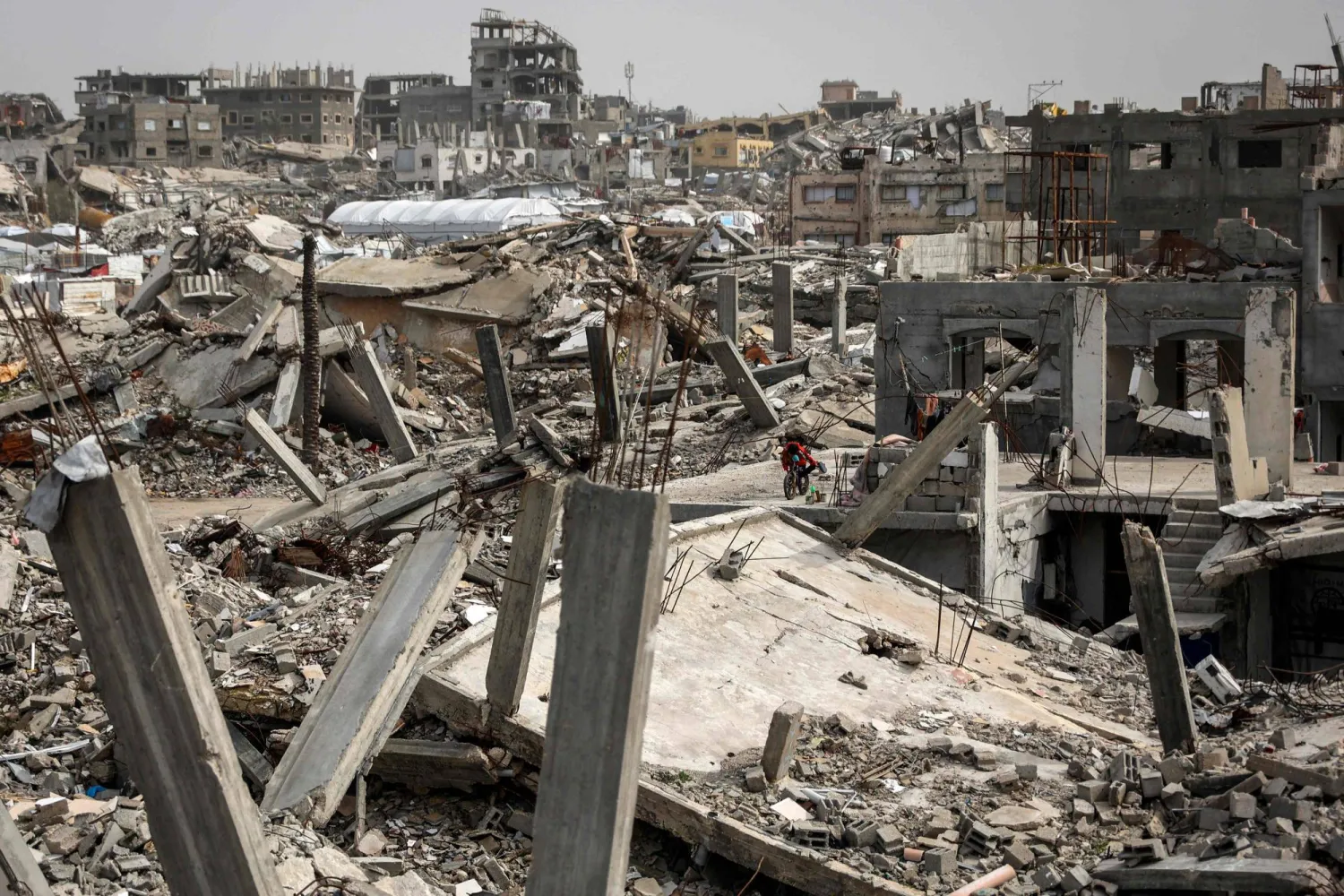
This handout picture released by the Lebanese Government Press Office shows Lebanon's Prime Minister Nawaf Salam being showered with confetti as he is received by locals during a tour in the heavily-damaged southern village of Dhayra near the border with Israel on February 7, 2026. (Lebanese Government Press Office / AFP)
TT

Lebanon PM Pledges Reconstruction on Visit to Ruined Border Towns

This handout picture released by the Lebanese Government Press Office shows Lebanon's Prime Minister Nawaf Salam being showered with confetti as he is received by locals during a tour in the heavily-damaged southern village of Dhayra near the border with Israel on February 7, 2026. (Lebanese Government Press Office / AFP)

Lebanese Prime Minister Nawaf Salam visited heavily damaged towns near the Israeli border on Saturday, pledging reconstruction.

It was his first trip to the southern border area since the army said it finished disarming Hezbollah there, in January.

Swathes of south Lebanon's border areas remain in ruins and largely deserted more than a year after a US-brokered November 2024 ceasefire sought to end hostilities between Israel and the Iran-backed group.

Lebanon's government has committed to disarming Hezbollah, and the army last month said it had completed the first phase of its plan to do so, covering the area between the Litani River and the Israeli border about 30 kilometers (20 miles) further south.

Visiting Tayr Harfa, around three kilometers from the border, and nearby Yarine, Salam said frontier towns and villages had suffered "a true catastrophe".

He vowed authorities would begin key projects including restoring roads, communications networks and water in the two towns.

Locals gathered on the rubble of buildings to greet Salam and the delegation of accompanying officials in nearby Dhayra, some waving Lebanese flags.

In a meeting in Bint Jbeil, further east, with officials including lawmakers from Hezbollah and its ally the Amal movement, Salam said authorities would "rehabilitate 32 kilometers of roads, reconnect the severed communications network, repair water infrastructure" and power lines in the district.

Last year, the World Bank announced it had approved $250 million to support Lebanon's post-war reconstruction, after estimating that it would cost around $11 billion in total.

Salam said funds including from the World Bank would be used for the reconstruction and rehabilitation projects.

The second phase of the government's disarmament plan for Hezbollah concerns the area between the Litani and the Awali rivers, around 40 kilometers south of Beirut.

Israel, which accuses Hezbollah of rearming, has criticized the army's progress as insufficient, while Hezbollah has rejected calls to surrender its weapons.

Despite the truce, Israel has kept up regular strikes on what it usually says are Hezbollah targets and maintains troops in five south Lebanon areas.

Lebanese officials have accused Israel of seeking to prevent reconstruction in the heavily damaged south with repeated strikes on bulldozers, excavators and prefabricated houses.

Visiting French Foreign Minister Jean-Noel Barrot on Friday said the reform of Lebanon's banking system needed to precede international funding for reconstruction efforts.

The French diplomat met Lebanon's army chief Rodolphe Haykal on Saturday, the military said.


Over 2,200 ISIS Detainees Transferred to Iraq from Syria, Says Iraqi Official

 One of the American buses transporting ISIS fighters, according to a security source from the Syrian Democratic Forces, heads from Syria towards Iraq, in Qamishli, Syria, February 7, 2026. (Reuters)
One of the American buses transporting ISIS fighters, according to a security source from the Syrian Democratic Forces, heads from Syria towards Iraq, in Qamishli, Syria, February 7, 2026. (Reuters)
TT

Over 2,200 ISIS Detainees Transferred to Iraq from Syria, Says Iraqi Official

 One of the American buses transporting ISIS fighters, according to a security source from the Syrian Democratic Forces, heads from Syria towards Iraq, in Qamishli, Syria, February 7, 2026. (Reuters)
One of the American buses transporting ISIS fighters, according to a security source from the Syrian Democratic Forces, heads from Syria towards Iraq, in Qamishli, Syria, February 7, 2026. (Reuters)

Iraq has so far received 2,225 ISIS group detainees, whom the US military began transferring from Syria last month, an Iraqi official told AFP on Saturday.

They are among up to 7,000 ISIS detainees whose transfer from Syria to Iraq the US Central Command (CENTCOM) announced last month, in a move it said was aimed at "ensuring that the terrorists remain in secure detention facilities".

Previously, they had been held in prisons and camps administered by the Kurdish-led Syrian Democratic Forces (SDF) in northeast Syria.

The announcement of the transfer plan last month came after US envoy to Syria Tom Barrack declared that the SDF's role in confronting ISIS had come to an end.

Saad Maan, head of the security information cell attached to the Iraqi prime minister's office, told AFP on Saturday that "Iraq has received 2,225 terrorists from the Syrian side by land and air, in coordination with the international coalition", which Washington has led since 2014 to fight IS.

He said they are being held in "strict, regular detention centers".

A Kurdish military source confirmed to AFP the "continued transfer of ISIS detainees from Syria to Iraq under the protection of the international coalition".

On Saturday, an AFP photographer near the Kurdish-majority city of Qamishli in northeastern Syria saw a US military convoy and 11 buses with tinted windows.

- Iraq calls for repatriation -

ISIS seized swathes of northern and western Iraq starting in 2014, until Iraqi forces, backed by the international coalition, managed to defeat it in 2017.

Iraq is still recovering from the severe abuses committed by the extremists.

In recent years, Iraqi courts have issued death and life sentences against those convicted of terrorism offences.

Thousands of Iraqis and foreign nationals convicted of membership in the group are incarcerated in Iraqi prisons.

On Monday, the Iraqi judiciary announced it had begun investigative procedures involving 1,387 detainees it received as part of the US military's operation.

In a statement to the Iraqi News Agency on Saturday, Maan said "the established principle is to try all those involved in crimes against Iraqis and those belonging to the terrorist ISIS organization before the competent Iraqi courts".

Among the detainees being transferred to Iraq are Syrians, Iraqis, Europeans and holders of other nationalities, according to Iraqi security sources.

Iraq is calling on the concerned countries to repatriate their citizens and ensure their prosecution.

Maan noted that "the process of handing over the terrorists to their countries will begin once the legal requirements are completed".


Drone Attack by RSF in Sudan Kills 24, Including 8 Children, Doctors’ Group Says

Displaced Sudanese wait to receive humanitarian aid at the Abu al-Naga displacement camp in the Gedaref State, some 420km east of the capital Khartoum on February 6, 2026. (AFP)
TT

Drone Attack by RSF in Sudan Kills 24, Including 8 Children, Doctors’ Group Says

Displaced Sudanese wait to receive humanitarian aid at the Abu al-Naga displacement camp in the Gedaref State, some 420km east of the capital Khartoum on February 6, 2026. (AFP)

A drone attack by a notorious paramilitary group hit a vehicle carrying displaced families in central Sudan Saturday, killing at least 24 people, including eight children, a doctors’ group said.

The attack by the Rapid Support Forces occurred close to the city of Rahad in North Kordofan province, said the Sudan Doctors Network, which tracks the country’s ongoing war.

The vehicle transported displaced people who fled fighting in the Dubeiker area of North Kordofan, the doctors’ group said in a statement. Among the dead children were two infants, the group said.

The doctors’ group urged the international community and rights organizations to “take immediate action to protect civilians and hold the RSF leadership directly accountable for these violations.”

There was no immediate comment from the RSF, which has been at war against the Sudanese military for control of the country for about three years.

Sudan plunged into chaos in April 2023 when a power struggle between the military and the RSF exploded into open fighting in the capital, Khartoum, and elsewhere in the country.

The devastating war has killed more than 40,000 people, according to UN figures, but aid groups say that is an undercount and the true number could be many times higher.

It created the world’s largest humanitarian crisis with over 14 million people forced to flee their homes. It fueled disease outbreaks and pushed parts of the country into famine.