


MWL Chief: The Makkah Document Filled an Important Void Regarding Pressing Issues

Part of the international symposium held in the Moroccan capital, Rabat (Asharq Al-Awsat)
TT

MWL Chief: The Makkah Document Filled an Important Void Regarding Pressing Issues

Part of the international symposium held in the Moroccan capital, Rabat (Asharq Al-Awsat)

The Islamic World Educational, Scientific, and Cultural Organization (ICESCO) held on Saturday a symposium in the Moroccan capital, Rabat, in collaboration with the Muslim World League (MWL).

During the symposium, dubbed “The Makkah al-Mukarramah Document: Achievements and Prospects,” Islamic and international scholars and religious and intellectual leaders unanimously agreed on the document’s contribution to bringing together the nation’s scholars and getting them to agree on pressing modern issues.

MWL Secretary-General Dr. Mohammed bin Abdulkarim al-Issa, who is also the chairman of the Association of Muslim Scholars, highlighted the most prominent features of the document, stressing that it demonstrated where Islam stands as opposed to civilizational and human coexistence.

He stressed that the Makkah Document filled an important void in the consensus of the scholars of the Islamic nation regarding pressing modern issues and that it demonstrated the distinction of those scholars by their ability to unify their word despite their great sectarian diversity.

Al-Issa also pointed to the document's keenness to develop Islamic societies, confront corruption, rationalize consumption and preserve the environment, and rationalize religious sentiment, especially among Muslim youth.

More than 1,200 prominent Muslim scholars and 4,500 Islamic intellectuals from 139 countries signed the document.

Issa said families and relevant official governmental and civil institutions responsible for raising awareness among the Muslim youth.

Director-General of ICESCO Dr. Salem al-Malik also delivered a speech, in which he praised MWL’s efforts in addressing concerns of the Islamic nation, highlighting the close bilateral partnership.

Assistant Secretary-General of the Muhammadan Association of Scholars in Morocco Dr. Ahmed al-Senouni, for his part, said the document’s guidelines and principles represent a source of inspiration at the individual and collective levels.

Dr. Khaled al-Samadi, the head of the Moroccan Center for Educational Studies and Research, noted that the document corrected many misconceptions, established many values and developed the skills of tackling the differences.

Meanwhile, the rapporteur of the Kingdom of Morocco Academy, Dr. Mustafa Zabakh, described the document as a junction that the Islamic world and all humankind need in light of the turmoil and intellectual conflicts the world is currently facing.
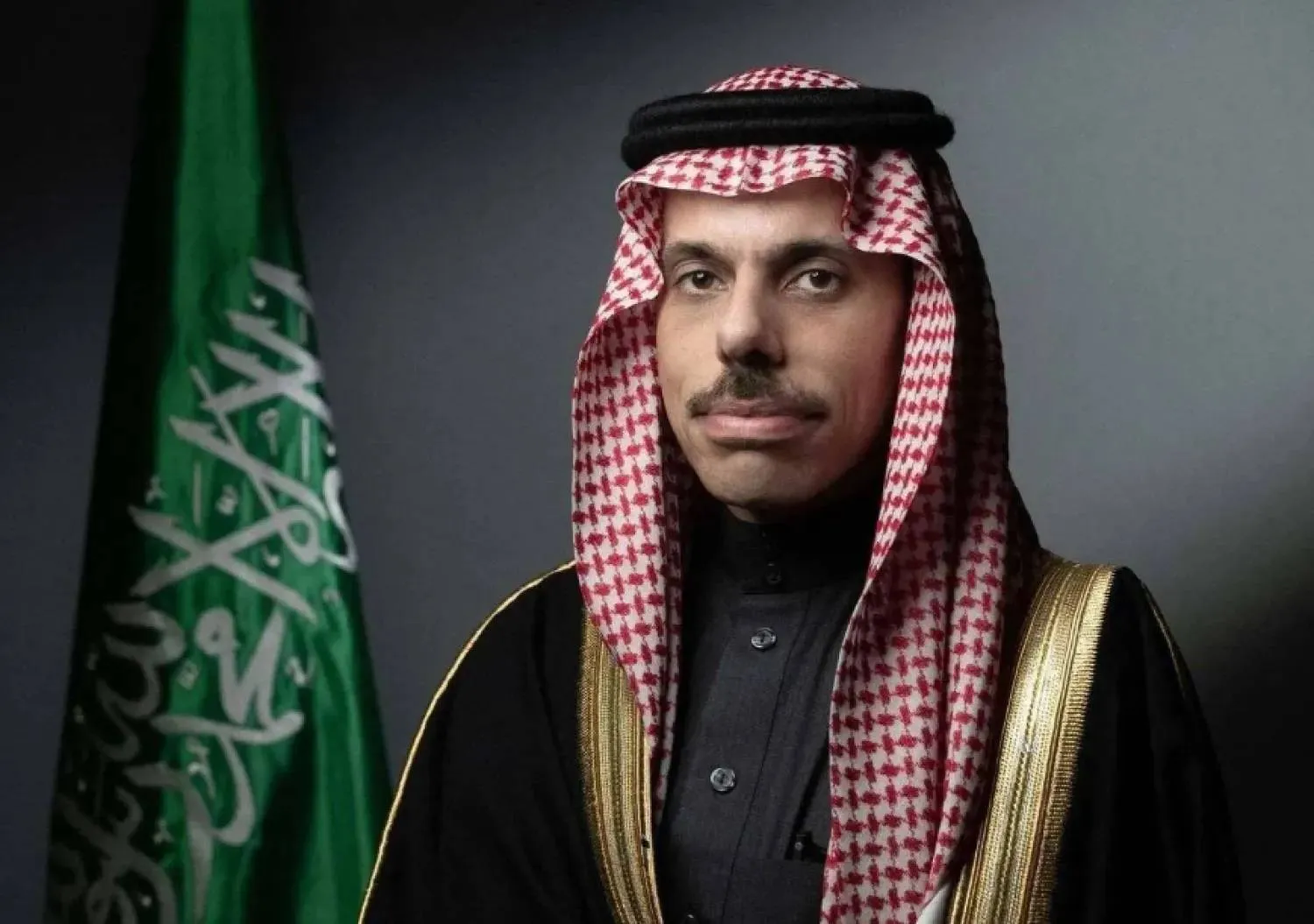



Saudi Foreign Minister Receives Phone Call from French Foreign Minister

zSaudi Foreign Minister Prince Faisal bin Farhan bin Abdullah - File Photo/Reuters)
TT

Saudi Foreign Minister Receives Phone Call from French Foreign Minister

zSaudi Foreign Minister Prince Faisal bin Farhan bin Abdullah - File Photo/Reuters)

Saudi Minister of Foreign Affairs Prince Faisal bin Farhan bin Abdullah received a phone call from Minister for Europe and Foreign Affairs of the French Republic Jean-Noël Barrot, SPA reported.

During the call, they discussed bilateral relations and the latest regional and international developments.


Yemen Presidential Leadership Council President Holds Talks with GCC Sec-Gen

President of the Presidential Leadership Council of Yemen Dr. Rashad Mohammed Al-Alimi - Reuters
TT

Yemen Presidential Leadership Council President Holds Talks with GCC Sec-Gen

President of the Presidential Leadership Council of Yemen Dr. Rashad Mohammed Al-Alimi - Reuters

President of the Presidential Leadership Council of Yemen Dr. Rashad Mohammed Al-Alimi met with Secretary-General of the Gulf Cooperation Council (GCC) Jasem Albudaiwi in Riyadh.

According to a press release issued by the GCC General Secretariat, the two sides reviewed GCC-Yemeni relations and discussed the current situation in the Republic of Yemen, with particular focus on recent developments in the governorates of Hadramout and Al-Mahrah. Albudaiwi affirmed that all efforts are being exerted and supported to enhance security and stability in Yemen.

Dr. Al-Alimi commended the stances, leading role, and exceptional efforts made by the GCC states to support Yemen across various fields, contributing to enhancing Yemen’s stability and realizing its development, SPA reported.

Furthermore, Albudaiwi reiterated the GCC’s steadfast position affirming full support for the Presidential Leadership Council, headed by Dr. Al-Alimi, and its supporting entities, in their endeavours to achieve security and stability in Yemen.

He also underscored the GCC’s support for reaching a comprehensive political solution in accordance with the three references, in a manner that preserves Yemen’s sovereignty, unity, territorial integrity, and independence.


No Damage as Quake Strikes Saudi Arabia’s Eastern Region 

No damage was reported from the earthquake. (SPA)
TT

No Damage as Quake Strikes Saudi Arabia’s Eastern Region 

No damage was reported from the earthquake. (SPA)

An earthquake struck Saudi Arabia’s Eastern Region on Wednesday.

Spokesperson for the Saudi Geological Survey (SGS) Tariq Aba Al-Khail said no damage casualties were reported in the 4.0-magnitude quake.

The earthquake resulted from tectonic stresses from the collision of the Arabian and Eurasian geological plates in the Zagros Mountains of Iran, which activated existing faults in the Earth's crust in Eastern Region of the Kingdom, he said.