


HRW: Ukraine Airline Victims’ Families Harassed, Abused

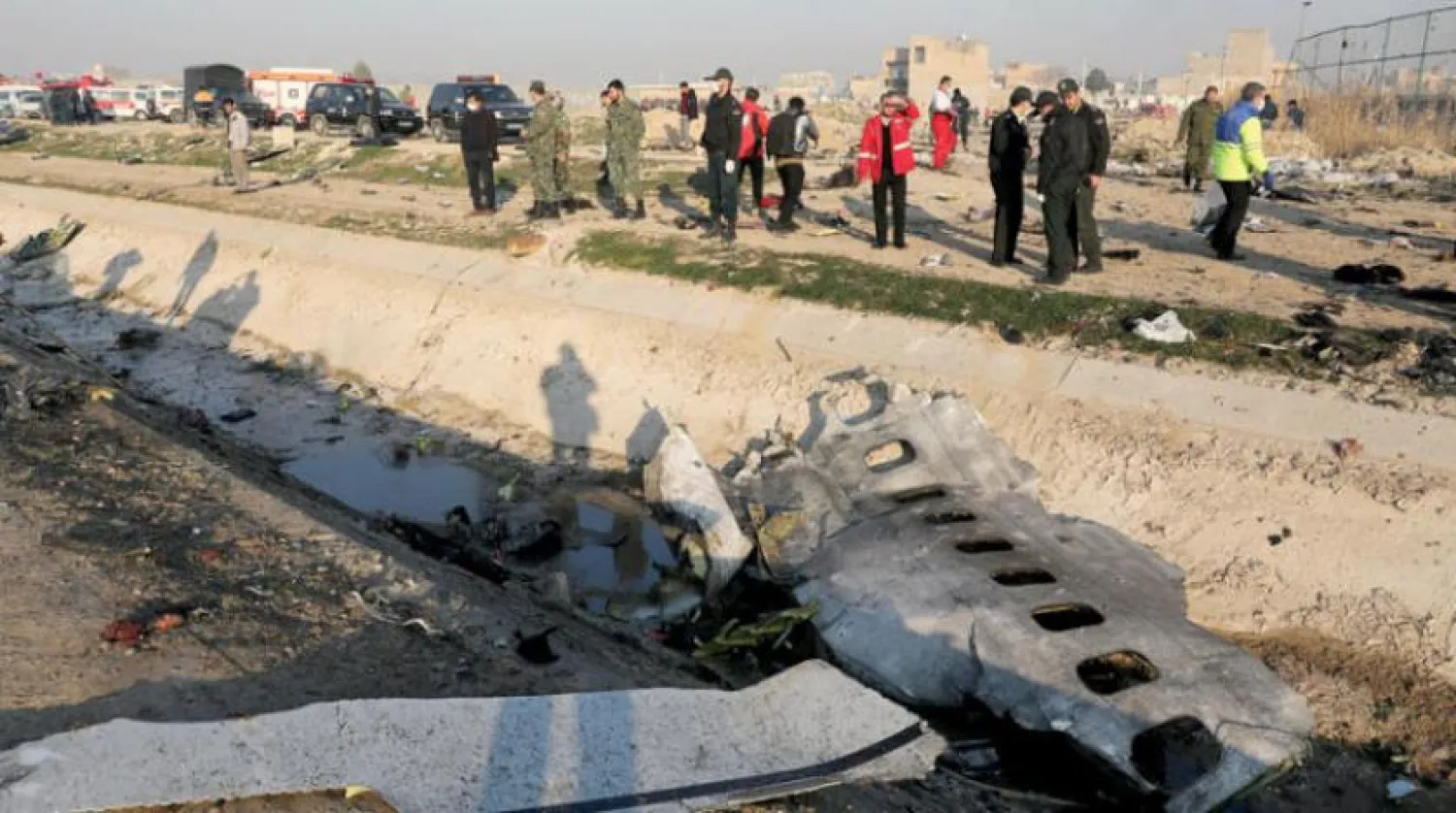
The debris of the Ukrainian plane that was shot down by Iran southwest of Tehran (AP)
TT

HRW: Ukraine Airline Victims’ Families Harassed, Abused

The debris of the Ukrainian plane that was shot down by Iran southwest of Tehran (AP)

The Human Rights Watch (HRW) reported that Iranian authorities have engaged in a campaign of harassment and abuse against families of people killed in the Iranian Revolutionary Guard’s (IRGC) downing of Ukraine International Airlines Flight 752 in January 2020.

The authorities indicted 10 people for their role in the incident but have not provided any public information about their identities, ranks, or the charges against them.

Governments participating in the Flight 752 investigation should support family members of victims in pursuing a path for justice and accountability, said HRW.

The organization interviewed 31 family members of victims and people with direct knowledge from October 2020 to January 2021. They said that Iran’s security agencies had arbitrarily detained, summoned, abusively interrogated, tortured, and otherwise mistreated victims’ family members.

The agencies also failed to return victims’ possessions to their relatives and interfered with burial and memorial gatherings in an apparent attempt to curtail efforts for accountability.

HRW deputy Middle East director Michael Page said that IRGC killed 176 people without a shred of accountability, and now Iran’s brutal security agencies are abusing victims’ family members to squash any hope for justice.

“Rather than attempting to regain people’s trust through a transparent investigation and redress for the families, the authorities are again silencing accountability efforts.”

On January 8, 2020, the Ukrainian plane was downed close to Tehran’s Imam Khomeini international airport. After several initial denials, the Armed Forces Central Command admitted on January 11 that IRGC had “mistakenly” shot down the passenger jet, killing all 176 passengers and crew on board.

Iranian authorities said that “human error” by a missile operator led to launching two surface-to-air missiles at the plane. But they did not disclose critical evidence supporting the claim and have not provided any details of their judicial investigation.

The cabinet announced that it had allocated $150,000 to compensate the family of each passenger.

On March 17, Iran’s Aircraft Accident Investigation Board published its final report on the incident in which it said, based on information provided by the military, that Iranian missiles were launched at the plane due to a 105-degree miscalibration of the launcher’s radar.

The report did not clarify inconsistencies in the Iranian government’s findings raised by various independent observers, including the UN special rapporteur on extrajudicial executions in a detailed letter to the Iranian government in December.

The foreign affairs and transport ministers of Canada, the intended destination of most of the passengers, indicated that the report makes no attempt to answer critical questions about what truly happened. “It appears incomplete and has no hard facts or evidence.”

On May 20, a Canadian court ruled in a civil lawsuit that “on the balance of probabilities, the missile attacks on Flight 752 were intentional and directly caused the deaths of all on board.”

After Iranian authorities admitted they shot down the plane, protests broke out in several Iranian cities, and security forces responded with rubber bullets, pepper spray, and tear gas.

Over the past year, courts have sentenced at least 20 people in connection with their participation in protests. At least three more participants are currently on trial.

At least 16 people said that security agencies threatened them not to participate in interviews with foreign media or had followed or summoned their relatives or friends who attended memorials and filmed those attending these events.

In some cases, security forces interrogated or detained family members for several hours, and in at least one case, the authorities tortured a person in custody.

In another case, plainclothes officers asked to meet a family member who had spoken against authorities’ conduct at a public place and threatened that person with prosecution.

Several of those interviewed said that the authorities returned important documents from the victims, but did not return any valuables, such as jewelry and electronic devices.

Videos and photos published two days after the crash show bulldozers demolishing the site before authorities had accepted responsibility for downing the plane, raising concerns that they failed to secure evidence that was then destroyed or left unusable for investigations or legal proceedings.



Rescue Teams Search for Survivors in Building Collapse that Killed at Least 2 in Northern Lebanon

A Lebanese flag is pictured, in the aftermath of a massive explosion, in Beirut's damaged port area, Lebanon August 17, 2020. REUTERS/Hannah McKay
TT

Rescue Teams Search for Survivors in Building Collapse that Killed at Least 2 in Northern Lebanon

A Lebanese flag is pictured, in the aftermath of a massive explosion, in Beirut's damaged port area, Lebanon August 17, 2020. REUTERS/Hannah McKay

At least two people were killed and four rescued from the rubble of a multistory apartment building that collapsed Sunday in the city of Tripoli in northern Lebanon, state media reported.

Rescue teams were continuing to dig through the rubble. It was not immediately clear how many people were in the building when it fell.

The bodies pulled out were of a child and a woman, the state-run National News Agency reported.

Dozens of people crowded around the site of the crater left by the collapsed building, with some shooting in the air.

The building was in the neighborhood of Bab Tabbaneh, one of the poorest areas in Lebanon’s second largest city, where residents have long complained of government neglect and shoddy infrastructure. Building collapses are not uncommon in Tripoli due to poor building standards, according to The AP news.

Lebanon’s Health Ministry announced that those injured in the collapse would receive treatment at the state’s expense.

The national syndicate for property owners in a statement called the collapse the result of “blatant negligence and shortcomings of the Lebanese state toward the safety of citizens and their housing security,” and said it is “not an isolated incident.”

The syndicate called for the government to launch a comprehensive national survey of buildings at risk of collapse.


Israel to Take More West Bank Powers and Relax Settler Land Buys

A view of Israeli settlement of Maale Adumim, in the West Bank, Sunday, June 18, 2023. (AP)
TT

Israel to Take More West Bank Powers and Relax Settler Land Buys

A view of Israeli settlement of Maale Adumim, in the West Bank, Sunday, June 18, 2023. (AP)

Israel's security cabinet approved a series of steps on Sunday that would make it easier for settlers in the occupied West Bank to buy land while granting Israeli authorities more enforcement powers over Palestinians, Israeli media reported.

The West Bank is among the territories that the Palestinians seek for a future independent state. Much of it is under Israeli military control, with limited Palestinian self-rule in some areas run by the Western-backed Palestinian Authority (PA).

Citing statements by Finance Minister Bezalel Smotrich and Defense Minister Israel Katz, Israeli news sites Ynet and Haaretz said the measures included scrapping decades-old regulations that prevent Jewish private citizens buying land in the West Bank, The AP news reported.

They were also reported to include allowing Israeli authorities to administer some religious sites, and expand supervision and enforcement in areas under PA administration in matters of environmental hazards, water offences and damage to archaeological sites.

Palestinian President Mahmoud Abbas said the new measures were dangerous, illegal and tantamount to de-facto annexation.

The Israeli ministers did not immediately respond to requests for comment.

The new measures come three days before Prime Minister Benjamin Netanyahu is scheduled to meet in Washington with US President Donald Trump.

Trump has ruled out Israeli annexation of the West Bank but his administration has not sought to curb Israel's accelerated settlement building, which the Palestinians say denies them a potential state by eating away at its territory.

Netanyahu, who is facing an election later this year, deems the establishment of any Palestinian state a security threat.

His ruling coalition includes many pro-settler members who want Israel to annex the West Bank, land captured in the 1967 Middle East war to which Israel cites biblical and historical ties.

The United Nations' highest court said in a non-binding advisory opinion in 2024 that Israel's occupation of Palestinian territories and settlements there is illegal and should be ended as soon as possible. Israel disputes this view.


Arab League Condemns Attack on Aid Convoys in Sudan

A general view shows the opening session of the meeting of Arab foreign ministers at the Arab League Headquarters (Reuters)
TT

Arab League Condemns Attack on Aid Convoys in Sudan

A general view shows the opening session of the meeting of Arab foreign ministers at the Arab League Headquarters (Reuters)

Arab League Secretary-General Ahmed Aboul Gheit strongly condemned the attack by the Rapid Support Forces on humanitarian aid convoys and relief workers in North Kordofan State, Sudan.

In a statement reported by SPA, secretary-general's spokesperson Jamal Rushdi quoted Aboul Gheit as saying the attack constitutes a war crime under international humanitarian law, which prohibits the deliberate targeting of civilians and depriving them of their means of survival.

Aboul Gheit stressed the need to hold those responsible accountable, end impunity, and ensure the full protection of civilians, humanitarian workers, and relief facilities in Sudan.