


Insect Pest Eats Into Lebanon's Pine Nut Trade

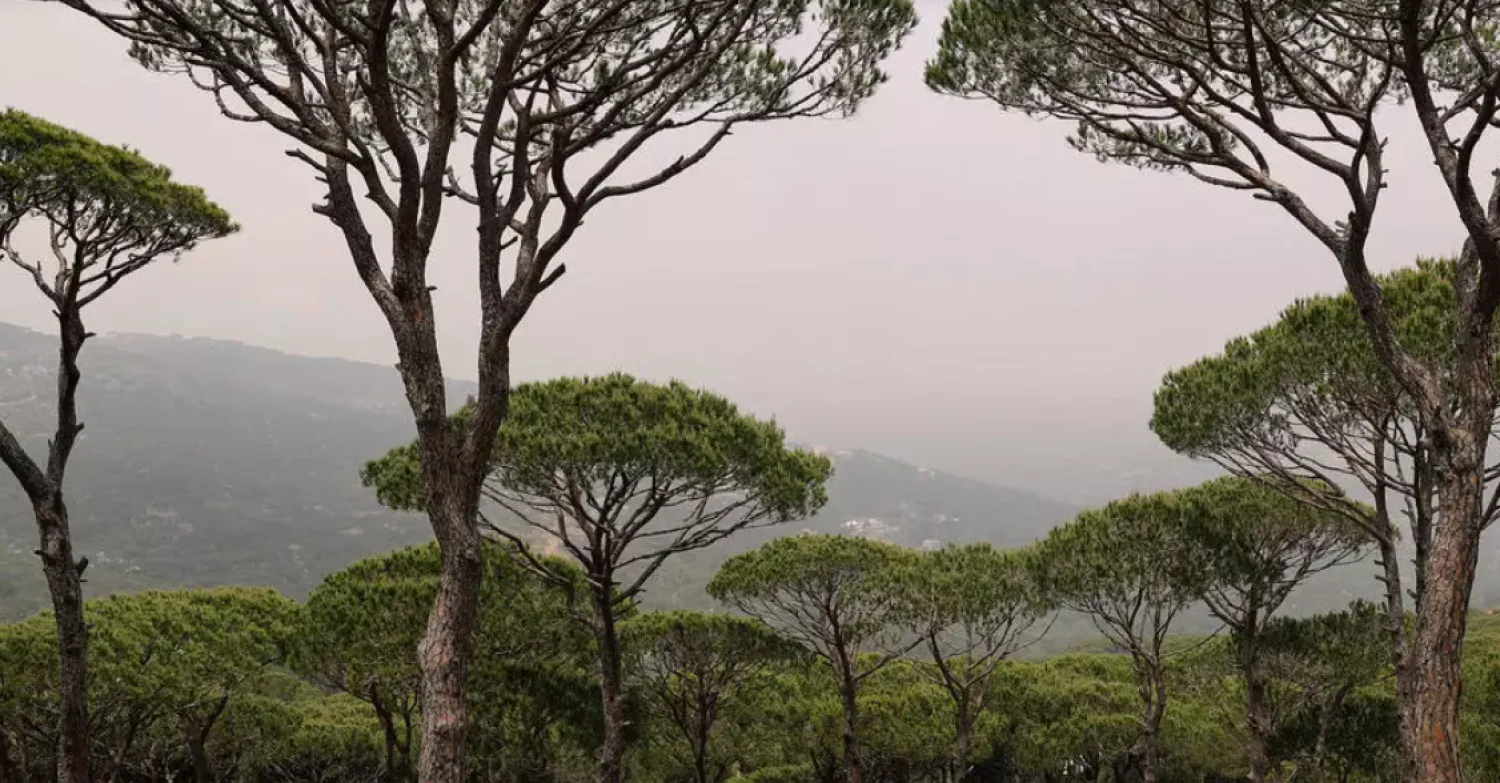
The Qsaybeh pine forest east of Beirut. AFP
TT

Insect Pest Eats Into Lebanon's Pine Nut Trade

The Qsaybeh pine forest east of Beirut. AFP

The scenic region of Mount Lebanon has long produced pine seed, a regional delicacy, but harvests have collapsed amid an exotic insect infestation experts say is accelerated by climate change.

Lebanon, wedged between the mountains and the Mediterranean Sea, is best known for the iconic cedar tree depicted on its national flag -- but it also has pine trees that make up nearly 10 percent of total forest cover.

Pine nuts harvested from their cones -- a popular ingredient in Middle Eastern cuisine -- have been dubbed "white gold" because of their traditionally lucrative sales, especially to wealthy Gulf states.
But the natural treasure trove is now under attack.

The culprit is the western conifer seed bug, native to the western United States where it is sometimes called the "stink bug", and which has spread to Eurasia, most likely by hitchhiking on timber shipments.

In the Qsaybeh pine forest east of Beirut, Elias Neaimeh, head of the syndicate of pine seed farmers, pointed to the damage it has caused: the dry, dead trunk of one pine tree, and cones scattered on the forest floor.

In a normal year in the past, Neaimeh said, "I used to produce around 16 tons of pine cones, but today I barely harvest 100 kilograms".

He used to make more than $40,000 a year from selling around 600 kilograms of white pine nuts a year, but now his income has dried up, at a time when Lebanon's deep economic crisis has plunged millions into poverty.

In Lebanon, farmers started noticing a decline in output in 2012, but it took them three more years to detect the cause.

Entomology expert Nabil Nemer identified the insect as the western conifer seed bug, or WCSB, which pierces cones to suck out sap and developing seeds.

The insect reached Turkey from Europe in 2010 before arriving in Lebanon, where it has since spread across most conifer forests.

"It is very harmful," Nemer told AFP of the pest that attacks pines, cedars and cypresses.

"We noticed that sometimes up to 10 insects feed on a single cone," said Nemer, a professor at the Holy Spirit University of Kaslik.

"When they infest small developing cones, the cones wither completely and fall to the ground."

Nemer said climate change is creating a favorable environment for the insects.

"Higher temperatures and less precipitation extends the life cycle of insects and also weakens trees," he said.

The bugs' infestation is compounded by the absence of its natural predators native to the United States, he said.

Many farmers have turned to pesticides, but Nemer warned that chemicals "could cause problems for exports and food safety".

Back in Qsaybeh, Neaimeh said that pesticides had allowed for a temporary and modest recovery in 2016 and 2017.

"There was a 30 percent decrease in the number of infested cones," he said, bringing some relief from an infestation rate of 85-90 percent.

But in the absence of a centralized pest control policy, many forests remain neglected, further devastating output.

"Today we produce no more than 200 tons of pine nuts annually across all of Lebanon," down from 1,200 tons before 2015, Neaimeh said.

This, in turn, has caused prices to skyrocket, with one kilogram (2.2 pounds) of pine nuts now selling for more than one million Lebanese pounds ($650) -- almost twice the monthly minimum wage.

The village of Bkassine southeast of Beirut is home to the biggest stand of pine trees in the region, with 100,000 trees covering around 220 hectares.

But these lush woodlands too are under threat -- from a double infestation.

Aside from the WCSB, another insect, the pine shoot beetle, which feeds and breeds beneath the tree bark, has added to the damage, said Nemer.

Bkassine mayor Habib Fares said that back in 2013, the year of the last big harvest, the municipality earned 500 million Lebanese pounds (more than $300,000) from pine seeds.

Since then output has plunged 70 percent, he said, adding that "the municipality does not have the means to deal with the crisis".

"Every year, we try to spray pesticides over a specific segment of the forest," he said, adding that such limited operations do not prevent the return of the pests.

Combating such pests is always difficult, but Lebanon's worst economic crisis in decades has made the problem a secondary concern for authorities.

Support from the agriculture ministry has declined over the past two years, say farmers.

But a solution cannot wait, and would indeed help the economic recovery, argued Nemer, saying that "the local community can benefit".

"But they may abandon their forests if the situation continues as it is. Pine nuts in Lebanon are known as white gold. We must find a solution."




Spain and Portugal Continue to Battle Storm Leonardo as New Storm Approaches

 A mountain landslide blocks railway tracks during heavy rains, as storm Leonardo hits parts of Spain, in Benaojan, Spain, February 6, 2026. (Reuters)
A mountain landslide blocks railway tracks during heavy rains, as storm Leonardo hits parts of Spain, in Benaojan, Spain, February 6, 2026. (Reuters)
TT

Spain and Portugal Continue to Battle Storm Leonardo as New Storm Approaches

 A mountain landslide blocks railway tracks during heavy rains, as storm Leonardo hits parts of Spain, in Benaojan, Spain, February 6, 2026. (Reuters)
A mountain landslide blocks railway tracks during heavy rains, as storm Leonardo hits parts of Spain, in Benaojan, Spain, February 6, 2026. (Reuters)

Storm Leonardo continued to batter the Iberian Peninsula on Friday, bringing floods and putting rivers at risk of bursting their banks while thousands of people were evacuated from their homes in Spain and Portugal.

In southern Spain's Andalusia region, some 7,000 people have had to leave their homes due to successive storms.

Among them were around 1,500 people ordered to evacuate the mountain village of Grazalema, where Andalusia's regional leader Juan Manuel Moreno warned that aquifers were "full to the brim with water,” and at risk of collapsing.

“It's raining on already saturated ground. The land is unable to drain," Moreno said. “We urge extreme caution. This is not over.”

Spanish police said Friday they had found a body located 1,000 meters (about 0.6 miles) away from where a woman had disappeared Wednesday after she fell into a river in Malaga province while trying to rescue her dog. Police said they had not yet identified the body, but believed it belonged to the 45-year-old woman.

Another storm front, Marta, was expected to arrive Saturday, with Spain's weather agency AEMET saying it would bring even more rain and heavy winds, including to areas already drenched by Storm Leonardo.

Marta is expected to affect Portugal, too.

Of particular concern was southern Spain's Guadalquivir River, which flows through Córdoba and Seville and eventually into the Atlantic Ocean, and whose water levels have dramatically risen in recent days.

Additional rain Saturday could leave many more homes at risk in Córdoba, local authorities warned.

In Portugal, parts of Alcacer do Sal were submerged after the Sado River overflowed, forcing residents to leave the city located 90 kilometers (about 56 miles) south of Lisbon.

Alerts were issued also for regions near the Tagus River due to rising water levels.

A separate storm in late January left a trail of destruction in Portugal, killing several people, according to Portuguese authorities.


AROYA Cruises Debuts Arabian Gulf Voyages for 2026

AROYA offers a curated experience featuring culturally inspired entertainment and diverse dining options - SPA
TT

AROYA Cruises Debuts Arabian Gulf Voyages for 2026

AROYA offers a curated experience featuring culturally inspired entertainment and diverse dining options - SPA

AROYA Cruises, a subsidiary of the PIF-owned Cruise Saudi, has officially launched its inaugural season in the Arabian Gulf.

Running from February 21 to May 8, the season marks a milestone in regional tourism by blending authentic Saudi hospitality with international maritime standards, SPA reported.

AROYA offers a curated experience featuring culturally inspired entertainment and diverse dining options.

The season is designed to provide guests with a dynamic way to explore the Gulf, setting a new benchmark for luxury travel that reflects the Kingdom's heritage on a global stage.


Snowstorm Brings Much of Denmark to a Halt

A car drives in heavy snow at Store Heddinge in South Zealand, Denmark, 05 February 2026.  EPA/Mads Claus Rasmussen
A car drives in heavy snow at Store Heddinge in South Zealand, Denmark, 05 February 2026. EPA/Mads Claus Rasmussen
TT

Snowstorm Brings Much of Denmark to a Halt

A car drives in heavy snow at Store Heddinge in South Zealand, Denmark, 05 February 2026.  EPA/Mads Claus Rasmussen
A car drives in heavy snow at Store Heddinge in South Zealand, Denmark, 05 February 2026. EPA/Mads Claus Rasmussen

Denmark authorities halted public transport, closed schools and cancelled flights on Friday as heavy snowfall blanketed much of the country.

The Nordic country's meteorological institute DMI warned that heavy snow would likely continue until Friday evening in the east, where the capital Copenhagen is located.

Police said people should avoid going outdoors unless necessary and stay indoors in the capital and the surrounding region.

Copenhagen's airport cancelled flights to Paris and Berlin and warned of "delay and cancellation risks because of snowy conditions." Many schools were closed.

In the second-largest city of Aarhus, bus services were cancelled.