Turkey Seeks Cooperation with Egypt on Eastern Mediterranean, Libya

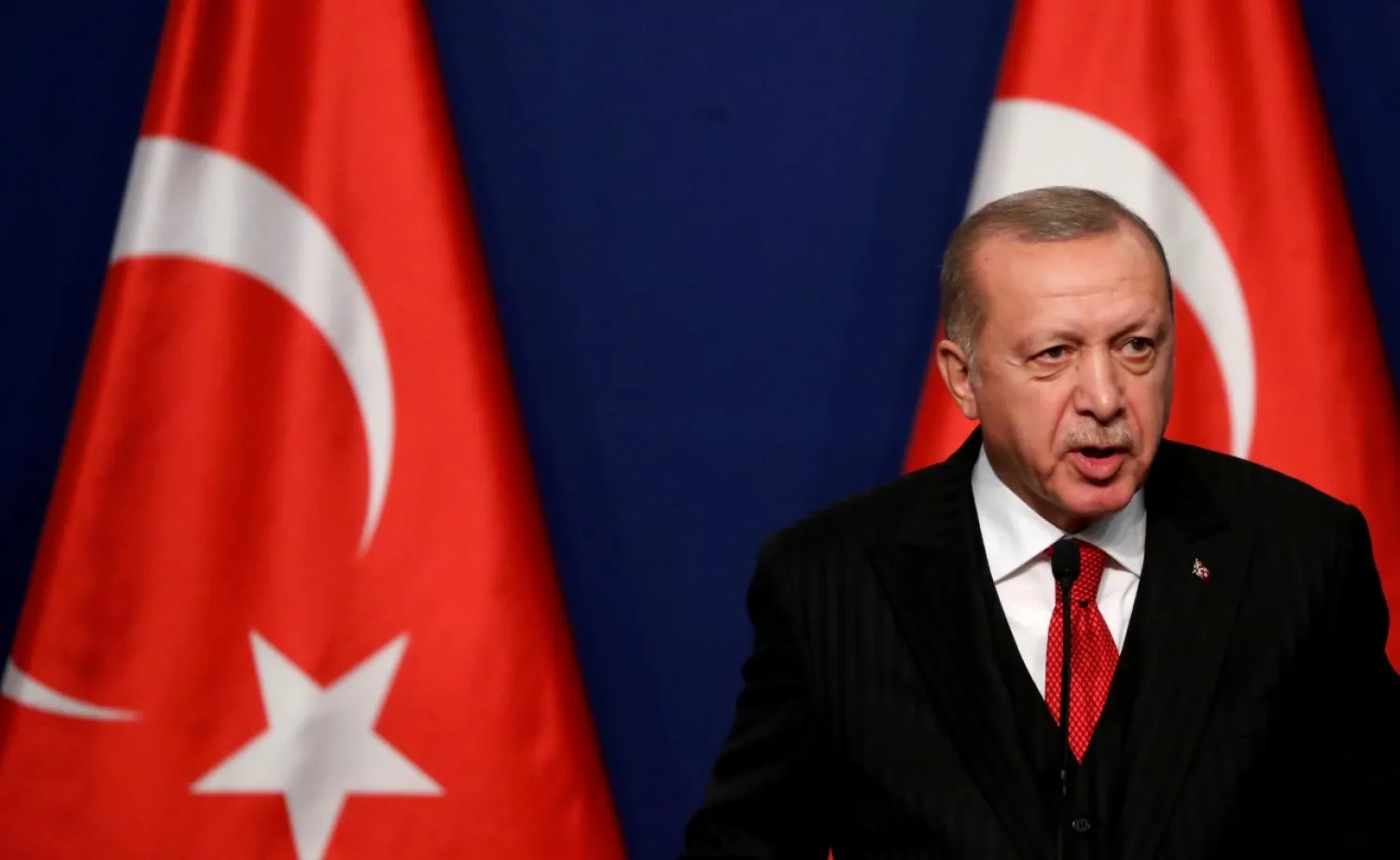
Turkish President Recep Tayyip Erdogan attends a news conference with Hungarian Prime Minister Viktor Orban (not pictured) in Budapest, Hungary November 7, 2019. REUTERS/Bernadett Szabo
TT

Turkey Seeks Cooperation with Egypt on Eastern Mediterranean, Libya

Turkish President Recep Tayyip Erdogan attends a news conference with Hungarian Prime Minister Viktor Orban (not pictured) in Budapest, Hungary November 7, 2019. REUTERS/Bernadett Szabo

Turkey has underlined the need for coordination with Egypt on several important issues, pointing to ongoing discussions aimed at improving relations between the two countries.

Spokesman for Turkey’s ruling Justice and Development Party Omer Celik said that his country and Egypt have work to do regarding bilateral relations, Libya and the Mediterranean.

The intelligence services in the two countries continue their talks on security issues, despite the rupture of relations between Ankara and Cairo, Celik said, adding: “The talks that started between our intelligence services have moved to the framework of the Ministry of Foreign Affairs. From now on, steps will be taken to enable us to focus on concrete issues through mutual discussions and consultations.”

His comments followed a meeting on Monday night of the Executive Committee of the ruling party headed by President Recep Tayyip Erdogan.

Last week, Erdogan said that his country wants to make the most of opportunities for cooperation with Egypt and to improve relations on the basis of mutual benefit.

“Our cultural relations are very strong, and we have solid historical ties with Egypt. We have great potential for cooperation in a wide range of fields, from the eastern Mediterranean to Libya,” the Turkish president stated.

He continued: “Talks that started with Egypt, first between the intelligence units on both sides, and then between officials from the two foreign ministries, have expanded and are ongoing. For us, there is no problem with the Egyptian and Turkish foreign ministers holding discussions on these issues.”

After a series of Turkish statements of rapprochement with Egypt, which were followed by contacts between the two countries’ intelligence services, a Turkish delegation headed by Deputy Foreign Minister Sedat Onal visited Cairo on May 5-6.

A joint statement noted that the discussions touched on bilateral and a number of regional issues.


Lebanese Army Steps Up Security in the South Ahead of Technical Talks with Israel

A Lebanese soldier stands at a newly established checkpoint in the southern town of Froun, which is included in the proposed pilot zone. (AP)
TT

Lebanese Army Steps Up Security in the South Ahead of Technical Talks with Israel

A Lebanese soldier stands at a newly established checkpoint in the southern town of Froun, which is included in the proposed pilot zone. (AP)

The Lebanese army has stepped up military and security measures in an area proposed for inclusion in a pilot zone in southern Lebanon, announcing deployments across towns in the districts of Bint Jbeil, Tyre and Nabatieh.

The measures come amid an Israeli military escalation and the start of construction of a line of permanent positions inside the security zone Israel occupies in southern Lebanon, Israel’s Maariv newspaper reported.

The Lebanese army said it had deployed patrols, checkpoints and observation posts in Froun, Ghandouriyeh, Qalawayh, Burj Qalawayh and Kfar Dounin in the Bint Jbeil district, as well as Qaaqaiyat al-Jisr in the Nabatieh district and Srifa in the Tyre district.

It also released photographs showing military vehicles and personnel deployed in the towns.

The measures were introduced ahead of a technical meeting scheduled to take place by video conference on Friday, with representatives of the Lebanese, Israeli and US militaries expected to discuss implementation mechanisms for the pilot zone and determine which towns it would cover.

The proposed zone could include Zawtar al-Sharqiya, which is occupied by Israel, and Zawtar al-Gharbiya, part of which is under Israeli occupation. It could also cover Froun, Ghandouriyeh, Srifa, Qalawayh and Burj Qalawayh, where Israel maintains fire control but has no forces stationed.

Airstrikes

Meanwhile, the Israeli military continued its violations of the ceasefire agreement.

Israeli warplanes carried out two strikes on Thursday afternoon targeting the outskirts of the al-Deir neighborhood in Nabatieh al-Fawqa, firing several air-to-surface missiles.

The explosions echoed across the Nabatieh area, sending thick plumes of smoke into the air.

Two people were killed in the strikes, Lebanon’s state-run National News Agency reported.

The Israeli military also set fire to several homes and plots of land on the outskirts of Beit Yahoun in the Bint Jbeil district.

Later in the afternoon, an Israeli drone carried out a guided-missile strike on the Ali al-Taher woodland on the outskirts of Nabatieh al-Fawqa.

At dawn, Israeli warplanes had also struck the outskirts of Baraachit and Beit Yahoun in the Bint Jbeil district.


Houthi Escalation Threatens Yemen's Imports, Deepens Humanitarian Crisis

Shipping disruptions threaten the flow of imports into Yemen. (Local media)
TT

Houthi Escalation Threatens Yemen's Imports, Deepens Humanitarian Crisis

Shipping disruptions threaten the flow of imports into Yemen. (Local media)

Concerns are mounting over a worsening humanitarian crisis in Yemen as renewed military escalation by the Houthis coincides with the fallout from the resumption of the war involving Iran, which has begun to disrupt trade flows and commodity supplies to the country. At the same time, the United Nations has warned of expanding hunger and a declining ability of aid agencies to respond because of severe funding shortages.

Government and commercial sources told Asharq Al-Awsat that importers are facing growing difficulties in delivering shipments to Yemen as disruptions to regional maritime traffic persist.

The sources said hundreds of containers have remained stranded at regional ports for months due to disruptions affecting shipping routes linked to the Strait of Hormuz, while concerns are growing over delays to new shipments and further increases in freight costs.

The situation is directly affecting commodity prices in a country that relies on imports for about 90 percent of its food needs, at a time when Yemenis are already grappling with declining purchasing power, currency depreciation, and rising poverty.

According to the sources, prices of several essential goods rose by more than 20 percent during the first round of the war. Price increases were even steeper in Houthi-controlled areas after the group imposed customs duties exceeding 100 percent on wheat and flour shipments entering through government-controlled ports. The measures drove up flour prices, despite flour being the main staple for most Yemenis, particularly in the country's mountainous governorates.

UN Warnings

These developments come as the United Nations says Yemen continues to face one of the world's worst humanitarian crises amid the ongoing conflict, worsening economic conditions, and expanding food insecurity.

According to a recent UN report, the continuation of the conflict, declining funding, deteriorating infrastructure, and rising import costs are pushing millions of Yemenis toward deeper poverty and hunger unless additional resources are secured to sustain humanitarian operations.

The report said 18.3 million people are experiencing acute food insecurity, with more districts expected to slip into the emergency phase of food insecurity and some areas facing catastrophic levels of hunger.

It also estimated that 22.3 million people, more than two-thirds of Yemen's population—will require humanitarian assistance and protection services this year, including 5.2 million internally displaced people, as well as migrants, refugees, and asylum seekers.

Funding Shortfall

The United Nations warned that Yemen's humanitarian response is facing an unprecedented funding crisis. As of the end of May, only 12.7 percent of the $2.16 billion required under the 2026 Humanitarian Response Plan had been secured, forcing aid agencies to scale back operations and focus assistance on those with the most urgent needs.

The report said children and women remain the hardest-hit groups. It projected that 2.2 million children under the age of five will suffer from acute malnutrition, including more than 500,000 with severe acute malnutrition. Another 1.3 million pregnant and breastfeeding women are also expected to face malnutrition.

The UN report added that around 40 percent of Yemen's health facilities are either completely or partially out of service. It warned that continued outbreaks of cholera, measles, and diphtheria, coupled with deteriorating water and sanitation services, are increasing the risk of large-scale public health emergencies. Meanwhile, 14.4 million people require water, sanitation, and hygiene (WASH) services.


Israeli Families Move into New West Bank Settlement Near Nablus

06 May 2026, Palestinian Territories, Sa-Nur: An aerial view shows rebuilt structures at the Sa-Nur settlement south of Jenin in the Israeli-occupied West Bank. Photo: Gil Cohen-Magen/dpa
TT

Israeli Families Move into New West Bank Settlement Near Nablus

06 May 2026, Palestinian Territories, Sa-Nur: An aerial view shows rebuilt structures at the Sa-Nur settlement south of Jenin in the Israeli-occupied West Bank. Photo: Gil Cohen-Magen/dpa

Israeli families moved into a new settlement on a mountain towering over the city of Nablus in the occupied West Bank on Thursday, the settler regional council for the area said.

"This morning, families from the Ebal founding group are transferring their equipment and moving into caravans in the new Ebal settlement, established in Samaria," the Samaria Regional Council said, using the Biblical name for the north of the West Bank.

Excluding east Jerusalem, more than 500,000 Israelis live in settlements in the West Bank, which Israel has occupied since 1967, among some three million Palestinians.

All Israeli settlements are illegal under international law.

In a video shared by the council, a dozen Israeli settlers were seen carrying moving boxes and furniture into mobile-homes typical of new settlements.

A newly paved road lined with Israeli flags on the mountain was lined with around 10 mobile homes.

Mount Ebal is one of the highest peaks in the West Bank. In the valley below, residents of Nablus' Old City told AFP they could see the settlement's homes.

"Palestinian citizens used to go to Mount Ebal to stroll and breathe fresh air, but today they have cut off our air by encircling Nablus from all sides with settlements and attacks," said Ghassan Daghlas, governor of the Nablus region.

He said that a military camp and parts of a settlement on the other mountain near Nablus, Mount Gerizim, had already made Palestinian residents feel encircled.

Samaria Regional Council head Yossi Dagan said that 600 families were expected to live at Ebal settlement in the future.

"We are establishing here a thriving settlement that will illuminate the entire region, and this is a huge step on the way toward expanding our presence throughout the northern Samaria area," Dagan said at the site.

Since taking office, Prime Minister Benjamin Netanyahu's government, one of the most right-wing in the country's history, has approved the establishment of 102 settlements in the West Bank, according to Israeli anti-settlement watchdog Peace Now.