


Ex-Mossad Chief Signals Israel Behind Recent Iran Nuclear Attacks

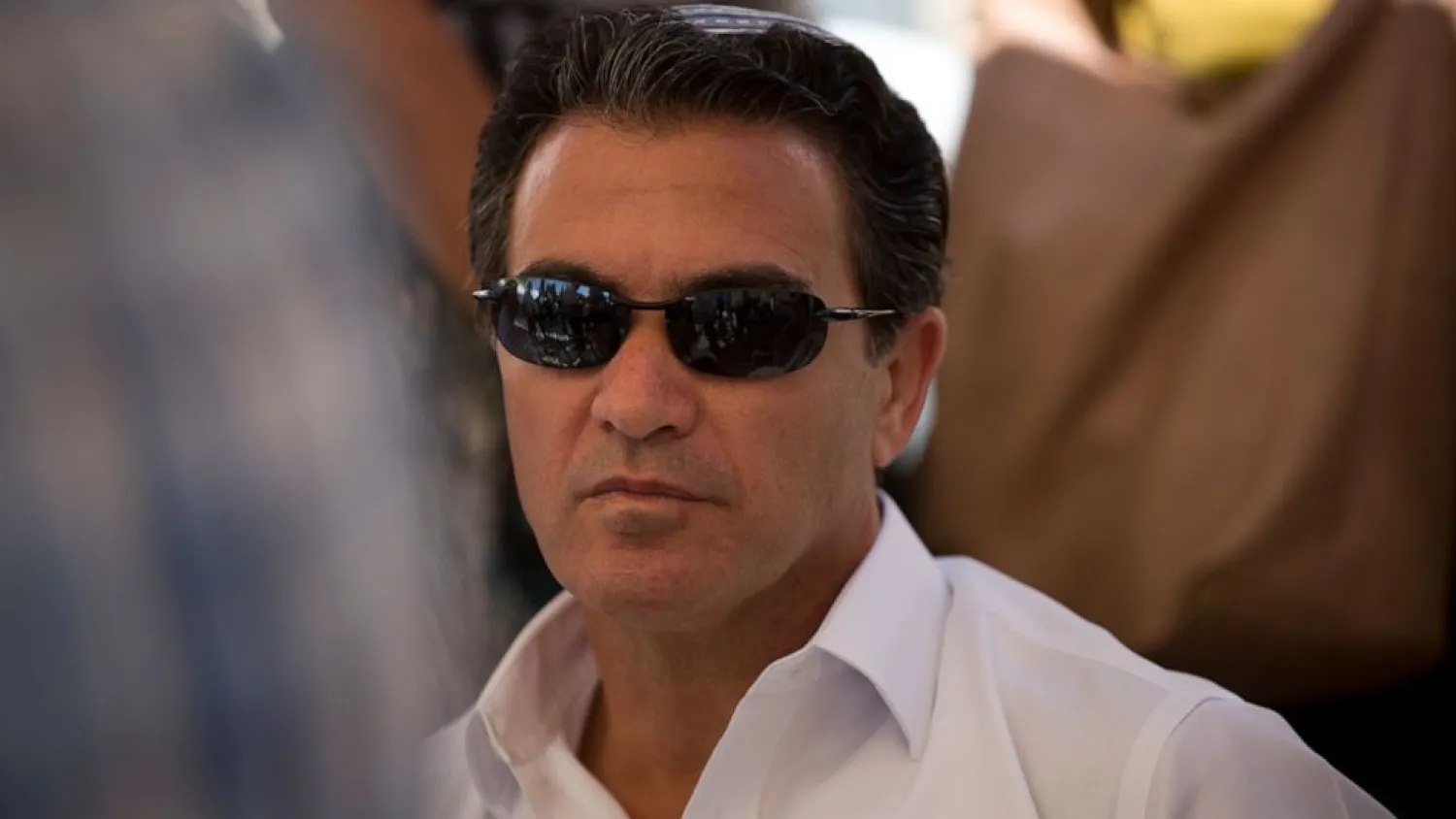
FILE - In this July 3, 2016, file photo, Yossi Cohen, then the director of Israel's Mossad intelligence agency, attends the funeral in Jerusalem of a rabbi killed by Palestinian gunmen. (AP Photo/Oded Balilty, File)
TT

Ex-Mossad Chief Signals Israel Behind Recent Iran Nuclear Attacks

FILE - In this July 3, 2016, file photo, Yossi Cohen, then the director of Israel's Mossad intelligence agency, attends the funeral in Jerusalem of a rabbi killed by Palestinian gunmen. (AP Photo/Oded Balilty, File)

The outgoing chief of Israel's Mossad intelligence service has offered the closest acknowledgment yet his country was behind recent attacks targeting Iran's nuclear program and a military scientist, The Associated Press reported.

The comments by Yossi Cohen, speaking to Israel's Channel 12 investigative program “Uvda” in a segment aired Thursday night, offered an extraordinary debriefing by the head of the typically secretive agency in what appears to be the final days of Prime Minister Benjamin Netanyahu's rule.

It also gave a clear warning to other scientists in Iran's nuclear program that they too could become targets for assassination even as diplomats in Vienna try to negotiate terms to try to salvage its atomic accord with world powers.

“If the scientist is willing to change career and will not hurt us anymore, than yes, sometimes we offer them" a way out, Cohen said.

Among the major attacks to target Iran, none have struck deeper than two explosions over the last year at its Natanz nuclear facility. There, centrifuges enrich uranium from an underground hall designed to protect them from airstrikes.

In July 2020, a mysterious explosion tore apart Natanz's advanced centrifuge assembly, which Iran later blamed on Israel. Then in April of this year, another blast tore apart one of its underground enrichment halls.

Discussing Natanz, the interviewer asked Cohen where he'd take them if they could travel there, he said “to the cellar" where “the centrifuges used to spin.”

“It doesn't look like it used to look,” he added.

Cohen did not directly claim the attacks, but his specificity offered the closest acknowledgement yet of an Israeli hand in the attacks. The interviewer, journalist Ilan Dayan, also seemingly offered a detailed description in a voiceover of how Israel snuck the explosives into Natanz's underground halls.

“The man who was responsible for these explosions, it becomes clear, made sure to supply to the Iranians the marble foundation on which the centrifuges are placed,” Dayan said. "As they install this foundation within the Natanz facility, they have no idea that it already includes an enormous amount of explosives.”

They also discussed the November killing of Mohsen Fakhrizadeh, an Iranian scientist who began Tehran's military nuclear program decades ago. US intelligence agencies and the International Atomic Energy Agency believe Iran abandoned that organized effort at seeking a nuclear weapon in 2003. Iran long has maintained its program is peaceful.

While Cohen on camera doesn't claim the killing, Dayan in the segment described Cohen as having "personally signed off on the entire campaign.” Dayan also described how a remotely operated machine gun fixed to a pickup truck killed Fakhrizadeh and later self-destructed.

Cohen described an Israeli effort to dissuade Iranian scientists from taking part in the program, which had seen some abandon their work after being warned, even indirectly, by Israel. Asked by the interviewer if the scientists understood the implications if they didn't stop, Cohen said: “They see their friends.”

They also talked about Israel's operation seizing archival documents from Iran's military nuclear program. Dayan said 20 agents, none Israelis, seized material from 32 safes, then scanned and transmitted a large portion of the documents. Cohen confirmed that the Mossad received most of the material before it was physically taken out of Iran.

Cohen defended Prime Minister Benjamin Netanyahu's decision to go public with the results of the operation, going against a long-standing practice of secrecy involving Mossad activities.

“It was important to us that the world will see this, but this thing should also resonate with the Iranian leadership, to tell them, ‘Dear friends: One, you have been infiltrated. Two, we see you.. Three, the era of ... lies is over,'” Cohen said.

Media in Israel operate under a decades-old policy that requires journalists to clear stories involving security matters through military censors. That Cohen's remarks apparently cleared the censors suggests Israel wanted to issue a new warning to Iran amid the Vienna nuclear negotiations.

Iran has repeatedly complained about Israel's attacks, with Iran's ambassador to the IAEA Kazem Gharibabadi warning as recently as Thursday that the incidents “not only will be responded to decisively, but also certainly leave no option for Iran but to reconsider its transparency measures and cooperation policy.”

Iran's mission to the United Nations did not immediately respond to a request for comment over the comments by Cohen, who was replaced by former operative David Barnea. Cohen in the interview acknowledged he might one day seek the prime minister's office himself.



Russia: Man Suspected of Shooting Top General Detained in Dubai

An investigator works outside a residential building where the assassination attempt on Russian Lieutenant General Vladimir Alexeyev took place in Moscow, Russia February 6, 2026. REUTERS/Anastasia Barashkova
TT

Russia: Man Suspected of Shooting Top General Detained in Dubai

An investigator works outside a residential building where the assassination attempt on Russian Lieutenant General Vladimir Alexeyev took place in Moscow, Russia February 6, 2026. REUTERS/Anastasia Barashkova

Russia's Federal Security Service (FSB) said on Sunday that the man suspected of shooting top Russian military intelligence officer Vladimir Alexeyev in Moscow has been detained in Dubai and handed over to Russia.

Lieutenant General Vladimir Alexeyev, deputy head of the GRU, ⁠Russia's military intelligence arm, was shot several times in an apartment block in Moscow on Friday, investigators said. He underwent surgery after the shooting, Russian media ⁠said.

The FSB said a Russian citizen named Lyubomir Korba was detained in Dubai on suspicion of carrying out the shooting.

Russian Foreign Minister Sergei Lavrov accused Ukraine of being behind the assassination attempt, which he said was designed to sabotage peace talks. ⁠Ukraine said it had nothing to do with the shooting.

Alexeyev's boss, Admiral Igor Kostyukov, the head of the GRU, has been leading Russia's delegation in negotiations with Ukraine in Abu Dhabi on security-related aspects of a potential peace deal.


Factory Explosion Kills 8 in Northern China

Employees work on an electric vehicle (EV) production line at the Volkswagen Anhui factory in Hefei, Anhui province, China, February 4, 2026. REUTERS/Florence Lo
TT

Factory Explosion Kills 8 in Northern China

Employees work on an electric vehicle (EV) production line at the Volkswagen Anhui factory in Hefei, Anhui province, China, February 4, 2026. REUTERS/Florence Lo

An explosion at a biotech factory in northern China has killed eight people, Chinese state media reported Sunday, increasing the total number of fatalities by one.

State news agency Xinhua had previously reported that seven people died and one person was missing after the Saturday morning explosion at the Jiapeng biotech company in Shanxi province, citing local authorities.

Later, Xinhua said eight were dead, adding that the firm's legal representative had been taken into custody.

The company is located in Shanyin County, about 400 kilometers west of Beijing, AFP reported.

Xinhua said clean-up operations were ongoing, noting that reporters observed dark yellow smoke emanating from the site of the explosion.

Authorities have established a team to investigate the cause of the blast, the report added.

Industrial accidents are common in China due to lax safety standards.
In late January, an explosion at a steel factory in the neighboring province of Inner Mongolia left at least nine people dead.


Iran Warns Will Not Give Up Enrichment Despite US War Threat

Traffic moves through a street in Tehran on February 7, 2026. (Photo by ATTA KENARE / AFP)
TT

Iran Warns Will Not Give Up Enrichment Despite US War Threat

Traffic moves through a street in Tehran on February 7, 2026. (Photo by ATTA KENARE / AFP)

Iran will never surrender the right to enrich uranium, even if war "is imposed on us,” its foreign minister said Sunday, defying pressure from Washington.

"Iran has paid a very heavy price for its peaceful nuclear program and for uranium enrichment," Abbas Araghchi told a forum in Tehran.

"Why do we insist so much on enrichment and refuse to give it up even if a war is imposed on us? Because no one has the right to dictate our behavior," he said, two days after he met US envoy Steve Witkoff in Oman.

The foreign minister also declared that his country was not intimidated by the US naval deployment in the Gulf.

"Their military deployment in the region does not scare us," Araghchi said.