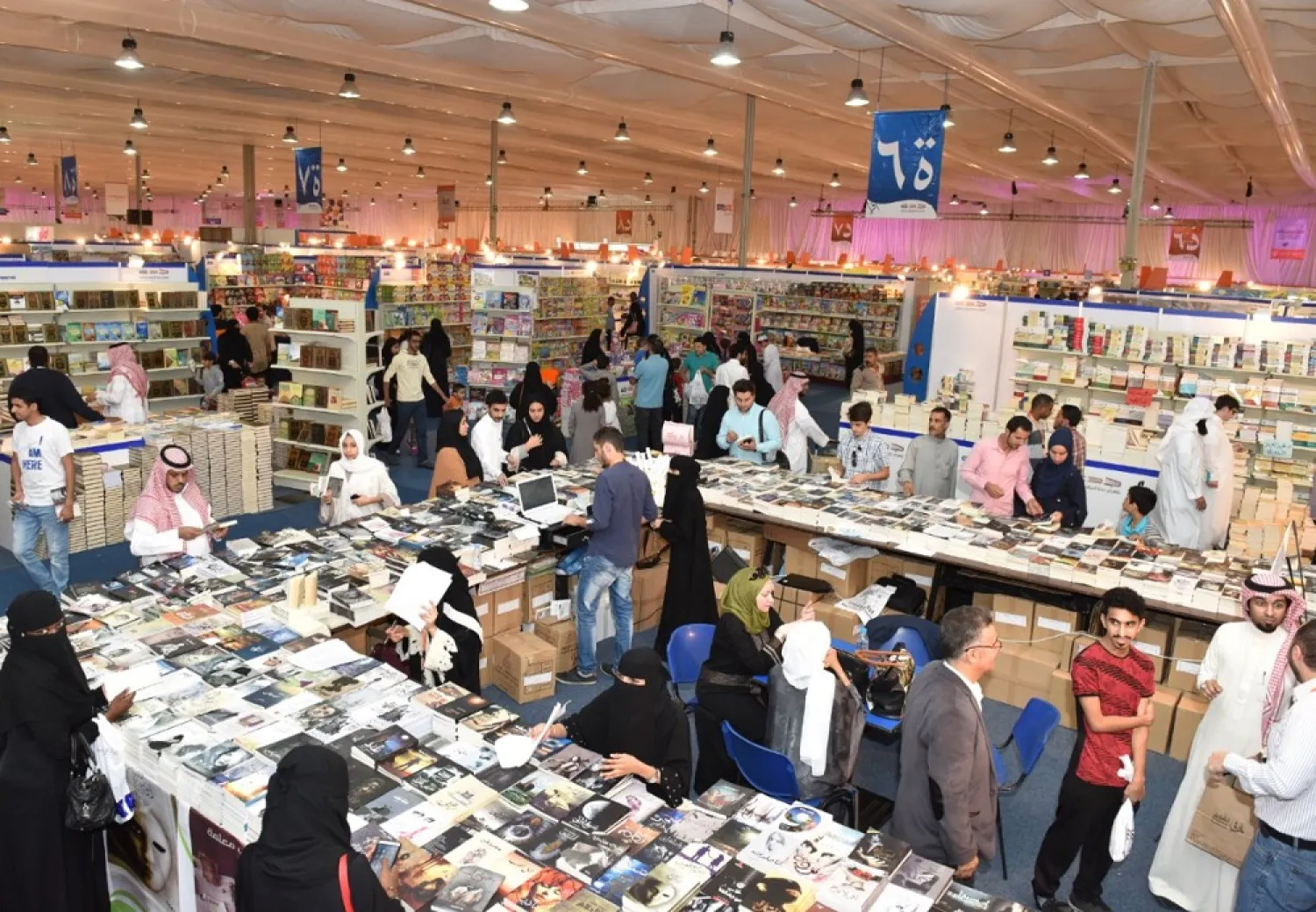

Saudi Arabia has ended the complex censorship on books in response to many publishers, writers, and cultural enthusiasts who have requested and awaited this decision for decades. The Kingdom has launched the direct release service for the written content including books, e-books, and publications. The requests for the release services are estimated at 61 percent abroad, and 39 percent locally.
The General Commission for Audiovisual Media (GCAM) announced on June 19, that according to the new decision, all the books, publications and written content will be accessible in the country right after their issue.
GCAM said in its statement that “Saudi Arabia is among the first countries in the region to provide the direct release service for the written content in the private sector. The beneficiaries can apply for a direct release of a foreign publication via the commission's platform dedicated to electronic permissions, provided that they abide by the required terms and conditions. The new service covers the traditional and e-books.”
The commission expected the direct releases in the first year of the service launch to hit 300,000 titles, stressing that the speed of release will allow everyone to access the publications on time, once they are issued. It also suggested that the new amendments will positively affect the e-trade and publishing sectors, in addition to facilitating the release process for writers, publishers, and distributors, and shortening the waiting period. It will also encourage investors to engage in the writing, publishing, and distribution industry, as well as boosting the e-book trade sector, and enriching the Saudi distribution outlets with unique contents right after their release. The decision will provide a direct support for the Saudi publishing houses, which have long suffered from unequal competition, as well as putting an end to content hacking, fraud and infiltration of users to global stores.
Asharq Al-Awsat explored the opinions of some publishers, and writers inside and outside Saudi Arabia about the news. They hailed the new unprecedented decision, but also called for a new mechanism that unifies the concerned authorities and publishing permissions in order to facilitate the direct release procedures without bureaucracy, and multiple permission authorities, which usually complicate and prolong the release process.
Dr. Mohammed al-Mushawah, founder and manager of Al Thuluthia publishing house in Riyadh, said publishers and writers should be given the right to publish.
“The decision taken by the Ministry of Media to approve the direct release of e-books, and facilitate its procedures is a major step that we, as publishers, have awaited for years. It is known among readers, publishers, and writers that the publishing releases are the hardest step in many countries,” he added.
“The old publishing system that gave the ministry all the provisions to give the releases for books printed inside and outside the country, the tough restrictions, and long release process, have pushed many writers away from the industry despite the changes that took place in the past two years,” he stated.
“Today, we call the ministry to adopt new publishing mechanisms that meet the great technological developments in Saudi Arabia. It is also important to consider and apply the distant censorship, as long as the writer and publisher pledge to handle the consequences of their works,” he continued.
“The direct release permissions that were given to some publishers lately, according to the ministry, will contribute to alleviating responsibilities on censorship authorities. We know that the concerned censorship bodies including the ministry of media are linked to tens of other authorities like Dar al-Iftaa, the Health Ministry, and King Abdulaziz Foundation for Research and Archives, and each gives the permissions according to its specialty,” he noted.
“I believe that this structure should be reviewed, and the direct release for writers and publishers should be enabled, as long as they can handle their responsibilities.”
“It's also important to shed lights on another experience, the literary clubs, which are not subject to censorship, their books don't need the media ministry's permission, and can benefit from the so-called distant censorship of books,” al-Mushawah said.
“We believe this step would have a great effect on the Saudi publishing market, considered the biggest in the Arab world despite the obstacles. We hope the media ministry to consider further updates for the censorship system, and to reach a happy ending for the book censorship matter, whether for local or foreign publications, and for the traditional and e-books, so we can keep up with this huge developing industry. The distant censorship should be activated, accompanied with a legal accountability,” he stressed.
“We live in a state of institutions and law, and it's urgent to ease the responsibilities on some authorities, instead of having to present each new title to tens of authorities for review.”
Mohammad al-Farih, manager of Al Abikan House for publishing and translation, hailed the ministry’s decision as “very good news.”
“It is daring and advanced, and will definitely lead to significant leap when it comes to cutting the former long procedures. However, the decision is still incomplete, and does not fulfill the aspirations of Saudi publishers and distributors, especially regarding changing the current form and methods of release procedures, which take weeks sometimes, and could interfere with the provisions of other sectors, which increases the complexity and time of getting a release,” he remarked.
“I totally believe that the update, renewal, replacement of some traditional systems, and conveying advancement is no more a luxury, but a duty that must be accomplished in line with our accelerating time. There is no more room for the same old thinking that consumed the time and efforts of publishers, observers, and the media ministry's employees,” he added.
“Some publishers, distributors, and workers in the writing and publishing industry may agree with me when I say that carrying out a pyramidal change to the publishing system is the best and most efficient solution to meet this age's needs. The responsibility of censorship in this field should be attributed to publishers and the industry workers alone, while focusing the role of government institutions and decision makers on law making, legislation, and monitoring to keep up with the digital age.”
“We must have the necessary legislations for the management, permission, and publishing of all types of digital books, in addition to the content targeting people with special needs, like those with visual impairments,” he urged.
“These types of books have become widespread in our age, but still don't have clear permission terms in the ministry's system and regulations. We hope the recent decision, which is very important, to be followed by other decisions that support and boost the publishing, translation, writing, and distribution movement, which has long suffered between the hammer of piracy and the anvil of distribution.”
Researcher and historian Dr. Badr bin Saleh al-Wahiby, who boasts many documented writings, and had to live many permission battles to publish his works, saw that cancelling pre-censorship on books is not sufficient in light of the Saudi Vision 2030.
Release permissions should be attributed to publishing houses instead of the many authorities that handle this responsibility today, because it would help writers, and publishers, and avoid the lost and wasted opportunities, he explained. Such a measure would also boost the publishing market in Saudi Arabia, and book fairs.
Rabih Kesserwan, founder and general manager of “Al Maaref Forum” in Beirut, said the decision to update censorship on books could lead to a renaissance in the publishing industry in the Kingdom.
“Making the mission easier and more accessible will encourage writers towards more productions, as they won't be waiting long to see their works in the markets. In the past, Saudi writers had to publish their works outside the Kingdom, send them to Saudi Arabia through a foreign publisher, and then a local distributor present them for censorship and review, and walk a long legal path before the book reaches the Saudi reader.”
“The increases of local works in cooperation with Saudi publishers will definitely double the number of published books inside the Kingdom, and would have a bigger effect, as it would motivate more writers to engage. The more the publishing sector prospers, the more the writers work, and so on.”