


For War-Scarred Iraq, Climate Crisis the Next Great Threat

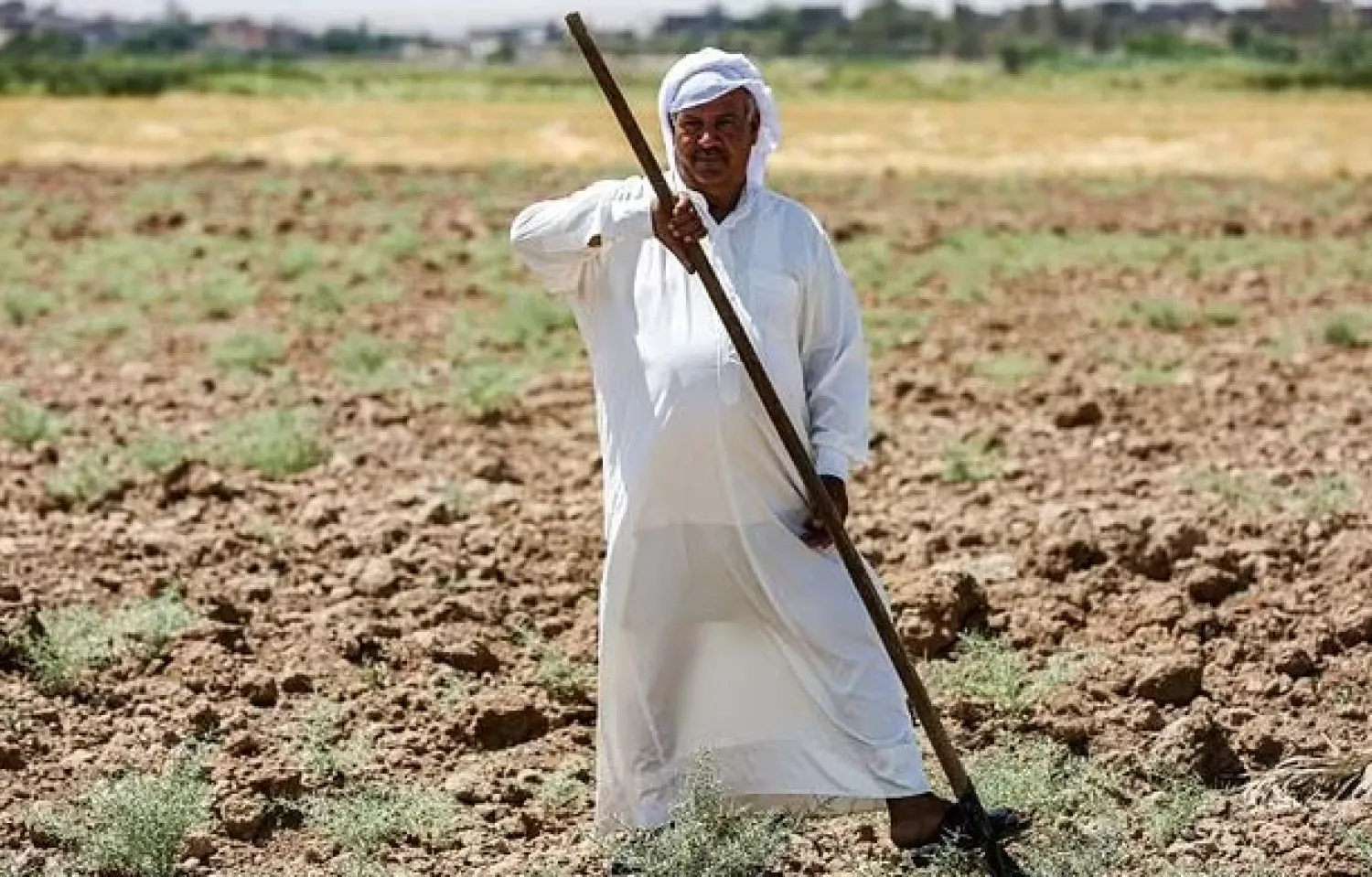
An Iraqi farmer in a parched field in the Khanaqin area, north of Diyala, in eastern Iraq - AFP
TT

For War-Scarred Iraq, Climate Crisis the Next Great Threat

An Iraqi farmer in a parched field in the Khanaqin area, north of Diyala, in eastern Iraq - AFP

As Iraq bakes in the blistering summer heat, its hardscrabble farmers and livestock herders are battling severe water shortages that are killing their animals, fields and way of life.

The oil-rich country, scarred by wars and insurgencies over the past four decades, is also one of the world's most vulnerable to climate change and struggles with a host of other environmental challenges.

Upstream dams in Turkey and Iran have diminished the Tigris and Euphrates rivers, which are also heavily polluted with sewage, waste and agricultural runoff as they flow southeast through Iraq, AFP reported.

Drought has hit the Mesopotamian marshes, said to be the site of the biblical Garden of Eden, where water buffalos and their owners once found respite from summer heat above 50 degrees Celsius (122 degrees Fahrenheit).

"Everything we plant dies: the palm trees and the alfalfa which normally tolerates salt water," said Rafiq Taufiq, a farmer in the southern riverside city of Basra.

The saline water encroaching ever further upstream has already destroyed thousands of hectares of farmland.

This year, the trend has worsened again, said Alaa al-Badran, an agricultural engineer in Basra province.

"For the first time the salt entered as early as April, the start of the farming season," he said.

- 'Risk of displacement' -

The problems are exacerbated as decades of military conflict, neglect and corruption have destroyed irrigation systems and water treatment plants.

According to the United Nations, only 3.5 percent of Iraq's farmlands are watered with irrigation systems.

Rivers are meanwhile often polluted with viruses and bacteria, oil spills and industrial chemicals.

In Basra, where freshwater canals are clogged with garbage, more than 100,000 people were hospitalized in 2018 after drinking water polluted with sewage and toxic waste.

The heat and the water shortages have been a blow to Iraq's agricultural sector, which accounts for five percent of the economy and 20 percent of jobs, but provides only half of the food needs of Iraq, which relies heavily on cheap imports.

In a nation of 40 million people, "seven million Iraqis have already been affected by the drought and the risks of displacement that it entails," President Barham Saleh wrote recently.

In Chibayish, in Iraq's marshlands, buffalo herder Ali Jasseb said he now has to travel great distances to keep the animals producing milk, his family's only income.

"Every two or three months, we have to travel to find water," he told AFP. "Because if the buffaloes drink salty water, they get poisoned, they stop producing milk and sometimes they die."

Raad Hmeid, another buffalo herder, pointed to the sun-cracked ground below his feet.

"Until 10 days ago this was mud, there was water and even greenery," he told AFP.

- Years of drought -

In Iraq's east, cereal farmer Abderrazzaq Qader, 45, said he had seen no rain "for four years" on his 38 hectare (94 acre) farm in Khanaqin near the Iranian border.

The years of drought, he said, had led many local farmers to abandon the land to take jobs as laborers.

In total, "69 percent of agricultural land is threatened with desertification, meaning it is being rendered unfit for cultivation," Sarmad Kamel, a state forestry official working on the issue, told AFP.

Iraq's agricultural lands are shrinking further as farmers are selling their unprofitable plots to developers, said economist Ahmed Saddam.

"On the one hand, there is more and more demand for housing, while on the other hand cultivating land no longer creates sufficient income," he said.

Rather than continue their back-breaking work for little pay, many farmers near Basra have sold their plots, often for "between 25,000 and 70,000 euros ... huge figures for farmers," he says.

At this rate, "every year, 10 percent of agricultural land disappears to become residential areas", he added.

This accelerates a rural exodus into towns and big cities, piling huge pressure on the economic, social and environmental fabric of life in Iraq.

There is little respite in sight, warned Saleh in a recent statement that said "climate projections for Iraq foresee a rise of about two degrees celsius, and a drop in rainfall of nine percent by 2050".

Another worrying projection says that, by mid-century, Iraq's population will have doubled to 80 million.



'I Thought I Would Perish': Everest Survivor Recounts Ordeal

Medics and rescuers carry mountaineer Dawa Sherpa upon his arrival at the HAMS Hospital in Kathmandu on June 4, 2026. (Photo by PRABIN RANABHAT / AFP)
TT

'I Thought I Would Perish': Everest Survivor Recounts Ordeal

Medics and rescuers carry mountaineer Dawa Sherpa upon his arrival at the HAMS Hospital in Kathmandu on June 4, 2026. (Photo by PRABIN RANABHAT / AFP)

A Nepali mountaineer who survived nearly a week on Mount Everest said he "chewed ice" to stay alive, as he recovered in a hospital after a miraculous rescue that stunned the climbing community.

Dawa Sherpa, 57, disappeared in brutal conditions on the upper slopes of the world's tallest mountain on May 30 during one of the final climbs of the spring season.

With few climbers still on the peak and his oxygen exhausted, relatives had given up hope and begun ritual mourning prayers, believing he had died on the mountain.

"I didn't think I would be alive," he told BBC Nepali on Friday from his hospital bed.

"I thought I would perish this way. I didn't get lost. As the oxygen ran out, I fell behind. After the oxygen finished, I couldn't walk."

Left stranded in freezing temperatures near Everest's "death zone", where oxygen levels are critically low, Dawa Sherpa said he survived for days with almost no food or water.

"I didn't eat anything for the first two days. Then I began chewing ice. It hurt my teeth. I chewed the ice hard," AFP quoted him as saying.

He survived on a few chocolates and snacks he found in his pockets.

"I soaked them in water and had them," he said.

Dawa Sherpa, also known as "Hillary" after legendary climber Edmund Hillary, had told others after his rescue that at one point he fell into a crevasse before managing to climb out.

"Stepping on the snow, I stood up and looked above... It felt I could get out from there," he said.

"I then looked for ropes and found one. Then I held on to it and walked... eventually I came down."

He said he walked day and night towards base camp until finally encountering people almost a week later.

He was found crawling towards the base camp on the morning of June 4 by the Sagarmatha Pollution Control Committee (SPCC), a Nepali team that helps set routes on Everest and clean up waste left behind.

"Boys from SPCC were going up to collect the waste. I met them. They carried me down."

He was flown to Kathmandu for treatment for frostbite, severe dehydration and a fractured thigh bone, doctors said.

"He is doing well. We had a chat," his daughter Mendo Lhamu Sherpa told AFP.

His survival has sparked celebration among fellow climbers, but also anger from family members who accused rescue teams of failing to locate him sooner.

Nepal Mountaineering Association President Fur Gelje Sherpa called the survival extraordinary but said the incident highlighted serious concerns over climber safety.

"It is irresponsible and inhumane to leave a person behind," he said. "I believe that an investigation committee must be formed to hold the responsible people accountable for this."

Everest guide Rinji Sherpa, who comes from the same village as Dawa Sherpa, said the climber was highly experienced and familiar with the dangers of high-altitude mountaineering.

"He is very lucky, he has had several close calls before but he has survived," he said.

At least five climbers -- two Indians and three Nepalis -- died during this year's Everest season.

More than 1,000 climbers reached Everest's summit this season, according to preliminary Nepali government figures, making it the busiest season on record.


Shark Attack Kills Man Off Western Australia Coast

A shark swims close to a diving cage during a shark cage diving experience off the coast of Gansbaai, Western Cape, South Africa, May 15, 2026. REUTERS/Esa Alexander
TT

Shark Attack Kills Man Off Western Australia Coast

A shark swims close to a diving cage during a shark cage diving experience off the coast of Gansbaai, Western Cape, South Africa, May 15, 2026. REUTERS/Esa Alexander

A man has died after being attacked by a shark while fishing off the coast of Western Australia state, police said on Saturday, the third fatal shark attack in Australia in three weeks.

The 35-year-old was attacked on Saturday morning while spearfishing with family off the state's south coast at Michaelmas Island, close to ⁠the town of ⁠Albany, about 388 km (241 miles) south of state capital Perth, police said.

Reuters said he was taken ashore where he was treated by paramedics but died of his ⁠injuries.

A 4.5 meter (14.8 feet) shark, of an unknown species, was spotted by a member of the public near Michaelmas Island, a nature reserve that receives few visitors, on Saturday, state authorities said.

On May 24, a 39-year-old man died after being attacked by a shark while fishing on ⁠the ⁠Great Barrier Reef. The death followed that of a 38-year-old mauled off an island near Perth 10 days earlier.

There are around 20 shark attacks in Australia every year but the vast majority are not fatal, according to data from conservation groups. Far more people drown on the country's beaches.


Excitement and Joy at Ljubljana Zoo after Birth of 3 Siberian Tiger Cubs

A visitor watches the Siberian tiger cubs with their mother on a screen at the zoo in Ljubljana. AP
TT

Excitement and Joy at Ljubljana Zoo after Birth of 3 Siberian Tiger Cubs

A visitor watches the Siberian tiger cubs with their mother on a screen at the zoo in Ljubljana. AP

A zoo in Slovenia's capital Ljubljana has presented its newest residents: three Siberian tiger cubs who were born there under two weeks ago.

The Siberian tiger is one of the world’s most endangered big cat species, with experts estimating that about 500 remain in the wild. Their survival is threatened primarily by habitat loss and poaching.

Zoo workers said the cubs were born to mother Arisa and father Ussuri, which arrived in Ljubljana in 2004, after careful planning and much hoping, The Associated Press reported.

“We were not really expecting, but hoping, working on it because we have a good breeding pair,” she said. Though the couple were introduced to each other at the right time “we weren't completely sure,” she added.

“So we were also a bit surprised and of course very happy,” Strus said.

Breeding wild animal species in enclosed spaces is known to be hard and often does not succeed.

The cubs, born on May 27, are highly vulnerable and need to be isolated from others except their mother, but zoo staff and visitors have been able see them on a screen streaming live video footage.

Visitors could be seen smiling as they watched the mother with her babies on the screen. Barbara Gallaido, from San Francisco, said the sight was “really fabulous.”

“I’ve seen tigers in the wild in India, but not like this, not with cubs,” she said. “It was really great.”

Arisa is a first-time mother at the age of 4, Strus said. She appears to be doing very well so far.

“She is constantly licking them (cubs,) breastfeeding them and they are resting together,” she said. “So far so good. But ... we still need to wait and see what will happen.”

According to Strus, tiger cubs open their eyes and begin hearing about two weeks after birth. She said the mother is expected to bring them out of the den for the first time when they are one month old.