


Hit, Run Battles Cost Houthis Hundreds of Militants in Al-Bayda

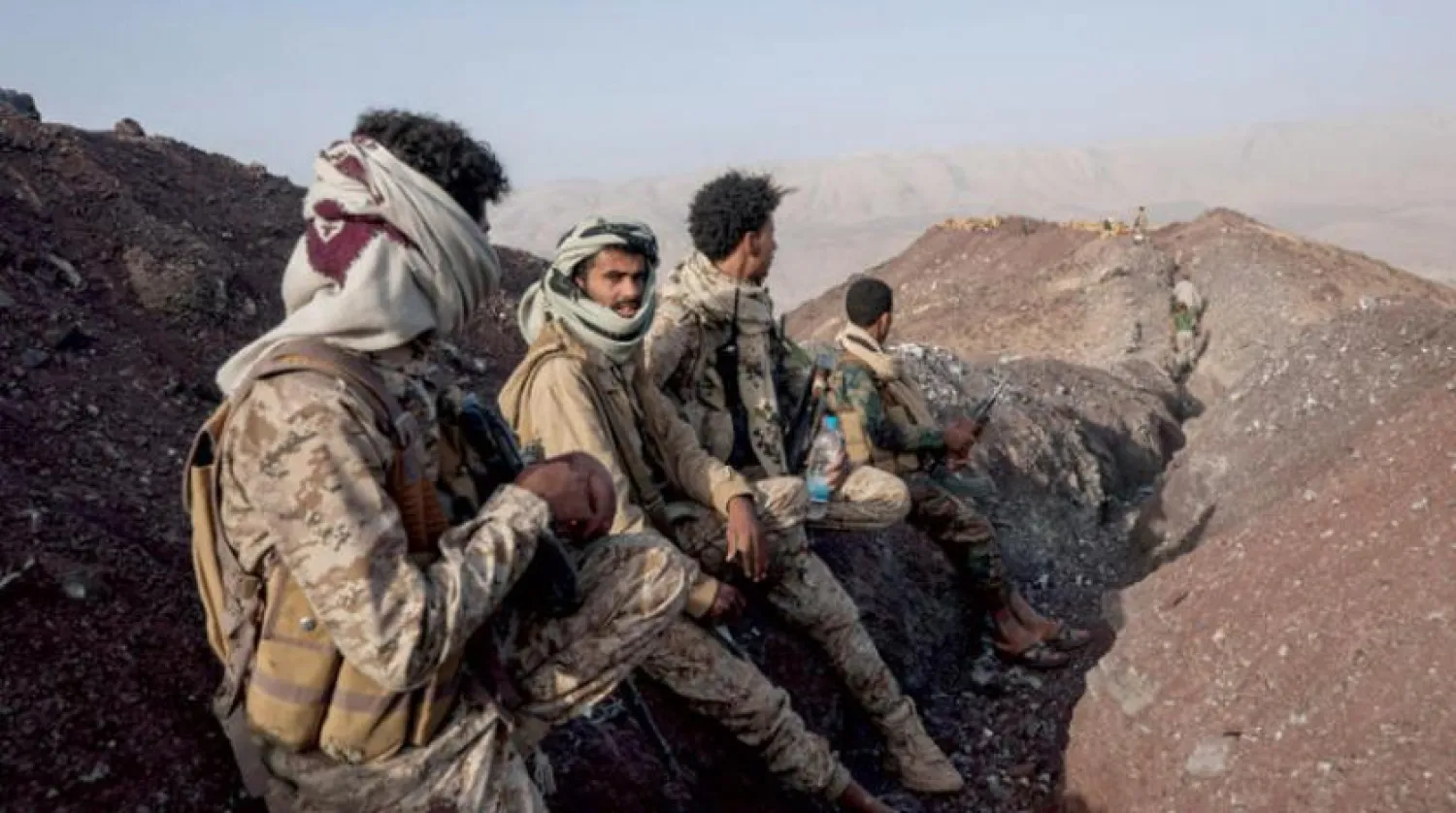
 Yemeni army fighters defending the northeastern governorate of Marib (Saba News Agency)
Yemeni army fighters defending the northeastern governorate of Marib (Saba News Agency)
TT

Hit, Run Battles Cost Houthis Hundreds of Militants in Al-Bayda

 Yemeni army fighters defending the northeastern governorate of Marib (Saba News Agency)
Yemeni army fighters defending the northeastern governorate of Marib (Saba News Agency)

Within seven days, Houthi militias have deployed some of its most elite forces in retaliation to military operations mounted by pro-government forces in Yemen’s central governorate of Al-Bayda, where the Iran-backed group had lost hold of the districts of al-Zahir and al-Soumaa.

Despite sending the “Hussein Brigades,” the insurgency militia failed in regaining any of the ground it lost and ended up entangled in hit-and-run battles that saw over 200 Houthi combatants killed, pro-government military media sources revealed.

Meanwhile, Yemeni army forces, backed by the Saudi-led Arab Coalition and Popular Resistance units, are determined to liberate Al-Bayda from the grip of Houthis, government sources told Asharq Al-Awsat.

Al-Bayda is considered highly strategic given its geographic location connecting it to eight other surrounding governorates. Houthis losing the central governorate will deal a severe blow to the entire insurgency they lead.

For the time being, Houthis shifted their strategy in Al-Bayda to focus on replenishing depleted ranks by deploying more artillery and fighters while continuing a terror campaign against local tribes.

Houthis are also isolating Al-Bayda locals by cutting off communications and spreading fake news.

A week ago, Popular Resistance forces, made up of Al Homaiqan and Yafei tribesmen, had joined the Yemeni army’s Giants Brigades in launching a far-reaching military campaign dubbed “Al-Najm Al-Thaqib” (Piercing Star) against Houthi positions in Al Bayda.

The Yemeni forces freed the entire al-Zahir district, located west of the governorate’s capital city, also called Al-Bayda. Other surrounding areas were also regained from Houthis.

In fear of losing the capital city and hoping to retake lost positions, Houthis deployed some 3,000 militants reinforced with a heavy-weight military arsenal equipped with drones.

As for how the international community views the fight for Al-Bayda, Houthi leaders are trying to sell false rumors that the forces inching in on their territory belong to terror groups like Al-Qaeda and ISIS to draw sympathy and support from Washington and the West.



EU Condemns Israel's West Bank Control Measures

The Israeli settlement of Har Homa, seen from the West Bank city of Bethlehem, Tuesday, Dec. 17, 2024. (AP)
TT

EU Condemns Israel's West Bank Control Measures

The Israeli settlement of Har Homa, seen from the West Bank city of Bethlehem, Tuesday, Dec. 17, 2024. (AP)

The European Union on Monday condemned new Israeli measures to tighten control of the West Bank and pave the way for more settlements in the occupied Palestinian territory, AFP reported.

"The European Union condemns recent decisions by Israel's security cabinet to expand Israeli control in the West Bank. This move is another step in the wrong direction," EU spokesman Anouar El Anouni told journalists.


Atrocities in Sudan's El-Fasher Were 'Preventable Human Rights Catastrophe'

Sudanese displaced people who left El Fasher after its fall, sit in the shade in Tawila at the Rwanda camp reception point on December 17, 2025. (Photo by AFP)
TT

Atrocities in Sudan's El-Fasher Were 'Preventable Human Rights Catastrophe'

Sudanese displaced people who left El Fasher after its fall, sit in the shade in Tawila at the Rwanda camp reception point on December 17, 2025. (Photo by AFP)

The atrocities unleashed on El-Fasher in Sudan's Darfur region last October were a "preventable human rights catastrophe", the United Nations said Monday, warning they now risked being repeated in the neighbouring Kordofan region.


"My office sounded the alarm about the risk of mass atrocities in the besieged city of El-Fasher for more than a year ... but our warnings were ignored," UN rights chief Volker Turk told the Human Rights Council in Geneva.


He added that he was now "extremely concerned that these violations and abuses may be repeated in the Kordofan region".


Arab League Condemns Israel's Decisions to Alter Legal, Administrative Status of West Bank

A general view shows the opening session of the meeting of Arab foreign ministers at the Arab League Headquarters (Reuters)
TT

Arab League Condemns Israel's Decisions to Alter Legal, Administrative Status of West Bank

A general view shows the opening session of the meeting of Arab foreign ministers at the Arab League Headquarters (Reuters)

The General Secretariat of the Arab League strongly condemned decisions by Israeli occupation authorities to impose fundamental changes on the legal and administrative status of the occupied Palestinian territories, particularly in the West Bank, describing them as a dangerous escalation and a flagrant violation of international law, international legitimacy resolutions, and signed agreements, SPA reported.

In a statement, the Arab League said the measures include facilitating the confiscation of private Palestinian property and transferring planning and licensing authorities in the city of Hebron and the area surrounding the Ibrahimi Mosque to occupation authorities.

It warned of the serious repercussions of these actions on the rights of the Palestinian people and on Islamic and Christian holy sites.

The statement reaffirmed the Arab League’s firm support for the legitimate rights of the Palestinian people, foremost among them the establishment of their independent state on the June 4, 1967 borders, with East Jerusalem as its capital.