


'Super Mario' Cartridge Sold for Video Game Record $1.5 Million

Mario and Luigi characters greet visitors in front of Yoshi's Adventure attraction inside Super Nintendo World at the Universal Studios Japan theme park in Osaka. (Reuters photo)
TT

'Super Mario' Cartridge Sold for Video Game Record $1.5 Million

Mario and Luigi characters greet visitors in front of Yoshi's Adventure attraction inside Super Nintendo World at the Universal Studios Japan theme park in Osaka. (Reuters photo)

A sealed cartridge of the legendary "Super Mario" for the Nintendo 64 console sold for $1.56 million, a new record for a video game, according to auction house Heritage Auctions.

"It's the first game to be auctioned for more than $1 million," Eric Bradley, a spokesman for the Dallas, Texas-based company, told AFP.

Heritage had already set a first record on Friday, when a cartridge of "The Legend of Zelda" for the old Nintendo NES console netted $870,000. The copy of "Super Mario 64" dates back to 1996 and uses 3D for the first time.

It is "the only known copy to receive a score of 9.8 A++" from video game expert Wata, which assesses the condition of cartridges, explained Bradley, adding that this score was "the highest a retro game could receive."

Mario, a hyperactive plumber with a mustache and a red cap, is one of the greatest heroes in video game history and contributed to Nintendo's worldwide success.

The character first emerged as "Jumpman" in 1981 in a game dubbed Donkey Kong before being renamed Mario in 1985.

Old video games have enjoyed increasing success among nostalgic gamers for several years.

In April, a 1986 "Super Mario Bros" cartridge for the Nintendo NES sold for $660,000 at auction, also organized by Heritage Auctions.


Beirut's 'Mother of Cats' Who Rescues Felines

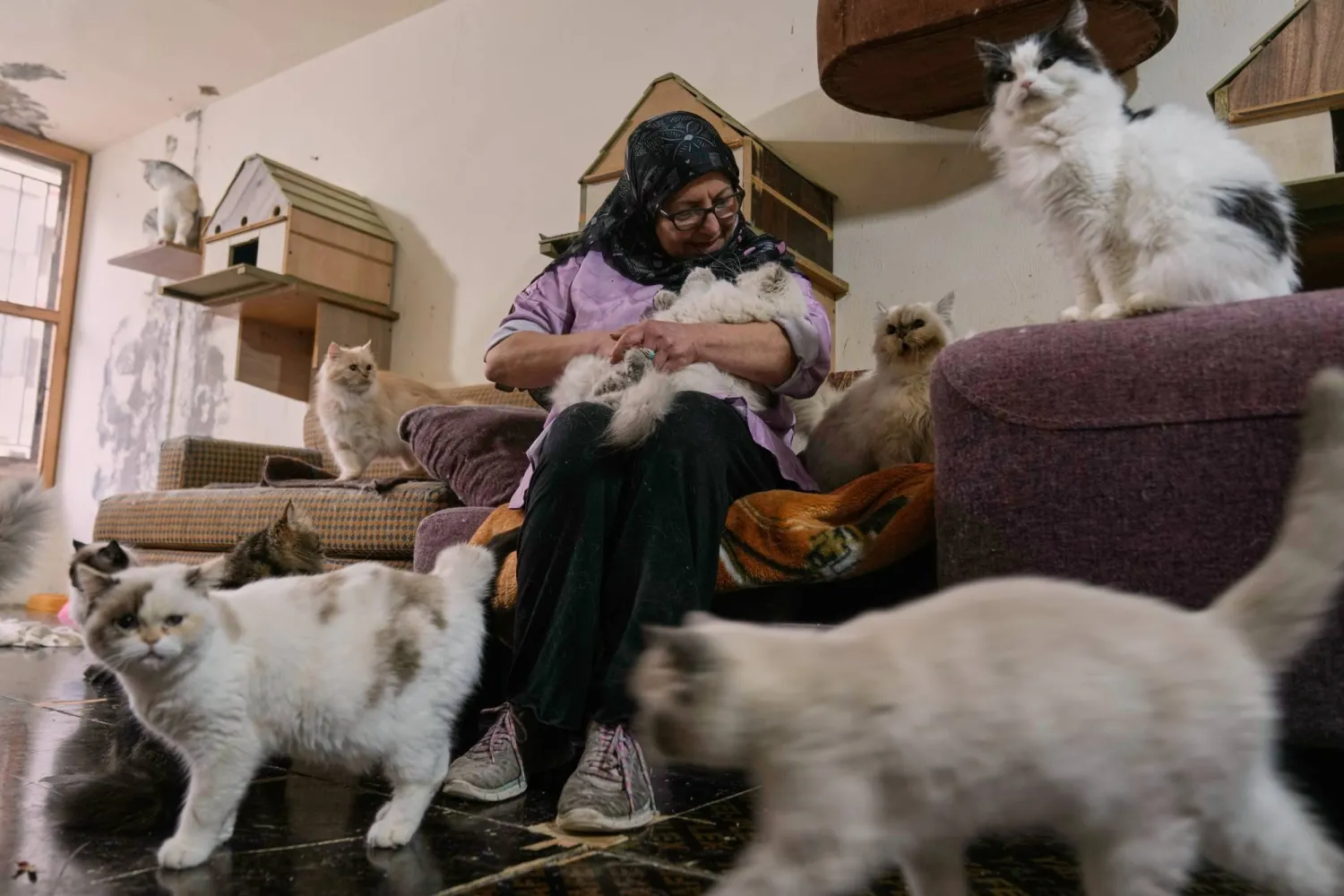
Diana Abadi, known as "the mother of cats," sits with felines waiting for adoption at her small pet food and plant shop in Hadath, in Beirut's southern suburbs known as Dahiyeh, in Lebanon, Saturday, Feb. 7, 2026. (AP Photo/Bilal Hussein)
TT

Beirut's 'Mother of Cats' Who Rescues Felines

Diana Abadi, known as "the mother of cats," sits with felines waiting for adoption at her small pet food and plant shop in Hadath, in Beirut's southern suburbs known as Dahiyeh, in Lebanon, Saturday, Feb. 7, 2026. (AP Photo/Bilal Hussein)

Diana Abadi is known in the southern suburbs of Beirut as the “Mother of Cats.”

For the past 12 years, she has turned her home and shop into a refuge for abandoned felines who now number between 50 and 70, and she often sleeps beside the cats as she cares for them full time.

Abadi began by taking in a single kitten.

Word spread, and residents started bringing her injured and unwanted animals, especially during periods of crisis. At its peak, the shelter housed more than 150 cats, especially during the COVID-19 pandemic and the recent Israel-Hezbollah war, when fear and displacement led many people to abandon their pets.

Her plant and pet food shop in the southern suburbs known as Dahiyeh serves as both her livelihood and the cats’ shelter. Among those currently in her care are Joujou, 13, the oldest, as well as cats named Loulou, Fluffy, Emma and Panda.

One of the most challenging cases involves a cat that was completely blind when abandoned. A woman offered to cover the animal’s expenses if Abadi would take him in. After months of treatment, the cat has partially regained vision in one eye.

Social media has recently helped improve adoption rates, reducing the number of cats under Abadi's care. Rising costs, however, threaten the shelter’s future. Monthly rent has climbed to $800, up from $250 before the war, forcing Abadi to cover most expenses herself.

“These are living beings,” she said. “I don’t take holidays or Sundays off.”


Face of 400-Year-Old 'Vampire' Recreated

Scientists have given a face to a decapitated skull which was uncovered in Croatia. (Croatia’s excavation team)
TT

Face of 400-Year-Old 'Vampire' Recreated

Scientists have given a face to a decapitated skull which was uncovered in Croatia. (Croatia’s excavation team)

The face of a "vampire", whose remains were posthumously mutilated to prevent them from rising from the dead, can be seen for the first time in more than 400 years, reported Sky News.

Discovered in a grave at Racesa, a fortress in eastern Croatia, the body had been exhumed, beheaded and reburied face down beneath heavy stones.

And since the desecration cannot be explained by environmental factors, experts believe it was done to stop the dead man returning as a vampire.

Now the face of the deceased can be seen for the first time in centuries, after scientists rebuilt his likeness from his skull.

Archaeologist Natasa Sarkic, part of the excavation team, said the fear inspired by the man in death may stem from the fear he inspired in life.

She said: “Bioarchaeological analysis showed that this man often participated in violent conflicts, and died a violent death. He experienced at least three episodes of serious interpersonal violence during his lifetime.”

“One of those attacks left his face disfigured, which could cause fear and repulsion, leading to social exclusion. Before even recovering from the penultimate trauma, he sustained a final fatal attack,” she revealed.

“Individuals who died violently, behaved violently in life, or were considered sinful or socially deviant, were believed to be at risk of becoming vampires,” she continued.

“He may have been regarded as a 'vampire', or a supernatural threat due to his facial disfigurement and his marginal lifestyle, characterized by repeated interpersonal violence,” Sarkic explained.

She said such beings were thought to be restless, vengeful, and capable of harming the living, spreading disease and killing people or livestock.

Sarkic said that, in the Slavic tradition, the soul remains attached to the body for about 40 days after death.


Caffeinated Beverages May Help Protect the Brain, Study Says

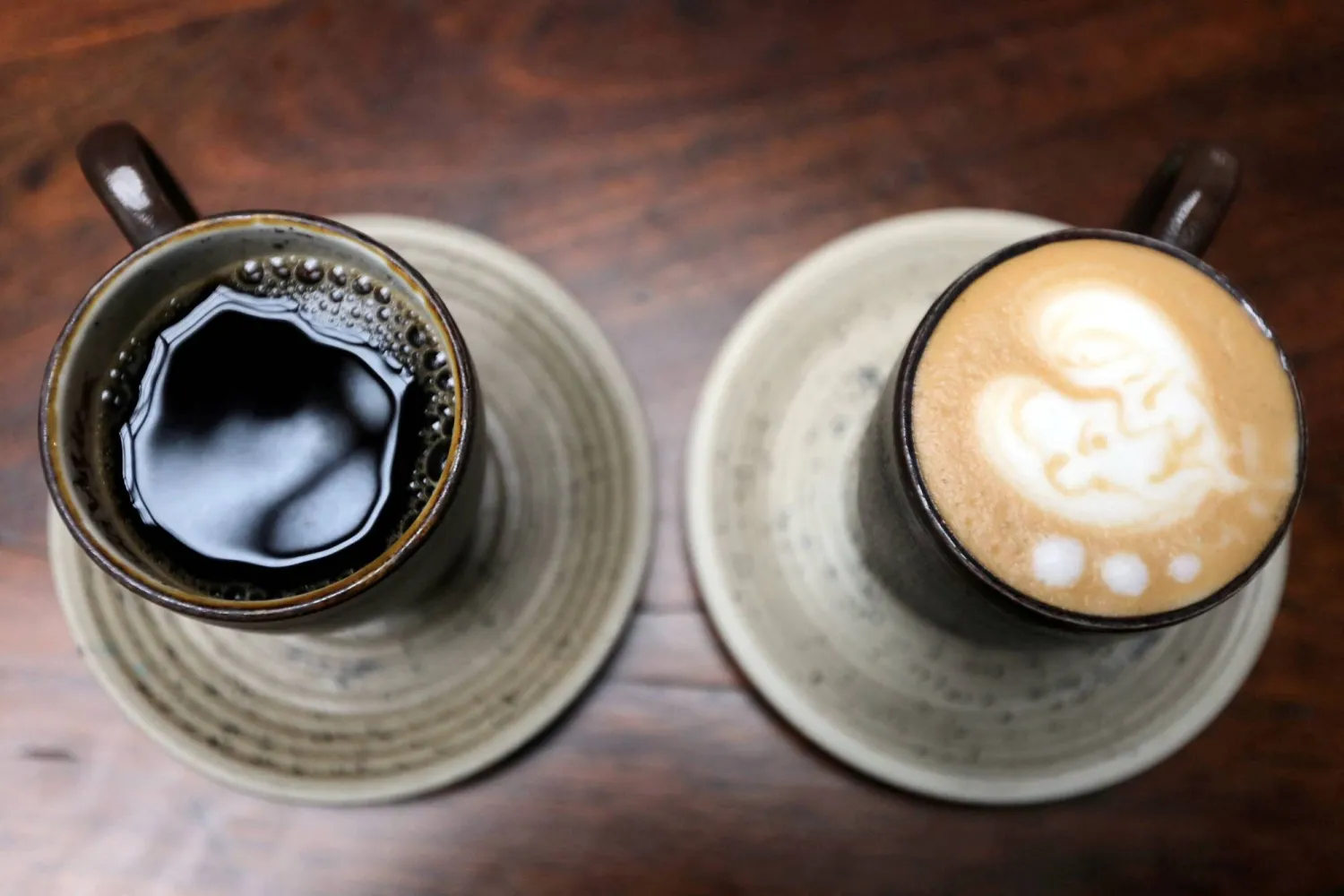
A cup of coffee and a cappuccino are seen at a Juan Valdez store in Bogota, Colombia June 5, 2019. (Reuters)
TT

Caffeinated Beverages May Help Protect the Brain, Study Says

A cup of coffee and a cappuccino are seen at a Juan Valdez store in Bogota, Colombia June 5, 2019. (Reuters)

Drinking a few cups of caffeinated coffee or tea every day may help in a small way to preserve brain power and prevent dementia, researchers reported on Monday.

People with the highest daily intake of caffeinated coffee had an 18% lower risk of developing dementia compared to those with the lowest such intake, according to a study based on responses to questionnaires by 132,000 U.S. adults spanning four decades.

The study, published in JAMA, also found that the people with the highest intake had a lower rate - by nearly 2 percentage points - of ‌self-perceived memory ‌or thinking problems compared to those with ‌the ⁠lowest intake.

Results were ‌similar with caffeinated tea, but not with decaffeinated beverages, the researchers said.

While the findings are encouraging, the study does not prove caffeine helps protect the brain, they said.

The magnitude of caffeine's effect, if any, was small, and there are other better-documented ways to protect cognitive function as people age, study leader Dr. Daniel Wang ⁠of Harvard Medical School said in a statement.

Lifestyle factors linked with lower risks of ‌dementia include physical exercise, a healthy diet ‍and adequate sleep, according to previous ‍research.

"Our study suggests that caffeinated coffee or tea consumption can ‍be one piece of that puzzle," Wang said.

The findings were most pronounced in participants who consumed two to three cups of caffeinated coffee or one to two cups of caffeinated tea daily, the researchers reported.

Those who drank caffeinated coffee also showed better performance on some objective tests of cognitive function, according to the ⁠study funded by the National Institutes of Health.

Further research is needed to validate the factors and mechanisms responsible for the findings, the researchers said.

They noted that bioactive ingredients in coffee and tea such as caffeine and polyphenols have emerged as possible factors that reduce nerve cell inflammation and damage while protecting against cognitive decline.

"We also compared people with different genetic predispositions to developing dementia and saw the same results - meaning coffee or caffeine is likely equally beneficial for people with high and low genetic risk of developing ‌dementia," study coauthor Dr. Yu Zhang of the Harvard T.H. Chan School of Public Health said in a statement.