


In fast-Warming World, Tokyo Is Barometer for Future Olympics

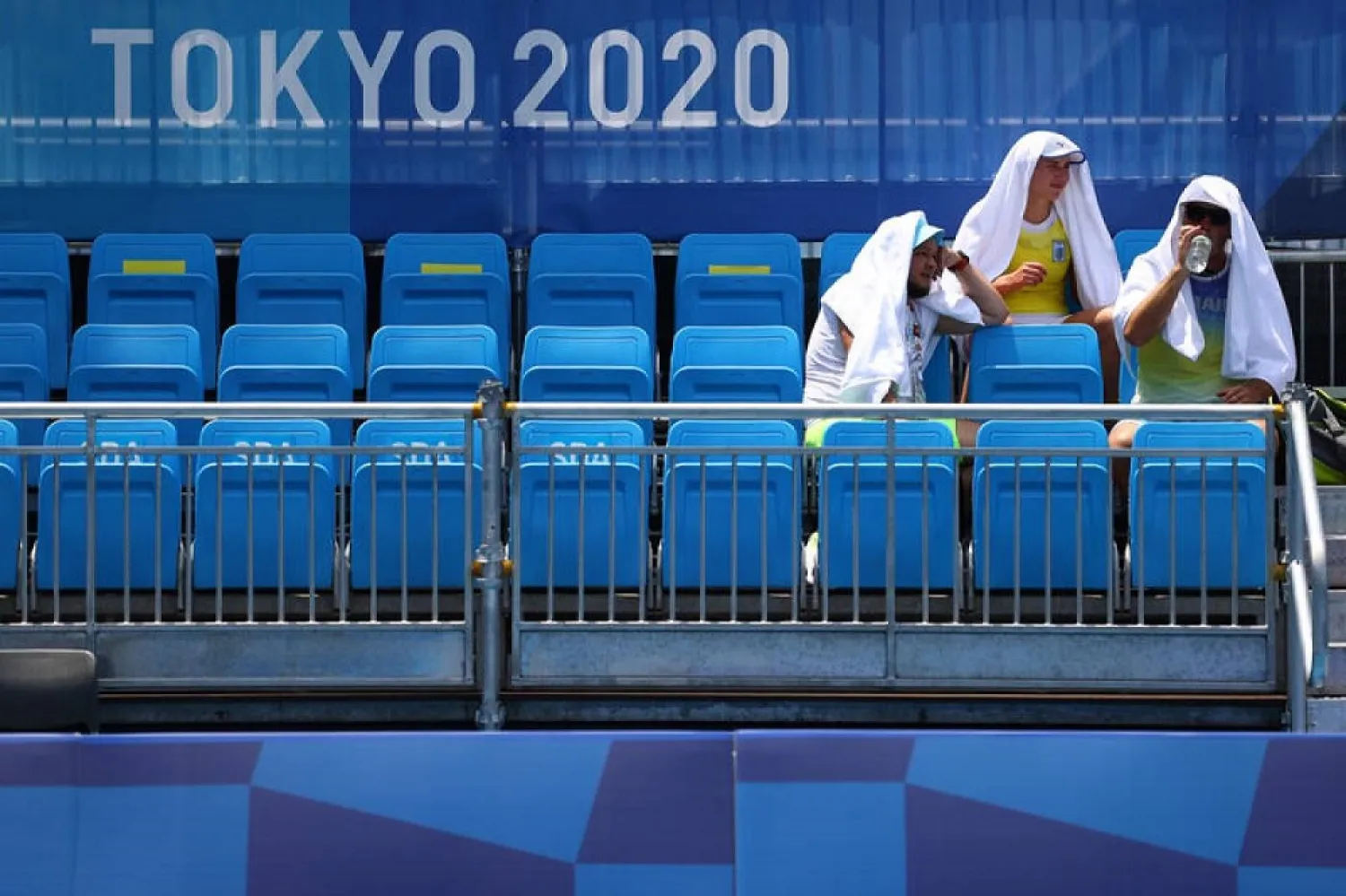
Players cool down in the hot weather at Ariake Tennis Park. (Reuters)
TT

In fast-Warming World, Tokyo Is Barometer for Future Olympics

Players cool down in the hot weather at Ariake Tennis Park. (Reuters)

The muggy heat swaddling Tokyo may be a forerunner of Olympic life to come, experts say, urging a rethink to make the world’s oldest sporting spectacular fit for a fast-warming planet.

The Olympics kicked off in the Japanese capital last week after a year-long delay due to the pandemic, with organizers banning spectators from venues and enforcing a slew of measures to keep the coronavirus at bay.

While worries over COVID-19 have overshadowed other concerns, Japan’s heat and humidity - where temperatures can exceed 35 degrees Celsius (95°F) - also show how future Games will need to grapple with extremes as climate change bites.

“Tokyo 2020 will serve as a model for future hotter Olympics and other summer sporting competitions,” said Yuri Hosokawa, an expert on sport and heat risks at Japan’s Waseda University.

“Leading up to the Games, many athletes around the world have trained under humid heat to acclimatize their body to the environmental stress they will experience in Tokyo,” she told the Thomson Reuters Foundation.

Tokyo’s mean annual temperature has risen by 2.86C since 1900, about three times as fast as the world average of 0.96C, says the British Association for Sustainable Sport.

Hosokawa said some new heat mitigation measures, such as on-site medical treatment for serious heat stroke, instigated for Tokyo, could help shape how best to compete in oppressive heat.

Forget running fast or jumping high - just watching many outdoor sports is now a feat as climate change brings intense rain and heatwaves, spawning hospitalizations and canned event.

The Tokyo Games, from July 23 to Aug. 8, coincide with the year’s hottest temperatures in Japan.

Just last Friday, a Russian archer fainted in the heat during a qualifying Olympic round.

On Wednesday, tennis world No. 2 Daniil Medvedev said a player “can die” in the heat that is stifling Tokyo. The sports’ governing body later agreed to delay match start times in response to similar complaints by other players.

‘Heat on the agenda’
Hoping to beat the heat, organizers have deployed a host of tools - from mist-spraying stations to cooling vests - as well as handing out salt tablets and ice cream to weary volunteers.

The city, known as an innovation hub, has also deployed tech to help mitigate man-made change: be it roads that reflect heat or pavements that absorb water to stay cool, while moving the marathon and race-walk events to the cooler north.

But climate researchers urged the Olympics authorities to think way further out and change the shape of future summer Games, either by shifting events to cooler seasons, building in more breaks or changing running orders for the fierce weather.

“They have to start putting heat on the agenda. They’re going to have to start thinking about the best time of the year and the best locations to have these events,” said Mike Tipton from Britain’s University of Portsmouth.

Tipton, a professor of human and applied physiology, said the heat was not only diminishing the elite competitors’ performance but also posed grave health risks.

“People who follow sport should appreciate what climate change is doing to their sport, entertainment and spectacle. You just won’t have people performing at the same level, in endurance events for example,” he added.

Makoto Yokohari, an advisor to the Tokyo Olympics, said high-tech measures, such as the heat-blocking pavements, could only have “limited” effects and it would be better to postpone.

“When it comes to this combination between the temperature and the humidity, I have been warning that Tokyo is the worst in Olympic history,” said Yokohari, a professor on green urban planning at the University of Tokyo.

Yokohari, who has analyzed data back to the 1984 Olympics in Los Angeles, urged the organizers of the next summer Olympics - Paris in 2024 - to act early and address potential challenges.

France saw record heatwaves in 2019, with temperature jumping to a high of 46C, causing about 1,500 deaths.

“If that happens again... then I’m sure the situation in Paris (2024) will become even worse than Tokyo,” said Yokohari.

Possible measures: using shade for outdoor events or holding the marathon at midnight when temperatures dip, he added.

Adaptation
The International Olympic Committee said in emailed comments that it would take into account “flexibility and adaptation to the consequences of climate change” in planning future events.

“A wide range of measures” are being taken by Tokyo to mitigate the heat, it added, such as moving locations for the marathon and shifting start times for others.

Hosokawa of Waseda University cautioned that delaying the summer Games to cooler seasons may not work as events such as the triathlon and beach volleyball are made for summer.

In future, she said, international sports federations would need to agree on what environmental conditions would lead to automatic cancellation of events or races.

“By knowing the upper threshold, athletes, spectators and stakeholders can train and plan accordingly and share the same expectations,” she added.



Pressure Builds on Milano Cortina Organizers Amid Climate Concerns and Funding Issues

A general view shows the Olympic rings on the Cortina Curling Olympic Stadium, which will host the curling, wheelchair curling, and Paralympic closing ceremony during the Milano Cortina Winter Olympic Games 2026, in Cortina, Italy, January 25, 2025. (Reuters)
TT

Pressure Builds on Milano Cortina Organizers Amid Climate Concerns and Funding Issues

A general view shows the Olympic rings on the Cortina Curling Olympic Stadium, which will host the curling, wheelchair curling, and Paralympic closing ceremony during the Milano Cortina Winter Olympic Games 2026, in Cortina, Italy, January 25, 2025. (Reuters)

Pressure is mounting on Italian authorities to accelerate preparations for the Milano Cortina Olympics amid funding gaps and unusually warm temperatures, even as the head of world skiing openly advocates a fundamental overhaul of how future Winter Games are hosted.

With the Games due to start in February, International Ski and Snowboard Federation (FIS) president Johan Eliasch said Italy’s challenges were symptomatic of deeper structural issues facing winter sport, as rising costs, climate pressure and under-used infrastructure fuel calls for a rotating model of permanent Olympic hosts.

Growing concern over climate pressure, escalating costs and the waste of Olympic infrastructure after the Games is strengthening support within international sport for a rotation system, under which a small pool of established venues would host the Winter Olympics on a recurring basis.

Proponents argue that such a model would allow long-term planning, reduce spending and ensure consistent conditions for athletes and spectators, rather than forcing hosts to build or upgrade facilities that are rarely used once the Games end.

Eliasch said several Olympic venues were facing technical difficulties not because of shortcomings by local organizers, but because of funding issues at government level.

Games ‌organizers have said the ‌venues will be ready on time.

"We see here that there are some venues that have ‌technical ⁠difficulties. It’s not the ‌organizing committees. It’s just simply a lack of funding from the Italian government," he told Reuters in an interview.

"It’s really important that every effort is now made to make sure that everything is ready on time."

Eliasch warned that readiness alone was not enough.

"We know that we will get everything somehow ready on time," he said. "But the question is, of course, what? And that what needs to meet a certain quality threshold and also experience threshold for the spectators, the fans, the athletes, first and foremost, to make this a success."

He warned that funding constraints could push preparations beyond critical tipping points.

SNOWMAKING CONCERNS

"We shouldn’t be penny wise and pound foolish," Eliasch said. "And there are certain tipping points here in the process beyond which there is no return."

"So from a quality perspective, for ⁠what we’re trying to do here, it’s really important that funding doesn’t become an impediment to delivering the best of the best for those two and a half weeks in February," he added.

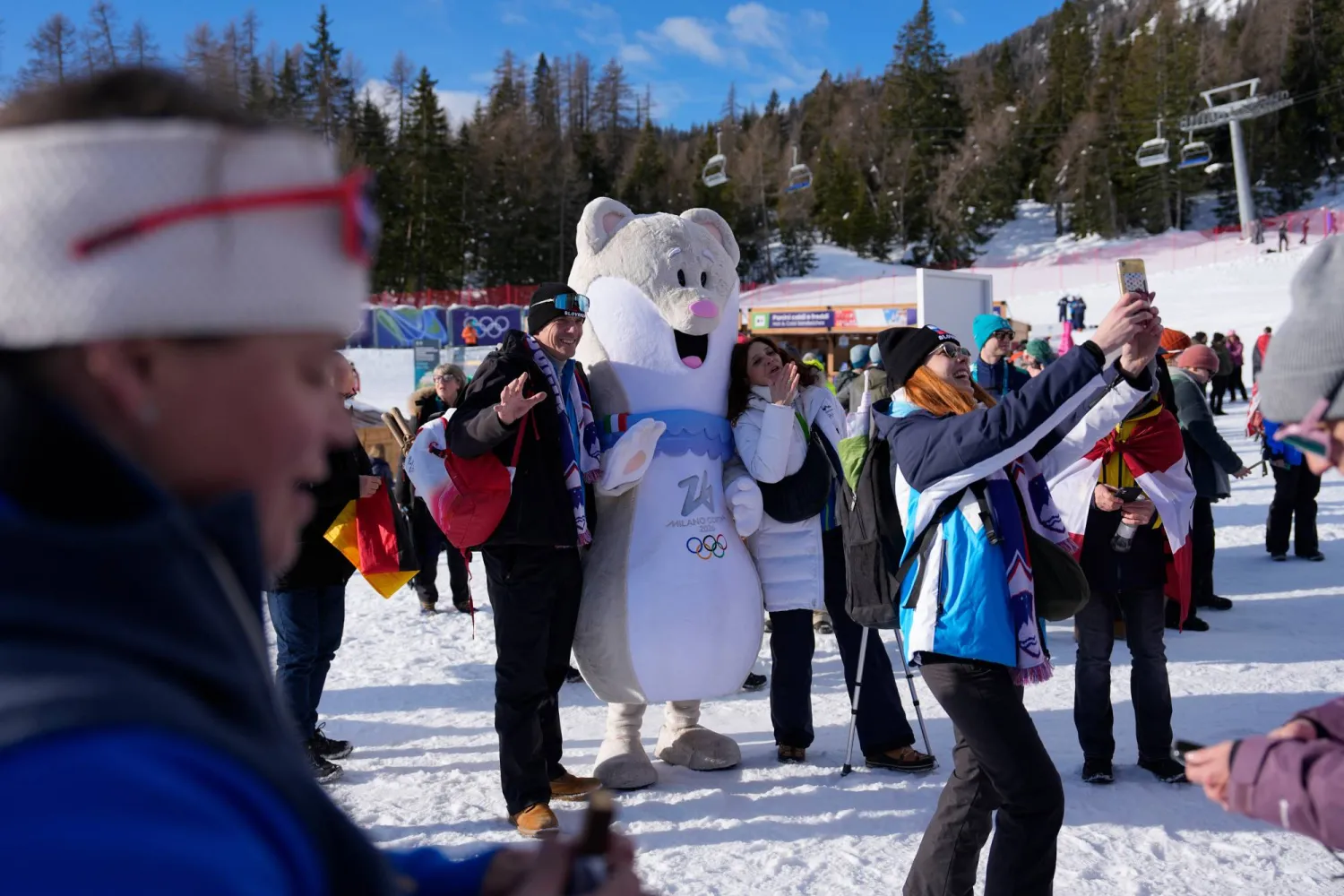
Snowmaking has emerged as a key concern as organizers prepare venues across northern Italy, and ‍Eliasch noted that parts of the downhill course in Bormio had ‍no snow on them.

"We know right now that the snowmaking equipment is working, but we have an additional problem, and that is that ‍the temperatures are very warm," Eliasch said. "Which means we can only produce snow during the night, not during the daytime because it’s too warm."

"So the theoretical capacity simply can’t be met," he added.

Alessandro Morelli, Italian Undersecretary of the Presidency of the Council of Ministers, said he was happy with the situation.

"In Livigno, 53 additional snow cannons are in operation, ensuring the production of the snow needed for the smooth running of the competitions, ahead of the Olympics," he told Italian news agency ANSA.

"The situation satisfies us, and we are confident that we can achieve an even better result than we had imagined."

Eliasch contrasted the situation with regular international competitions.

"If this was a World Cup race or a World Championship race, it would be easy," Eliasch ⁠said. "We’d know exactly what plan B, plan C, plan D is. We wouldn't start making snow this late. We would have plans to bring in snow from other areas, track it in. We would have all sorts of contingency planning."

Olympic events are far more complex, making financial certainty essential.

"Without clarity on and transparency for the organizing committee that we’re trying to support in every possible way — and they are doing their best, they’re working incredibly hard — but without resources, no one is going to step forward and deliver without knowing that they will get paid," Eliasch, an International Olympic Committee (IOC) member, said.

IOC HAT ON

"It is a very logical step to take," Eliasch said of a rotation model. "And I have advocated for it with my IOC hat on. Without long-term planning, people are not going to invest. And the Games are getting more and more expensive."

"Huge investments, billions of dollars, are being invested in infrastructure," Eliasch added. "Which becomes wasted after the Olympic Games have been held."

"For Olympic Winter Games, to pull all that together, they need at least five- or six-years’ notice," Eliasch said.

"I think we’re looking at maybe six to eight venues to start with," Eliasch said.

Climate pressure is accelerating the debate.

"Climate change could become an ‌existential threat," Eliasch said. "The only logical way to bring costs down to reasonable levels is to have a rotation scheme."

The stakes extend far beyond winter sport.

"We are competing with Formula One, NFL, NBA, football — we have to be at the forefront," he said. "The five rings are magical. And that’s something we must protect at ‌all costs."


Jackson at the Double as Senegal Defeat Botswana 3-0

 Senegal's Nicolas Jackson celebrates after scoring during the Africa Cup of Nations group D soccer match between Senegal and Botswana in Tangier, Morocco, Tuesday, Dec. 23, 2025. (AP)
Senegal's Nicolas Jackson celebrates after scoring during the Africa Cup of Nations group D soccer match between Senegal and Botswana in Tangier, Morocco, Tuesday, Dec. 23, 2025. (AP)
TT

Jackson at the Double as Senegal Defeat Botswana 3-0

 Senegal's Nicolas Jackson celebrates after scoring during the Africa Cup of Nations group D soccer match between Senegal and Botswana in Tangier, Morocco, Tuesday, Dec. 23, 2025. (AP)
Senegal's Nicolas Jackson celebrates after scoring during the Africa Cup of Nations group D soccer match between Senegal and Botswana in Tangier, Morocco, Tuesday, Dec. 23, 2025. (AP)

Striker Nicolas Jackson scored twice as Senegal got their 2025 Africa Cup of Nations campaign off to a winning start with a comfortable 3-0 Group D victory over Botswana in Tangier on Tuesday.

Jackson ‌converted Ismail ‌Jakobs’ low ‌cross ⁠to give ‌his side the lead after 40 minutes as they broke the resistance of a stubborn Botswana, before showing quick feet from Ismaila ⁠Sarr’s pass to finish from ‌close range just before ‍the hour-mark.

Senegal, ‍who won the Cup ‍of Nations title in 2021 and are among the favorites again, overwhelmed their opponents with waves of attacks and added a third late ⁠on from Cherif Ndiaye, one of 28 efforts on the Botswana goal.

Senegal head Group D on goal difference from the Democratic Republic of Congo after the opening round of games. The latter defeated ‌Benin 1-0 on Tuesday.


Real Madrid’s Endrick Joins Lyon on Loan

Real Madrid’s 19-year-old Brazilian forward Endrick gestures during a match at Santiago Bernabeu Stadium in Madrid, Spain. (AFP)
TT

Real Madrid’s Endrick Joins Lyon on Loan

Real Madrid’s 19-year-old Brazilian forward Endrick gestures during a match at Santiago Bernabeu Stadium in Madrid, Spain. (AFP)

Real Madrid's Brazilian starlet Endrick has joined Lyon on loan, the Ligue 1 club announced on Tuesday.

The 19-year-old joined the Spanish giants to much fanfare in summer 2024, arriving from Palmeiras where he had led the side to back-to-back Brazilian league titles.

Endrick has scored seven goals in 40 appearances for Real Madrid but has seen his playing time at the Bernabeu limited this season under new coach Xabi Alonso.

In 14 appearances with the Brazil national team, the left-footed attacker has netted three times but his last strike for the Selecao came in June last year and he has only earned one cap in 2025.

Endrick joins French side Lyon on loan until the end of the season, with a fee agreed between the clubs of one million euros ($1.2 million).